Dynamic Flow
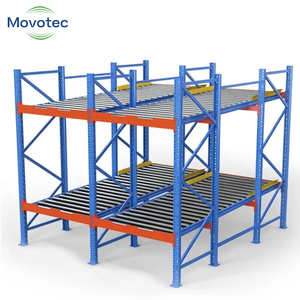
Direct manufacturer supply for North American, European, and Asia-Pacific distributors and logistics hubs. Below are eight engineered systems configured for commercial warehouse loading demands.
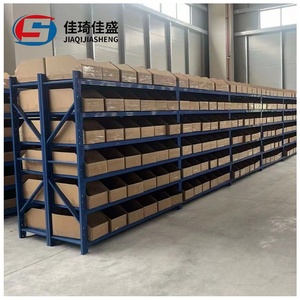
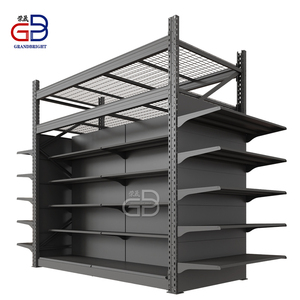
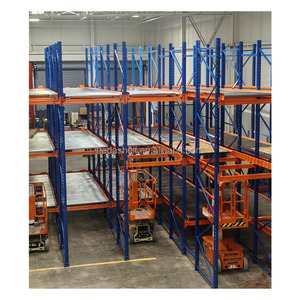
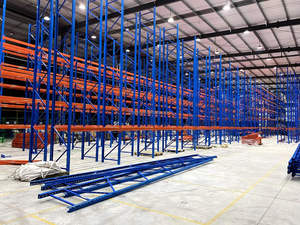
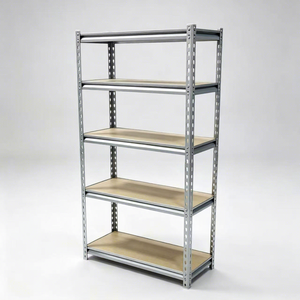
A comprehensive technical overview for supply chain executives, warehouse engineering directors, and logistics project managers planning long-item storage infrastructure.
As a recognized top-tier cantilever racking factory and exporter established in 2001, Guangzhou Heda Shelves Co., Ltd. builds structural systems compliant with American ANSI MH16.1 (Rack Manufacturers Institute) and European EN 15512 standards. By using hot-rolled wide flange beams (ASTM A572 Grade 50 / Q355B structural steel) and precision roll-formed C-profiles, our engineering team eliminates catastrophic structural deflection, ensures seismic lateral resistance, and optimizes open-front bay loading for lumber mills, steel tubing processors, and aerospace materials depots.
According to RMI specifications, cantilever arm tip deflection under full rated load must not exceed L / 180 for standard loads and L / 250 for automated or AS/RS applications, where L is the horizontal length of the arm. Furthermore, upward pre-cambering of 1.5° to 2.5° is manufactured into every welded connector collar to counteract permanent arm sagging under sustained working stresses.
| Structural Parameter | Roll-Formed Cantilever (Light/Medium) | Structural I-Beam Cantilever (Heavy-Duty) | HEDA Factory Engineering Standard |
|---|---|---|---|
| Base Steel Metallurgy | Q235B cold-rolled coiled sheet | Q355B / ASTM A572 Gr 50 Hot-Rolled I-Beam | Certified mill test reports (MTR) with heat tracing |
| Column Section Depth | 200 mm to 305 mm profile depth | W8 to W18 structural wide flange beams | FEA (Finite Element Analysis) simulated profiles |
| Arm Capacity (per arm) | 500 lbs to 1,800 lbs (220 - 800 kg) | 2,000 lbs to 8,800 lbs (900 - 4,000 kg) | 1.65 safety factor exceeding ANSI MH16.1 minimums |
| Arm Pitch Adjustability | 75 mm or 76.2 mm (3-inch) pitch | 100 mm to 101.6 mm (4-inch) heavy bolt pitch | High-tensile Grade 8.8 / ASTM A325 fasteners |
| Impact Resistance | Moderate; requires column base guards | Extremely high; withstands forklift mast impact | Reinforced 16mm thick base plate anchoring |
| Primary Applications | PVC pipe, furniture, moldings, light conduit | Structural steel beams, timber packs, heavy machinery | Custom configured to material packaging center-of-gravity |
How automation, smart sensing, and strict environmental compliance are transforming heavy-load material handling architecture over the coming decade.
The convergence of cantilever hardware with automated storage and retrieval systems (AS/RS). Telescopic forks and automated multidirectional shuttles pick long bars and sheet packs without direct forklift driver intervention, doubling storage heights up to 24 meters.
Real-time structural health monitoring (SHM). Digital strain sensors mounted to column bases and arm connection nodes transmit load distribution and dynamic vibration cycles to warehouse management systems (WMS), immediately warning against point overloading.
With warehouse space costs increasing, operators are expanding into outdoor storage yards. The modern trend replaces standard enamel coatings with hot-dip galvanizing (ISO 1461) paired with UV-resistant polyurethane powder coats for 25+ years of rust immunity.
Established in 2001, Guangzhou Heda Shelves Co., Ltd. operates a premier 30,000 m² (approx. 323,000 sq ft) manufacturing campus in Guangzhou, China. Producing over 30,000 metric tons of engineered storage steel per month, HEDA provides complete OEM and ODM supply services to global logistics equipment importers, material handling dealers, and Fortune 500 distribution operations.
Unlike domestic trading middlemen, HEDA operates complete in-house continuous cold-roll forming lines, high-precision CNC multi-axis punch presses, automated robotic welding cells, and an eco-compliant 10-stage phosphating electrostatic powder coating facility.
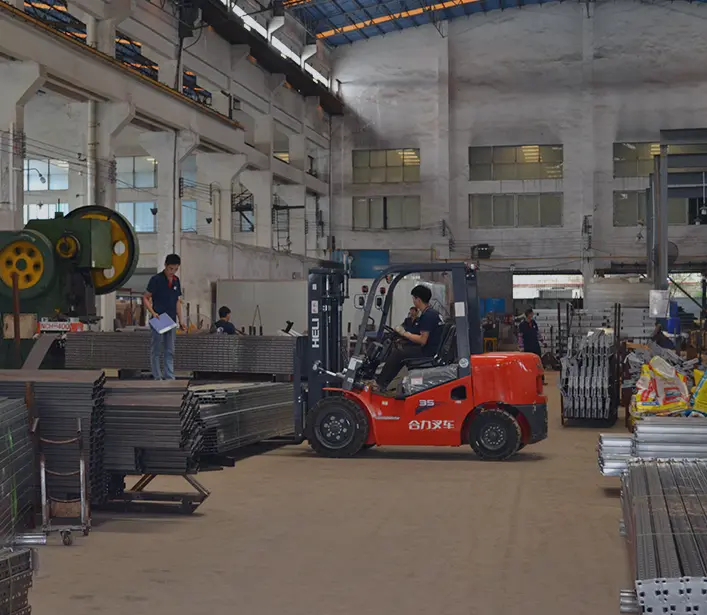


Every column, arm, bracing set, and base plate undergoes standardized QA/QC protocols to guarantee defect-free mechanical interlocking and long-term dimensional stability.
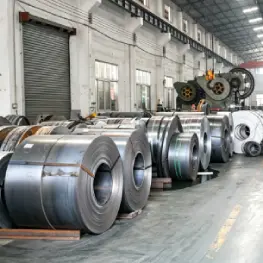
Tensile testing of prime Q235B and Q355B coils upon delivery.
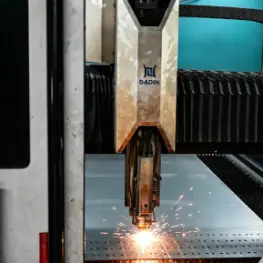
CNC slitting lines cut wide coil stock to exact millimetric widths.
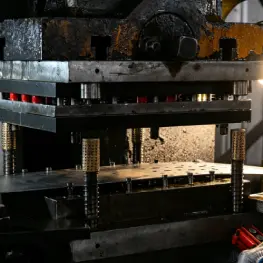
Continuous multi-point hydraulic stamping for repeatable hole pitch.
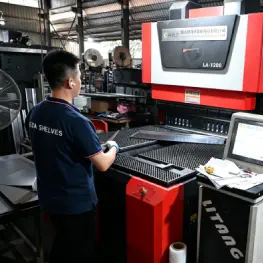
Multi-roller forming lines shape rigid structural sections.
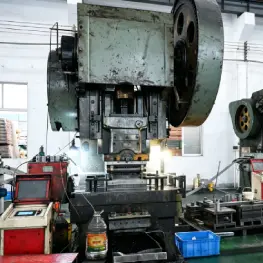
Precision calibration stands straighten and verify cross-sections.
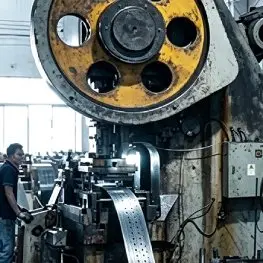
Shot blasting and edge deburring for clean, smooth surfaces.
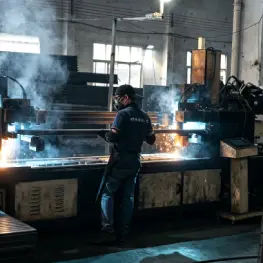
CO2 gas shielded robotic arms weld base plates and arm collars.
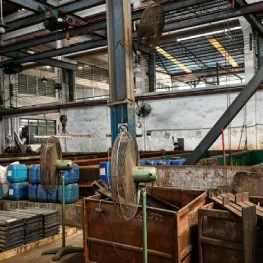
Hot alkaline degreasing, acid pickling, and chemical phosphating.
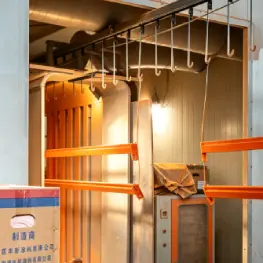
Thermoset polyester powder cured at 180°C–200°C baking tunnels.
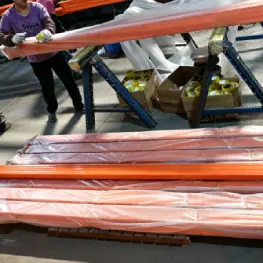
Cushioned strapping, moisture-barrier wrapping, and ocean stowage.
Full regulatory compliance documentation ready for municipal permit filing, fire department review, and structural safety sign-offs across North America, Europe, and Australasia.
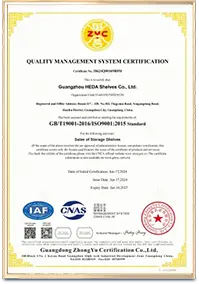
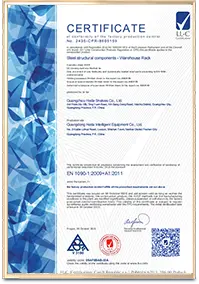 ISO 9001:2015
Cert. 18624Q00169R0M
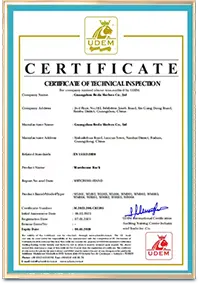 CE Marking
Cert. 2435-CPR-8605159
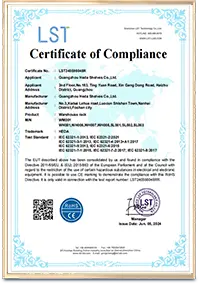 RoHS Compliance
Heavy Metal Free Coatings
 Full Load Testing
ANSI MH16.1 Certified Lab Data
Clear, technical guidance addressing municipal permitting, load calculations, forklift compatibility, and ocean shipping logistics.
Cantilever arm length must match or slightly exceed the depth of the stored bundle. The load center of gravity is calculated as exactly half of the load depth (LC = D / 2). For example, a 48-inch deep lumber bundle places the load center at 24 inches along the arm. Rated arm capacities are specified based on this center point. Placing concentrated loads at the outer tip reduces safe load capacity by up to 50%.
Standard light-duty cantilever systems require a minimum of 5 to 6 inches of 3,000 psi unreinforced concrete. For heavy-duty structural I-beam towers exceeding 16 feet (4.8 m) in height, a 6 to 8-inch slab rated at 4,000 psi or dedicated isolated footings are typically required to resist anchor bolt uplift and overturning moment forces during seismic events.
Yes. HEDA provides comprehensive calculation packets—including dead load, live load, wind overturning (for outdoor racks), and seismic base shear values (Ss and S1 values per IBC chapter 16). These packets are prepared in imperial units (lbs, feet, inches) for submission to your local licensed PE or municipal building department for stamping and permitting.
We supply factory-welded or removable pipe stop sockets at the tip of each cantilever arm. Heavy steel retaining pins (ranging from 4 inches to 12 inches high) slot directly into the arm end, preventing round inventory from shifting during loading. We also manufacture drop-in saddle plates and cradle decks for small-diameter bundled conduit.
Standard production turnaround ranges from 20 to 30 days depending on total steel tonnage. Shipping from our Guangzhou/Nansha/Shenzhen ports to West Coast ports (Los Angeles, Long Beach) takes 14 to 18 days transit, while East Coast ports (Savannah, Houston, New York/NJ) require 28 to 35 days. We quote FOB, CIF, or DDP terms with all customs clearance documents provided.
Heavy structural columns and bases are strapped with high-tensile steel banding, cushioned with protective wooden runners, and nested to maximize 40HQ container space utilization (averaging 24 to 26 metric tons per 40HQ). Machined arm pins, fasteners, and anchor bolts are boxed in steel-strapped export crates with VCI anti-corrosion barrier wrapping.
Single-sided columns are designed to anchor flat against building perimeter walls with arms projecting from one face. Double-sided columns feature a central mast with load arms projecting from both front and rear faces, creating symmetrical load balance. Double-sided configurations offer superior moment stability and maximize central floor aisle density.
Yes. We engineer heavy-duty galvanized wire mesh decking, solid steel shelf panels, and drop-in channel supports that sit across adjacent arms. This transforms open cantilever arms into continuous horizontal shelves, allowing warehouses to store variable-length items, mixed pallets, and irregularly shaped components in the same run.
Send your building dimensions, clear height, load center specifications, and forklift parameters. Our engineering department will deliver an itemized quotation, 2D CAD floor plan, and 3D realistic rendering within 24 hours.