High-Capacity Industrial Warehouse Racking & Logistics Systems
Precision-engineered in our 323,000 sq ft production campus. Built to stringent seismic and deflection tolerances for intensive 3PL, cold chain, and high-throughput distribution hubs.
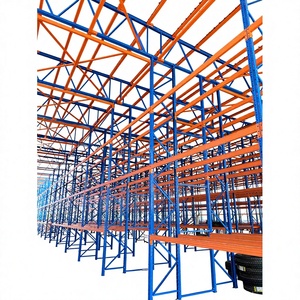 Heavy Duty
Rack Heavy Duty Steel Shelf Warehouse Racking Pallet Industrial Pallet Rack Storage Shelving Storage System Racking
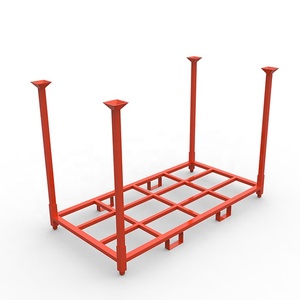 Logistics Cage
Factory Supply Industrial Logistics Foldable Stacking Rack Rolling Steel Cage Trolley Metal Shelves for Putting Cargo and Tires
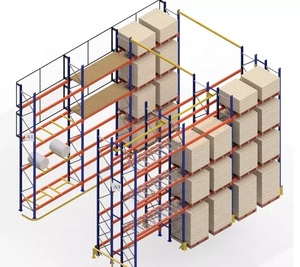 AS4084 Standard
Jracking AU Standard Steel Warehouse Pallet Racks Heavy Duty Pallet Storage Racks and Shelving
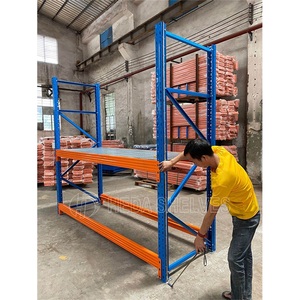 Multi-Capacity
Mracking Heavy Duty Metal Pallet Storage Racking 1000kg/2000kg/3000kg Per Layer Industrial Pallet Shelving Rack
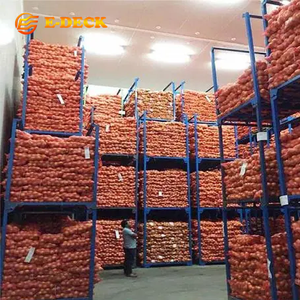 Stacking Unit
Warehouse Storage Durable Steel Stacking Metal Frame Pallet
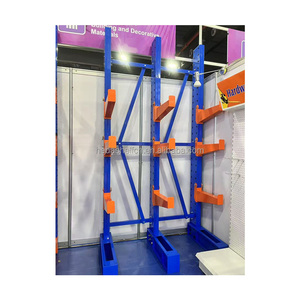 Cantilever System
Wholesale Industrial Shelves Storage Racks Double Sided Heavy Duty Cantilever Racking System Cantilever Racks
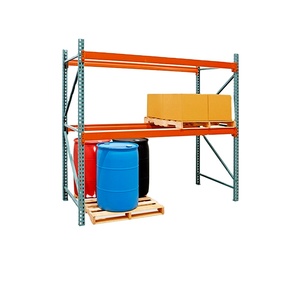 Teardrop Standard
Selective Industrial Warehouse Shelving Teardrop Pallet Rack
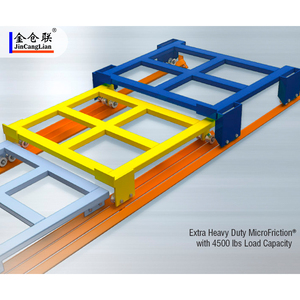 High Density Push-Back
Customized Pallet Rack High Density Storage Steel Push-back Racking Industrial Metal Racks with 2~5 Movable Carts
The Mechanics of Back-to-Back Pallet Racking Architecture
Back-to-back pallet racking systems represent the most widely implemented structural configuration in global warehousing logistics. Configured by pairing two single-entry selective racking runs tied together through mechanical row spacers, this configuration maximizes floor area efficiency while maintaining 100% immediate selectivity for every standard GMA (48×40 inch), EUR-1 (1200×800 mm), or ISO industrial pallet. By sharing a central flue space and reinforcing mutual longitudinal and cross-aisle rigidity, back-to-back runs drastically reduce the total aisle footprint required by counterbalance forklifts, reach trucks, and articulated VNA machinery.
Structural Anatomy and Load Transfer Dynamics
The structural efficacy of back-to-back racking relies on cohesive mechanical interaction among cold-rolled omega-profile upright columns, twin-welded box step beams, heavy-duty row connectors, and baseplates anchored to Class 4000+ PSI reinforced concrete slabs. Uprights roll-formed from certified high-tensile hot-rolled steel strip (conforming to Q235B and Q355B grades) feature multi-point interlock punching along 50mm, 75mm, or teardrop 2-inch intervals. Under dynamic loading, vertical weight is transferred from the pallet interface through the horizontal beam connector claws, activating a rigid moment-resistant connection that distributes bending stresses into vertical column flanges and bracing trusses.
Flue Space & Fire Suppression
Properly engineered rigid row spacers maintain a mandatory 6-inch to 12-inch longitudinal flue space between back-to-back frame bays. This vertical void facilitates unobstructed heat convection upward to ESFR (Early Suppression, Fast Response) ceiling sprinklers, meeting NFPA 13 and local industrial safety codes.
Cross-Aisle Dynamic Bracing
Connecting two parallel frame lines horizontally and diagonally creates a broad-stance space-frame truss. This configuration counteracts forklift impact torques, minimizes cross-aisle sway, and prevents harmonic resonance under seismic lateral forces without relying on external building structural ties.
Deflection Ratios & Safety Factors
Fabricated under finite element analysis (FEA), our back-to-back beam profiles limit live vertical beam deflection to less than L/200 under nominal safe working load (SWL). This strict threshold prevents permanent deformation while providing a minimum 1.65 to 1.95 structural safety coefficient.
Comparative Matrix: Back-to-Back vs Alternative Industrial Layouts
Warehouse planners must reconcile floor space density against SKU picking velocities. Below is an engineering evaluation comparing standardized Back-to-Back racking against adjacent storage topologies:
| Racking Topology | Direct Pallet Accessibility | Floor Space Utilization | Forklift Compatibility | Cost per Pallet Position | Fire Safety (NFPA Flue) |
|---|---|---|---|---|---|
| Back-to-Back Selective | 100% Immediate | 40% – 50% Storage Density | Counterbalance, Reach, VNA | Lowest Baseline Capital Cost | Maintained via Solid Row Spacers |
| Double Deep Racking | 50% (Requires 2-Deep Reach) | 55% – 65% Storage Density | Pantograph Double Reach | Low to Medium (+20% vs B2B) | Requires Engineered Flue Stops |
| Drive-In / Drive-Through | LIFO / Strict Batch Selection | 70% – 85% Storage Density | Narrow Counterbalance/Reach | Moderate (Increased Frame Gauge) | Restricted Upward Convection |
| Push-Back (2–6 Deep) | Face Pallet Only (LIFO) | 65% – 75% Storage Density | Standard Forklifts | Medium to High (+80% cart gear) | Open Clear Vertical Channels |
| Automated Radio Shuttle | Lane-End Selective (FIFO/LIFO) | 80% – 90% Storage Density | Standard Truck + Robotic Shuttle | High Capital Investment (ASRS Tier) | Pre-Engineered Integrated Flues |
Future Procurement Trends: 2025–2030 Warehouse Demands
Procuring industrial racking has evolved beyond simple structural fabrication into a critical supply chain risk management function. Enterprise logistics operators, 3PL managers, and general contractors now evaluate racking manufacturers across complex total-cost-of-ownership (TCO) variables, rigorous regulatory compliance, and dynamic warehouse technology alignments.
AGV & AMR Aisle Navigation Compatibility
Forklift electrification and autonomous mobile robots (AMRs) require millimeter-accurate rack fabrication. Procurement contracts increasingly demand tight beam punch tolerances and zero column twist to maintain clearance profiles for automated turret heads and vision-guided pallet scanners.
Certified Seismic Performance (RMI & Eurocode)
Geographic risk modeling in seismically active corridors across the US West Coast, Latin America, and southern Europe demands certified structural calculations stamped by licensed engineers. Procurement teams prioritize suppliers capable of delivering FEA simulation files matching local base shear criteria.
Decarbonization & Lifecycle Powder Coatings
Global supply chain carbon footprints are under direct ESG audit. Enterprise buyers favor manufacturing facilities employing closed-loop powder recovery, non-toxic zirconium pretreatments instead of heavy phosphate baths, and structural steel coils with verified low-embodied-carbon certifications.
Technological Evolution: Smart Sensor Racking & High-Yield Metallurgy
The modernization of the standard back-to-back bay focuses on smart operational safety. Impact detection is transitioning from passive column guards to embedded IoT strain-gauge nodes placed on critical lower frame uprights. These sensors continuously monitor deflection and micro-vibrations, alerting warehouse supervisors in real-time through cloud telemetry if a forklift impact compromises structural load ratings.
Metallurgically, cold-roll forming has adopted high-strength low-alloy (HSLA) steels. By replacing thick, heavy low-carbon profiles with optimized thin-walled profiles roll-formed through 24-station automated tooling, overall steel weight can be reduced by 12% to 18% without diminishing SWL capacity. This material efficiency lowers ocean container shipping weights and simplifies manual handling during warehouse assembly.
Enterprise Advantages: Engineering Authority from HEDA Shelves
Founded in 2001, Guangzhou Heda Shelves Co., Ltd. is an established manufacturer of industrial storage systems, serving commercial supply chains across 130+ countries. Operating an extensive 30,000 m² (323,000 sq ft) production campus staffed by 300+ technicians, certified structural engineers, and skilled metalworkers, HEDA produces over 30,000 tons of precision-machined racking steel monthly.
Over two decades of continuous production and more than 10,000 large-scale distribution projects deployed worldwide ensure robust, dependable component engineering.
Our in-house project engineering division provides complete 2D floor layouts, load capacity certifications, and 3D architectural renderings within 24 hours of receiving site blueprints.
Certified under ISO 9001:2015 (Certificate 18624Q00169R0M) and CE Marking (Certificate 2435-CPR-8605159), our manufacturing processes undergo continuous third-party audits.
We provide full documentation, architectural shop drawings, beam elevation diagrams, and load tables in both imperial (lbs/inches) and metric units to streamline local contractor approvals.
Components pass through chemical degreasing, ultrasonic rust removal, zinc-iron phosphating, and automated electrostatic powder curing, ensuring long-term rust and salt-spray resistance.
Steel profiles are bundled on dedicated custom dunnage and protected with foam corner guards and moisture-barrier shrink films to minimize transit abrasion and accelerate container offloading.
Frequently Asked Questions: Racking Procurement & Engineering
Practical answers to technical questions concerning factory sourcing, dimensional compatibility, safety compliance, and site installation.
Why choose Back-to-Back racking over single runs or drive-in?
Back-to-back configurations halve the number of forklift access aisles required compared to standalone single runs. Unlike drive-in racks that enforce strict LIFO batch grouping, back-to-back systems maintain 100% immediate selectivity for every single pallet location, making them ideal for high-SKU operations.
How do row spacers maintain structural and fire safety integrity?
Row spacers act as rigid structural ties between back-to-back frames, transferring lateral loads across both upright assemblies to resist harmonic twist. They simultaneously maintain a fixed 6" to 12" vertical flue space required by NFPA 13 to allow early fire suppression water penetration.
What engineering standards are used for load calculation?
All load-bearing beams and upright columns are engineered according to RMI MH16.1 (North America) and EN 15512 (Europe). Permissible beam deflections are capped at L/200 under uniformly distributed loads, backed by factory destructive testing reports and mill-certified steel test certificates.
Can HEDA custom-fabricate frames for non-standard pallets?
Yes. Beyond standard 48"x40" GMA and 1200x800mm EUR footprints, our roll-forming profiles can be customized across frame depths (from 600mm to 1600mm), beam lengths (up to 4500mm clear spans), and post gauges up to 2.5mm cold-rolled steel to handle specialized loads like wire containers, coils, or drums.
What is the typical production and shipping cycle for export orders?
Standard container orders are fabricated within 15 to 25 business days. Cargo is shipped via major ports like Guangzhou and Shenzhen on direct ocean freight routes to major international ports, including Los Angeles, Houston, Savannah, Rotterdam, and Sydney.
What floor slab requirements are needed for tall back-to-back bays?
For installations exceeding 24 feet (7.3 meters), floor slabs typically require a minimum thickness of 6 to 8 inches of reinforced concrete (minimum 3,000 to 4,000 PSI rating). HEDA supplies baseplate footprints and anchor hole configurations matching Hilti or mechanical wedge anchors for secure slab fastening.
Plan Your Warehouse Racking Architecture with Direct Factory Engineers
Submit your facility dimensions, ceiling clearances, pallet weights, and forklift specifications. Our engineering team will deliver a comprehensive 2D CAD layout, 3D render, and transparent factory quotation within 24 hours.