Featured Industrial Pallet Racking & High-Density Storage Solutions
Standardized around universal GMA footprint (48"x40"), European EUR-spec crates, and custom high-tonnage industrial storage. Roll-formed from Q235B/Q355B premium structural coils with automated continuous punching.
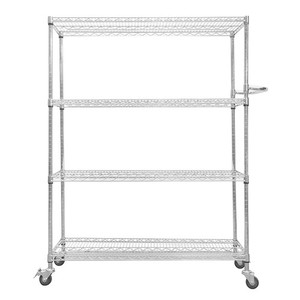
21" X 42" X H72" Multi-functional 4 Tier Chrome Metal Wire Shelving for Commercial Warehouse
Electro-plated anti-corrosive finish optimized for fast-pick order assembly, moisture-controlled distribution setups, and auxiliary light-parts picking modules.
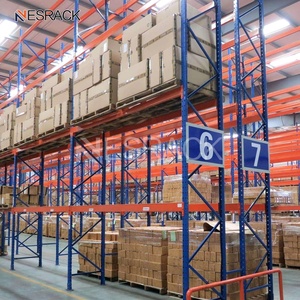
Industrial Steel Storage Racks 5-Layer Pallet Racking with Storage Racks & Shelving Units
Multi-bay vertical framework featuring interlocking 50mm/75mm pitch connectivity. High torsional resistance for variable pallet load heights.
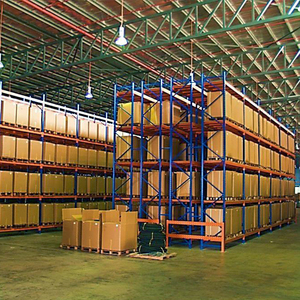
Factory Direct Sale Warehouse Shelves Pallet Steel Taiwan Heavy Duty Storage Industrial Shelving
Designed for rigorous distribution centers, featuring continuous roll-formed columns and heavy bracing profiles to handle heavy fork impacts.
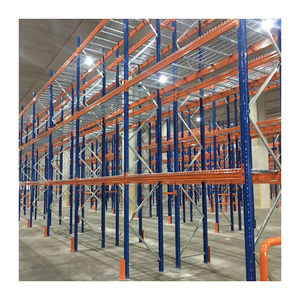
Heavy Duty Industrial Storage Warehouse Rack Selective Pallet Racking Shelves
The gold standard for multi-SKU facilities: provides 100% immediate individual pallet accessibility, seamless reach-truck turning radii, and adjustable levels.
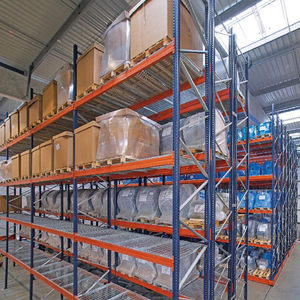
2000KG - 3000KG High Capacity Heavy Duty Industrial Pallet Racking System
Reinforced box beams and thickened footplates designed explicitly for chemical drums, heavy dies, industrial machinery components, and dense raw materials.
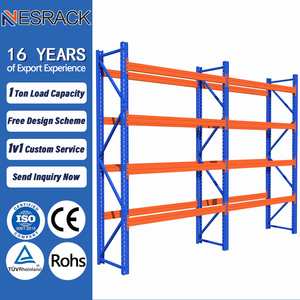
Heavy Duty Warehouse Shelving Industrial Steel Storage Rack With 5 Layers Racks
Engineered for high cubic volume utilization. Supports wire deck reinforcement, drop-in cross ties, and integrated side-cladding accessories.
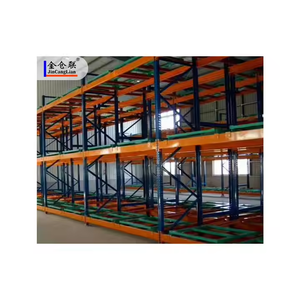
90 Inches Tall Heavy Duty Steel Garage Shelves 5-Layer Corrosion Protection
Electrostatic thermoset powder-coat finish over pickled steel. Ideal for maintenance bays, retail hardware backrooms, and utility facilities.
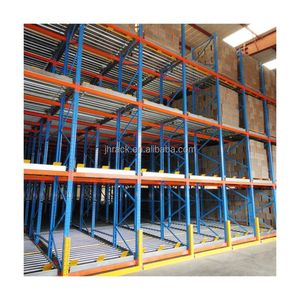
Jinhui Brand Wholesale Galvanized FIFO Pallet Flow Heavy Duty Gravity Racks
Inclined roller-tracks equipped with centrifugal brake cylinders and separation dampers to enforce automatic inventory cycling in food and cold chain logistics.
Technical Dissection: Cold-Formed Steel Dynamics & Seismic Safety
A deep dive into cross-sectional moment calculations, boltless connector rigidity, and material integrity compliant with RMI (Rack Manufacturers Institute) and EN 15512 specifications.
High-Yield Steel & Cold Roll-Forming Integrity
Our wide pallet racking upright profiles utilize structural steel grade Q235B to Q355B with continuous roll-forming. This cold-work process introduces progressive strain hardening, noticeably increasing yield points at critical punch intersections without sacrificing ductility during seismic shear loading.
Rotational Beam-to-Column Connection Rigidity
Pallet racking stability relies on the rotational stiffness (kb) of the beam end connectors. We utilize multi-prong drop-forged connector plates with auto-locking safety pins, producing a semi-rigid joint that absorbs lateral displacement forces while neutralizing beam rollover under 3,000kg concentrated loads.
Tri-Stage Surface Pretreatment & Anti-Corrosion
Prior to automated electrostatic coating, all profiles undergo chemical immersion: acid pickling to eliminate mill scale, followed by iron-phosphate passivation and deionized water rinsing. The thermosetting polyester epoxy is baked at 180°C, delivering 500+ hours of ASTM B117 salt spray endurance.
Comparative System Architecture & Selection Criteria
| Racking Configuration | Direct Accessibility | Space Utilization | Typical Density (Pallets/m²) | Floor Turn Strategy | Typical Payload Capability |
|---|---|---|---|---|---|
| Selective Standard Racking | 100% (Instant) | ~40% Footprint | 1.2 - 1.5 Pallets | FIFO / LIFO (Universal) | 1,000 - 4,500 kg / beam level |
| Double-Deep System | 50% (Reach Pantograph) | ~60% Footprint | 1.8 - 2.2 Pallets | LIFO Preference | 1,000 - 2,500 kg / beam level |
| Drive-In / Drive-Thru | 20% - 30% | ~75% Footprint | 2.5 - 3.2 Pallets | LIFO (Drive-In) / FIFO | 1,000 - 1,500 kg / pallet space |
| Radio Shuttle Automation | Semi-Automated (Lane-End) | ~85% Footprint | 3.5 - 4.2 Pallets | Continuous FIFO/LIFO | 500 - 2,000 kg / lane runner |
| Gravity Flow System | Pick Face Dedicated | ~80% Footprint | 3.0 - 3.8 Pallets | Enforced Dynamic FIFO | 500 - 1,500 kg / gravity tray |
Future Procurement Trends in Industrial Warehouse Racking
As regional logistics dynamics evolve, procurement executives are moving away from baseline component price towards holistic Lifecycle Cost Optimization (LCO) and dynamic automated adaptability.
1. Transition from Static to Automation-Ready Modules
Global warehousing is progressively adopting autonomous mobile robots (AMRs) and automated storage and retrieval systems (AS/RS). Modern wide pallet racking procurement increasingly specifies tight deflection tolerances (≤ L/200 or L/300) and optical sensor clearances, permitting static aisles to be retrofitted with autonomous shuttle channels without rebuilding vertical structures.
2. Cold Chain Footprint Maximization
Refrigerated warehouse space costs 3.5x to 5x more to build and operate than ambient storage. Procurement shifts show an accelerating drift away from standard selective layouts toward deep-lane high-density Radio Shuttle and Push-Back configurations. These systems slash chilled air refrigeration waste while maintaining high structural resilience against cold-induced metal brittleness.
3. Comprehensive Structural Audit Trails
Insurance compliance and regional safety codes in the USA, Canada, and Europe demand third-party verified mechanical properties. Warehouse operators are enforcing transparent documentation: chemical composition heat numbers, mill-test certifications, non-destructive weld testing, and FEA finite-element seismic validation prior to container loading at China ports.
The HEDA Shelves Strategic Manufacturing Advantage
Established in 2001 in Guangzhou, China, HEDA Shelves delivers over two decades of technical expertise in heavy-duty racking, automated mezzanine networks, and industrial warehouse hardware.
Massive Scalability & Continuous Output
Operating across a dedicated 30,000 m² (323,000 sq ft) production base with 300+ seasoned engineers, roll-line technicians, and certified welders, we achieve a consistent 30,000-metric-ton monthly output. This throughput ensures rapid turnaround for enterprise fulfillment centers and multi-container project rollouts.
Turnkey Engineering & Global Compliance
We provide complete end-to-end management: initial site survey layout, structural steel deflection calculations, imperial and metric documentation, container packing plans, and step-by-step 3D installation blueprints designed for local engineering sign-off.
Rigorous Factory Quality Control
Certified to ISO 9001:2015, CE Marking (No. 2435-CPR-8605159), and RoHS directives. Every steel coil batch undergoes tensile proof tests, weld micro-structure inspections, and cross-hatch coating adhesion checks before container packaging.
Frequently Asked Questions for Project Engineers & Buyers
Key information covering international compliance, freight logistics, localized engineering permits, and technical options.