Standard & Engineered Industrial Storage Inventory
Explore our factory-engineered product lineup. Every beam, upright column, cross-bracing strut, and deck platform is fabricated from prime cold-rolled steel coils, passing rigorous tensile yielding and ultrasonic weld inspections.
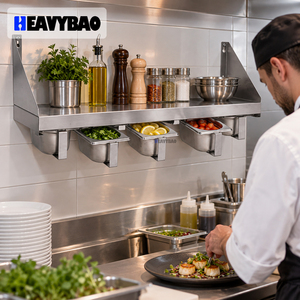
Heavybao Sanitation Restaurant Kitchen Stainless Steel Wall Mount Spice Rack Spice Shelf for 1/6 GN Pan
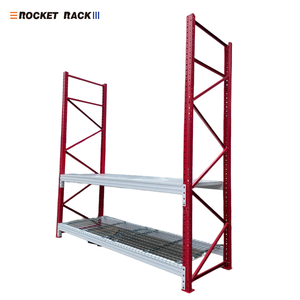
Heavy Duty Cold Rolled Steel Pallet Rack Storage System for E Commerce Warehouse Picking and Forklift Operation
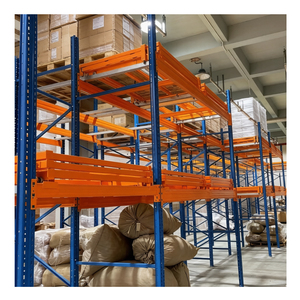
DJ China Heavy Duty Steel Push-Back Pallet Rack With Powder Coating Corrosion Protection Customizable Length
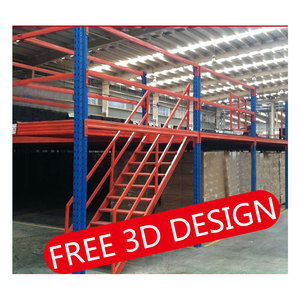
Warehouse Heavy Duty Loft Platform Storage Attic Rack Pallet Racking Mezzanine Floor Rack for Warehouse Storage Racks System
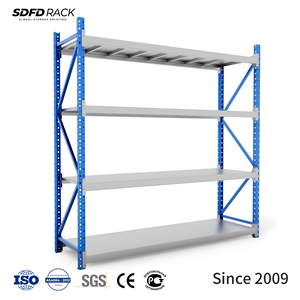
Custom 200kg 300kg 500kg Adjustable Pallet Racks Steel Heavy Duty Shelf Long Span Warehouse Shelving For E-commerce Storage
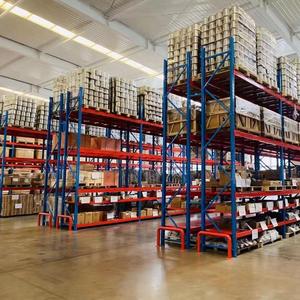
Industrial Racks for Warehouse for 48x40 Pallets Heavy Duty Steel Storage Rack Factory Direct Supply
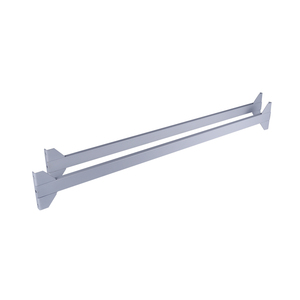
Oem Odm Warehouse Rack Parts 600L Steel Shelf Back Panel Bracing Gondola Shelf Cross Cd Bar Set
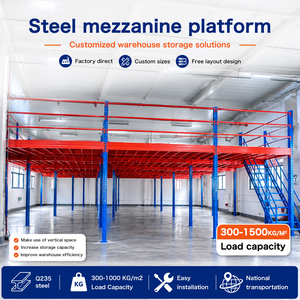
Multi Level Steel Industrial Mezzanine Warehouse Storage Rack Heavy Duty Platform Shelving Customized System
Engineering Integrity: Why Enterprise Supply Chains Procure From HEDA
Operating out of Guangzhou, China since 2001, Guangzhou Heda Shelves Co., Ltd. has established an integrated manufacturing ecosystem capable of fulfilling multi-thousand-ton logistics contracts. From raw coil slit-rolling to automatic continuous punch lines, our structural steel meets the most rigorous seismic and metallurgical requirements of North American, European, and Australian projects.
Turnkey Engineering & PE Calculations
We eliminate operational risk by providing comprehensive CAD warehouse layout drawings, 3D renderings, and finite-element structural calculation packages in imperial units (lbs, in, ft) stamped ready for regional municipal permit reviews.
- Calculations aligned with ANSI MH16.1 & RMI
- Seismic spectral acceleration response (Ss & S1)
- Complete anchor bolt shear & pull-out data
10-Stage Precision Manufacturing
Every cold-formed upright profile and box step beam undergoes computer-controlled roll-forming, high-speed automated punching, robotic laser welding, 4-stage ultrasonic degreasing, zinc phosphating, and electrostatic epoxy curing.
- Strict yield strength compliance (Q235B & Q355B)
- Uniform 60–80 µm electro-powder coating thickness
- ISO 9001:2015 certified production tracking
Container Consolidation & Ocean Protection
We solve the hidden logistics costs of industrial freight. Components are stacked with specialized non-slip dunnage, steel strap banding, moisture-barrier wrapping, and corner protectors to ensure zero transit damage across transpacific corridors.
- Optimized cube stuffing for 40ft HQ dry shipping
- Direct container handling to US & Canadian ports
- Comprehensive color-coded bundle labeling
OEM/ODM Support for System Integrators
For warehouse distributors, material handling dealers, and automated system integrators (AS/RS providers), we provide white-label manufacturing, custom hole-pitch stamping (teardrop, hex, diamond), and bespoke structural packaging.
- Proprietary tooling for custom beam profiles
- Flexible batch runs with guaranteed lead times
- Protected dealer regional territories
Engineering Guide: Matching Racking Topologies to Operational Velocity
Selecting the optimal warehouse racking design requires balancing floor footprint capital costs with SKU selectivity, crane/truck picking cycles, and building clear heights. Consult our comparative engineering table below.
| Storage System Type | Typical SKU Density | Inventory Accessibility | Stock Rotation | Forklift Compatibility | Floor Footprint Utilization | Ideal Industry Application |
|---|---|---|---|---|---|---|
| Selective Pallet Racking | Baseline (100% Floor Span) | 100% Direct Immediate Access | FIFO or LIFO | Standard Counterbalance, Reach Truck | 40% - 50% Active Floor | 3PL, FMCG, Retail DCs, High-SKU Assortments |
| Double-Deep Racking | +30% vs Selective | 50% Direct Access (Filo Rear) | LIFO | Deep-Reach Pantograph Forklifts | 55% - 65% Active Floor | General Manufacturing, Cold Chain Buffers |
| Push-Back Pallet Rack | +50% to +75% vs Selective | Lane-Face Pick Access (2–6 Deep) | LIFO | Standard Counterbalance Forklift | 65% - 75% High Density | Food & Beverage, Dry Storage, Building Materials |
| Drive-In / Drive-Through | +60% to +85% vs Selective | Lane Entrance Only (Mass Bulk) | LIFO (Drive-In) / FIFO (Drive-Thru) | Narrow Mast Drive-In Specialized Forklifts | 70% - 80% High Density | Cold Storage Freezers, Raw Materials, Seasonal SKUs |
| Radio Shuttle Automation | +80% to +100% vs Selective | Deep Lane via Remote Pallet Shuttle | FIFO & LIFO Flexible | Standard Forklift (Loads lane shuttle) | 85% - 90% Ultra Dense | High-Volume Freezer DCs, Beverage, Automated Hubs |
| Multi-Tier Mezzanine | 200% to 400% Cubic Volume | 100% Pedestrian Access / Chute Pick | Manual Batch / Flow | Pallet Jacks, Hand Trucks, VRC Cargo Lifts | Multiplies Total Square Footage | E-Commerce Fulfillment, Fashion, Auto Spare Parts |
Engineering Note on Deflection Limits: In accordance with RMI (Rack Manufacturers Institute) and European standard EN 15512, horizontal beam members manufactured by HEDA are calculated against a maximum allowable vertical deflection of L/180 (span length divided by 180) under uniformly distributed static load, ensuring zero plastic deformation and permanent structural elasticity.
Macro Trends Transforming Warehouse Racking Procurement (2025–2030)
Industrial warehousing is undergoing an aggressive technological shift. Global procurement directors, third-party logistics (3PL) operators, and general contractors must navigate real estate hyper-inflation, labor scarcity, and stringent building life-safety codes.
1. Nearshoring & Seismic Design Hardening
With the rapid proliferation of regional distribution nodes in the US sunbelt, Mexico, and Canadian logistics corridors, pallet racking procurement now demands rigorous site-specific seismic engineering. Racks are no longer commoditized steel; they are mission-critical civil structural platforms.
Modern procurement specifications mandate non-linear dynamic seismic time-history analysis, enlarged ductile baseplates, and high-tensile anchor bolt patterns capable of absorbing seismic shear forces up to 0.4g ground acceleration without collapse.
2. Transition to Automation-Ready Infrastructure
The divide between pure manual storage and high-throughput automation has vanished. Warehouses are retrofitting static selective racks into hybrid frameworks capable of integrating Autonomous Mobile Robots (AMRs), Automated Guided Vehicles (AGVs), and 4-way Radio Shuttle carriers.
Future-proof procurement strategies prioritize upright column profiles punched with exact millimetric tolerances to ensure seamless optical and LiDAR positioning for autonomous navigation, along with reinforced bottom runner channels to handle concentrated battery shuttle wheel wear.
3. ESG, Decarbonized Steel & Coating Life Cycles
Scope 3 carbon reporting is becoming mandatory for Fortune 500 supply chains. Buyers are demanding environmental product declarations (EPDs) demonstrating scrap-recycled Electric Arc Furnace (EAF) steel sourcing and low-VOC powder coat finishes.
Furthermore, in sub-zero refrigerated environments and corrosive chemical facilities, traditional solvent paints are rapidly being displaced by hot-dip galvanization (HDG) and zero-heavy-metal thermo-cured hybrid polyester powders that resist micro-cracking and salt spray corrosion up to 1,000 salt-spray test hours (ASTM B117).
4. Vertical Clear Height Maximization (High-Bay Cube Utilization)
With industrial land prices at record highs, developers are building up rather than out, pushing warehouse clear heights from traditional 28–32 feet up to 45–50 feet. This requires heavy-duty racking frames capable of handling immense accumulated vertical column loads exceeding 45,000 lbs per frame.
Manufacturers are deploying high-yield micro-alloyed steels (such as Q355B and ASTM A1011 Grade 50) cold-rolled with multi-bend stiffening ribs that dramatically increase torsional stiffness without adding excessive deadweight to warehouse concrete floor slabs.
Product Engineering Evolution: The Convergence of Cold-Formed Steel and Digital Twins
The manufacturing of heavy-duty industrial racking has transitioned from simple mechanical shearing and stamping into automated roll-forming lines governed by computerized closed-loop feedback systems. At HEDA Shelves, our roll-forming stations feature up to 26 continuous forming passes, progressively bending heavy-gauge structural coil into Omega (Ω) and proprietary C-channel profiles without inducing localized residual stress or metallurgical micro-fracturing along bend radii.
This level of structural consistency allows warehouse operators to integrate digital twin modeling directly with their Warehouse Management Systems (WMS). Real-time load sensors mounted beneath baseplates can monitor dynamic dead-and-live load shifts, structural rack impact from forklift collisions, and temperature-induced metal contraction in blast freezers, preventing catastrophic cascade collapses before they can manifest.
Frequently Asked Questions by Industrial Warehouse Buyers
Technical, commercial, and freight insights to help procurement directors, general contractors, and logistics engineers streamline international container direct sourcing.
What international engineering codes do HEDA heavy-duty racks comply with?
Our systems are engineered in strict conformance with the Rack Manufacturers Institute (RMI) Specification ANSI MH16.1 (Specification for the Design, Testing and Utilization of Industrial Steel Storage Racks), European Standard EN 15512 (Steel Static Storage Systems), and Australian Standard AS 4084. We provide full finite element analysis (FEA) and structural load calculation packages for third-party professional engineer (PE) review and municipal permit stamping.
How do you guarantee steel grade integrity and welding quality?
We utilize certified high-tensile cold-rolled steel coils (principally Q235B and high-yield Q355B, equivalent to ASTM A36 and ASTM A572 Grade 50). Every raw material delivery is verified with mill test certificates (MTC) detailing chemical composition and yield points. Beam connectors and baseplates are welded using automated continuous robotic CO2 shielded arc welders, followed by periodic ultrasonic non-destructive weld testing (NDT).
Can you manufacture racking compatible with standard 48" x 40" GMA pallets?
Yes. Over 65% of our international exports serve North American 48" x 40" GMA pallet layouts. Standard configurations include 96", 108", or 144" clear beam spans with 42" or 44" frame depths, allowing proper 3-inch overhang per front and back face. Custom euro-pallet (1200 x 800 mm), industrial container, and cylindrical drum configurations are also engineered upon request.
What finish should I select: Powder Coating or Hot-Dip Galvanizing?
For climate-controlled, ambient distribution facilities and general manufacturing, our automated electrostatic epoxy-polyester powder coat (60–80 µm dry film thickness) offers exceptional wear resistance and color coding. For outdoor storage, corrosive chemical environments, or deep freezer blast chillers (-20°F / -30°C), we recommend hot-dip galvanization conforming to ASTM A123, which provides decades of sacrificial zinc anodic protection against oxidation.
What is the typical production lead time and shipping consolidation model?
Standard production runs for full container loads (FCL 20GP/40HQ) range from 15 to 25 business days from final CAD drawing sign-off. We manage container stuffing at our factory yard, maximizing cube volume while utilizing customized wood blocking, PET steel-core banding, and moisture-absorbing silica canisters to prevent container rain and transit deformation during trans-oceanic passage.
How are installation instructions and seismic anchors handled on-site?
Every order is dispatched with a localized installation manual, assembly sequence diagrams, numbered upright frame profiles, and 3D exploded views. Concrete expansion wedge anchors or heavy-duty screw anchors (Hilti / Simpson Strong-Tie compatible specifications) can either be bundled with shipment or sourced locally according to your general contractor's floor slab thickness and compressive psi rating.
Accelerate Your Storage Capacity: Request a 24-Hour Layout & Quote
Send us your architectural CAD drawings, clear warehouse ceiling height, pallet dimensions, and forklift lift profile. Our structural racking engineering team will deliver a calibrated 2D layout, 3D visualization, and factory-direct pricing matrix within 24 hours.