Featured Heavy-Duty & Commercial Racking Portfolio
Direct from our 323,000 sq ft intelligent production campus: standardized and custom-engineered warehouse solutions meeting global logistics, seismic, and weight capacity standards.
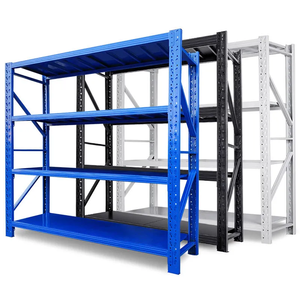
Easily Assemble Heavy Duty Steel/Iron Garage Storage Racks 4 Layers Long Span Warehouse Shelving Rack Set with 10 Year Warranty
Longspan multi-layer structural system designed for versatile footprint utilization, high static loads, and boltless tool-free bay configurability.
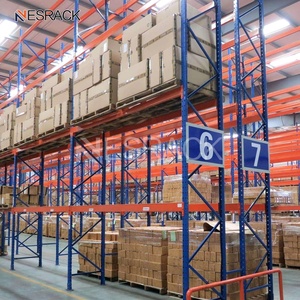
Industrial Steel Storage Racks 5-Layer Pallet Racking with Storage Racks & Shelving Units for Warehouse Shelving
Certified cold-rolled structural uprights and welded box beams configured specifically for standard 48×40 GMA and Euro-pallet load profiles.
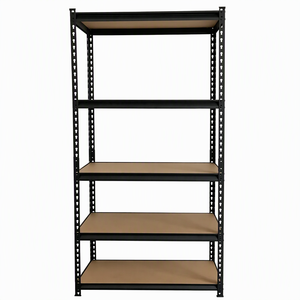
5 Layer 150kg Capacity Per Shelf Adjustable Powder Coated Steel ODM Boltless Rivet Medium Duty Rack Supermarket Storage Shelving
Corrosion-resistant epoxy electrostatic powder-coated shelving for distribution fulfillment, retail stockrooms, and medium-weight bin picking.
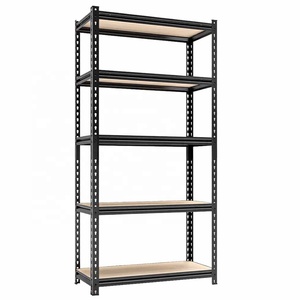
60" H X28 W X12 D 5-Shelf Rack Industrial Steel Adjustable Heavy-Duty Tall Shelving Units Black Boltless Racking Warehouse Use
Compact architectural footprint engineered with high rigidity-to-weight ratios, adjustable interlocking levels, and industrial finish durability.
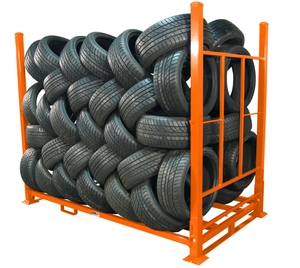
Steel Stacking Rack Heavy Duty Shelving Racks Warehouse Stackable Racking
Modular post-and-cradle stacking frame assemblies allowing flexible dynamic floor configurations without permanent anchoring constraints.
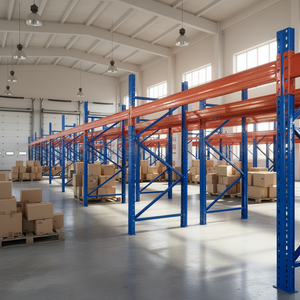
Warehouse Heavy Rack Pallet Rack Store Shelf Warehouse Racking System For Racking Rack Shelf Factory Shelf
Continuous upright-frame profiles optimized for selective single-pallet or multi-tier reach-truck logistics applications across wide distribution centers.
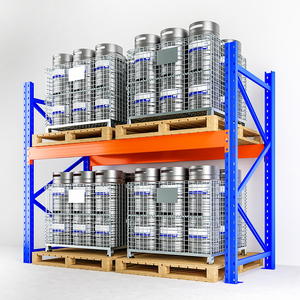
Industrial Steel Heavy Duty Pallet Storage Shelves Systems Stacking Rack Units with 5000KG Load-Bearing CE Certified
Certified high-capacity frame engineering for heavy raw material, die/mold staging, and container loads up to 5,000 kg per storage tier.
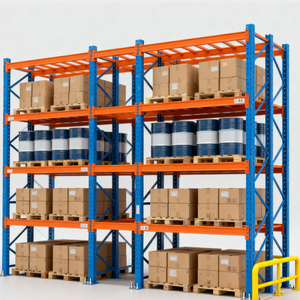
Factory-Direct Wholesale Rates Seismic-Resistant Pallet Rack Shelving Rack
Reinforced base plating, cross-bracing profiles, and ductile beam-to-column connections designed for compliant installation in high seismic risk zones.
Why International Logistics Leaders Source from Us
Global supply chain efficiency demands structural reliability, strict raw material traceability, and tailored engineering design support. Here is how our factory-direct model drives risk out of your cross-border procurement.
Certified High-Tensile Steel Profiles
Every frame and beam is manufactured using certified high-yield Q235B and Q355B structural steel coil. Raw steel is inspected upon mill arrival to guarantee elastic modulus, yield tensile performance, and impact resistance under thermal stresses.
Free 24-Hour CAD & 3D Calculations
Supply your warehouse architectural drawings, ceiling clearance elevations, and pallet load profiles. Our structural engineering team provides complete AutoCAD layouts, clearance simulations, and 3D FEA stress-distribution calculations within 24 hours.
Automated Precision Forming Lines
Utilizing high-speed CNC punching and multi-station continuous roll-forming lines, we eliminate dimensional discrepancies on column pitch perforations, ensuring exact upright plumbness and effortless beam interlocking during jobsite erection.
Pretreatment & Electrostatic Coating
Prior to powder deposition, structural steel undergoes multi-stage automatic acid pickling, rinsing, and phosphating. This guarantees 100% rust removal and provides maximum adhesion for high-durability polyester resin powder finishes resistant to forklift scrapes.
Engineered Seismic & Code Compliance
Our engineering calculations integrate AS4084, ANSI MH16.1 (RMI), and FEM 10.2.02 design methodologies. Load capacity charts and seismic baseplate configurations are provided in imperial (lbs/ft) and metric units ready for municipal engineer-of-record signoff.
Export-Optimized Container Bundling
We deploy strict container staging and banding procedures using structural dunnage and protective multi-layer film. This prevents transit shifting and maximizes 40HQ container volumetric capacity to lower landed freight expenditure per pallet position.
Future Sourcing & Technological Trends in Industrial Storage
Strategic warehouse operators are pivoting from basic static storage toward modular, high-density, and automated materials handling configurations to mitigate surging industrial real estate and labor costs.
The global intralogistics landscape is experiencing a fundamental structural shift. Industrial land lease rates in North America and Western Europe have risen significantly over the past decade, placing immense pressure on distribution footprint productivity. Warehouses can no longer afford wide, inefficient forklift aisles. Consequently, procurement strategies are pivoting heavily toward three distinct paradigms: vertical cubic expansion, automated robotic integration, and data-backed supply chain resilience.
When selecting a manufacturing partner in China, tier-1 procurement directors increasingly evaluate total landed cost of ownership rather than pure factory-gate component pricing. Steel grade verification, quality of cold-formed beam locking mechanisms, deflection ratios under full static load (L/200), and ISO 9001:2015 quality control systems dictate long-term warehouse safety and operational uptime.
Integration with Semi-Automated Radio Shuttles
Standard drive-in racking is being systematically upgraded with high-density Radio Shuttle systems. By deploying battery-operated shuttles within rails, forklifts avoid entering deep storage bays, reducing racking impact damage by over 80% and drastically shrinking cycle times.
Multi-Tier Mezzanine Picking Floors
Rather than acquiring secondary warehouses, operators are maximizing vertical clear heights up to 40 ft using rack-supported and structural steel mezzanines. These installations convert unused overhead airspace into active manual picking and sorting fulfillment zones.
Cold-Chain Optimization for Food & Pharma
Refrigerated and blast freezer facilities demand specialized low-temperature carbon steels (preventing cold embrittlement) and ultra-dense storage topologies like push-back or gravity-flow systems to conserve cubic refrigeration energy consumption.
| Storage System Type | Space Utilization | Pallet Accessibility | Stock Rotation | Ideal Logistics Application |
|---|---|---|---|---|
| Selective Pallet Racking | 40% – 50% | 100% Immediate Access | FIFO / LIFO | High-SKU distribution, 3PL logistics, retail stock hubs |
| Double Deep Racking | 55% – 65% | 50% Immediate Access | LIFO | Medium SKU volumes with specialized pantograph reach trucks |
| Drive-In / Drive-Through | 70% – 80% | Lane Dependent | LIFO / FIFO | Cold storage, beverage bulk storage, uniform SKU lots |
| Radio Shuttle System | 80% – 90% | High Throughput End-of-Lane | FIFO & LIFO | High-throughput cold chain, manufacturing staging, buffer storage |
| Rack-Supported Mezzanine | 100%+ (Multi-Level) | Direct Manual Access | Dynamic | E-commerce fulfillment, spare parts, high-density order picking |
Frequently Asked Questions on Importing China Storage Racking
Essential answers regarding material certifications, seismic calculations, maritime containerization, and custom design standards for international project stakeholders.
What engineering specifications are required to receive a formal CAD layout and quote?
To deliver an optimized CAD design, please share your building architectural plan (including clear height, column grid locations, and floor flatess), pallet dimensions (width, depth, height including overhang), maximum gross pallet weight, and operating forklift specs (mast collapsed/extended height, minimum right-angle aisle turning radius).
How does your factory ensure compliance with US and European seismic building codes?
We perform finite element structural analyses calculating horizontal base shear, dynamic overturning moments, and beam deflection under seismic drift. Upright baseplates, anchor bolt patterns, and frame bracing are customized according to site-specific seismic zone parameters (Ss, S1) compliant with IBC, RMI MH16.1, and EN 15512 codes.
Can you supply technical drawings and load capacity charts in Imperial units?
Yes. We regularly supply bilingual, dual-dimensioned shop drawings, structural calculation packets, and load plaque decals displaying ratings in pounds (lbs), inches, and feet alongside metric equivalents, streamlining reviews with local engineers of record and permit departments.
How are pallet racking beams and frames packed to avoid transit damage during ocean freight?
All beams and uprights are bundled with heavy-gauge PET straps, steel banding, corrugated edge corner protectors, and moisture-barrier shrink wrap. Structural timber dunnage separates bundles to facilitate direct, safe forklift unloading at the jobsite container dock without surface damage.
What is your typical production lead time and minimum order quantity (MOQ)?
Standard production cycles run 15 to 25 days depending on total project tonnage. Our automated roll-forming and powder-coating lines support both full container load (FCL) orders (20GP, 40GP, 40HQ) and multi-container distribution center buildouts scaling beyond 10,000 pallet positions.
Do you offer OEM/ODM fabrication for foreign storage system distributors and integrators?
Yes. As a primary manufacturer founded in 2001, we provide private-label branding, customized teardrop or slot punch geometries, tailored RAL powder coating finishes, and proprietary beam connector designs for distribution partners across North America, Europe, and Australasia.