Procurement Intelligence
The Definitive B2B Sourcing Guide for Slotted Angle & Industrial Storage Systems
An exhaustive technical examination of Chinese cold-formed slotted steel fabrication, metallurgical grade selection, structural load-to-deflection ratios, anti-corrosion pre-treatments, and international export economics for warehouse engineers and procurement directors.
Enterprise Product Lineup
Standard & Heavy-Duty Structural Storage Racking Systems
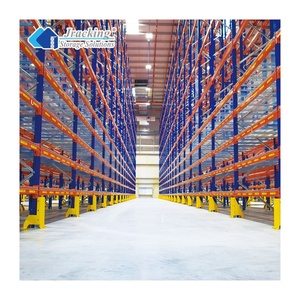
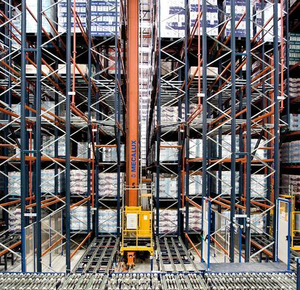
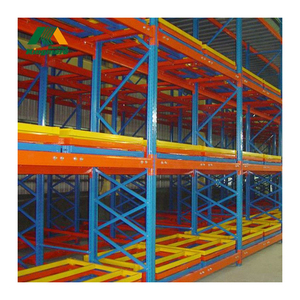
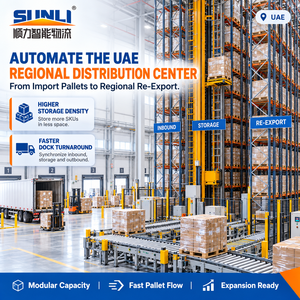
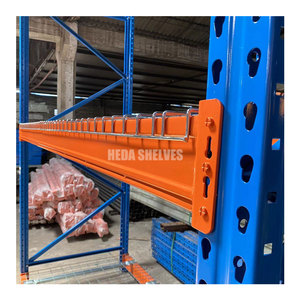
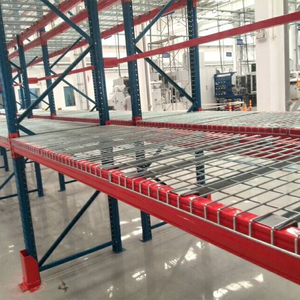
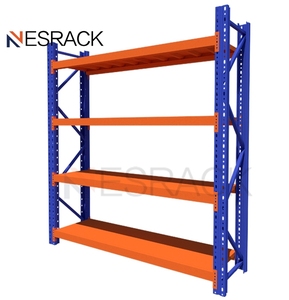
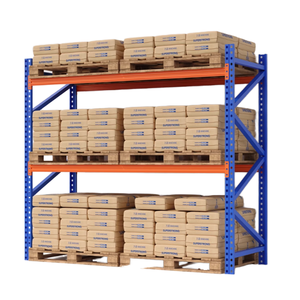
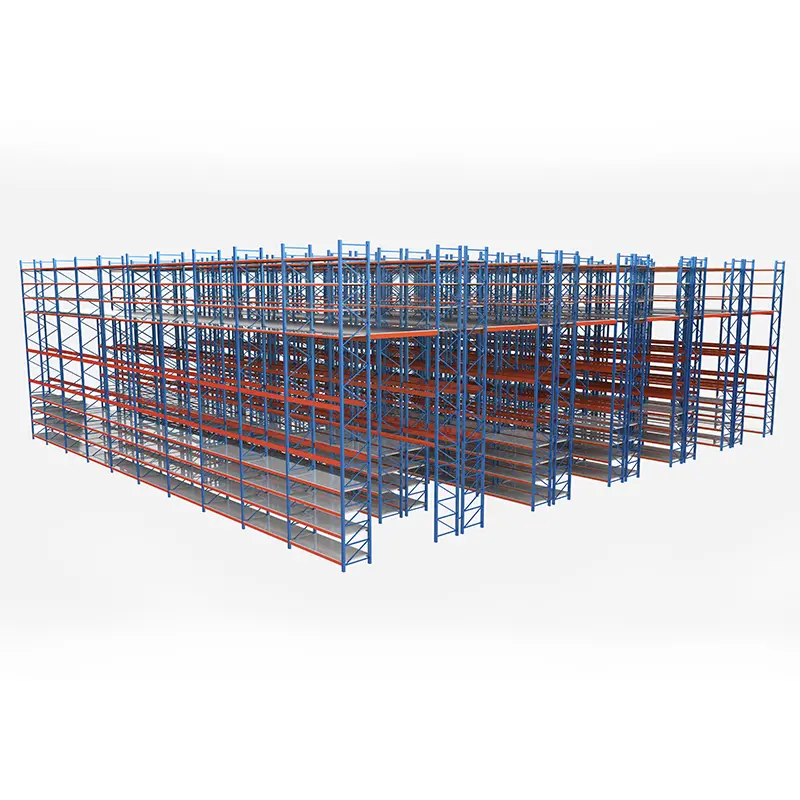
Explore factory-direct industrial shelving, selective racking, and automated configurations fabricated from cold-rolled prime Q235B steel.
2001#
Established Since
Over 25 Years Engineering Expertise
30,000t
Monthly Output
High-Volume Cold-Formed Steel Capacity
323,000sqft
Production Campus
Integrated Roll-Forming & Coating Lines
10,000+
Completed Projects
Shipped Across US, Canada, EU & LatAm
Engineering Fundamentals of Industrial Slotted Angle Systems
Slotted angle racking—often categorized as lightweight to medium-duty multi-configuration industrial framing—represents the mechanical backbone of flexible storage. Unlike heavier structural channel beams, slotted angle uprights depend heavily on cold-worked steel crystallization, precise slot geometry, and cold-bend radiuses to deliver optimal strength-to-weight ratios.
Information Gain Insight: Slotted angle profile load capacity is governed by the Euler Critical Buckling Load formula. Slotted punches reduce section modulus by 12% to 18%; top-tier Chinese manufacturers compensate by engineering stiffening ribs along the 90-degree spine, effectively increasing polar moment of inertia ($I_z$) without inflating steel tare weight.
Metallurgical Raw Material Standards: Q235B vs. SS400 vs. ASTM A36
The operational lifespan and yield threshold of warehouse slotted shelving are determined by hot-rolled steel strip quality prior to cold slitting. Leading Chinese manufacturers, centered around Guangdong and Jiangsu metallurgical hubs, utilize prime structural carbon steel grades:
- Q235B (GB/T 700): Yield strength $f_y \ge 235 \text{ MPa}$, tensile strength $370\text{--}500 \text{ MPa}$. Excellent ductility and weldability; standard specification for export to North America and Europe.
- Q355B / Q345: Higher yield variant ($f_y \ge 355 \text{ MPa}$) used in slotted angle mezzanine uprights and structural long-span frames subject to high vertical moment loads.
- SPCC / DC01: Cold-rolled commercial quality sheets utilized for roll-formed shelf panels requiring zero surface scale and sub-millimeter gauge consistency.
Universal Hole Geometry: Bolted vs. Boltless Rivet Lock
Top China slotted angle rack factories offer two primary mechanical interconnection standards. The classic bolted system utilizes round and slotted oval punches (commonly $13 \times 25 \text{ mm}$ ovals coupled with $8 \text{ mm}$ grade 4.8 or 8.8 galvanized fasteners and triangular corner braces). This creates an exceptionally rigid moment connection resistant to progressive sway. Conversely, modern boltless slotted angle designs employ tapered teardrop or keyhole slots paired with double-rivet shelf supports, cutting onsite installation labor hours by up to 65%.
Engineering Matrix: Profile Gauges, Dimensions & Uniformly Distributed Loads (UDL)
The following technical table provides verified capacity thresholds based on common cold-formed L-angle profiles with typical 50 mm vertical slot pitch. Structural stability assumes four-post shelving modules anchored with double diagonal cross-bracing.
| Profile Size (mm) | Material Thickness | Standard Steel Grade | Maximum Bay Height | Rated Shelf UDL (kg) | Recommended Industrial Applications |
|---|---|---|---|---|---|
| 38 × 38 (Equal) | 1.5 mm – 1.8 mm | Q235B Cold-Formed | 2,000 mm | 100 – 150 kg / level | Archive boxes, retail display, light carton picking |
| 40 × 40 (Equal) | 1.8 mm – 2.0 mm | Q235B / SPCC | 2,500 mm | 150 – 220 kg / level | Automotive spare parts, e-commerce manual sort bins |
| 50 × 38 (Unequal) | 2.0 mm – 2.5 mm | Q235B Structural | 3,000 mm | 250 – 350 kg / level | Hardware distributors, tool storage, workshop setups |
| 60 × 40 (Heavy L) | 2.2 mm – 2.75 mm | Q355B Alloyed | 4,000 mm | 350 – 500 kg / level | Multi-tier shelving catwalks, raw materials staging |
*Deflection criteria calculated at $L/200$ under static Uniformly Distributed Load (UDL) according to FEM 10.2.06 and RMI standards.
Manufacturer Profile & Core Advantages: Guangzhou Heda Shelves Co., Ltd.
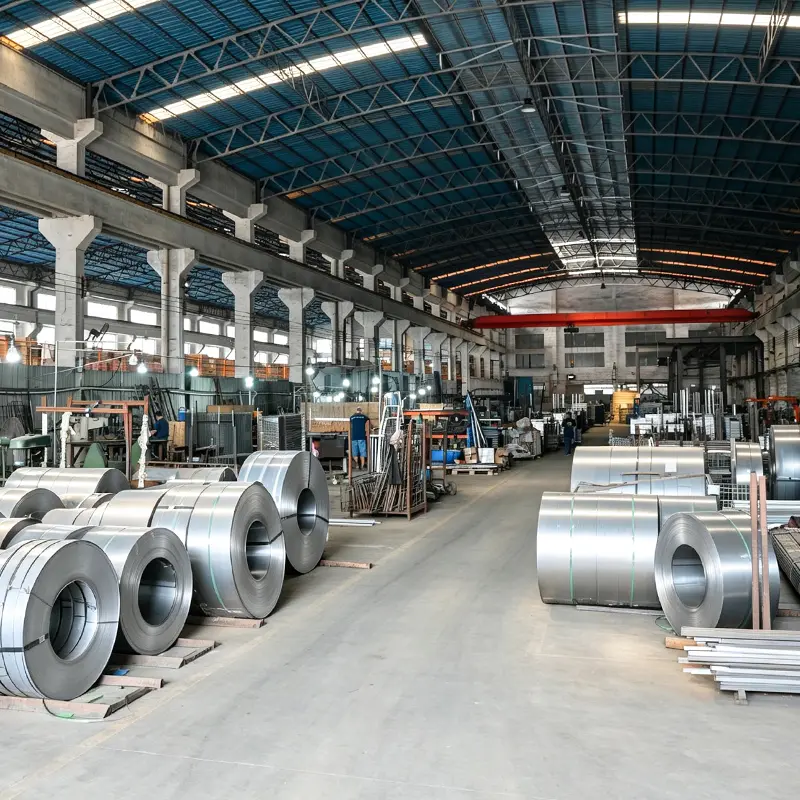
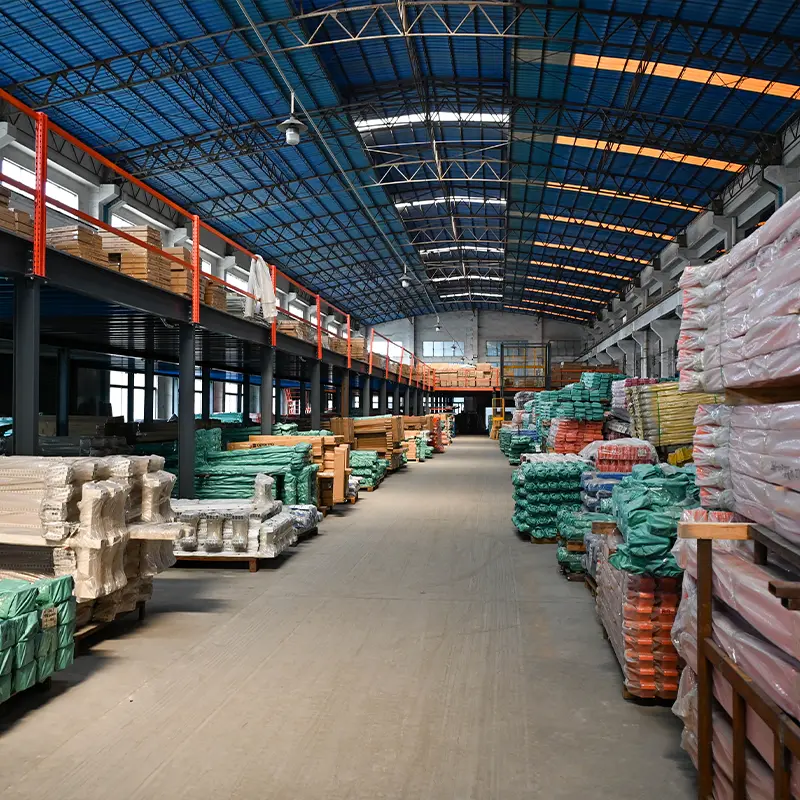
Founded in 2001, Guangzhou Heda Shelves Co., Ltd. has evolved into an elite OEM/ODM powerhouse in the international storage manufacturing arena. With an advanced 30,000 square meter (approx. 323,000 sq ft) production facility and over 300 experienced technical engineers, fabricators, and certified QC auditors, the factory yields in excess of 30,000 metric tons of finished precision steel storage racking per month.
⚒
Continuous Roll-Forming
Multi-station automated rolling lines ensure precise angle geometry and straightness tolerance within ±0.5 mm per 3 meters, preventing structural twist during high-bay assembly.
★
Pre-Treatment Chemistries
Fully automated 7-stage immersion line featuring degreasing, acid pickling, phosphating, and deionized water rinsing to guarantee optimal resin cross-linking.
⚙
Electrostatic Polymer Finish
60–80 micron thermoset polyester powder coating cured at 200°C, offering superior abrasion resistance and passing rigorous 500-hour ASTM B117 salt spray testing.
✅
Independent Third-Party Verification
Strict management systems certified under ISO 9001:2015 (Cert No. 18624Q00169R0M), CE Construction Products Directive (2435-CPR-8605159), and RoHS compliance.
📐
24-Hour Rapid CAD Turnaround
Dedicated design engineers convert your raw architectural floorplans into structural load charts, imperial/metric BOMs, and 3D renderings within 24 business hours.
🚢
Container-Cube Shipping Efficiency
Specialized flat-pack nested banding protocols maximize weight and cubic capacity inside 20GP/40HQ containers, driving down landed ocean logistics costs per unit.
Future Procurement & Technological Trends in Slotted Steel Racking (2025–2030)
As the international logistics landscape grapples with volatile shipping freight rates, strict labor regulations, and accelerating micro-fulfillment warehouse deployment, procurement professionals must factor future-proof developments into their supplier evaluations:
1. High-Yield Micro-Alloy Thin-Gauge Steel
The historical procurement bias of "thicker steel equals better racking" is rapidly being replaced by high-tensile metallurgical engineering. Leading Chinese manufacturers are deploying low-alloy high-strength (HSLA) sheet steels. By utilizing thermo-mechanically controlled processing (TMCP), a 1.6 mm profile can achieve yield strengths previously requiring 2.2 mm standard carbon steels, reducing raw material deadweight by up to 25% and directly shrinking carbon tariffs (such as the EU's Carbon Border Adjustment Mechanism - CBAM).
2. Hybrid Slotted-Automation Integration (Micro-ASRS)
Slotted angle systems are transitioning from purely static manual storage into the structural frameworks for autonomous mobile robots (AMRs) and automated bin-shuttle picking tunnels. Modern slotted angle designs increasingly feature punched indexing slots on the outer flange to seat magnetic track guides, photoelectric sensors, and automated carton conveyor brackets directly to the upright without on-site field drilling.
3. Eco-Friendly Powder Formulations & Pre-Galvanized Shift
Environmental compliances in export target markets are accelerating demand for heavy-metal-free, low-VOC thermoset finishes. Concurrently, continuous hot-dip pre-galvanized slotted angle (zinc coatings ranging from Z120 to Z275) is gaining substantial ground against post-paint dipping for damp cold-storage facilities, eliminating coating chips and hazardous particulate contamination in cleanroom environments.
4. Digital Twin Modeling & Finite Element Analysis (FEA) Verification
Global procurement teams no longer rely on unverified factory catalog ratings. Top-tier Chinese suppliers now submit comprehensive structural FEA simulation reports along with raw Mill Test Certificates (MTCs). This allows your local licensed Professional Engineer (PE) or Engineer of Record (EOR) to verify seismic coefficient tolerances ($S_s, S_1$) and local fire sprinkler flue clearance compliance before components leave the overseas manufacturing facility.
Factory Vetting: How to Qualify a Chinese Slotted Angle Supplier
To avoid supply disruptions, defective slot pitches, and structural failures, institutional buyers must execute structured audits against the following quantitative criteria:
Punch Consistency Tolerances: Request video proof of optical sensor inline measurement. A variation exceeding ±0.3 mm across a 2,000 mm upright will result in misaligned shelf levels and racking twist.
Coating Adhesion Testing: Verify the supplier conducts cross-hatch adhesion tests (ASTM D3359 Method B) and impact resistance checks before container packing to eliminate in-transit flaking.
Base Plate Welding Integrity: Inspect fillet welds joining bottom anchor plates to slotted posts. Full penetration CO2 gas shielded arc welding (GMAW) without undercut is mandatory.
Traceability Protocols: Raw steel heat numbers must directly trace back to state steel mills (Baosteel, Shougang) with signed chemistry and tensile test documentation.
Frequently Asked Questions: Global Procurement of Slotted Angle Racks
Direct technical and logistical clarity for overseas procurement officers, 3PL managers, and commercial distributors.
What is the difference between standard slotted angle and heavy-duty industrial shelving?
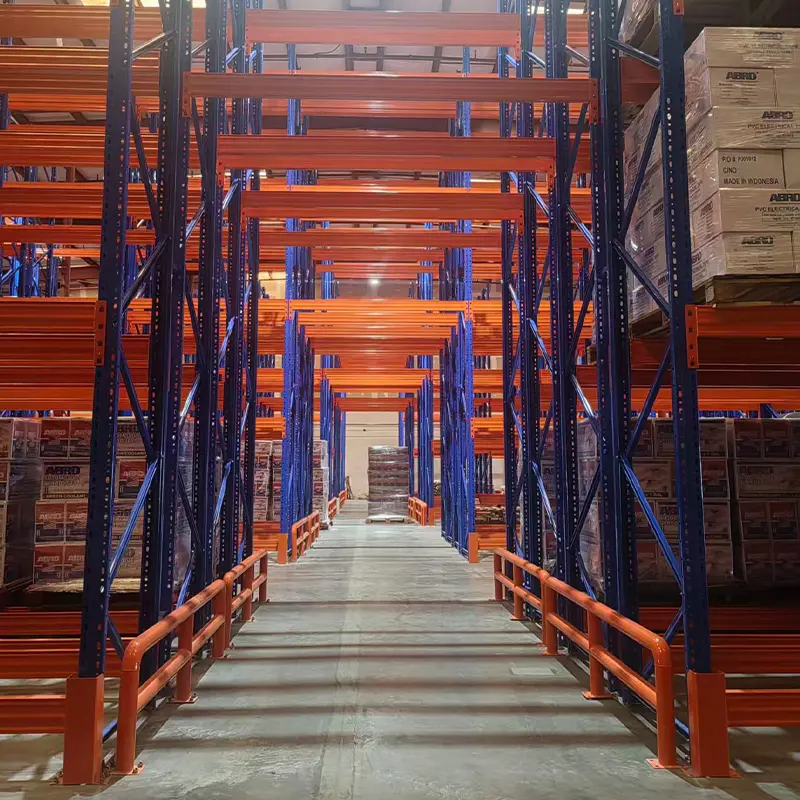
Standard slotted angle racks are formed from light-gauge cold-rolled strips (1.5 mm to 2.0 mm) with equal or unequal L-profiles, optimal for manual picking and loads between 100 kg and 250 kg per tier. Heavy-duty industrial racking (such as selective pallet racking or longspan step-beam systems) uses C-shaped or box-beam profiles with steel gauges up to 3.0 mm or structural hot-rolled sections, engineered to carry 1,000 kg to over 4,000 kg per level via forklift loading.
Can Chinese factories manufacture custom hole spacing and imperial configurations?
Yes. While the 50 mm and 75 mm metric hole pitches represent global standards, advanced manufacturers like HEDA Shelves operate modular tooling dies. We routinely stamp imperial patterns (e.g., standard 2-inch teardrop punching, 1-inch slotted spacing) tailored for North American hardware compatibility, complete with load documentation formulated in pounds (lbs) and feet (ft).
How are slotted angle racks bundled to prevent ocean transit rust and surface abrasion?
High-integrity export packaging utilizes multiple protective layers: individual slotted angle bundles are bound with steel strapping over corner paper protectors, tightly wrapped with moisture-barrier PE shrink film, and interleaved with corrugated foam buffers to prevent metal-on-metal vibration scratches. Heavy-gauge wooden dunnage or custom steel skids are placed underneath to facilitate swift forklift de-vanning at your destination port.
What documentation is provided to support local building code permits and seismic reviews?
For commercial installations subject to municipal building inspections, our engineering office supplies comprehensive shop drawings, anchor bolt pull-out calculations, component specification sheets, and mill test certificates (MTCs). These structural packages are prepared in full alignment with international design codes (RMI in the US, CSA A344 in Canada, FEM in Europe) for seamless review and stamping by your local Engineer of Record.
What is the typical production lead time and container loading volume for a 40HQ?
Standard production runs for full container loads (FCL) of slotted angle racks range between 15 and 20 business days upon drawing approval. A standard 40HQ container can accommodate approximately 22 to 26 metric tons of nested slotted profiles and shelf panels, representing between 800 to 1,500 linear meters of finished multi-tier shelving, depending upon profile size and packaging density.
Are OEM and private labeling services available for industrial equipment distributors?
Yes. We provide complete private-label OEM manufacturing programs for regional shelving dealers and logistics distributors. This includes customized punch geometry, custom RAL color powder matching, silkscreened company logos, barcoded master cartons, and multilingual user assembly manuals tailored to your market specifications.
Ready to Engineer Your Next Storage Installation?
Connect directly with our engineering division for an optimized layout, certified load calculations, and a competitive factory-direct quote within 24 hours.
Send an Inquiry