Engineered Storage Equipment & High-Density Racking Systems
Custom-fabricated to ANSI MH16.1, EN 15512, and AS 4084 international engineering tolerances. Select high-performance products manufactured from high-yield Q235B and Q355B hot-rolled structural coil.
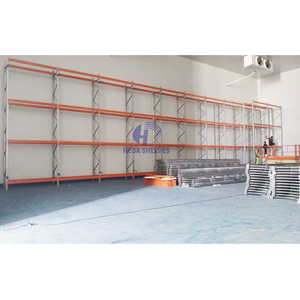
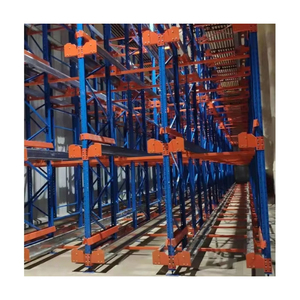
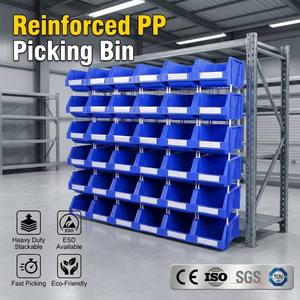
Navigating Global Steel Logistics: Why China Remains the Strategic Epicenter for Material Handling Systems
In modern industrial supply chain architecture, structural storage systems are no longer treated as passive steel frameworks; they represent capital-intensive physical infrastructure that dictates cubic volume utilization, throughput velocity, operational safety, and automation compatibility. As global fulfillment footprints expand across North America, Europe, Southeast Asia, and Latin America, supply chain directors face compounding challenges: escalating industrial real estate lease rates, stringent localized seismic building codes, volatile ocean freight cycles, and the urgent imperative to compress storage costs per pallet position.
As premier Chinese pallet racking manufacturers and global exporters, our manufacturing ecosystem bridges the critical gap between heavy industrial metallurgy and precise structural engineering. Through continuous vertical integration—from high-precision roll forming lines and automated multi-station cold-bending machines to fully automated electrostatic powder coating lines—Chinese manufacturing facilities deliver unmatched economies of scale. We supply cold-formed and structural steel racking engineered from certified Q235B and Q355B coil stock (equivalent to ASTM A36 and ASTM A572 Grade 50), ensuring superior yield strength, exceptional weld ductility, and prolonged structural lifecycle under extreme dynamic forklift impacts.
| Storage Architecture | Pallet Selectivity | Floor Space Utilization | Stock Rotation Logic | Forklift Compatibility | Ideal Industrial Applications |
|---|---|---|---|---|---|
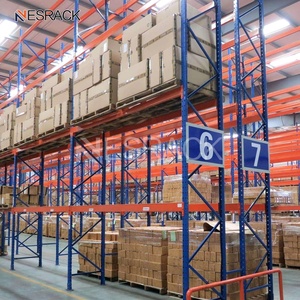
| Selective Pallet Racking | 100% Direct Access | Baseline (35% - 40%) | FIFO / LIFO Dynamic | Counterbalance, Reach Trucks | High-SKU distribution, FMCG, 3PL logistics hubs |
| Double Deep Systems | 50% Direct Access | High (+30% vs. Selective) | LIFO Controlled | Deep-Reach Pantograph Trucks | Manufacturing reserves, cold chain buffer zones |
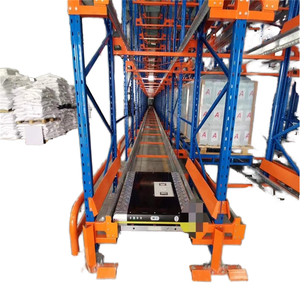
| Automated Radio Shuttle | Lane Selective | Maximum (Up to 85%) | Configurable FIFO / LIFO | Standard Trucks (Load Face Only) | Cold storage freezers, beverage bottling, bulk food |
| Multi-Tier Mezzanine | 100% Tier Access | Vertical Multiplication (+200%) | Manual Batch Picking | Conveyors, Vertical Reciprocating Lifts | E-commerce fulfillment, spare parts, apparel sorting |
| Drive-In / Drive-Thru | Last Pallet Only | Very High (Up to 75%) | Strict LIFO (FIFO Drive-Thru) | Narrow-Chassis Counterbalance | Homogeneous bulk goods, seasonal raw materials |
By standardizing component dimensions to match both imperial North American specifications (48"x40" GMA pallets, tear-drop punch configurations, 3"x3" columns) and European metric standards (1200x800mm Euro pallets, 50mm/75mm pitch connectors), we eliminate integration friction for overseas system integrators, automated logistics providers, and distribution center facility managers.
Future Sourcing & Procurement Trends in Warehouse Storage Equipment
Procurement directors are fundamentally rethinking their capital expenditure strategies. The convergence of nearshoring logistics, robotic picking fleets, and stringent carbon metrics demands forward-looking engineering specifications.
High-Density Automation-Ready Modular Structures
Global operations are pivoting rapidly away from single-selective manual layouts toward automation-ready racking skeletons. Modern procurement requires frame uprights and support beams pre-machined to accommodate autonomous mobile robot (AMR) under-chassis navigation tracks, optical sensor reflectors, and 4-way automated radio shuttle busways without field cutting or field welding.
Rigorous Structural Traceability & Seismic Deflection
Stringent compliance with regional building standards—such as the International Building Code (IBC 2024), FEMA 460 guidelines, and Eurocode 3—is now baseline criteria. Sourcing teams prioritize tier-1 Chinese manufacturers capable of providing certified structural calculations, stamped finite element analysis (FEA), and continuous material test reports (MTR) matching coil heat numbers.
Cubic Efficiency Optimization in Landed Ocean Freight
Freight rate volatility necessitates revolutionary container packaging engineering. Leading exporters no longer package structural components loose; upright frames are engineered as knocked-down (KD) bolted assemblies packed in precision-nested steel cassettes. This achieves container cubic volume utilization rates exceeding 95%, slumping the landed freight cost per pallet location by up to 28%.
Technological Evolution: From Static Frameworks to Intelligent Cyber-Physical Racking
The global material handling industry is undergoing unprecedented technological convergence. The historical paradigm of warehouse storage viewed pallet racking strictly as a civil structural element. Today, pallet racking acts as the physical backbone for advanced intra-logistics cyber-physical systems. Four decisive technological shifts are currently reshaping warehouse racking manufacturing and deployment globally:
1. Four-Way Radio Shuttle Matrix Ecosystems: Two-way radio shuttles are rapidly yielding ground to sophisticated four-way shuttle robots. These carriers traverse longitudinal storage tunnels and lateral transfer channels without forklift intervention. This architecture requires millimeter-precise beam punch accuracy (within ±0.5mm over a 12-meter profile) and ultra-flat cold-formed steel guide rails, demanding high-end roll-forming lines equipped with multi-axis servo positioning.
2. Structural Clad-Rack High-Bay Warehousing (Rack-Supported Buildings): In land-constrained logistics hubs, warehouse operators are abandoning traditional concrete tilt-up or structural steel frame buildings. Instead, clad-rack warehouses use the racking uprights themselves to bear the vertical roof weight and lateral wind/seismic wall loads. Our Guangzhou production facility engineers high-gauge structural columns capable of clear heights exceeding 40 meters, integrating automated stacker cranes (AS/RS) directly into the structural columns.
3. Advanced Surface Treatments for Cold-Chain & Aggressive Environments: Cold-chain logistics for pharmaceuticals, seafood, and frozen meats accelerate thermal cycling condensation, inducing rapid corrosion on sub-standard steel coatings. Modern manufacturing applies non-porous thermosetting epoxy-polyester powder formulations preceded by a 9-stage zirconium or zinc-phosphating conversion wash. In sub-zero environments down to -30°C, this specialized chemical barrier prevents micro-cracking and delamination under repetitive thermal contraction.
4. Digital Twin Simulation & Real-Time Load Strain Sensors: The advent of Industry 4.0 has introduced strain gauge sensor pods and LiDAR deflection monitoring embedded directly inside rack beam-to-column connectors. By feeding live deflection data into warehouse management system (WMS) digital twins, facility directors detect localized structural overload, forklift impact deformation, and joint displacement well before catastrophic failure occurs.
Why Global Logistics Leaders Partner with HEDA Shelves
With an established manufacturing heritage since 2001, Guangzhou Heda Shelves Co., Ltd. serves as the premier engineering benchmark for industrial racking, heavy-duty shelving, and warehouse mezzanine systems across the United States, Canada, Europe, and Latin America.
Precision CAD/3D Layouts in 24h
Our dedicated team of 30+ structural engineers translates your architectural DWG building plans into optimized pallet capacity designs, forklift aisle turning calculations, and structural elevations in under 24 hours.
ISO 9001 & CE Certified Quality
Manufactured under strict ISO 9001:2015 Quality Management System controls (Cert No. 18624Q00169R0M) and Construction Products Regulation CE Marking (No. 2435-CPR-8605159), meeting EN 1090 structural execution norms.
Imperial & Metric Bilingual Drawings
All calculation schedules, column load tables, and beam capacity plaques can be engineered in imperial units (lbs, ft, in) for North American engineers of record (EOR) or metric dimensions for international markets.
End-to-End Export Execution
Direct ocean container staging to major global sea ports including Los Angeles, Houston, Savannah, New York, Vancouver, Rotterdam, and Sydney, backed by comprehensive container packing lists and bolt schedules.
Inside Our Controlled 10-Step Industrial Production Sequence
Quality assurance in steel rack manufacturing is determined long before components arrive at the job site. At our Guangzhou production campus, every upright frame, box beam, base plate, and wire mesh decking panel undergoes an audited, computerized fabrication workflow designed to eliminate dimensional variance:
Step 01: Raw Steel Coil Inbound Testing: Chemical spectrographic analysis and mechanical tensile testing of inbound Baosteel/Shougang hot-rolled strip coil to verify Q235B/Q355B yield points.
Step 02: High-Speed Slitting: Computerized decoiling and precision edge trimming to exact development widths with tight tolerance controls.
Step 03: Automated Progressive Punching: Multi-station CNC punch presses create tear-drop, diamond, or modular hexagonal upright hole pitches with sub-millimeter pitch repeatability.
Step 04 & 05: Continuous Cold Roll-Forming: 22-pass to 26-pass roll-forming mills progressively shape omega-upright sections and double-C interlocking box beams without inducing material micro-fractures.
Step 06 & 07: Robotic Beam Connector Welding: Dual-arm Panasonic robotic welders fuse high-strength forged 3-claw or 4-claw connector ears to box beams under 80% Argon / 20% CO2 shielding gas.
Step 08 & 09: 9-Stage Chemical Pretreatment & Electrostatic Powder Coating: Automated immersion degreasing, acid pickling, phosphating, and deionized water rinsing followed by electrostatic Swiss Gema powder application and 200°C baking.
Step 10: Final Batch Metrology & Unitized Export Packing: 100% check of beam weld throats, coating mil thickness (60-80 μm target), bundled with moisture-proof wrapping and custom structural lifting skids.
Frequently Asked Questions for Global Racking Buyers
Technical, logistical, and compliance insights compiled by our senior structural engineering team to de-risk overseas pallet racking procurement.
Q: How do your structural calculations satisfy localized North American building permits and seismic reviews?
We supply complete engineering calculation packages, including 3D structural model diagrams, material yield certifications, connection rotational stiffness coefficients, and second-order P-Delta structural stability analyses. These calculations adhere to ANSI MH16.1 specifications, providing all technical inputs your local Engineer of Record (EOR) requires to apply their professional engineering (PE) stamp for municipal permitting.
Q: What are the standard lead times from final CAD drawing approval to ocean vessel loading?
For standard selective pallet racking and shelving projects (1 to 5 forty-foot high cube containers), manufacturing lead times average 15 to 20 business days. Complex engineered systems such as multi-tier rack-supported mezzanines, automated radio shuttle racks, or cantilever systems typically ship within 25 to 30 days following approved production shop drawings.
Q: Can beams and uprights be fabricated to match existing teardrop racking profiles in our facility?
Yes. We manufacture industry-standard teardrop punch patterns that are fully interchangeable with predominant North American teardrop systems. We can match beam connector profiles, safety lock configurations, and column dimensions, allowing you to seamlessly expand existing facilities without replacing installed racking assets.
Q: How do you prevent freight damage and rust during long ocean voyages across high-humidity routes?
Every structural bundle is protected by heavy-gauge plastic strapping, edge corner guards, and sealed stretch-film wrapping. Beam connectors and small hardware are crated in reinforced wooden boxes with vapor-phase corrosion inhibitor (VCI) desiccant bags. Upright frames are systematically nested on custom structural dunnage to prevent point-load deformation during sea transit.
Q: What is the difference between Q235B and Q355B steel, and which should our project specify?
Q235B steel offers a minimum yield strength of 235 MPa (comparable to ASTM A36) and is the cost-effective standard for medium-duty beams, shelving, and lower upright levels. Q355B possesses a yield strength of 355 MPa (comparable to ASTM A572 Grade 50), which is specified for heavily loaded bottom column sections, deep-lane shuttle tracks, and high-seismic geographic zones to maintain safety margins without excessive steel dead-weight.
Q: What customs documentation and tariff classifications (HS Codes) are standard for export?
We supply complete commercial invoices, packing lists with individual piece counts and gross/net weights, ocean bills of lading, Mill Test Certificates (MTC), Certificates of Origin (CO), and fumigation certificates for solid wood packaging. Structural pallet racking is commonly exported under HS Code 7308.90 (Structures and parts of structures of iron or steel).
Accelerate Your Warehouse Capacity with Factory-Direct Engineering
Send us your warehouse CAD floor plan, ceiling clear height, pallet dimensions, and operational throughput targets. Our engineering team will deliver an itemized bill of materials, 3D spatial layout, and factory-direct quote within 24 hours.
Get a Quote