Factory-Direct Racking Systems & Heavy-Duty Product Inventory
Custom-fabricated from high-tensile Q235B and Q355B structural coil steel, precision-punched with CNC roll-forming lines, and finished with electrostatic polyester powder coating for extreme industrial environments.
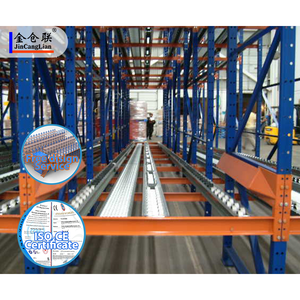 FIFO Flow
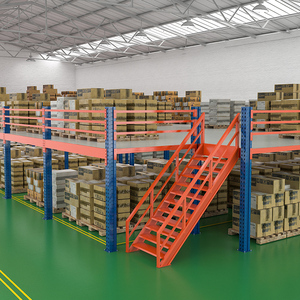 Heavy Duty
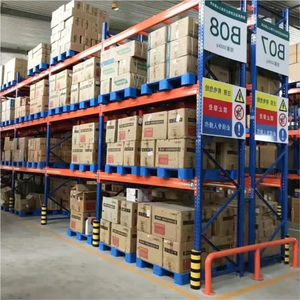 Epoxy Coated
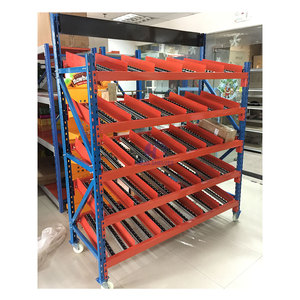 Lineside Flow
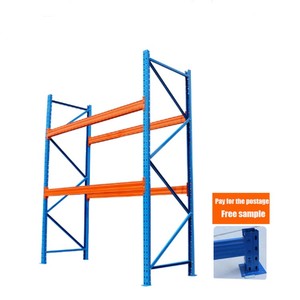 Selective
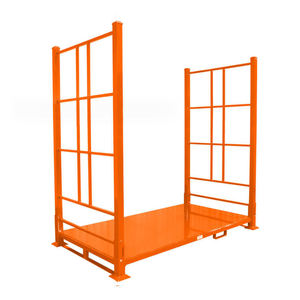 Modular Stack
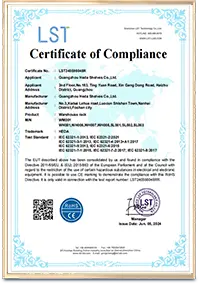
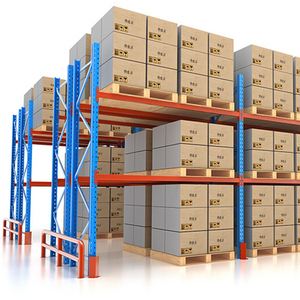 CE Certified
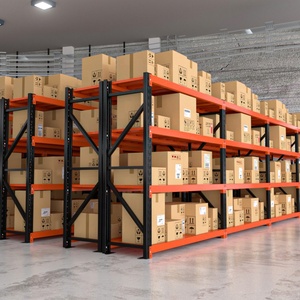 Adjustable
High-Grade Cold-Rolled Steels
Direct supply from tier-one steel mills using verified prime Q235B and Q355B coil stock. Tensile strength and elongation verified by batch metallography to prevent catastrophic structural yield under dynamic forklift impact.
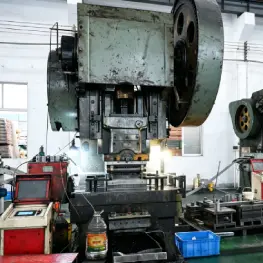
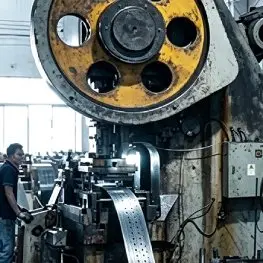
Continuous CNC Roll Forming
18-to-24 station roll forming lines deliver sub-millimeter cross-sectional tolerance on complex omega upright profiles. Continuous computer-controlled punching ensures precise hook engagement without mechanical play.
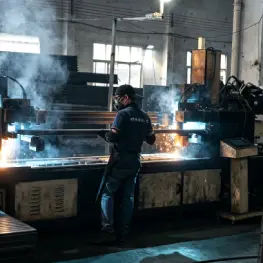
Automated Robotic Welding
Dual-pulse Panasonic and OTC multi-axis welding robots execute uniform multi-pass fillet welds joining beam end-connectors to structural box beams. Zero porosity, consistent weld root penetration, and 100% UT/MT batch sampling.
PE-Stamped Global Engineering
In-house structural engineering department provides finite element analysis (FEA), base plate anchorage shear calculation, and building code compliance packages matching US RMI ANSI MH16.1, Eurocode EN 15512, and Australian AS 4084.
Engineering Whitepaper: Structural Integrity, Finite Element Analysis & Sourcing Optimization in Pallet Racking
In modern high-density distribution centers, automated sorting facilities, and temperature-controlled cold chains, warehouse racking is no longer static metal shelving—it functions as a critical, load-bearing skeletal infrastructure. Modern pallet racks must withstand complex multi-axis dynamic loads, seismic acceleration forces, repeated mast impacts, and cyclic temperature extremes while maintaining structural deflection tolerances within strict regulatory thresholds.
For international supply chain directors, industrial real estate developers, and third-party logistics (3PL) infrastructure managers, sourcing racking structures directly from certified Chinese manufacturers requires an understanding of structural steel metallurgy, roll-forming geometry, upright perforation stability, and connection moment-rotation stiffness. As a premier original equipment manufacturer (OEM) based in Guangzhou, HEDA Shelves integrates deep material science with modern automation to eliminate the risk of structural failure and lower the total cost of ownership (TCO) across decades of operational life.
1. Mechanical Properties & Metallurgical Criteria: Q235B vs. Q355B
The foundation of racking load capacity begins at the hot-rolled and cold-rolled steel coil stage. In Chinese structural engineering, structural carbon steels are categorized primarily under the GB/T 700 and GB/T 1591 national standards:
- Q235B (Yield Strength $f_y \ge 235 \text{ MPa}$, Tensile Strength $370\text{--}500 \text{ MPa}$): Comparable to European S235JR and American ASTM A36. Featuring balanced carbon content (typically 0.12% to 0.20%) and controlled silicon/manganese levels, Q235B delivers excellent ductility, notch toughness, and weldability. It is the premier standard for horizontal load beams, light-to-medium uprights, dynamic push-back carts, and wire deck waterfall supports.
- Q355B (Yield Strength $f_y \ge 355 \text{ MPa}$, Tensile Strength $470\text{--}630 \text{ MPa}$): Comparable to European S355JR and American ASTM A572 Grade 50. This low-alloy, high-strength steel incorporates trace micro-alloying elements (Vanadium, Niobium, Titanium) to refine grain boundary size. Q355B is deployed in ultra-tall upright frame columns exceeding 12 meters, automated storage and retrieval systems (AS/RS) rack-clad buildings, seismic base isolators, and heavy-duty cantilever column arms where extreme buckling resistance and reduced cross-sectional steel weight are mandated.
2. Cross-Sectional Optimization & Torsional-Flexural Buckling Prevention
Unlike standard hot-rolled I-beams or structural square tubes, racking uprights utilize thin-walled open cross-sections perforated along regular pitches (e.g., 50mm, 75mm, or 76.2mm / 3-inch centers). These perforations accommodate teardrop, diamond, or hex-lock beam connectors for boltless installation. However, the presence of perforations reduces both the effective net cross-sectional area and the torsional warpage constant ($I_w$).
To prevent combined torsional-flexural buckling under axial pallet loads:
- Omega Multi-Bend Geometry: HEDA Shelves utilizes proprietary multi-flange omega profiles featuring return lips and intermediate stiffener ribs. These stiffeners delay local plate buckling ($b/t$ ratio limitation) and significantly increase the radius of gyration ($r_x, r_y$) around the weak axis.
- Beam Connector Clamping Stiffness ($C_d$): The connection between the horizontal step/box beam and the upright column is semi-rigid. The moment-rotation curve of the connector clip determines the effective buckling length factor ($K_x, K_y$) of the upright frame. Utilizing precision 4-claw and 5-claw cast-steel hooks with automatic self-locking spring safety pins, our connections achieve an exceptionally high joint rotational stiffness ($K_s$), minimizing frame sway drift without requiring oversized diagonal cross-bracing.
3. Comparative System Matrix: Density, Access, and Operational Velocity
Selecting the proper racking architecture dictates warehouse labor velocity, energy expenditure, and inventory turnover efficiency. The following analytical matrix compares primary systems across standardized key engineering metrics:
| Racking Topology | Pallet Selectivity | Footprint Density | Inventory Flow | Forklift Equipment Match | Structural Cost / Position |
|---|---|---|---|---|---|
| Selective Pallet Racking | 100% Immediate | Moderate (35–40% Cube) | FIFO / LIFO Any | Standard Counterbalance, Reach | Baseline (Most Economical) |
| Double Deep Racking | 50% Immediate | High (50–55% Cube) | LIFO Batched | Deep-Reach Pantograph Truck | Economical (+15% vs Selective) |
| Drive-In / Drive-Through | Low (Lane-Restricted) | Very High (65–75% Cube) | LIFO (Drive-In) / FIFO | Counterbalance, Narrow Profile | Moderate (+30% vs Selective) |
| Gravity Pallet Flow | Pick Face Only | Maximum (75–85% Cube) | Strict Automatic FIFO | Standard Trucks at Ends | Higher (Roller Tracks & Brakes) |
| Push Back (Nested Carts) | One SKU Per Lane | High (60–70% Cube) | LIFO (2–6 Deep) | Standard Counterbalance | Moderate-High (Inclined Carts) |
| Radio Shuttle Automation | High Per Lane | Ultra-High (80–88% Cube) | Flexible FIFO / LIFO | Automated Shuttle + Any Lift | Advanced (Lithium Shuttle AGV) |
4. Future Sourcing & Procurement Trends: Strategic Arbitrage
Global logistics managers evaluating Asian manufacturing ecosystems are experiencing a shift in sourcing methodology. The historical model of working through multiple layers of domestic middlemen, catalog trading houses, and local system integrators is being superseded by factory-direct engineering engagements. Key dynamics include:
- Direct-to-Factory Engineering Transparency: International procurement teams now directly audit factory capabilities, including mill certificates, raw material spectrometer test results, CNC stamping precision, and ultrasonic weld inspections. Bypassing regional branding markups yields a 25% to 42% reduction in landed steel capital expenditure (CapEx).
- Modular Containerization Engineering: Shipping freight constitutes a substantial portion of landed cost. Experienced Chinese suppliers utilize specialized algorithmic nesting programs that pack upright frames, box beams, and base plates into 40ft High Cube (40HC) containers. This achieves 98%+ cubic density while preventing in-transit abrasive coating damage through high-density polyethylene interleaving.
- Dual Unit Engineering Deliverables (Imperial & Metric): Modern tier-one factories deliver synchronized CAD and BIM (Revit) files detailing structural tolerances, anchoring depths, and load data in both imperial (inches, feet, lbs) and metric (mm, meters, kg) units. This ensures local civil engineers and city permitting authorities can verify floor slab capacities without translation or unit conversion errors.
5. Future Product Development Trends: Smart Racking & High-Density AS/RS
Driven by rising land costs, labor shortages, and aggressive e-commerce fulfillment service-level agreements (SLAs), the structural racking industry is evolving rapidly:
- Integration with Autonomous Mobile Robots (AMRs) and Automated Shuttles: Conventional static racks are giving way to automated 4-way radio shuttle systems and rack-supported AS/RS buildings where the racking structure itself supports the exterior wall cladding and roof trusses, eliminating the need for a separate steel building frame.
- Seismic Base Dissipation & Dynamic Damping: Next-generation structural designs incorporate sacrificial seismic base plates with elastomeric or friction-pendulum dampening. Under severe seismic excitation, the energy is dissipated through controlled, replaceable mechanical joints rather than permanent plastic deformation of main vertical upright columns.
- Corrosion Defense in Sub-Zero Cold Chains: As frozen food and bio-pharmaceutical storage booms, racking systems face condensation-induced thermal shock and micro-cracking. Advanced multi-stage zinc-phosphating combined with low-cure hybrid polyester-epoxy powder coatings prevents rust formulation even in harsh -30°C (-22°F) continuous operating environments.
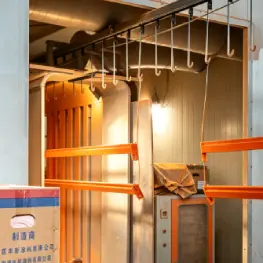
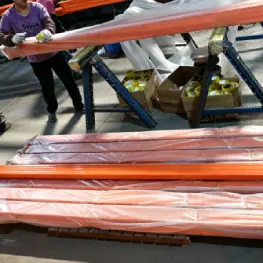
10-Step Integrated Manufacturing Sequence
From prime steel coil inspection through roll forming, continuous robotic welding, and automated powder baking—traceability is maintained across every single production batch.
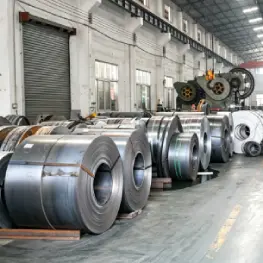 01
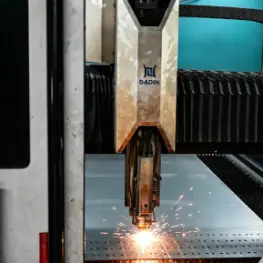 02
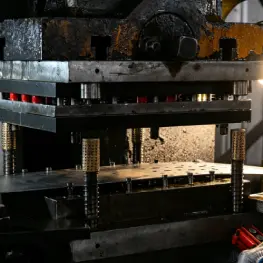 03
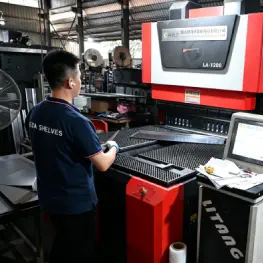 04
 05
 06
 07
 08
 09
 10
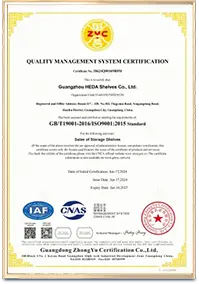
Internationally Recognized Safety Certifications
Our structural production and quality management methodologies are audited and verified under international engineering frameworks.
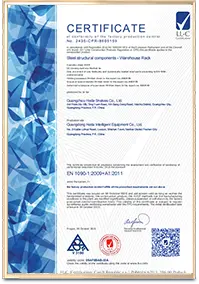
ISO 9001:2015 System
Cert No: 18624Q00169R0M
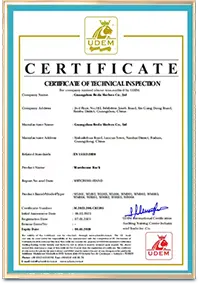
CE Marking (CPR)
Cert No: 2435-CPR-8605159
RoHS Environmental
Non-Toxic Surface Finishes
Physical Load Testing
Mechanical Shear & Deflection Tested
Frequently Asked Questions on Factory Direct Procurement
Direct answers to complex structural engineering, import duty, seismic permitting, and container staging queries.
How do Chinese steel specifications (Q235B / Q355B) correlate with American ASTM and European EN standards?
Can your engineering team provide PE-stamped calculations for US, Canadian, and Australian seismic codes?
How are standard 48x40-inch GMA pallets, Euro-pallets, and non-standard skids supported within beam levels?
What is the typical lead time from CAD sign-off to container discharge at North American or European ports?
What surface treatment warranties and corrosion classifications are supported for outdoor or cold room use?
Accelerate Your Warehouse Capacity with Direct Mill-Level Pricing
Submit your facility architectural floor plan, clear building eaves height, slab thickness, and pallet load profiles. Our senior structural racking engineers will generate an optimized 2D/3D CAD layout, bill of materials, and landed freight quotation within 24 hours.
Direct Factory Inquiries
Connect immediately with our global project engineering department.
Get a Quote