High-Performance Dynamic & Static Racking Systems
Engineered to handle high-turnover fulfillment, industrial raw goods, and temperature-controlled cold chain logistics with structural cold-rolled steel reliability.
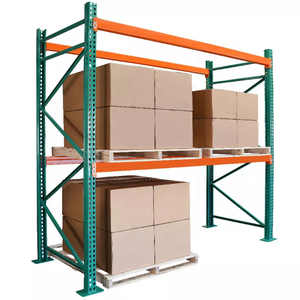
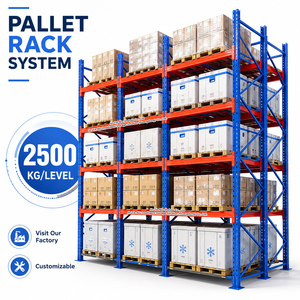
Heavy Duty Pallet Rack Warehouse Storage Racking System 2500kg Per Level 5 Layers OEM Factory
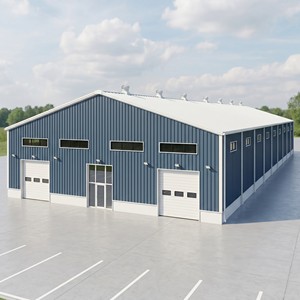
Meituo Free Design Prefabricated Steel Structure Warehouse Workshop Industrial Building for Equipment
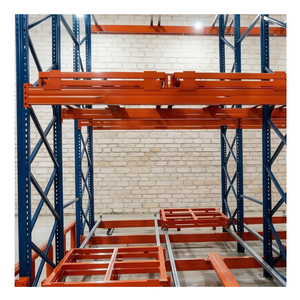
DJ High Density Storage Solution For Warehouse Storage Rack Push Back Rack Warehouse Racking Systems Push Back Pallet Racks
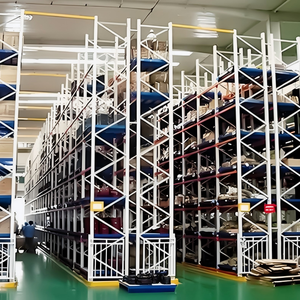
Space Saving Narrow Aisle Storage Racks VNA Racking System For Ecommerce Fulfillment Warehouses Offering Quick Installation
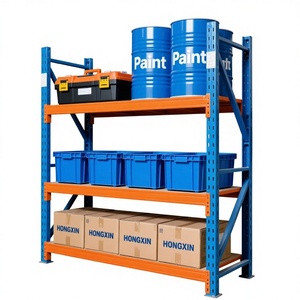
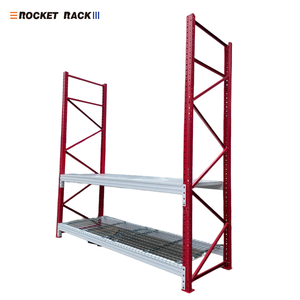
Heavy Duty Cold Rolled Steel Pallet Rack Storage System for E Commerce Warehouse Picking and Forklift Operation
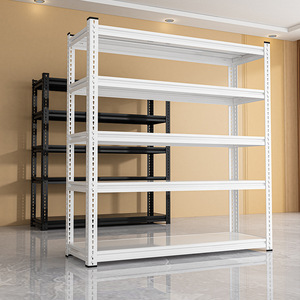
Engineering Gravity Pallet Flow: The Science of Dynamic FIFO Storage
Pallet flow racks—frequently designated as gravity flow systems—stand at the apex of high-density dynamic storage engineering. Unlike static selective configurations that require generous transit aisles, pallet flow racking utilizes inclined roller tracks set on a precise gradient (typically between 2.5% and 4.0%). Working on the First-In, First-Out (FIFO) principle, inventory is inducted from the rear loading face and moves smoothly under gravity down to the ergonomic discharge picking face. For high-velocity distribution centers dealing with perishable FMCG, pharmaceutical expiration tracking, cold storage operations, and intensive cross-docking, Chinese manufacturing hubs provide exceptional structural cost-to-performance margins.
Kinetic Balance, Steel Metallurgy, and Braking Mechanics
When sourcing dynamic racking from Chinese factories, engineering diligence shifts from basic static load formulas to dynamic momentum calculations. The structural core requires prime certified hot-rolled or cold-rolled Q235B and Q355B structural coil steel, cold-formed with zero micro-fracturing along upright profiles. In pallet flow engineering, load dynamics introduce complex torsional forces along the longitudinal beams. Chinese manufacturing centers that maintain automated roll-forming and robotic welding assure strict adherence to deflection thresholds, strictly maintaining deflection lower than L/250 under full dynamic surge loads.
Furthermore, roller selection must align with pallet bottom boards. Full-width galvanized steel rollers with precision sealed bearings are essential for non-uniform GMA, Euro, or composite plastic pallets, whereas dual/triple wheeled split tracks accommodate standardized wooden runners. In cold chain facilities operating down to -30°C, lubricant viscosity within the internal centrifugal brake assemblies is specially engineered to prevent lockup or velocity slippage caused by ambient temperature drops.
Comparative Performance: Dynamic Flow vs. Alternative High-Density Systems
Procurement teams must carefully weigh pallet accessibility against throughput velocity and capital investment. The comparative engineering index below details the operational differences:
| Racking Topology | Rotation Logic | Space Utilization | Throughput Speed | Forklift Travel In-Lane | Capital Investment |
|---|---|---|---|---|---|
| Pallet Flow (Gravity) | Strict FIFO | Extremely High (85%+) | Fast (Separated Load/Pick) | Zero (External Aisle Only) | Moderate to High |
| Radio Shuttle System | FIFO or LIFO | Maximum (90%+) | Automated / High | Zero (Automated Shuttle) | High (Battery/Robotics) |
| Push Back Racking | Strict LIFO | High (70-75%) | Moderate | Zero (Push on Carts) | Moderate |
| Drive-In Racking | Strict LIFO | High (75-80%) | Low to Moderate | High (Inside System) | Economical |
| Selective Racking | Arbitrary | Baseline (40-45%) | High (100% Selectivity) | Aisle Dependent | Low Baseline |
Enterprise Strengths of Leading Chinese Racking Plants
Integrated supply chain integration, continuous QC auditing, and full structural compliance engineered for international supply chain resilience.
Stringent Metallurgical Sourcing
Direct supply partnerships with Tier-1 domestic steel mills (such as Baosteel and Shougang) guarantee uniform tensile yields, reliable chemical compositions, and mill certificates conforming to EN 10204 3.1 verification for every production run.
Continuous Automated Production
Utilizing multi-station computerized CNC punching, multi-roll progressive forming, and robotic MIG/TIG continuous seam welding. This reduces dimensional variance to within ±0.5mm across extended upright column matrices.
Multi-Stage Surface Pretreatment
Comprehensive 9-stage degreasing, ultrasonic pickling, and zirconium phosphating provide the structural foundation for high-adhesion thermosetting epoxy-polyester powder coats, rated beyond 500 hours of continuous salt-spray testing.
Full RMI / FEM / AS4084 Calculations
In-house structural engineering teams prepare stamped calculation packages, Finite Element Method (FEM) stress analyses, and seismic simulation modeling customized to client jurisdiction codes and facility parameters.
Export Packaging & Ocean Logistics
Precision container packing software optimizes 40HQ payload efficiency, securing galvanized upright frames with structural steel strapping and protective corner buffers to withstand harsh maritime ocean voyages undamaged.
Rapid 24-Hour Design Turnaround
Equipped with parameterized CAD and BIM design platforms, engineering teams return fully optimized floor layouts, 3D renderings, and transparent component quotations within 24 hours of receiving site drawings.
Future Sourcing & Technological Trends in Pallet Flow
Key technological and commercial developments shaping global warehouse procurement over the next decade.
1. Sensorized IoT Dynamic Monitoring
Next-generation pallet flow lanes are integrating non-powered, kinetic sensor modules that monitor roller speed and identify stuck pallet loads. These systems relay wireless telemetry directly to WMS platforms without needing external in-lane power wiring.
2. Hybrid AS/RS & Gravity Flow Interfaces
Modern distribution centers increasingly combine the density of gravity flow with automated crane induction. Stacker cranes drop pallets at high-bay rear flow beds while autonomous mobile robots (AMRs) collect from front picking faces, maximizing staging throughput.
3. Eco-Coil & Low-Carbon Manufacturing
As Scope 3 carbon auditing becomes standard among Fortune 500 supply chains, Chinese manufacturers are transitioning to electric arc furnace (EAF) low-carbon recycled steel and solar-powered electrostatic powder coating facilities.
4. Universal Composite Roller Geometries
With increasing variability in wooden pallet quality and the adoption of slippery virgin plastic pallets, factories are engineering hybrid polyurethane-elastomer rollers that provide consistent friction coefficients across both material types.
5. Complete Seismic Resiliency Engineering
High-bay installations in seismically active areas now demand specialized seismic baseplates and ductile energy-dissipating dynamic backstops, engineered to prevent accidental pallet shed during seismic wave oscillations.
6. Digital Twin Layout Sourcing
Procurement teams increasingly expect digital twin models before metal is punched. Leading suppliers now supply parametric Revit/BIM models ready to drop directly into warehouse engineering models to avoid MEP and HVAC clashes.
Frequently Asked Questions on Importing from China
Addressing engineering safety, compliance audits, load calculations, and global delivery logistics.
To deliver an engineered design, provide clear warehouse ceiling heights, concrete slab load capacities, pallet dimensions (W x D x H including overhang), minimum and maximum pallet weights, pallet bottom bottom-board configurations, and daily pallet turnover rates.
Reputable Chinese factories engineer racking in accordance with ANSI MH16.1 (RMI standards) for the United States, and EN 15512 / FEM 10.2.02 standards for Europe. Third-party testing by agencies like TV Rheinland, SGS, or Bureau Veritas verifies both material yield strengths and weld seam integrity.
Deep lanes incorporate mechanical centrifugal brake rollers installed at calibrated intervals (usually every 1 to 2 pallet depths). These brake rollers operate purely via centrifugal resistance: as pallet roll speed accelerates, the internal shoes expand, holding terminal pallet descent speed within safe operational limits.
Custom fabrication runs usually span 20 to 30 calendar days depending on tonnage. Ocean transit to US West Coast ports requires 14-18 days; East Coast ports span 28-35 days; European primary ports take 25-32 days. CIF and DDP delivery terms are supported with container stuffing optimized for smooth offloading.
Severely damaged pallets with split bottom boards or protruding fasteners pose a jam hazard on any gravity roller system. For operations handling mixed or variable pallet qualities, factories engineer continuous full-width heavy steel rollers combined with entry guide flanged funnels rather than twin-track wheel lanes.
Systems ship with piece-marked structural drawings, 3D exploded connection schematics, and complete assembly manuals. Clients can deploy local certified union or non-union mechanical installers, or request factory technical dispatch engineers to provide on-site supervisory installation training.
Plan Your High-Density Pallet Flow System with Factory Engineers
Submit your warehouse floor plan, pallet dimensions, and storage targets today. Our engineering team will supply a customized CAD layout, system load capacity analysis, and direct factory pricing within 24 hours.