Featured Heavy-Duty & High-Density Storage Deployments
Precision cold-formed rack geometries, cantilever arms, and structural mezzanine solutions engineered by Guangzhou Heda Shelves Co., Ltd. for extreme load integrity, seamless material handling navigation, and optimal SKU selectivity.
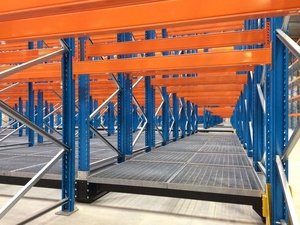
The Mobile Racking System Is One of the Best Racking Solutions for Pallets, Designed to Increase Warehouse Capacity
- Motorized Base
- Aisle Consolidation
- Cold-Chain Ready
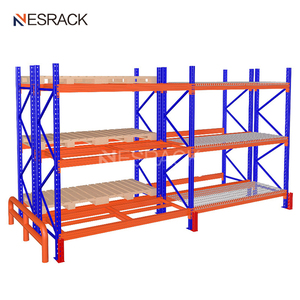
Adjustable Boltless Durable 4-Layers Steel Heavy Duty Pallet Rack 500-3000kg Warehouse Storage Rack
- Q235B Cold Steel
- Interlocking Pins
- Adjustable Pitch
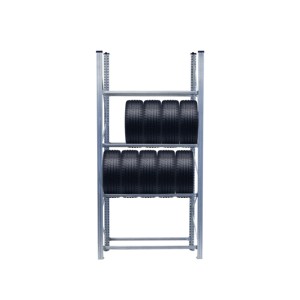
Best Quality Heavy Duty Adjustable Black Galvanized Steel 2-Layer Rubber Storage Shelf Rack for Warehouse Tire Storage
- Custom Beams
- Direct Cradle
- Automotive Class
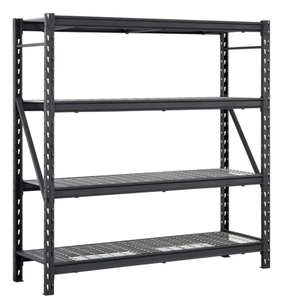
3 Layers Boltless Steel Racking Industrial Shelf Adjustable Stacking Assemble Shelving For Garage Warehouse
- Manual Picking
- Modular Rivet
- High Stability
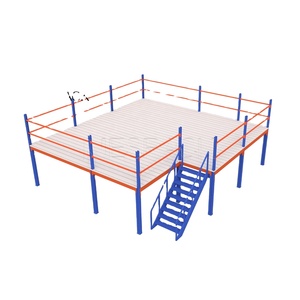
Customized Heavy Duty Steel Mezzanine Floor Second Floor Platform Wire Shelving for Warehouse Storage Second Mezzanine Floor
- Multi-Tier Hub
- Walkable Deck
- Integrated Stairs
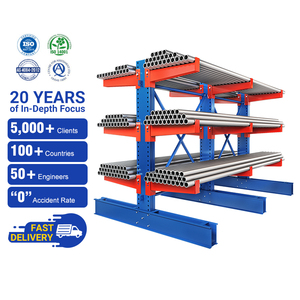
Durable Heavy-Duty Industrial Shelving Unit Durable Adjustable Cantilever Arm Racks Racking System for Warehouse Storage
- No Front Columns
- Timber & Steel
- Up to 6,600 lbs
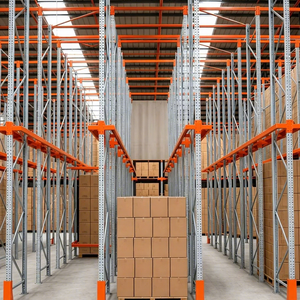
Industrial Heavy Duty Drive in Rack High Density Storage System for Warehouse
- LIFO Management
- Fewer Aisles
- Structural Rails
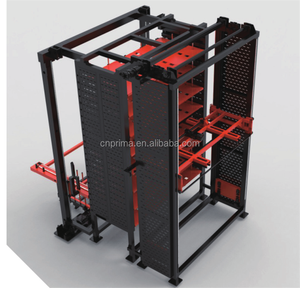
Automatic Pallet Racks Storage Rack for Sheets Metal Laser Cutting Machines
- Integrated Lift
- Plate Handling
- Automated Feeder
Very Narrow Aisle (VNA) Mechanics: Tolerances, Guidance & Load Dynamics
Narrow Aisle Racking configurations condense warehouse operating aisles from the typical 3.5–4.0 meters down to 1.5–1.8 meters, delivering an immediate 45% to 65% surge in volumetric storage density while retaining 100% individual pallet selectivity.
Aisle Dimensional Tolerances & Clearances
VNA architectures engineered by top Chinese factories enforce EN 15620 (Class 300) parameters. Unlike wide-aisle counterbalance configurations, operating tolerances between turret truck masts and rack frames are restricted to 75mm–100mm safety margins, demanding cold-rolled steel profile deflection under full static payload not exceeding 1/300th (L/300) of the beam length.
Guidance Subsystems: Inductive vs. Mechanical
To safeguard structural steel frames and accelerate truck handling speeds up to 12 km/h inside aisles, VNA systems incorporate either floor-anchored steel guide rails (C-channel or solid angle profiles 100×75×10mm) or low-frequency induction wire-guidance embedded within saw-cut slab joints (5–10 kHz frequencies) connected to automated guidance feedback sensors.
Floor Flatness Requirements (Superflat Slabs)
Because turret trucks raise operator cabins and pallet forks up to heights of 14 to 17 meters, minor slab imperfections are magnified exponentially at the mast top. Racking installations must coordinate with warehouse civil engineering teams to satisfy DIN 18202 Table 3 Group 4 or Concrete Society TR34 (DM1 / DM2 classifications) to eliminate kinematic mast sway and rack collision.
Factory-Direct Engineering Prowess: Guangzhou Heda Shelves
Established in 2001, Guangzhou Heda Shelves Co., Ltd. operates a vertically integrated industrial production base dedicated to delivering fully certified, container-optimized storage racking across the Americas, Europe, and the Asia-Pacific region.
10-Stage Precision Quality Control Protocol
Every structural upright, box beam, cross-bracing strut, and column protector undergoes a rigid in-line automated manufacturing sequence before ocean container stowage.
Raw Coil Inbound
Certified prime Q235B & Q355B hot-rolled strip steel with lab tensile testing.
Precision Slitting
High-speed CNC slitting lines strip mother coils to precise section strip tolerances.
Automated Punching
Continuous hydraulic stamping for consistent 50mm / 75mm beam hole pitches.
Cold Roll-Forming
22-station rolling dies craft upright columns without internal micro-fractures.
Profile Welding
Robotic GMAW / CO2 shielding welding joins 3/4/5-claw connectors to box beams.
Surface Polishing
Automated shot-blasting and mechanical deburring removes mill scale and slag.
Pickling & Phosphating
Multi-bath chemical immersion pre-treatment ensures superior anti-corrosion bonding.
Powder Coating
Electrostatic epoxy-polyester spray baked at 180°C–200°C (60–80 μm thickness).
Batch Testing
ISO 9001:2015 dimensional verification, cross-hatch adhesion, and salt spray test.
Container Packing
Palletized steel bundling with protective foam wrapping for 20GP/40HQ export transit.
Engineering Benchmark: Narrow Aisle vs. Alternative Racking Typologies
Selecting the right pallet system requires evaluating volumetric density against SKU turnover velocity, operating machinery investments, and structural floor loading thresholds.
| Storage Topology | Aisle Clear Width | Floor Footprint Utilization | Selectivity Ratio | MHE Fleet Required | Vertical Clear Heights | Relative Cost / Position |
|---|---|---|---|---|---|---|
| Narrow Aisle (VNA) | 1.5m – 1.8m | Up to 65% | 100% (Individual) | Man-Up / Man-Down Turret Truck, Articulated Forklift | Up to 17.0 meters | Moderate – Optimized High Tonnage |
| Standard Selective | 3.2m – 3.8m | 35% – 40% | 100% (Individual) | Standard Counterbalance, Reach Truck | Up to 11.5 meters | Lowest Initial Capital Cost |
| Double Deep Racking | 2.8m – 3.2m | 45% – 50% | 50% (Last-In First-Out) | Deep-Reach Pantograph Forklift | Up to 11.0 meters | Low – Moderate |
| Drive-In Racking | Internal Drive Lanes | Up to 75% | Low (Batch LIFO) | Standard Counterbalance | Up to 12.0 meters | Moderate (High Steel Mass) |
| Radio Shuttle System | Lane Entry Face | Up to 85% | LIFO / FIFO (By Lane) | Forklift + Semi-Autonomous Battery Shuttle | Up to 24.0 meters | High – High Density Return |
Future Procurement Trends in High-Density Narrow Aisle Logistics
Global supply chain disruptions, rising urban industrial land leases, and automation mandates are revolutionizing how distribution center engineers procure steel storage structures.
Hybrid AMR & VNA Automation
Procurement engineers are transitioning from traditional manned turret trucks to Autonomous Mobile Robots (AMRs) and automated guided narrow-aisle stacker cranes. Modern VNA rack designs must now feature tighter structural plumbing tolerances (±1.5mm) and standardized optical target retro-reflectors mounted on frame uprights for LiDAR vehicle positioning.
Seismic Finite Element Modeling (FEM)
International buyers across the US West Coast, New Zealand, Japan, and Latin America are demanding advanced seismic engineering compliance under ANSI MH16.1 and Eurocode 3. Direct-factory procurement now mandates FEA dynamic simulation reports displaying dynamic modal base shear resistance and ductility ratios prior to roll-forming approval.
Sustainable Pre-Galvanization vs. Powder
Driven by corporate Scope 3 decarbonization objectives and harsh cold-chain freezer atmospheres (-30°C), warehouse buyers are switching from standard solvent or heavy powder finishes to continuous mill-galvanized (pre-galv Z275) structural steel coils, eliminating volatile organic compound (VOC) emissions while offering self-healing rust resistance.
Direct Factory BIM / Digital Twin Integration
B2B procurement has moved beyond static DWG drawings. Leading manufacturers supply fully parametric Revit® and IFC 3D Building Information Modeling (BIM) families directly into the architect’s digital twin model, enabling clash detection with ESFR fire sprinkler pipes, HVAC ducting, and structural columns weeks before container arrival.
Frequently Asked Technical Questions on Narrow Aisle Sourcing
Clear, engineer-level answers addressing compliance, installation logistics, seismic certifications, and ocean shipping practicalities.
Because VNA turret trucks lift to extreme elevations (12m–17m) with minimal mast clearances, concrete floor slabs must adhere to Concrete Society TR34 DM1 or DM2 classifications, or DIN 18202 Class 4 standards. If the warehouse floor is existing and fails to meet these superflat tolerances, grinding the wheel tracks or laying localized structural leveling grout under the guidance rails is compulsory.
Mechanical guide rails (typically 100×75×10mm hot-rolled angle steel anchored every 500mm) act as a physical buffer, protecting upright columns from low-level vehicle impact while providing foolproof mechanical guidance. Inductive wire guidance cuts a narrow 4mm slot into the floor slab, preserving clean pedestrian crossings and order picking ergonomics, but requires certified onboard sensor navigation on all fleet vehicles.
Calculations and structural engineering certifications are performed using finite element analysis (FEA) compliant with RMI (Rack Manufacturers Institute) ANSI MH16.1 for the USA/Canada, and EN 15512 / FEM 10.2.02 for European Union jurisdictions. Load capacities are supplied in imperial (pounds/level) or metric (kg/level) with safety factors of 1.65 to 1.95 against ultimate yield strength.
In high-density VNA configurations exceeding 9 meters in height, NFPA 13 (Standard for the Installation of Sprinkler Systems) typically dictates transverse and longitudinal flue spaces between back-to-back pallets of at least 6 inches (150 mm). For installations exceeding ceiling-only Early Suppression Fast Response (ESFR) operating heads, integrated in-rack sprinkler pipework runs are coordinated within our CAD layout designs.
Upright frames are nested horizontally in custom structural steel bundling cradles wrapped in anti-abrasion corrugated foam and heavy shrink-film, fitted with forklift lifting dunnage. Beams are palletized in uniform bundles with safety locking pins pre-inserted. Container cube utilization in 40ft HQ ocean containers regularly reaches 95%–98% weight/volume efficiency, minimizing per-pallet landed shipping costs.
Upon receipt of your warehouse building CAD file, clear ceiling height, pallet dimensions (e.g. 48"x40" GMA or 1200x800 Euro), and forklift specifications, our engineering department provides a complete 2D layout, 3D isometric view, and itemized structural quote within 24 hours. Factory production for 10 to 50 container projects averages 18 to 25 business days from drawing sign-off.
Optimize Your Warehouse Footprint with Certified Engineering
Connect directly with Guangzhou Heda Shelves Co., Ltd.'s structural engineering team. Receive a complimentary facility capacity analysis, professional AutoCAD layout, 3D perspective rendering, and factory-direct landed pricing.
- ISO 9001:2015 & CE Certified
- 24-Hour Layout Turnaround
- PE-Stamped Structural Review Ready
- Global Ocean Port Delivery