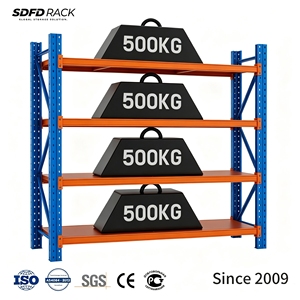
Custom Heavy Duty Industrial Steel 5 Multi-Level Stacking Storage Carpet Roll Display Warehouse Beam Pallet Racking Systems
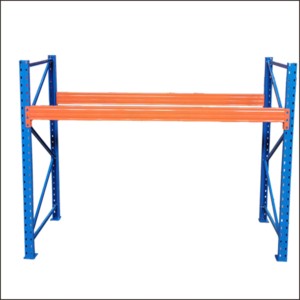
- Long-Span Cradle
- Heavy Beam Deflection: L/200
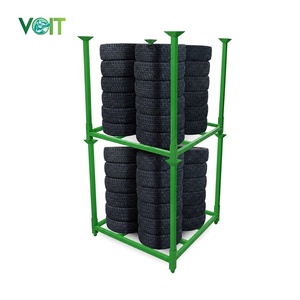
- Textile & Coil Storage
Engineered for heavy-duty structural reliability, dimensional uniformity, and strict compatibility with standard 48"×40" GMA, Euro-pallets (EPAL), and customized industrial loads. Tested to meet ANSI MH16.1, EN 15512, and AS 4084 specifications.
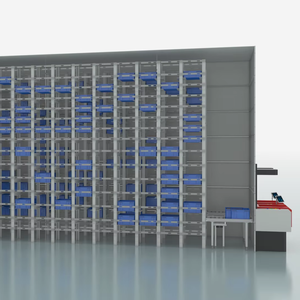
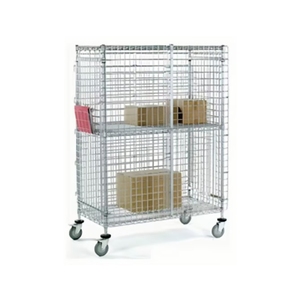
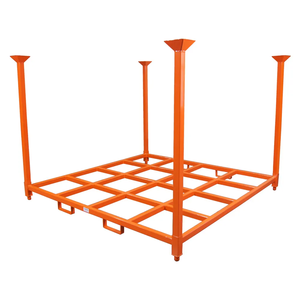
Established in 2001, Guangzhou HEDA Shelves Co., Ltd. is a vertically integrated Chinese manufacturer of heavy-duty pallet racking, structural steel mezzanines, and smart automated warehouse systems. Serving global supply chain leaders, logistics integrators, and Fortune 500 distribution networks with engineered precision.
Fully audited quality management under ISO 9001:2015 (Cert No. 18624Q00169R0M) and European CE Marking for structural steelwork under EN 1090 / Construction Products Regulation (CE 2435-CPR-8605159), ensuring global site-permit compliance.
Our dedicated in-house structural engineering department provides comprehensive CAD floor plans, elevation schematics, structural finite-element analyses (FEA), and 3D renderings within 24 hours of receiving warehouse clear heights and pallet loads.
From raw Q235B/Q355B coil slitting to automated CNC multi-station cold roll-forming, robotic continuous-seam welding, automated pickling, phosphating, and German Wagner electrostatic powder coating, every stage is executed in-house.
Drawings, beam moment capacities, and post base-plate load distributions are delivered in imperial units (pounds, feet, inches) or metric systems, tailored for Engineer-of-Record (EOR) plan reviews and high-seismic zone permits (IBC / CBC Seismic Design Categories D-F).
Engineered bundle configurations and modular knock-down frame designs maximize 40-foot HQ container volumetric utilization (achieving up to 26–28 metric tons payload per container), significantly suppressing landed freight costs per pallet location.
Direct OEM/ODM supply eliminates intermediary markups. Coupled with rigorous batch metallurgical testing and steel mill test reports (MTR), buyers achieve 30% to 45% capital expenditure savings while exceeding domestic safety factors.
In modern supply chain engineering, specifying warehouse metal racking requires a forensic understanding of metallurgy, roll-forming mechanics, and structural dynamics. The global materials handling industry operates on thin tolerances where structural steel deflection, yield strength variations, and connection joint ductility directly govern warehouse life safety and operational efficiency. When sourcing from China, the distinction between tier-1 engineering fabricators and generic steel converters lies in certified raw material chemistry and continuous quality assurance throughout the roll-forming process.
The primary material standard for Chinese metal pallet rack uprights and load beams is Q235B and Q355B structural steel (governed by GB/T 700 and GB/T 1591). From an engineering equivalence perspective, Q235B exhibits a nominal yield strength ($f_y$) of 235 MPa (34.1 ksi) with an ultimate tensile strength of 370–500 MPa, directly correlating to North American ASTM A36 and ASTM A1011 SS Grade 36. For high-bay AS/RS systems and seismic applications, tier-1 suppliers utilize Q355B (yield strength $f_y \ge 355\text{ MPa}$ or 51.5 ksi), structurally matching ASTM A572 Grade 50 and European S355JR under EN 10025.
| Steel Grade / Standard | Yield Strength ($f_y$ min) | Tensile Strength ($f_u$) | Elongation ($\delta_5$ min) | International Equivalent | Recommended Racking Application |
|---|---|---|---|---|---|
| Q235B (GB/T 700) | 235 MPa (34.1 ksi) | 370 - 500 MPa | 26% | ASTM A36 / EN S235JR | Standard Selective Racks, Industrial Shelving, Carton Flow |
| Q355B (GB/T 1591) | 355 MPa (51.5 ksi) | 470 - 630 MPa | 22% | ASTM A572 Gr 50 / EN S355JR | High-Bay AS/RS, Heavy Seismic Uprights, Drive-In Racks |
| SPCC / DC01 (Cold Rolled) | 140 - 240 MPa | 270 - 370 MPa | 38% | ASTM A1008 CS Type B | Wire Decking, Drop-in Dividers, Small Parts Shelving Panels |
| Q345qD / Low-Temp Alloy | 345 MPa (50.0 ksi) | 490 - 670 MPa | ≥ 34J Impact @ -20°C | ASTM A709 Gr 50W | Sub-Zero Freezers, Deep-Freeze Blast Cells (-30°C) |
The mechanical structural strength of an upright column is not merely a function of steel thickness; it is fundamentally determined by the cross-sectional profile geometry and moment of inertia ($I_x, I_y$). Premium Chinese manufacturers engineer 11-fold to 13-fold continuous cold-formed roll profiles. Each cold bend induces plastic strain, elevating the yield strength at the bend radii through strain hardening (work hardening), which increases the column's torsional stiffness and resistance to local flexural-torsional buckling under concentric and eccentric axial loads.
Crucially, the perforation pattern (such as teardrop, hexagonal, or diamond slots) creates a reduced net section area ($A_{\text{net}}$). In compliance with the American Iron and Steel Institute (AISI S100) and RMI ANSI MH16.1 specifications, structural load testing must validate the effective section properties. Beam-to-column connectors are equipped with precision cold-stamped 3-prong or 4-prong claw hooks designed to fit tightly against the column wall, generating a semi-rigid moment connection that dampens system sway without inducing premature notch stresses around the perforation cutouts.
How forward-thinking procurement executives, 3PL giants, and industrial real estate operators are restructuring their capital allocation for maximum supply chain resilience, carbon compliance, and automation readiness.
As automated storage and retrieval systems (AS/RS), autonomous mobile robots (AMRs), and four-way shuttle systems achieve dominance, traditional racking deflection thresholds are shrinking. Buyers now enforce tight fabrication tolerances ($\pm 1.0\text{ mm}$ over vertical column spans) and maximum deflection limits tightened from $L/200$ to $L/400$ or $L/600$ to eliminate robotic crane positioning faults.
With global cold-chain storage expanding rapidly, procurement focuses heavily on low-temperature steel embrittlement mitigation. Procurement teams are specifying killed structural steels subjected to Charpy V-notch impact testing at $-30^\circ\text{C}$, coupled with deep-lane radio shuttle racking that minimizes freezer volume per pallet to slash ongoing kilowatt-hour refrigeration draw.
European Carbon Border Adjustment Mechanism (CBAM) and US environmental reporting mandates require verified carbon footprint declarations on imported metal structures. Tier-1 Chinese exporters are shifting upstream procurement to electric arc furnace (EAF) scrap-recycled steel and providing certified Environmental Product Declarations (EPD) alongside ISO 14001 compliance sheets.
Savvy supply chain directors have abandoned simple Ex-Works (EXW) price comparisons in favor of dynamic landed-cost modeling. By partnering with manufacturers who engineer nested, fully knockdown upright frames and nested step beams, buyers maximize ocean container density, effectively amortizing transatlantic and transpacific container freight across 25% more steel tonnage.
Skyrocketing industrial real estate leasing rates have sparked a major migration toward multi-tier rack-supported mezzanines and structural platform overlays. Integrating high-density pallet storage at ground level with second- and third-tier picking decks multiplies usable cubic square footage without altering the building's physical footprint or triggering external building permit delays.
Metal pallet racking is evolving from static load-bearing frames into dynamic, monitored structural assets. Industrial logistics centers operate under intense 24/7 fulfillment schedules where forklift impacts, seismic shocks, and improper load distributions present major operational liabilities. In response, modern Chinese engineering has introduced groundbreaking innovations across coatings, smart diagnostics, and non-linear seismic modeling.
Replacing legacy zinc-phosphate baths with zirconium-based nanotech conversion coatings delivers enhanced micro-porosity bonding. Combined with architectural-grade electrostatic polyester powder thermosetting, racking systems achieve >1,000 hours of ASTM B117 salt spray resistance, making them ideal for high-humidity coastal and chemical storage facilities.
Next-gen smart racks feature embedded fiber Bragg grating (FBG) optical sensors and wireless tri-axial accelerometers inside upright frame bases. These devices monitor real-time strain, beam deflection, and forklift collisions, instantly alerting warehouse management systems (WMS) before structural failure thresholds are reached.
Engineering for high-risk seismic zones (PGA ≥ 0.4g) now utilizes second-order non-linear inelastic pushover analyses ($P-\Delta$ and $P-\delta$ effects). By pairing ductility-rated beam connectors with seismic base isolators and ductile base plates, Chinese manufacturers deliver systems pre-qualified for the strictest international seismic codes.
Prior to releasing a purchase order or letter of credit, international EPC contractors and supply chain directors should benchmark prospective Chinese vendors against this 6-point technical audit checklist:
Demand Mill Test Certificates (MTRs) from primary state-owned steel mills (e.g., Baosteel, Ansteel) verifying heat numbers, carbon equivalence ($CEV$), yield, tensile, and elongation testing.
Verify that the vendor operates automated continuous roll-forming lines equipped with multi-roll cold forming stations rather than outsourcing profile production to uncontrolled third-party workshops.
Review Welding Procedure Specifications (WPS) and Welder Performance Qualifications (WPQ) under AWS D1.1 (Structural Welding Steel) or ISO 9606-1 to guarantee beam-to-connector weld integrity.
Audit the surface preparation sequence. Systems must undergo multi-stage immersion or spray pretreatment (degreasing, phosphating/zirconium) to ensure paint adhesion passes cross-hatch tape testing (ASTM D3359).
Inspect physical test test-bed reports validating beam end-connector rotational stiffness ($F$) and stub column compressive strength tests conforming to ANSI MH16.1 or EN 15512 Annex A protocols.
Examine factory packing standards: uprights must be bundled with non-marking corrugated interleaving, wrapped in waterproof stretch film, and bound with steel banding on heavy-duty dunnage.
Essential engineering, seismic compliance, customs classification, and logistical details for importing metal warehouse racking directly from Chinese manufacturing facilities.
Q235B corresponds directly to ASTM A36 and ASTM A1011 SS Grade 36 in yield strength (min. 235 MPa / 34 ksi) and elongation. Q355B structurally matches ASTM A572 Grade 50 and European EN 10025 S355JR with a minimum yield of 355 MPa (51.5 ksi). Every production heat is backed by formal Mill Test Certificates (MTR) showing exact carbon equivalence ($CEV$), silicon, and manganese chemistry.
Yes. We provide complete structural calculation packages, component property datasheets, and AutoCAD shop drawings conforming to ANSI MH16.1, the International Building Code (IBC), and ASCE 7. These calculations are configured in imperial units (lbs, ft, in) to facilitate smooth review and final stamping by your local licensed Professional Engineer / Engineer of Record (EOR).
Our standard selective pallet rack beams are engineered to a maximum allowable vertical deflection limit of $L/180$ under maximum uniformly distributed load (UDL), fully complying with ANSI MH16.1 Section 5.3 and EN 15512. For automated AS/RS shuttle systems and robotic automated crane facilities, we fabricate specialized box beams engineered to stricter deflection criteria of $L/300$, $L/400$, or $L/600$.
Steel members undergo an automated 10-stage continuous pretreatment sequence consisting of hot alkaline degreasing, twin water rinses, acid pickling to remove scale, zinc or zirconium phosphating, and deionized water rinsing. The electrostatically applied polyester-epoxy powder is cured in baking ovens at 180°C–200°C, producing a dense 60–90 micron dry film thickness (DFT) with superior cross-hatch adhesion.
Yes. Our standard selective rack bays feature 96-inch, 108-inch, or 144-inch clear beam lengths designed to accommodate two or three 48"×40" GMA pallets with mandatory 3-to-4 inch flue space clearances. Upright frame depths are standard at 42 inches (or 48 inches for deep pallets), allowing standard 3-inch front and rear pallet overhangs onto the load beams.
Upright columns and beams are bundled with industrial high-tensile steel straps over protective corrugated edge-protectors and wrapped in heavy-gauge anti-moisture polyethylene shrink film. Heavy base plates and small hardware (bolts, nuts, locking pins, anchors) are packed in reinforced wooden crates or steel cage boxes to eliminate dynamic friction damage during ocean transport.
Upon final engineering drawing and color approval, standard production runs for 1 to 5 forty-foot high-cube (40HQ) containers take 15 to 20 working days. Large distribution center projects spanning 20 to 50 containers are delivered via rolling container dispatches over a 30 to 45 day production window, aligned with your site general contractor's phasing plan.
Absolutely. For refrigerated food distribution facilities, outdoor cantilever lumber racks, and corrosive chemical environments, we offer hot-dip galvanization conforming to ASTM A123 / ISO 1461, yielding a sacrificial zinc coating thickness of 70 to 100 microns that guarantees multi-decade protection against frost, condensation, and chemical salt degradation.
Metal pallet racks and industrial steel shelving are generally classified under HTS Code 7308.90 (Structures and parts of structures of iron or steel). For modular boltless shelving and small parts drawers, code 9403.20 (Other metal furniture) may apply. Our export documentation specialists supply exact commercial invoices, packing lists, and certificates of origin for your customs broker.
Every beam connector joint incorporates a dedicated spring-loaded or drop-in positive locking pin manufactured from high-yield carbon steel. In compliance with ANSI MH16.1 Section 5.4.2, our locking pins are rated to resist an accidental vertical upward dislodgement shear force exceeding 1,000 lbs (4.45 kN) without shearing or allowing beam disengagement.
Submit your building layout, clear height, pallet dimensions, and forklift specifications today. Guangzhou HEDA Shelves Co., Ltd.'s senior engineering team will furnish an itemized quotation, structural review, and CAD drawing within 24 hours.