Engineered Industrial Slotted Angle Racks & Pallet Systems
Comprehensive high-load storage racking systems engineered to meet international safety guidelines including ISO 9001:2015, CE Marking (EN 15095 / EN 15512), and AS4084-2012 structural benchmarks.
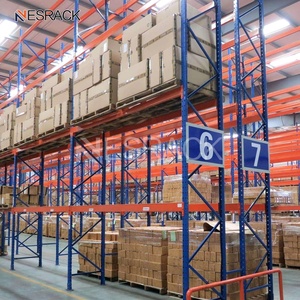
Configurable 5-layer system built with high-yield cold-rolled steel profiles for versatile box, bin, and heavy carton buffering.
Learn More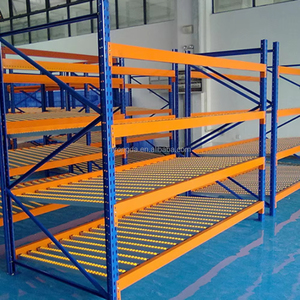
Dynamic roller beds operating under controlled gravity gradients to guarantee strict First-In, First-Out (FIFO) material rotation.
Learn More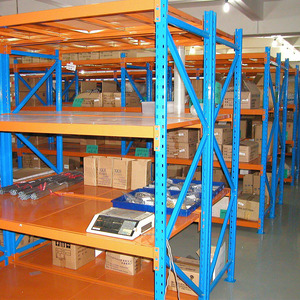
Space-maximizing wall-anchored steel slotted angle tracks with fast clip adjustments for maintenance rooms and picking aisles.
Learn More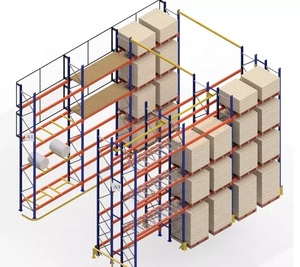
Engineered to comply strictly with AS4084 structural steel storage codes, equipped with heavy footplates and seismic locking pins.
Learn More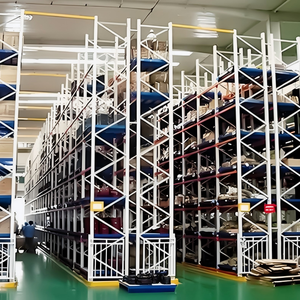
Ultra-dense vertical storage framework tailored for guided turret trucks and automated picking vehicles in high-velocity hubs.
Learn More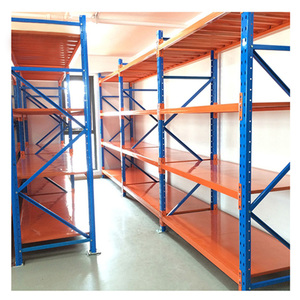
All-purpose light to medium industrial angle shelving with modular pitch increments and corrosion-resistant powder coatings.
Learn More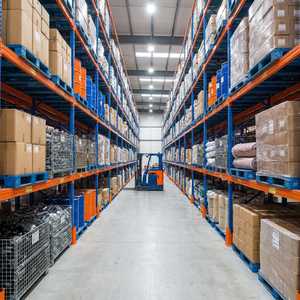
Engineered for extreme loading of 1000kg to 4000kg per beam level, reinforced with robot-welded three-prong connectors.
Learn More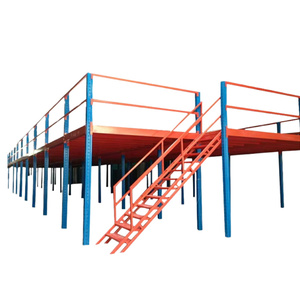
Multiplies usable vertical warehouse volume up to 300% without structural wall extensions, featuring integrated steel staircases and gates.
Learn MoreEngineering Authority: China's Slotted Angle Rack Manufacturing Prowess
Modern industrial supply chains require warehousing frameworks that balance high volumetric density, rapid manual reconfiguration, and uncompromised structural stability. Slotted angle racks—often called universal slotted angle steel shelving—remain the world's most versatile, cost-effective manual picking and light-to-medium payload storage medium. Guangzhou HEDA Shelves Co., Ltd., based in Guangzhou, Guangdong, China, has stood at the core of this industrial segment since 2001, transitioning from localized metal fabrications to an engineering-driven global export leader operating across a 30,000-square-meter facility.
True manufacturing authority in slotted angle systems is dictated by metallurgical precision. Unlike light commercial shelving manufactured from recycled scrap steel sheets, our export-grade industrial slotted angle racks utilize prime cold-rolled Q235B structural carbon steel (certified yielding tensile strength of 235 MPa). Automated roll-forming systems shape the continuous L-profile uprights, punching precision teardrop or elliptical slotting arrays with strict tolerances (±0.05 mm pitch variation). This ensures absolute perpendicular verticality and eliminates racking creep under heavy shelf loadings.
10-Stage Surface Treatment
Every beam, angle upright, and steel panel completes a chemical pickling, degreasing, and phosphating cycle before electrostatic epoxy powder coating at 200°C for exceptional resistance to scratching and corrosion.
Traceable International Certifications
Guaranteed compliance with ISO 9001:2015 Quality Systems (Cert No. 18624Q00169R0M), CE Construction Product Directives (No. 2435-CPR-8605159), and Australian AS4084-2012 seismic storage mandates.
Integrated CAD/3D Engineering
Custom structural calculations, CAD layouts, and load calculation sheets delivered in dual unit systems (lbs/ft and kg/mm) within 24 hours of floor plan submission for smooth review by your engineer of record.
Engineering Selection Guide: Slotted Angle vs. Advanced Racking Architectures
Logistics facilities must match structural frameworks to SKU velocity, unit load dimensions, and mechanical handling machinery. Below is an engineering comparison matrix detailing operational criteria across key warehouse storage solutions.
| System Architecture | Typical Payload / Level | Handling Interface | Floor Space Efficiency | Optimal Deployment |
|---|---|---|---|---|
| Industrial Slotted Angle Rack | 100 – 350 kg (220 – 770 lbs) | 100% Manual Hand-Pick | Moderate (Configurable heights) | Spare parts, hardware bins, tool cribs, archive libraries |
| Heavy-Duty Pallet Racking | 1,000 – 4,000 kg (2,200 – 8,800 lbs) | Counterbalance / Reach Trucks | High (Direct pallet access) | Standardized FMCG warehousing, raw materials, heavy containers |
| Carton / Pallet Gravity Flow | 300 – 1,500 kg per lane | Manual pick face / Forklift load | Very High (Dynamic FIFO lanes) | Cold storage fulfillment, perishable pharmaceuticals, fast FMCG |
| Narrow Aisle (VNA) Systems | 1,000 – 2,500 kg (2,200 – 5,500 lbs) | Wire-Guided Turret Forklifts | Maximum Vertical Utilization | High-bay distribution centers with premium real estate costs |
| Rack-Supported Mezzanine | 300 – 1,000 kg/m² floor capacity | Multi-Tier Manual & Pallet Drop | 200% - 300% Floor Area Multiplier | E-commerce order fulfillment, split-case handling, assembly floors |
Future Sourcing Trends for Industrial Slotted Angle Racks (2025–2030)
Procuring warehouse racking from overseas is evolving from simple per-ton price comparisons into a holistic Total Cost of Ownership (TCO) evaluation. Enterprise buyers are navigating geopolitical, ecological, and technological shifts that dictate four clear procurement trends:
1. Carbon-Footprint Tracking & Green Steel Sourcing
Industrial procurement standards across Europe and North America increasingly penalize high-carbon steel manufacture. Forward-thinking suppliers utilize scrap-enhanced electric arc furnace (EAF) steel and dry-powder electrostatic lines that generate zero volatile organic compound (VOC) emissions, helping enterprises hit Scope 3 sustainability targets without sacrificing load limits.
2. Seismic-Resilient Cold-Formed Uprights (AS4084-2012 & RMI MH16.1 Compliance)
Municipal building departments and insurance adjusters now demand authenticated engineering validation. Overseas suppliers must demonstrate finite element analysis (FEA) testing for slotted corner plates, beam deflection ratios under full loading (standard L/200 criteria), and floor anchor pull-out ratings for high seismic risk zones (Zones 3 and 4).
3. High-Density Mixed Modular Architectures
Modern supply chains rarely rely on a single racking system. The trend favors hybrid facilities combining heavy pallet base levels with upper slotted angle picking mezzanines. Chinese manufacturers that offer end-to-end production across heavy structural uprights, intermediate slotted angles, and open steel plank decking deliver significant logistical savings through bundled container packing.
4. Ocean Container Volumetric Packing Optimization
With volatile international freight rates, freight space efficiency is critical. Experienced exporters pack nested angle profiles, boxed corner gussets, and shrink-wrapped upright bundles using custom wood cribbing, maximizing gross weight limits in 40ft High Cube containers without component deformities.
Slotted Angle Rack Evolution: From Light Storage to Smart Intralogistics
The slotted angle rack was originally developed as a flexible construction framing material. Over decades of industrial maturation, it has developed into a standardized, high-performance structural component:
Phase 1: Purely Bolted Angle Frameworks (1960s–1980s)
Early iterations depended on manual bolt, washer, and nut assemblies on every joint. While flexible, initial installations were labor-intensive and susceptible to operational racking tilt under lateral forces.
Phase 2: Hybrid Rivet & Boltless Keyhole Technology (1990s–2010s)
The market adopted quick-connect slotted angles featuring precision teardrop, keyhole, and butterfly slot configurations. Tool-free assembly reduced installation labor costs by up to 60%, while corner stiffener gussets preserved lateral structural rigidity.
Phase 3: Automated Micro-Slotting, High-Yield Q355 Steels, and AMR Integration (Present & Future)
Today's advanced slotted angle racks are integral parts of semi-automated picking facilities. Modern angle frames integrate seamlessly with Autonomous Mobile Robots (AMRs), pick-to-light LED arrays, carton flow gravity tracks, and electronic inventory tags. Upgraded steel metallurgy (moving into micro-alloyed Q355 profiles) allows thinner gauge steel to sustain higher dynamic weights, cutting material usage while boosting resilience.
Why Global Logistics Leaders Partner with Guangzhou HEDA Shelves
With a comprehensive manufacturing campus based in Guangzhou, HEDA Shelves serves as a reliable direct manufacturing bridge between high-capacity steel production and sophisticated global warehouse engineering. Our advantages include:
30,000 m² Integrated Campus
We manage all core operations in-house: automated coil slitting, cold roll-forming lines, computerized multi-station punching, robotic arm welding, and automated powder-coating lines produce up to 30,000 metric tons per month.
Turnkey OEM & ODM Capabilities
We supply private-label racking distributors and systems integrators across North America, Europe, Australia, and the Middle East with custom stamping, specialized profile geometry, and brand-tailored packaging.
Pre-Shipment Quality Audits
Every export production lot is checked for paint thickness (≥60 microns), salt spray corrosion resistance, tensile strength, and test-assembled before container sealing to avoid on-site delays.
Comprehensive Procurement FAQ: Industrial Slotted Angle Racks
Direct technical responses addressing common engineering, logistics, and quality assurance questions when importing industrial racking systems from China.
What steel grade is used in HEDA industrial slotted angle racks, and can test certificates be provided?
How are maximum load limits determined for slotted angle shelves?
Can HEDA provide engineering drawings and calculations in imperial units (lbs, inches, feet)?
What rust preventative treatments are applied to protect metal racks during ocean transit?
What is your typical production lead time and minimum order quantity (MOQ)?
How do you support structural permits and seismic code compliance?
Transform Your Warehouse Floor Layout
Submit your facility layout, clear ceiling heights, and payload requirements. Our engineering team will supply an itemized quotation, structural bill of materials (BOM), and complete CAD/3D designs within 24 hours.
Contact Us