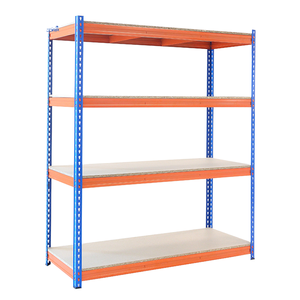
High-Capacity Industrial Racking Solutions
Explore precision-formed storage systems tailored for distribution centers, heavy cold chain operations, and e-commerce picking hubs worldwide.
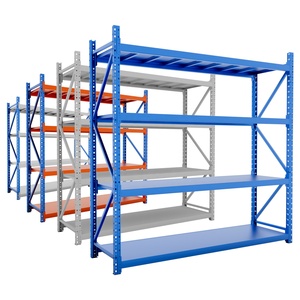
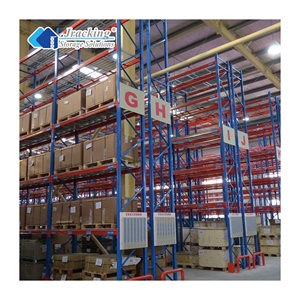

Enterprise Direct Advantages: Precision Racking Manufacturing
Combining heavy industry rolling mill capacity with European and North American engineering criteria for enterprise-scale logistics facilities.
2001
Established Engineering Hub
30,000+
Metric Tons Monthly Capacity
323,000
Sq Ft Dedicated Production
10,000+
Global Systems Installed
High-Yield Certified Steel
We source prime Q235B and Q355B coil stock. Every structural batch undergoes yield, tensile, and elongation verification matching international quality compliance standards.
Custom Engineering & CAD/3D
Full CAD layout designs, load profile charts in lbs/ft or kg/mm, and finite element modeling (FEM) validated within 24 hours to accelerate permitting and approvals.
ISO 9001 & CE Certified
Full-process auditing, EN 15512 compliance testing, and verified weld integrity across automated multi-stage roll-forming, cutting, and robotic welding lines.
10-Step Surface Treatment
Continuous pickling, phosphating, and electrostatic powder coating prevent premature corrosion in variable cold storage and high-humidity warehouse environments.
Technical Whitepaper: Industrial Racking Manufacturing Dynamics & Global Sourcing
As modern logistics evolves to cope with rapid order-fulfillment cycles and fluctuating pallet sizes, selecting an industrial racking manufacturer is no longer merely a procurement exercise in raw steel pricing. Facilities directors, system integrators, and 3PL leaders must examine mechanical tolerances, metallurgy, structural calculation models, and future scalability.
1. Structural Integrity & Seismic Design Standards
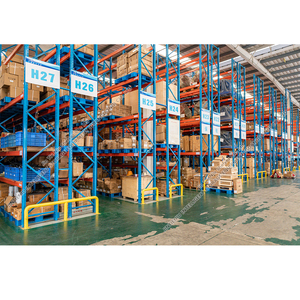
Engineering industrial pallet racking requires deep knowledge of seismic load codes, localized slab deflections, and aisle clearances. Top Chinese industrial racking manufacturers implement global design standards like the Rack Manufacturers Institute (RMI MH16.1) specification in North America and EN 15512/FEM 10.2.02 codes across Europe. Key structural variables include:
- Base Plate Anchor Embedment: Sizing anchoring bolts and concrete base fixtures relative to local seismic zone accelerations (Ss and S1 ratings).
- Beam-to-Column Connection Stiffness: Multi-tang claw locking configurations designed to absorb harmonic vibrations while eliminating accidental disconnects via heavy-duty safety lock pins.
- Upright Flue and Perforation Geometry: Ensuring that column roll forming preserves steel integrity through cold work without micro-cracking across precision punch pitches.
Engineering Rule of Thumb: Always require your manufacturing partner to furnish engineering calculation sheets indicating maximum beam deflection ratios under full rated load (typically L/180 or L/200).
2. Future Procurement Trends in Industrial Storage
The global materials handling landscape is experiencing a structural pivot. When assessing future racking procurement strategies, enterprise buyers are prioritizing three technological transitions:
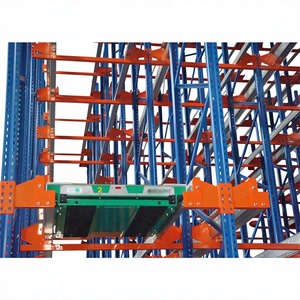
- Migration to Semi-Automated High-Density Storage: Standard drive-in racking is giving way to 4-way and 2-way Radio Shuttle Pallet Racking systems. Automated shuttles reduce forklift collision incidents by up to 80% while enabling denser pallet matrices.
- AMR & AGV Integration Readiness: Racking layouts are increasingly designed with wider base apertures, floor-level sensor channels, and tighter manufacturing tolerances to accommodate autonomous mobile picking robots.
- Total Landed-Cost Analysis: Sophisticated operators look past base FOB metrics. Container cube-efficiency, nested upright designs, modular bolt-together assemblies, and verified structural paint warranties form the cornerstone of true lifecycle ROI.
3. Evolution of Surface Chemistry & Material Protection
Warehouses are expanding into extreme cold chain logistics (-25°C to -30°C) and corrosive ambient facilities. Conventional single-coat finishes risk micro-fissuring and rust creep under dynamic load cycles. Next-generation production features multi-stage zinc phosphate immersion followed by thermosetting polyester powder layers cured above 180°C. For aggressive exterior or open solar integration scenarios, structural hot-dip galvanization (HDG) maintaining coating thicknesses exceeding 65–85 microns remains the industry benchmark.
Industrial Racking Sourcing FAQ
Critical answers for supply chain executives, facility managers, and international logistics planners.
How do top Chinese racking manufacturers verify load bearing capacities?
Reliable manufacturers carry out extensive destructive and non-destructive load tests on components and assembled frame bays. These tests follow EN 15512 and RMI standards, assessing upright compressive strength, beam end-connector looseness, shear deflection, and frame shear resistance. Test results are documented in third-party verified laboratory engineering reports.
Can customized racking accommodate non-standard pallets and bins?
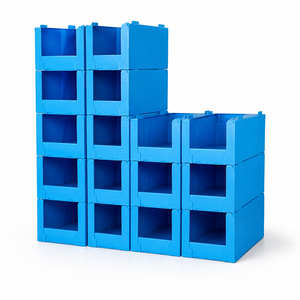
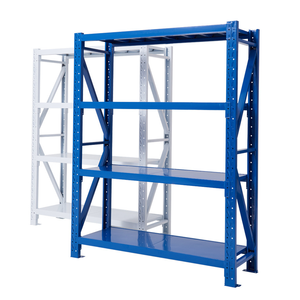
Yes. Custom manufacturing supports standard GMA (48"x40"), European EUR/EPAL (1200x800mm), and Australian configurations alongside bespoke sizes. Upright frame depths, beam step profiles, and cross-support accessories (drop-in pallet supports, wire decking, corrugated picking bins) are engineered specifically to match specialized containers.
What documentation is required to clear customs and ensure site permitting?
Turnkey international projects require a complete export dossier: Commercial Invoice, Packing List, Mill Test Certificates (MTC) proving steel grades, CE Declarations of Conformity, and ISO 9001 certifications. For municipal warehouse permitting, manufacturers provide full CAD floor layouts, profile dimension drawings, and structural design calculations ready for review by your licensed local Engineer of Record (EOR).
How does containerization impact structural component lengths?
Standard ocean shipping containers limit single-piece lengths to approximately 11.8 meters (in 40-foot High Cube containers). For facilities with upright requirements exceeding this height, manufacturers engineer precision structural column splices. These heavy-gauge bolted sleeve joints match or exceed the parent upright section modulus without compromising frame load ratings.
Plan Your Warehouse Storage Layout with Certified Engineers
Submit your facility floor plan, clear heights, and load requirements to receive free CAD engineering drawings, load tables, and an itemized direct quotation within 24 hours.
Inquire Now