Industrial Heavy-Duty Pallet Flow & High-Density Storage Lineup
Explore our heavy-duty industrial storage racks engineered in our ISO 9001:2015 and CE-certified Guangzhou manufacturing complex, configured to exact pallet metrics, load weight variables, and rotation profiles.
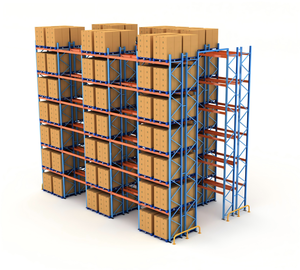
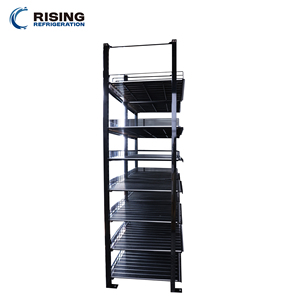
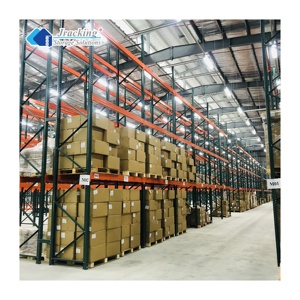
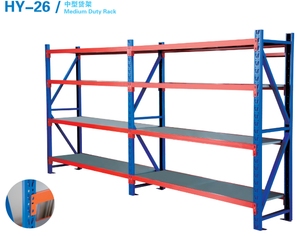
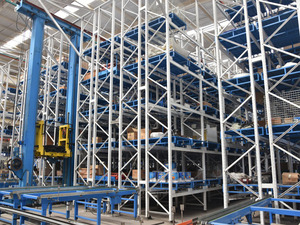
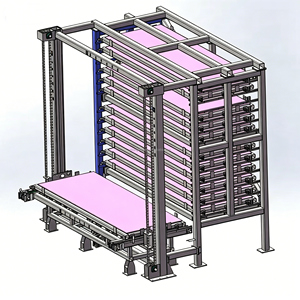
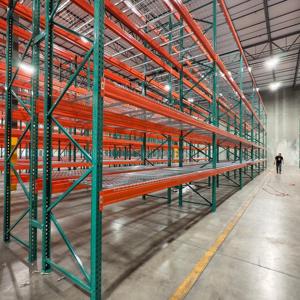
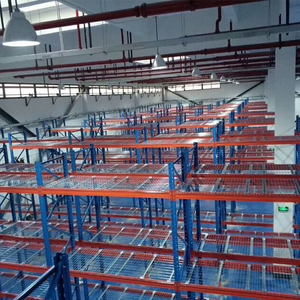
OEM ODM Selective Pallet Racking for Warehouse Storage with Adjustable Beam
Structural Physics and Dynamics of Pallet Flow Racking Systems
Gravity feed pallet racking systems—commonly designated as gravity flow or pallet flow racks—represent the pinnacle of non-powered, high-density First-In, First-Out (FIFO) material handling. Operating entirely on gravitational potential energy, these advanced structures yield unmatched space savings and dispatch cycle optimization.
Slope & Velocity Mechanics
Factory-calibrated gradients (typically 3.0% to 4.2% or 3/8" per linear foot) translate static load weight into controlled linear motion, overcoming initial pallet stiction without exceeding terminal runaway velocity.
Centrifugal Speed Controllers
Internal viscous or planetary gear centrifugal brake rollers are engineered at designated pitch intervals (every 1 to 2 pallet lengths) to govern downward momentum and ensure gentle, impact-free indexing.
Pallet Separation Assemblies
Mechanical exit ramp separators isolate the lead discharge pallet from upstream queue pressure, neutralizing line back-pressure so lift trucks can extract loads cleanly without snagging downstream pallets.
High-Density Intralogistics: System Architecture Comparison
A data-backed comparative analysis evaluating structural density, rotation compliance, SKU selectivity, and operational cycle times across leading heavy-duty warehousing systems.
| System Architecture | Rotation Logic | Storage Volume Utilization | Forklift Travel In-Aisle | Honeycombing Risk | Relative CapEx / Position |
|---|---|---|---|---|---|
| Gravity Feed (Pallet Flow) | Strict FIFO | Up to 85% Active Volume | Zero (Dedicated Load/Pick Faces) | Negligible | Moderate to High (Passive Mechanicals) |
| Drive-In Racking | LIFO Only | Up to 75% Active Volume | High (Drive into racking lane) | High (Lane locking) | Economical / Low Initial Cost |
| Push Back Racking | LIFO Only | Up to 70% Active Volume | Zero (Front access nested carts) | Moderate (2-6 pallets deep) | Moderate |
| Radio Shuttle Automation | FIFO or LIFO | Up to 88% Active Volume | Zero (Semi-automated car) | Low | High (Battery & Controls) |
| Selective Pallet Racking | Any (Flexible) | 40% - 50% Active Volume | High (Aisles between every rack) | None (100% SKU Access) | Lowest Baseline |
Future Procurement Trends in Gravity Feed Pallet Systems (2025–2030)
Global supply chain resilience, cold chain expansion, and automated guided vehicle (AGV/AMR) fleets are radically reshaping how engineering directors specify and procure pallet flow solutions from Chinese manufacturing powerhouses.
Autonomous Mobile Robot (AMR) Interfacing
Modern gravity feed pick faces are increasingly outfitted with precision optical alignment targets and mechanical docking stops calibrated specifically for counterbalanced AGVs and automated reach trucks.
Cold Chain Energy Optimization
With cubic meter cooling energy costs surging, high-density FIFO flow tracks are becoming standard in -30°C food and biopharma hubs, slashing building refrigeration volume by over 45% compared to selective aisles.
Modular Track Sub-Assemblies
Procurement teams demand bolt-on, interchangeable roller cartridges that integrate effortlessly onto teardrop and standard roll-formed step beams, reducing installation lead time and long-term track replacement costs.
Standardized Factory Pre-Testing
Tier-1 procurement mandates factory pre-assembly and gravitational velocity testing on actual client pallets before containerization, eliminating on-site alignment disputes during facility commissioning.
Advanced Materials and Precision Manufacturing Disciplines
The structural longevity and kinetic reliability of modern gravity racking hinges on rigorous material science and tight fabrication tolerances from China's leading roll-forming facilities.
High-Yield Steel Chemistry
Cold-rolled structural steel coils exceeding ASTM A1011 / Q235B and Q355B yield ratings ensure structural column integrity under severe dynamic fork truck loading and dynamic braking impacts.
Electrostatic Powder & Galvanizing
Every beam, upright frame, and bed component undergoes an 8-stage pre-treatment (acid pickling, phosphating, pure water wash) followed by automated thermosetting powder coating or hot-dip galvanization.
Polymer & Steel Hybrid Bearings
Maintenance-free sealed ball bearings fitted with high-impact polymeric outer sleeves guarantee silent operation, corrosion resistance, and consistent roller rotation under sub-zero thermal extremes down to -30°C.
Guangzhou Heda Shelves Co., Ltd. – Manufacturing Authority Since 2001
Backing your supply chain with 25+ years of production heritage, an expansive 30,000 m² (approx. 323,000 sq ft) manufacturing complex, 300+ seasoned engineers and technicians, and a monthly output surpassing 30,000 metric tons of precision warehouse steel.
24-Hour Engineering Turnaround
Send your warehouse architectural CAD drawings, clear height, pallet footprints, and forklift turning radiuses; our senior engineering office provides optimized 2D layouts, 3D renderings, and structural calculations within 24 hours.
Comprehensive Quality Audits
Manufactured in stringent alignment with ISO 9001:2015 (Cert No. 18624Q00169R0M) and CE Construction Products Regulation (2435-CPR-8605159). Mill test certificates and comprehensive ultrasonic weld testing accompany every shipment.
North American Code Compliance
Supplying imperial load data tables (lbs, ft, in), RMI standards compliance, and seismic base plate engineering ready for review and stamping by local professional engineers (PE) across the United States, Canada, and Mexico.
In-House Roll-Forming Lines
Continuous CNC-controlled automated punch presses and roll-forming profiles ensure hole-pitch consistency down to 0.1mm tolerance, ensuring flawless beam-to-column connector lock engagement during assembly.
Containerization & Export Care
Exporting through major international ports (Long Beach, Houston, Savannah, New York/New Jersey, Vancouver, Rotterdam) using steel strapped bundling, waterproof polyethylene wrapping, and padded channel dunnage.
Full OEM / ODM Customization
Custom beam length configurations for standard 48"x40" GMA pallets, 1200x800mm Euro pallets, or non-standard container skids, finished in customer-designated RAL powder-coat colorways with branded beam caps.
Frequently Asked Questions: Sourcing Gravity Feed Pallet Racking
In-depth technical answers addressing operational mechanics, engineering criteria, containerized ocean logistics, and project safety certification.
Q1 How is the slope pitch calculated for varying pallet weights?
Lane slope is calibrated based on pallet bottom-runner geometry, wood/plastic material friction coefficient, and gross weight variance (ranging from 500 lbs to 3,300 lbs per pallet). Standard systems employ a 3.5% to 4.0% decline. Pallet flow testing in our factory test tower verifies that lightweight loads start unassisted while maximum loads do not overload speed controllers.
Q2 Can gravity flow racking handle defective or broken pallets?
Gravity systems require structurally sound bottom boards or skids with minimal deflection (less than 1/4 inch under load). For warehouses handling mixed or compromised pallets, our engineers recommend full-width steel roller tracks or heavy-duty 3-track skate wheel assemblies equipped with continuous guide channels and bottom anti-split runner supports.
Q3 What prevents runaway pallets in lanes 10 to 20 pallets deep?
Deep-lane systems integrate centrifugal speed controller rollers at mathematically spaced intervals (typically every 2 pallet positions). As dynamic line velocity exceeds safe thresholds, centrifugal brake pads within the roller housing expand against the outer casing, dynamically throttling speed to a controlled walking pace (approx. 0.3 m/s).
Q4 How does the separator mechanism protect forklift operators?
When the lead pallet arrives at the unload face, it depresses an automatic mechanical floor lever that engages a secondary lock upstream. This physical barrier blocks the hydrostatic pressure of the entire queue (up to 30 tons of cumulative force), allowing the forklift operator to remove the discharge pallet safely without rear pressure clamping the pallet forks.
Q5 How does the factory package gravity flow beds for ocean freight?
Roller tracks, speed controllers, and separator assemblies are pre-assembled into rigid modular modules, secured on heavy structural steel transport skids, wrapped with multi-layer waterproof film, and banded with high-tensile steel strapping. Upright frames are nested to maximize 40ft HQ container space utilization while preventing transit rubbing.
Q6 Are your engineering drawings compatible with North American seismic codes?
Yes. All structural calculations can be issued using imperial units (lbs, ft, in) according to AISC and RMI (Rack Manufacturers Institute) specification standards. We provide load capacity plaques, foundation anchoring layouts, and seismic base plate dimensions ready for local Engineer of Record (PE) sign-off and jurisdictional permitting.
Q7 What is the operating temperature threshold for cold-chain freezers?
Our cold-storage gravity feed systems utilize specialized low-temperature internal roller lubricants, zinc-dichromate or hot-dip galvanized steel coatings, and cold-bend steel formulations certified to perform reliably without brittle failure down to -30°C (-22°F).
Q8 What data is required to generate an actionable CAD layout and quotation?
We require warehouse building dimensions and clear slab height, column grid layouts, pallet dimensions (W x D x H) including overhang and bottom runner profile, minimum/maximum pallet weight, number of SKUs, inventory turnover velocity, and forklift mast height/turning radius specifications.
Transform Your Warehouse Throughput with Factory-Direct Engineering
Partner directly with Guangzhou Heda Shelves Co., Ltd. Leverage over two decades of heavy-duty racking manufacturing, 323,000 sq ft of high-precision roll-forming capacity, and rapid 24-hour CAD design support to cut landed project costs without compromise.
Send an Inquiry