Engineering External Pallet Racking for Resilient Global Logistics
A definitive technical evaluation of outdoor storage engineering, heavy steel structural profiles, metallurgy surface treatments, and international factory supply contracts.
In modern supply chain engineering, warehouse footprint expansion frequently encounters severe land acquisition caps, escalating municipal construction permitting timelines, and surging indoor leasing costs. Consequently, enterprise distribution hubs, heavy machinery manufacturers, chemical processors, and port logistics operators are systematically migrating high-cube, weather-tolerant inventory to external pallet racking systems. Unlike standardized indoor warehousing infrastructure, outdoor and perimeter rack installations operate under relentless environmental exposure, encountering cyclical wind shears, seismic lateral forces, thermal expansion stresses, and aggressive chemical corrosion categorized under ISO 9223 atmospheric corrosivity classes C3 through C5-M.
Sourcing heavy-duty external pallet racking directly from premier Chinese manufacturing hubs enables EPC contractors, warehouse developers, and 3PL conglomerates to attain unprecedented capital expenditure efficiencies—typically yielding a 30% to 45% reduction in total landed steel costs. However, mitigating procurement and operational risk requires strict alignment with rigorous structural compliance mandates, including RMI ANSI MH16.1 (North America), EN 15512 / EN 1090 execution standards (European Union), and AS 4084 (Australasia). As an established leader in heavy structural steel fabrication and international exports since 2001, Guangzhou Heda Shelves Co., Ltd. (HEDA Shelves) provides comprehensive turnkey engineering, automated roll-forming, hot-dip galvanization, and end-to-end containerized logistics to North America, Europe, and emerging industrial markets.
Certified Industrial Racking & Specialized Storage Systems
Manufactured using cold-rolled high-tensile Q235B and Q355B structural steel, precision-punched, and treated for maximum environmental longevity.
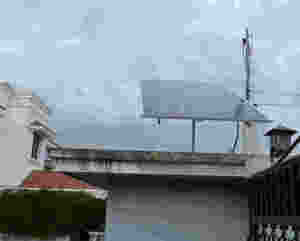
Hot-DIP Galvanized Corrosion Resistant 2 Panels Single Pole Steel Solar Ground Mounting PV Panel Racking System 25-Year Warranty
- Surface: Hot-Dip Galvanized ≥ 85 μm
- Wind Load Resistance: Up to 60 m/s
- Warranty: 25-Year Structural Lifecycle
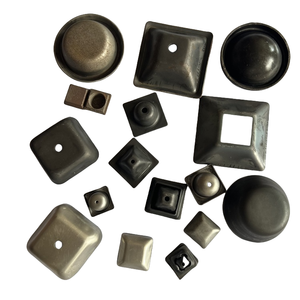
Best Quality Heavy Duty Round Stacking Steel Pallet Stillage Feet Stacking Racks Bottom Feet
- Material: Deep-Stamped Heavy Carbon Steel
- Load Capacity: Up to 5,000 kg Stacking Load
- Integration: Compatible with Stillage & Posts
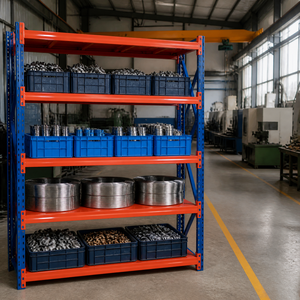
Custom Adjustable Anti-Rust Storage Metal Stacking Racks Pallet Racking System Steel Shelving VNA Racking Narrow Aisle Rack
- Footprint: Narrow Aisle (1.6m - 1.9m) Design
- Height Capacity: Modular Vertical Reach to 15m
- Finish: Corrosion Inhibitive Powder Coat
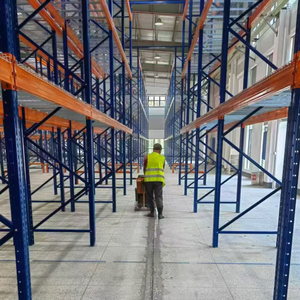
Industrial Steel Heavy Duty Storage Rack System CE Certification Adjustable Beam Height Quick Assembly for Long-Term Warehouse
- Compliance: CE Certified (EN 15512:2020)
- Bay Capacity: 1,000 kg - 4,500 kg / Level
- Adjustment: 50mm / 75mm Pitch Spacing
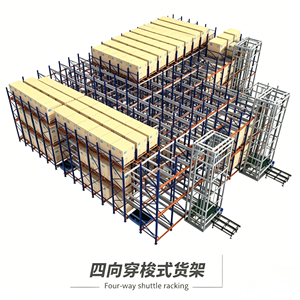
Energy-Efficient 4-Way Steel Shuttle Cart Rack Corrosion Protection High-Capacity Movable Pallet Storage System For Cold Chain
- Thermal Rating: Operational to -30°C Freezers
- Automation: Multi-Directional Radio Shuttle
- Density: Up to 85% Volumetric Space Utilization
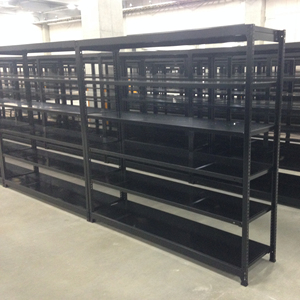
Factory Price Customized Medium-Duty Rack Warehouse Steel Metal Rack Shelf
- Load Range: 200 kg - 800 kg per Shelf Level
- Decking: Solid Steel, Wire Mesh, or Plywood
- Assembly: Boltless Interlocking Upright Frames
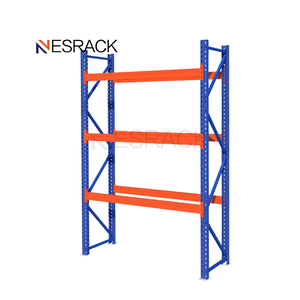
Heavy Duty Pallet Rack Shelving Pallet Racking Dimensions Warehouse Storage Racks Customized Adjustable Steel Q235B Pallet Rack
- Steel Grade: Certified Q235B / ASTM A36 Equiv.
- Pallet Dimensions: Optimized for GMA 48"x40" & Euro
- Upright Profile: High-Section Modulus Roll-Formed
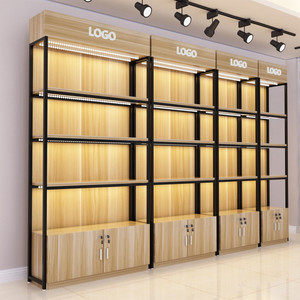
Supermarket Wooden Retail Shelving Display Shop Shelves Cosmetic Grocery Display Convenience Store Rack Shelves for Retail Store
- Aesthetics: Integrated Solid Timber & Steel Framing
- Modularity: Double-Sided Gondola & End-Caps
- Application: High-Traffic Retail, FMCG & Marts
Over Two Decades of Structural Manufacturing Excellence
Combining heavy-industry metallurgical engineering, certified ISO quality management, and dedicated global export operations.
Imperial & Metric Engineering Deliverables
We supply full CAD shop drawings, 3D BIM models, and structural calculation packages formatted in both imperial (lbs, ft, in) and metric systems. Our documentation is tailored specifically for smooth stamping and seismic reviews by your local registered Professional Engineer (PE) or Engineer of Record (EOR).
Accredited International Quality Certifications
Our operations comply with verified international quality frameworks, maintaining ISO 9001:2015 certification (Cert. No. 18624Q00169R0M), CE Marking (Declaration of Conformity No. 2435-CPR-8605159 for Structural Steel Components), and comprehensive RoHS environmental non-toxicity certifications.
Container-Optimized Ocean Export Packaging
To eliminate maritime transport damage and minimize per-unit ocean freight, components are nested in high-density bundles wrapped with anti-chafing film and heavy-duty steel banding. Optimized for standard 40-foot High Cube (40HC) containers, ensuring safe uncrating across major US, Canadian, and global seaports.
At Guangzhou Heda Shelves Co., Ltd., quality control spans every stage of manufacturing across our 10-step production protocol: from spectrographic raw coil steel testing, automated slitting, high-precision continuous roll-forming of upright columns and box beams, to multi-stage chemical pretreatment (acid pickling, degreasing, and zinc phosphating), automated robotic welding, and thermoset electrostatic powder curing. This rigorous process guarantees maximum dimensional precision, minimal residual stress, and dependable load ratings that meet or exceed international safety factors.
Metallurgy and Protective Coatings for External Pallet Racking
A technical guide to selecting steel grades, galvanic zinc treatments, and weather-resistant polymer finishes under outdoor conditions.
External pallet racking faces severe environmental degradation mechanisms that indoor warehouse systems never encounter. The presence of atmospheric moisture, sulfur dioxide (SO₂), airborne chlorides in coastal zones, and constant ultraviolet (UV) solar radiation requires advanced metallurgical engineering and tailored protective coatings. Specifying improper finishes can trigger accelerated galvanic corrosion, beam deflection failures, or catastrophic baseplate buckling within as little as 24 to 36 months of deployment.
| Coating / Metallurgy System | Typical Thickness | Corrosion Resistance Class (ISO 12944) | Average Outdoor Service Life | Ideal Application Environments |
|---|---|---|---|---|
| Batch Hot-Dip Galvanizing (HDG) ASTM A123 / ISO 1461 |
70 μm – 110 μm | C4 – C5 (Very High / Marine) | 25 – 50+ Years | Perimeter yards, unshaded outdoor lumber storage, coastal terminals, chemical plants |
| Continuous Pre-Galvanized (Sendzimir) EN 10346 / ASTM A653 |
15 μm – 25 μm | C2 – C3 (Low / Moderate) | 5 – 10 Years | Semi-covered outdoor canopies, dry climatic zones, secondary wire mesh decking |
| Architectural Polyester Powder Coat Dual-Layer Zinc Rich Primer + TGIC |
90 μm – 140 μm | C3 – C4 (Moderate / High) | 10 – 15 Years | Covered outdoor dock aprons, drive-through retail lumber yards, architectural installations |
| Austenitic Stainless Steel (304 / 316) Base Alloy (Uncoated) |
N/A (Solid Substrate) | C5-M (Extreme Offshore / Marine) | 50+ Years | Specialty chemical IBC storage, cryogenic yards, coastal food processing zones |
Key Engineering Design Considerations for Outdoor Racking:
1. Internal Drainage and Weep Holes: Hollow closed sections, such as welded box beams and enclosed tubular columns, must feature strategically placed laser-cut drainage holes at their lowest points. Rainwater accumulation inside closed tubes can freeze during sub-zero winter spells; water expansion upon freezing creates severe internal hydraulic pressure capable of splitting structural steel profiles along their longitudinal seam welds.
2. Fastener Metallurgy and Galvanic Isolation: Connecting hot-dip galvanized uprights with standard electroplated zinc fasteners (Class 4.8 or 8.8) induces rapid sacrificial depletion of the bolt threads due to the surface area ratio between the vast cathode (the rack) and minuscule anode (the bolt). External systems require hot-dip galvanized grade 8.8 structural bolts (ASTM A325 / ISO 10684) paired with neoprene isolation washers where dissimilar metals interface.
Emerging Procurement Trends in Global Heavy Racking (2025–2030)
How automation, decarbonization standards, and digital twin engineering are reshaping international factory contracts.
Decarbonized "Green Steel" & CBAM Verification
Global procurement teams in Europe and North America face intensifying regulatory pressures to document embedded carbon footprints. Sourcing strategies are rapidly shifting toward tier-1 Chinese manufacturers operating electric arc furnaces (EAF) powered by renewable grids. The implementation of the European Union’s Carbon Border Adjustment Mechanism (CBAM) requires Chinese exporters to supply verified Environmental Product Declarations (EPDs) and raw coil carbon accounting certificates alongside standard bill of materials.
Rack-Clad Building (RCB) Structures & Hybrid Silos
To eliminate the dual expense of constructing a standard industrial steel building and then filling it with free-standing pallet racks, EPC developers are investing heavily in Rack-Clad Buildings. In this structural typology, the external heavy-duty pallet racking functions as the primary load-bearing skeleton supporting the exterior roof purlins, wall claddings, and snow-shedding building envelopes. This delivers immense capital efficiency, cutting warehouse civil execution timelines by 35%.
Digital Twin Integration & IoT Deflection Telemetry
Enterprise procurement departments are transitioning from static structural procurement to digital lifecycle contracts. Chinese export factories now deliver Native IFC and Autodesk Revit BIM assets matching fabrication tolerances. Advanced outdoor installations are integrating battery-less IoT strain-gauge sensors on critical bottom-bay uprights to continuously monitor real-time wind shear deflections, ground settlement, and dynamic forklift impacts.
Landed Cost Optimization via Modular Nesting
With international ocean container rates subject to seasonal volatility, structural frame design now focuses on nested packing geometries. Forward-thinking manufacturers engineer bolted modular upright frames where horizontal and diagonal bracings unbolt and pack flat, increasing 40HC container tonnage efficiency from 18 metric tons up to the maximum legal maritime payload of 26-28 metric tons, substantially decreasing shipping overhead.
Frequently Asked Questions: Sourcing External Racking from China
In-depth engineering and logistical guidance addressing the critical questions posed by structural engineers, import brokers, and procurement heads.
How are wind uplift and lateral seismic calculations handled for external racking installations?
Unlike indoor warehouse racking which relies on stable surrounding structures and is governed primarily by pallet dead/live loads, external pallet racking design must be computed in strict compliance with ASCE 7 (Minimum Design Loads and Associated Criteria for Buildings and Other Structures) and Chapter 16 of the International Building Code (IBC). In Europe, Eurocode 1 (EN 1991-1-4) governs wind forces.
Our engineering department utilizes advanced finite element analysis (FEA) software to model 3-second wind gust velocities (frequently specified from 90 mph up to 150 mph in coastal hurricane belts). Calculations incorporate wind drag coefficients ($C_d$) across both empty bays (maximum overturning uplift risk) and fully loaded bays (maximum baseplate bearing stress). We supply custom-engineered baseplates with multi-anchor bolt arrays (Hilti / Fischer heavy mechanical or chemical anchors) to prevent shear displacement and anchor pullout.
Can Chinese pallet racking manufacturers comply with North American RMI (Rack Manufacturers Institute) standards?
Yes. Guangzhou Heda Shelves Co., Ltd. routinely fabricates systems in strict alignment with ANSI MH16.1 (Specification for the Design, Testing and Utilization of Industrial Steel Storage Racks). We supply comprehensive structural mill test certificates (MTC) proving yield strength ($F_y \ge 345\text{ MPa}$ for Q355B / ASTM A572 Grade 50 equivalent), tensile properties, and chemical composition.
Furthermore, we supply imperial-dimensioned shop drawings, structural section moduli, and member load-deflection profiles ($L/200$ deflection limits for beam levels) required by your local US/Canadian Engineer of Record (EOR) to complete building permit applications and secure local municipal stamp approvals.
What is the difference between hot-dip galvanizing (HDG) and pre-galvanized steel for outdoor racks?
The distinction lies in coating thickness and cut-edge protection. Pre-galvanized (mill-galvanized or Sendzimir) steel is produced by passing continuous steel coil through a molten zinc bath before fabrication. The resulting zinc coating is relatively thin (typically 15 to 20 microns, or Z180–Z275). When the manufacturer punches teardrop or diamond holes into upright columns or cuts beam lengths, raw steel edges are exposed. While zinc provides limited galvanic sacrificial protection to small cut edges, severe outdoor environments will inevitably produce edge corrosion within 3 to 5 years.
In contrast, Batch Hot-Dip Galvanizing (HDG per ASTM A123 / ISO 1461) occurs after all cutting, punching, and welding operations are 100% completed. Entire upright frames, beams, and baseplates are submerged into a molten zinc bath at approximately 450°C. This creates metallurgical zinc-iron alloy layers with a rugged outer coating of 70 to 100+ microns, hermetically sealing every punched edge, interior surface, and weld seam against corrosion for 25 to 50 years.
What concrete slab foundation specifications are required for external heavy pallet racking?
External racking installations must never be anchored directly onto unreinforced asphalt or thin yard pavement. Asphalt possesses viscoelastic properties, causing anchor bolts to loosen, tilt, and pull out under dynamic wind vibrations and summer temperature softening.
A reinforced concrete slab or dedicated strip footing is required, typically specifying a compressive strength ($f'_c$) of at least 3,000 to 4,000 PSI (20 to 28 MPa). Concrete slab thickness generally ranges from 6 inches to 12 inches (150mm to 300mm), engineered according to geotechnical soil bearing capacity ($q_a$), frost line depths, and the overturning moment generated by maximum frame heights under wind loading.
How are international ocean freight logistics and customs duties managed when importing from HEDA?
We provide comprehensive commercial trade terms including FOB (Guangzhou / Shenzhen / Ningbo), CIF (to any major global discharge port such as Los Angeles, Long Beach, Houston, Savannah, Vancouver, Rotterdam, or Jebel Ali), and full DDP (Delivered Duty Paid) through our accredited international freight partners.
All shipments include fully verified shipping documents: Commercial Invoices, Packing Lists with serialized component bundling, Bills of Lading (B/L), Certificates of Origin (CO / Form A), Mill Test Certificates, and Fumigation Certificates for wooden dunnage (ISPM 15 compliant). We also guide buyers through Harmonized System (HS) classifications (HS Code 7308.90 for structural steel racking) to ensure correct tariff processing.
Request an Engineered Layout & Landed Factory Quotation
Consult directly with HEDA Shelves' technical structural engineering department. Provide your facility footprint, geographic wind/seismic zone, pallet specifications, and target storage density to receive an optimized CAD layout, structural component profile, and transparent container-landed quotation within 24 hours.
- Free 2D CAD & 3D Visual Layouts
- PE/EOR Stamping-Ready Calculation Data
- High-Yield Q235B & Q355B Steel Options
- ISO 1461 Certified Hot-Dip Galvanization