Engineered Heavy-Duty Pallet Racking Systems
Every racking configuration is fabricated from certified high-tensile structural steel, engineered for rigorous seismic compliance, and optimized for global export container loading.
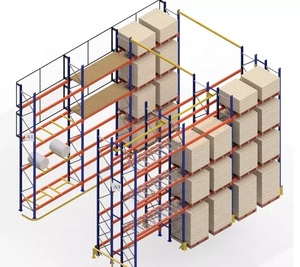
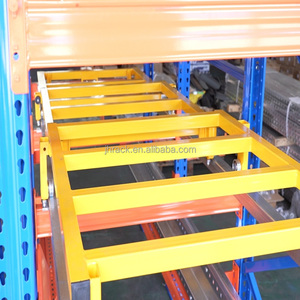
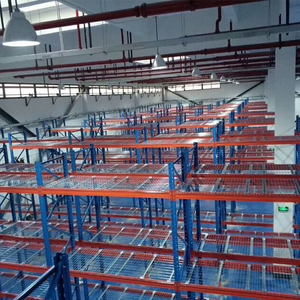
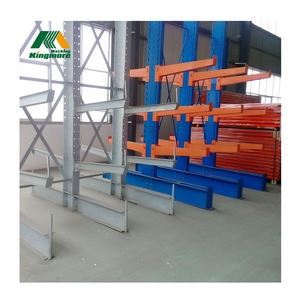
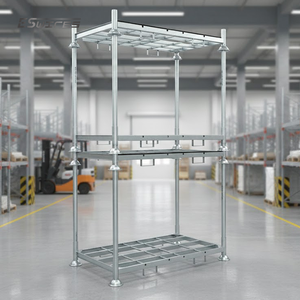
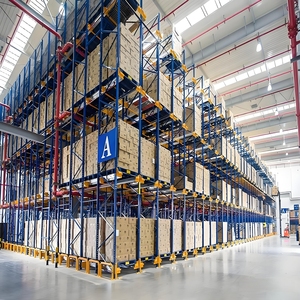
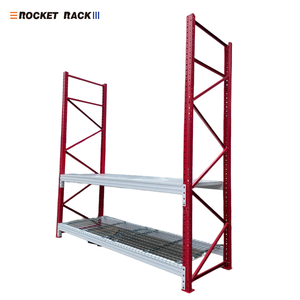
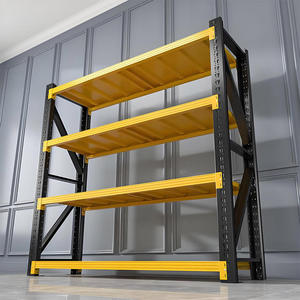
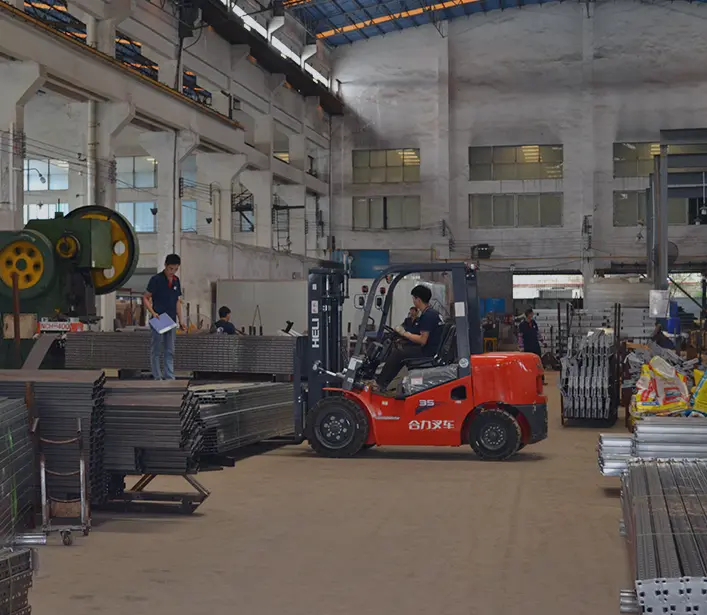
Precision Racking Production & Scale
Backing international logistics providers, distributors, and engineering contractors with state-of-the-art roll forming and rigorous dimensional tolerance control.
Structural Integrity, Deflection Limits & Compliance Standards
High-bay pallet racking is an engineered civil structure subject to strict dynamic live loads, windage, and seismic ground accelerations.
In modern high-density distribution centers, erecting pallet racking requires comprehensive finite element analysis (FEA) to calculate second-order structural deformations, torsional buckling limits, and dynamic pallet impact loads. When sourcing pallet racking systems from China, tier-one global buyers demand strict adherence to international building and racking codes, including ANSI MH16.1 (Specification for the Design, Testing and Utilization of Industrial Steel Storage Racks in North America), AS4084-2023 (Steel Storage Racking code in Australia), and EN 15512:2020 / EN 15635 across the European Union.
The distinction between economy racking and precision-engineered erecting racking lies in the metallurgical composition of cold-rolled steel coils and the continuous roll-forming tolerances. Chinese industrial-grade racking relies heavily on modified Q235B and high-tensile Q355B (comparable to ASTM A1011 Grade 50 or European S355JR). These alloys deliver exceptional yield strength (up to 355 MPa) and guaranteed elongation percentages (>21%), ensuring that structural upright frames and box beams undergo plastic deformation under seismic shock rather than catastrophic brittle shearing.
| Steel Grade Standard | Yield Strength (ReH Min) | Tensile Strength (Rm) | Charpy V-Notch (-20°C) | Ideal Application Scenario |
|---|---|---|---|---|
| Q235B / ASTM A36 Equiv. | ≥ 235 MPa | 370 – 500 MPa | ≥ 27 Joules | Standard ambient warehouse selective & double-deep racking (< 8m height). |
| Q355B / EN S355JR Equiv. | ≥ 355 MPa | 470 – 630 MPa | ≥ 27 Joules | High-bay ASRS clad buildings, heavy cantilever arms, drive-in systems (> 12m). |
| Low-Temp Micro-Alloyed | ≥ 345 MPa | 510 – 600 MPa | ≥ 34 Joules (-30°C) | Sub-zero freezer warehouses, post-pallet blast chillers, cold-chain hubs. |
| Hot-Dip Galv. S280GD+Z | ≥ 280 MPa | 360 – 480 MPa | Ambient / Mild | Corrosive chemical warehousing, outdoor staging racks, high-humidity zones. |
Erecting Rigor: Plumbness, Beam-to-Column Interlock, and Anchoring Physics
Erecting pallet racking systems on site demands strict alignment tolerances. Under EN 15635 and AS4084, the maximum allowable out-of-plumb tolerance in both the cross-aisle and down-aisle directions cannot exceed H/500 (where H represents overall frame height), or a maximum of 15 mm. Achieving this level of precision during erection depends fundamentally on factory stamping repeatability. Automated high-speed CNC punching presses guarantee that upright slots maintain exact 50 mm, 75 mm, or 76.2 mm pitches across 12-meter single-piece columns, eliminating cumulative pitch drift during beam engagement.
Furthermore, the beam-to-column connector mechanism dictates the frame's rotational stiffness. Engineered 3-hook, 4-hook, or 5-hook cold-stamped connector claws are precision-welded to the box beam ends. When erected, these connectors create an interference wedge fit against the tapered teardrop or trapezoidal upright holes. Coupled with spring-loaded, electro-galvanized locking pins (rated to resist shear forces exceeding 5,000 N under RMI standards), the system prevents accidental dislodgement caused by forklift mast contact during high-speed pallet elevation.
Future Procurement Trends for Industrial Pallet Racking
How progressive logistics operators, omnichannel retailers, and cold-storage providers are structuring their capital expenditures over the next decade.
1. Hybrid Pallet Shuttle & AMR Integration
Global distribution centers are pivoting away from human-driven, deep-lane drive-in racking toward semi-automated radio shuttle and 4-way pallet shuttle architectures. Procurement contracts increasingly specify racking profiles engineered with tight deflection tolerances (L/400) to support robotic automated guided vehicles (AGVs) and autonomous mobile robots (AMRs).
2. Total Cost of Ownership (TCO) & Modular Reconfigurability
Procurement teams are analyzing lifetime operational costs rather than initial purchase price per pallet position. Racking that incorporates interchangeable boltless beam connectors, adjustable teardrop hole centers, and standardized baseplates enables businesses to repurpose facilities from bulk pallet storage to multi-tier carton-picking mezzanines without buying new steel.
3. Decarbonized Steel & ESG Procurement Clauses
Multi-national enterprises are implementing mandatory ESG tracking across Chinese supply chains. Demands for environmental product declarations (EPDs), scrap-recycled electric arc furnace (EAF) steel coils, and zero-VOC electrostatic powder coating lines with zero toxic heavy-metal effluents are becoming non-negotiable qualifying criteria in international public tenders.
Technological Advancements Shaping Racking Manufacturing
From smart deflection sensors to ultra-high-bay clad rack automation, engineering innovations are revolutionizing warehouse infrastructure.
Structural Health Monitoring (SHM) & IoT
Modern erecting racking is evolving into an intelligent sensing asset. Embedded optical strain gauges and IoT vibration sensors installed along critical aisle baseplates detect forklift collisions in real time. They report eccentric loading imbalances directly to Warehouse Management Systems (WMS), preventing progressive structural collapse.
Advanced Continuous Cold-Roll Forming
Modern production facilities utilize computerized 24-station continuous roll forming mills with real-time laser measurement verification. By progressively bending high-strength sheet steel without generating residual thermal stress, Chinese manufacturers produce closed box beams and complex omega-profile uprights with zero micro-cracking along bend radii.
Pretreatment & Nanotechnology Powder Coating
Surface degradation in coastal or cold-chain environments is mitigated through 8-stage automatic immersion pretreatments, including ultrasonic degreasing, nano-ceramic silane conversion coatings, and anti-static epoxy polyester finishes. This delivers 60–90 μm film thickness and over 1,000 hours of ASTM B117 salt spray resistance.
Factory-Direct 10-Stage Manufacturing Workflow
Full traceability from certified raw steel coil intake to export container stuffing.
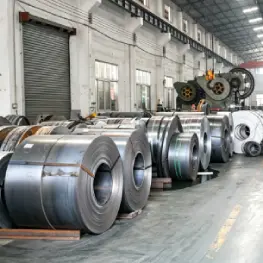 01
Raw Steel Intake
Mill test certificates (MTC) check for C, Mn, Si chemistry.
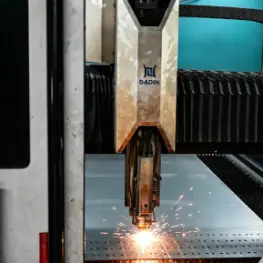 02
Precision Slitting
High-speed uncoiling and precision longitudinal slitting.
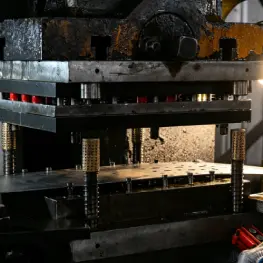 03
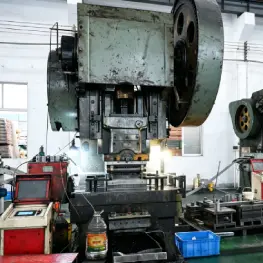
CNC Punching
Multi-punch press ensures pitch repeatability (±0.1mm).
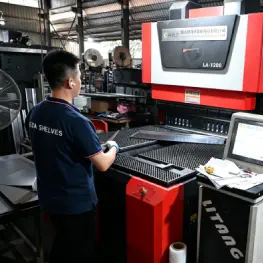 04
Cold Bending
Gradual edge curvature forming prevents micro-fracturing.
 05
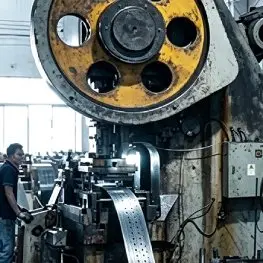
Roll Profiling
24-stage roll forming for omega uprights and box beams.
 06
Mechanical Deburring
Laser edge chamfering eliminates rough weld burrs.
 07
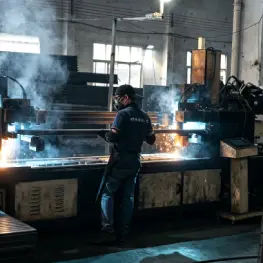
Robotic Welding
MIG/CO2 robotic welding of connector end plates.
 08
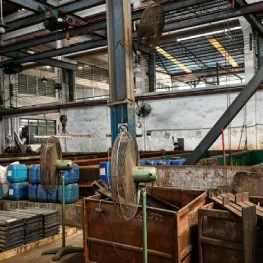
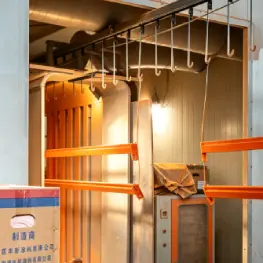
Phosphating Pretreatment
Acid wash, rust removal, and phosphate dip for adhesion.
 09
Electrostatic Coating
Automated powder coating cured at 200°C baking tunnels.
 10
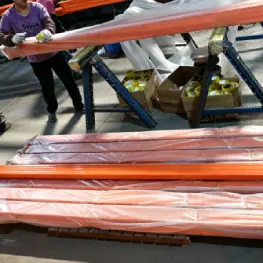
QC & Ocean Bundling
Steel strapping, protective dunnage, container loading.
Global Engineering Credibility & Complete Turnkey Accountability
As a leading Chinese designer, manufacturer, and exporter of industrial warehouse racking, our operations bridge heavy industrial capacity with bespoke international structural requirements. We do not simply fabricate steel; we partner with structural engineers, project coordinators, and 3PL leaders across the Americas, Australasia, and Europe to deliver risk-free warehouse installations.
- Full Engineering Calculations: Finite element analysis (FEA), baseplate shear anchors, and seismic response spectra supplied with every proposal.
- Rapid Turnaround CAD Layouts: Comprehensive 2D plan views, 3D structural elevations, and beam loading tables returned within 24 hours.
- Certified Global Standards: Fully compliant with ISO 9001:2015, CE Marking (EN 1090-1 / EN 15512), AS4084-2023, and RoHS non-toxic finishes.
- Precision Export Packing: Heavy-gauge steel bundling, protective corrugated edge protectors, and optimal container cubing to eliminate ocean transit damage.
Frequently Asked Questions for Global Buyers
Answers to common technical, logistics, compliance, and customs questions when importing heavy-duty erecting pallet racking from China.
How do Chinese pallet racking designs comply with US (RMI), European (FEM/EN), and Australian (AS4084) standards?
Racking systems engineered for export undergo rigorous structural verification tailored to the destination jurisdiction. For North American markets, load charts, beam deflection criteria (L/180 limit per beam span), and seismic drift parameters align with ANSI MH16.1 and local IBC building codes. For Australia and New Zealand, fabrication follows AS4084-2023, specifying upright torsional testing, beam-end connector moment-rotation curves, and seismic baseplate anchoring. We provide stamped calculations and verified test reports that your local Engineer of Record (EOR) can review and incorporate into building permit filings.
What steel grades are used, and can you provide mill test certificates (MTC)?
We source raw coils exclusively from certified Tier-1 domestic steel mills (such as Baosteel, Shougang, and Ansteel). Primary profiles utilize Q235B (yield strength ≥ 235 MPa) for light-to-medium loads and Q355B (yield strength ≥ 355 MPa, equivalent to ASTM A572 Grade 50 or EN 10025 S355JR) for heavy-duty columns, long-span cantilever arms, and structural base components. Every production batch is delivered with EN 10204 Type 3.1 Mill Test Certificates detailing exact chemical compositions (carbon, manganese, silicon, phosphorus) and mechanical tensile/yield test data.
How do you protect pallet racking from corrosion during ocean shipping and cold storage operation?
Corrosion protection begins with automated 8-stage pre-treatment: alkaline degreasing, clean water rinsing, acid pickling to eliminate mill scale, and zinc-phosphate/silane coating to maximize powder mechanical bonding. Components receive an electrostatic thermosetting epoxy-polyester powder coating cured at 180°C–200°C, providing a uniform 60–90 μm dry film thickness. For sub-zero freezers (-30°C) or outdoor seaside staging racks, we offer hot-dip galvanizing per ASTM A123 / ISO 1461, achieving a heavy 80–100 μm zinc barrier layer that resists moisture, scratching, and condensation corrosion.
What information is required to receive an accurate CAD proposal and itemized quote within 24 hours?
To produce an engineered 2D/3D layout, our design team needs: (1) Warehouse architectural drawings detailing clear ceiling height, column grid spacing, building egress doors, and floor slab specifications; (2) Pallet dimensions (width × depth × load height including pallet overhang) and maximum gross weight per pallet position; (3) Forklift specifications including mast collapse height, maximum lift height, and minimum right-angle stacking aisle width (Ast); (4) Operating environmental conditions (ambient, cold storage, outdoor, or seismic zone rating).
How are racking bundles packed to maximize 40ft High Cube (40HC) container utilization?
Ocean freight efficiency is fundamental to landed cost economics. Upright frames are either pre-bolted or knocked-down (KD) depending on container length constraints; KD frames allow up to 40% more steel per container. Uprights and beams are bundled using heavy polyester or steel straps, separated by high-density polyethylene (HDPE) dunnage, protective corner angles, and water-resistant plastic wrapping. Small structural hardware (anchor bolts, safety clips, leveling shims) is palletized in labeled crates. A standard 40HC container accommodates between 22 and 26 metric tons of packed racking components without exceeding road transport weight limits.
Request Technical Specifications, CAD Drawings & Factory Pricing
Consult with our senior warehouse systems engineering team. Receive detailed architectural CAD layouts, structural FEA calculations, and a turnkey CIF/FOB quotation tailored to your operational requirements.