Wall & Bin Systems
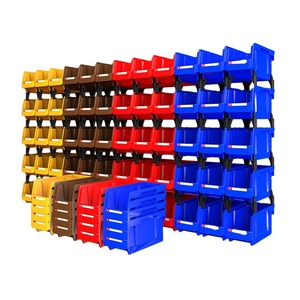
Wall Mounted Stackable Plastic Storage Bin Shelf
Louvered steel panel with impact-resistant polypropylene bins. Engineered for zero-deflection small parts pick faces.
Technical Specs →Tested for seismic resiliency, structural deflection limits, and severe warehouse throughput. Compare technical profiles across our ISO 9001:2015 and CE-certified production lines.
Louvered steel panel with impact-resistant polypropylene bins. Engineered for zero-deflection small parts pick faces.
Technical Specs →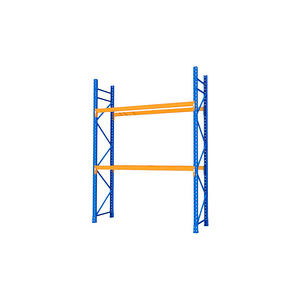
Truss-reinforced electroplated wire decks promoting air circulation, light infiltration, and ESFR fire sprinkler compliance.
Technical Specs →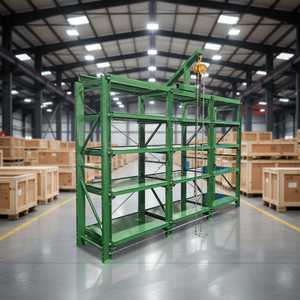
500-1000KG per layer capacity with angular beam step geometry preventing rubber contact deformation and rolling fatigue.
Technical Specs →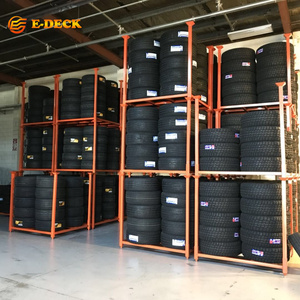
Collapsible post nesting design allowing 4-to-1 reverse logistics space efficiency when units are demounted between peak cycles.
Technical Specs →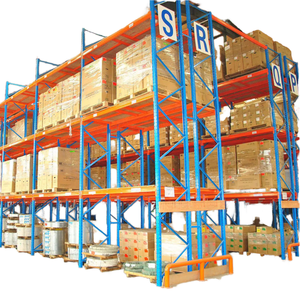
Continuous roll-formed box uprights with 50mm-75mm beam adjustability. Epoxy-polyester thermoset powder coat for corrosion guard.
Technical Specs →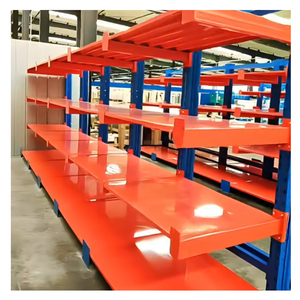
Free-front structural column configuration engineered for timber, PVC conduits, steel bars, and non-standard architectural extrusions.
Technical Specs →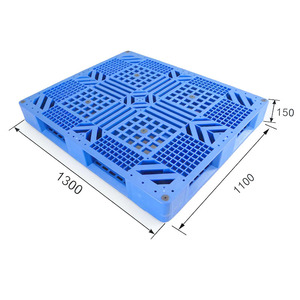
Virgin HDPE structural injection moulding with embedded steel reinforcement rods for static loads up to 6,000kg.
Technical Specs →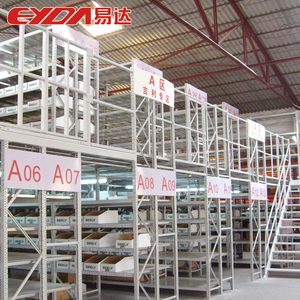
Multi-tier vertical warehouse volumetric expansion. 1000kg/sqm rated cold-rolled interlocking steel plank subfloor structure.
Technical Specs →Modern industrial supply chains demand extreme structural efficiency across vertical storage envelopes. High-density fulfillment centers and automated workshops require rack framing that satisfies rigorous elastoplastic deformation tolerances. When calculating seismic shear loads and localized anchor pullout capacities, the mechanical differentiation between prime commercial cold-rolled steel and secondary re-rolled metal becomes the deciding factor in facility safety.
Wall-mounted racking systems must decouple live picking vibrations from static building perimeter members. In high-density environments, cantilevered wall profiles rely on precision moment-connection brackets to disperse rotational torque across structural brickwork, pre-cast tilt-up concrete, or light gauge commercial steel studs, preventing wall degradation and joint shear.
Factory fabrication excellence is rooted in metallurgical integrity. Top-tier manufacturers utilize SS400 and Q235 structural carbon steels, cold-roll-formed via progressive CNC profiling stations. This preserves grain alignment along critical 90-degree radius bends, counteracting localized stress fracturing under maximum design static loading.
Furthermore, electrostatic powder coating lines with multistage zinc-phosphate surface conversion eliminate micro-porosity. This chemical barrier prevents subsurface iron oxidation in harsh ambient environments, such as high-humidity cross-docking depots, sub-zero cold-storage freezer vaults, and coastal industrial plants.
Cold-rolled Q235 steel ensures an optimal yield-to-tensile ratio, resisting irreversible beam sag under uniform distributed loads (UDL).
Engineering compliance matching RMI MH16.1 specifications, verified deflection thresholds (L/240 to L/400), and finite-element structural validation.
Automatic 8-step pickling, immersion phosphating, and electrostatic resin cures that withstand 500+ hours of ASTM B117 salt spray exposure.
Traditional manual racking is rapidly merging with robotic automation. Modern enterprise procurement favors structural designs pre-fitted with floor guidance anchors, reflective laser targets, and reinforced bottom tracks designed for Autonomous Mobile Robots (AMRs) and radio shuttle carriers. Pallet uprights are now built with tighter dimensional tolerances (±0.5mm) to avoid clearance errors during automated machine picking.
With real estate costs rising across major logistics nodes, vertical spatial expansion is outpacing greenfield warehouse development. Multi-tier rack-supported mezzanines and boltless modular wall-mounted pick frames allow logistics operators to triple usable floor area inside existing building envelopes without costly civil zoning permits.
Global supply contracts now require full metallurgical provenance. Tier-1 manufacturers must supply carbon accounting data for structural steel coils alongside toxic-free certifications. Closed-loop, zero-VOC powder-coating facilities that eliminate heavy metals from the chemical pretreatment phase have become standard requirements in European and North American enterprise tenders.
Emerging racking implementations integrate digital twin CAD datasets directly into Warehouse Management Systems (WMS). Real-time telemetry monitoring via beam strain sensors flags dynamic overloading, forklift impacts, and uneven load distribution before structural degradation can occur.
Since 2001, our 323,000 sq ft Guangzhou facility has operated integrated roll-forming, laser slitting, robotic welding, and automated powder-coating lines, producing over 30,000 tons of structural steel storage systems every month.
Spectrographic analysis of prime Q235 steel coils confirms tensile strength, elongation, and yield characteristics.
Continuous multi-station cold rolling shapes high-precision upright profiles and box beams with zero internal stress.
Automated MIG welding fixtures fuse beam end-connectors, baseplates, and cantilever arms with consistent weld penetration.
Automated acid pickling, ultrasonic degreasing, and zinc phosphating prepare steel surfaces for maximum finish adhesion.
Electrostatic dry powder application cured at 200°C produces an ultra-durable, scratch- and impact-resistant finish.
Direct engineering answers addressing export logistics, structural certifications, and custom racking adaptations.
In accordance with international RMI and EN 15512 specifications, our beam deflection limits are engineered not to exceed L/200 for standard selective applications and L/300 to L/400 for semi-automated systems, calculated strictly under maximum evenly distributed design dead and live loads.
Yes. We generate comprehensive CAD floor plans, section elevations, load calculation sheets, and baseplate anchorage shear details in both imperial (lbs/ft) and metric configurations, ready for review by your structural engineer of record (EOR).
For sub-zero operating environments down to -30°C, we apply high-purity zinc primer followed by specialized low-temperature polyurethane powders, or complete hot-dip galvanization (HDG) per ASTM A123, stopping flaking and frost-line oxidation.
Upright frames and horizontal beams are bundled using high-tensile steel strapping, corner protectors, and heavy poly wrapping. Frame footplates and beam connectors are positioned on custom wood dunnage to prevent transit friction, metal-to-metal abrasion, and moisture damage.