Industrial Storage Lineup
High-Density Heavy Duty Warehouse Storage Racks
Explore our engineering-certified pallet racking systems, gravity roller flows, and structural storage configurations built to withstand extreme dynamic handling loads.

2001yr
Manufacturing Since
323,000sq ft
Integrated Production Hub
30,000Tons
Monthly Structural Output
10,000+
Completed Projects Globally
Whitepaper & Strategic Engineering
Engineering Superiority of Very Narrow Aisle (VNA) Systems
A technical assessment of aisle reduction kinematics, cubic footprint optimization, and vertical deflection management.
1. The Geometry of Floor Optimization: Overcoming Aisle Sprawl
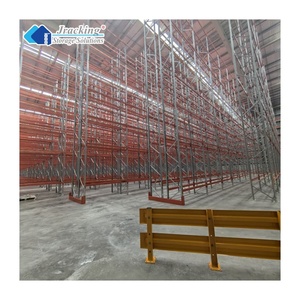
In standard selective pallet racking setups, forklift operational aisles typically demand between 3.2 meters and 3.8 meters (10.5 to 12.5 ft) of clearance to permit 90-degree counterbalanced turns. This configuration compromises internal warehouse volume, routinely relegating 55% to 65% of the total facility floor area strictly to transit buffers. A Very Narrow Aisle (VNA) system engineered by a specialized manufacturer contracts operational aisles down to 1.5–1.8 meters (4.9 to 5.9 ft), freeing up to 45% of previously underutilized footprint. When coupled with vertical bay extensions reaching heights of 15 to 18 meters, volumetric density escalates by over 160% compared to conventional layouts.
VNA racking functions as a semi-automated, high-precision structural grid. Pallet access remains completely uninhibited (100% individual selectivity), bypassing the inventory "honeycombing" and cycle delays seen in push-back or deep-lane drive-in configurations. Materials handling is performed using man-up or man-down turret trucks and articulated forklifts that operate along guided corridors via low-profile mechanical steel guide rails or wire-guidance inductive loops embedded into the concrete slab.
2. Structural Dynamics: Torsional Stiffness and Floor Flatness Specifications
Because VNA structures extend to significant heights with tighter horizontal tolerances, top-tier manufacturers must address structural sway and dynamic torsion. Uprights roll-formed from certified high-tensile structural steel coils undergo rigorous cold bending to form multi-flanged, closed or reinforced open Omega profiles. Diagonal and horizontal bracing patterns are calibrated via finite element analysis (FEA) to absorb lateral mast acceleration when high-reach turret forks telescope out with maximum rated capacities (typically 1,000 kg to 1,500 kg per pallet level).
Equally critical is compliance with industrial concrete floor specifications. Operating high-lift mast trucks within a 1.6-meter aisle tolerates zero rotational deviation; minute undulations in the slab manifest as exaggerated oscillations at a 15-meter pick height. As an expert exporter and engineering partner, our manufacturing process cross-references equipment axle loadings with international floor profile standards (such as DIN 18202, VDMA 4398, and ASTM E1155 F-min ratings), ensuring baseplate anchoring assemblies and expansion anchors distribute point-load forces evenly across the sub-base.
Factory-Direct Capabilities
Why International Buyers Trust Our Manufacturing Standards
Combining complete vertical integration with strict export verification to protect supply chain timelines and structural reliability.
25+ Years of Structural Heritage
Founded in 2001, Guangzhou Heda Shelves Co., Ltd. brings decades of refined roll-forming, welding, and high-bay layout design experience to every project. Over 10,000 industrial facilities have been engineered and deployed across North America, Europe, Southeast Asia, and Latin America.
Free 24h CAD & 3D Modeling
Our dedicated engineering department converts your building footprints, clear heights, and material flow patterns into optimized CAD shop drawings, 3D spatial renders, and structural load charts within 24 hours. Loadings are documented in both imperial (lbs/ft) and metric scales.
Full In-House Quality Assurance
Production spans automated CNC punching, precision profile bending, and robotic connector welding. Components undergo a multi-stage surface pretreatment of pickling, phosphating, and electrostatic powder curing to guarantee anti-corrosion resistance and adherence to ISO 9001:2015 and CE marks.
Container-Optimized Logistics
Shipping high-bay structures requires meticulous packing protocols to prevent transit warping. Components are bundle-strapped, nested, and palletized to maximize 40HC container capacity, delivering turnkey FOB, CIF, or DDP shipments straight to major international logistics hubs.
Technical Comparison
System Performance Matrix: VNA vs. Conventional Configurations
A side-by-side engineering breakdown to help supply chain directors evaluate equipment ROI and floor utilization.
| Storage Architecture | Typical Aisle Width | Vertical Reach Limit | Floor Space Utilization | Selectivity Ratio | Handling Speed / Throughput |
|---|---|---|---|---|---|
| Very Narrow Aisle (VNA) | 1.5m – 1.8m (5.0 - 5.9 ft) | Up to 18 meters (60 ft) | 85% – 90% Cubic Max | 100% Individual Pallet | High (Constant Line Tracking) |
| Selective Pallet Racking | 3.2m – 3.8m (10.5 - 12.5 ft) | Up to 11 meters (36 ft) | 40% – 50% Standard | 100% Individual Pallet | Moderate (Unconstrained Steering) |
| Double Deep Racking | 3.0m – 3.5m (9.8 - 11.5 ft) | Up to 10 meters (33 ft) | 60% – 65% Dense | 50% (Requires Re-handling) | Moderate-Low (Extended Reach Pantograph) |
| Drive-In / Drive-Through | Lane Entry System | Up to 10 meters (33 ft) | 75% – 85% Concentrated | LIFO / FIFO Bulk Lane | Slow (Mast Maneuvering inside Racks) |
| Radio Shuttle High-Bay | Aisleless Cart Channel | Up to 20 meters (65 ft) | 85% – 92% Automated | Channel Batched | Very High (Automated In-Channel Run) |
Market Forecast & Trends
Future Procurement Trends in Very Narrow Aisle Racking
Where high-density material handling is heading: Next-generation automation, floor monitoring, and sustainability integration.
1. Convergence with Autonomous Mobile Robots (AMRs)
Procurement teams are shifting away from traditional man-up trucks toward unmanned narrow-aisle automated guided vehicles (AGVs) and AMRs. Future-ready VNA systems must feature reinforced bottom clearances, laser targets integrated directly into upright profiles, and optical navigation brackets to interface seamlessly with 24/7 dark warehouse routines.
2. Rack-Clad Building Envelopes (Silobau)
Rising land costs and steel fabrication constraints are accelerating the adoption of rack-supported buildings. Rather than constructing a warehouse shell and installing racks inside, industrial buyers increasingly procure the VNA racking structure itself as the primary load-bearing framework that supports exterior walls, roof trusses, and rainwater drainage fixtures.
3. Decarbonized Steel & Eco-Coating Directives
Environmental, Social, and Governance (ESG) standards are influencing B2B bids. Buyers prioritize manufacturers using low-carbon electric arc furnace (EAF) structural steel coils, coupled with zero-VOC, heavy-metal-free thermosetting powder coatings that comply with strict RoHS, REACH, and LEED green building certification standards.
Frequently Asked Questions
Very Narrow Aisle Racking: Procurement & Technical FAQ
Clear, direct technical answers addressing structural certification, equipment matching, and international shipping.
What is the standard minimum aisle width required for a VNA racking installation?
Aisle widths for VNA systems generally range between 1,500 mm and 1,850 mm (approximately 59 to 73 inches), contingent upon pallet dimensions (e.g., standard 48x40-inch GMA or 1200x800 Euro pallets) and the exact chassis clearance required by your turret truck or articulated reach truck manufacturer. A minimum safety gap of 100 mm (4 inches) is maintained between the pallet perimeter and the upright frames.
Do we need low-profile steel guide rails or an inductive wire guidance system?
Both options are viable and supported by our engineering layouts. Mechanical guide rails (typically robust 100x50x5 mm structural angle steel anchored directly into the concrete) provide immediate physical protection, preventing forklift body contact with the bottom uprights. Wire guidance uses an electromagnetic sensor under the truck tracking a buried low-frequency wire, which creates a flush floor surface free of physical floor obstructions—ideal for operations handling lower-tier order picking.
How does floor levelness (superflat floor) affect VNA system performance and safety?
Because VNA trucks elevate to heights exceeding 10 to 15 meters, any minute tilt at floor level is amplified at the top mast. For example, a 3 mm deviation at floor level can translate to a 100 mm mast sway at 14 meters height. Consequently, VNA installations require concrete slabs graded to superflat criteria—such as DIN 18202 Table 3 Line 4, VDMA 4398 Level A, or ASTM F-min 75 to 100. Where existing slabs have imperfections, leveling shims and precision grouting under baseplates are specified.
Can you provide seismic load calculations and drawings for building permit reviews?
Yes. Our structural engineering department provides comprehensive CAD layout drawings, elevation cross-sections, structural beam deflection values (designed strictly to L/200 or tighter limits), and dead/live load tables in both imperial (lbs/ft) and metric standards. These packages are engineered to support your local Registered Professional Engineer (PE) or Engineer of Record (EOR) during local building permit reviews and regional seismic verifications.
What is the typical manufacturing lead time and international export packing format?
Standard production turnaround for complete warehouse configurations spans 15 to 25 days following engineering drawing sign-off. Uprights and beams are bundled with steel strapping, corrugated corner protectors, and moisture-barrier shrink wrap, placed on heavy timber runners for straightforward container destuffing via extended forklift tines. All hardware, anchor bolts, row spacers, and guide-rail splice joints are categorized and crated in fumigated export-grade wooden cases.