Heavy-Duty Industrial
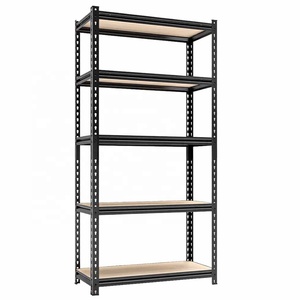
In high-throughput distribution environments, selecting a qualified steel pallet racking manufacturer demands a thorough assessment of cold-formed structural integrity, load-bearing capacities under cyclic strain, and full compliance with international seismic design criteria.
Global logistics centers, third-party logistics (3PL) aggregators, and automated material handling facilities face escalating real-estate costs and soaring inventory velocity. Sourcing heavy-duty storage infrastructure requires deep technical rigor far beyond surface comparisons of list prices. As facilities shift toward automated shuttle integration and multi-tier mezzanines, the distinction between standard commercial metal shelving and structural pallet racking lies in cold-bending metallurgy, torsional rigidity, column yield thresholds, and strict compliance with global codes such as ANSI/RMI MH16.1, EN 15512, and AS 4084.
A continuous 100 mm upright pitch combined with high-grade Q235B/Q355B cold-rolled carbon steel provides superior dynamic impact resistance against forklift mast collisions. Standardized beam connectors, engineered beam deflection profiles under 1/180th of clear span length, and factory-applied electrostatic epoxy finishes are absolute prerequisites for high-turnover hubs.
Precision-fabricated at our certified plant to support capacities ranging from 1,000 lbs to beyond 5,000 kg per storage level.
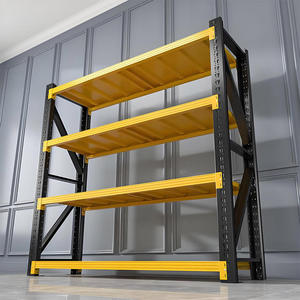
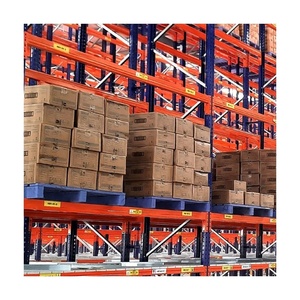
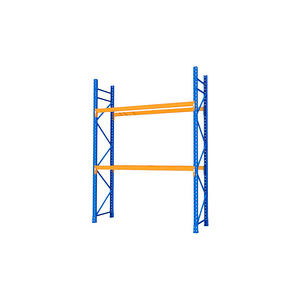
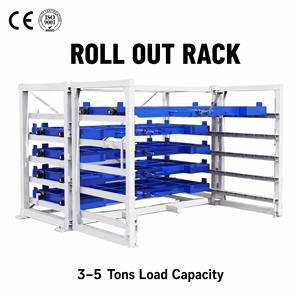
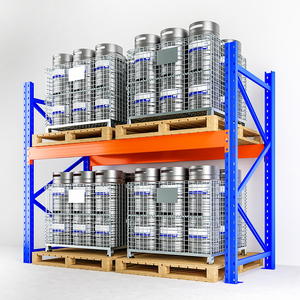
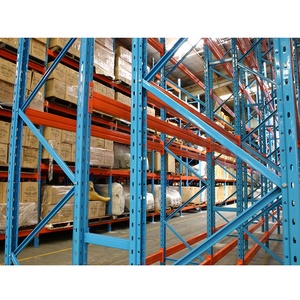
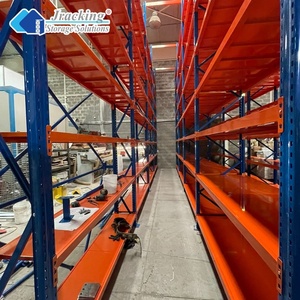
Combining heavy-tonnage structural manufacturing with custom 3D engineering to deliver verified, audit-ready storage systems.
Full conformance to European CE standard EN 15512 and ISO 9001:2015 process protocols ensure chemical-tested mill certifications on every cold-bent component.
Our engineering division delivers structural calculations, beam deflection studies, and accurate AutoCAD 2D/3D layouts tailored to your exact aisle clearances.
Automatic pickling, zinc-phosphating, and continuous electrostatic powder baking lines guarantee multi-decade corrosion resistance, even in sub-zero freezers.
Engineered bundle strapping and steel framing protect structural columns during multi-modal ocean transit to North America, Europe, Australia, and the Middle East.
Strategic analysis of seismic dynamics, automation-readiness, and cold-chain energy optimization for the 2026–2030 cycle.
Traditional static storage is rapidly integrating with autonomous reach trucks and four-way radio shuttles. Future-proof pallet racking requires ultra-tight tolerances: horizontal beam level deviations must stay under ±1.5 mm across wide bays to avoid sensor disorientation on autonomous lift machinery.
Structural engineering trends are moving past simple static load modeling. International building codes now mandate dynamic spectrum analyses that evaluate ductility factors under intense seismic activity. Upright profiles must combine high yield strength with controlled deformation capability to dissipate kinetic energy safely.
Cold chain facilities run on tight thermal power budgets. Operating sub-zero refrigeration requires maximizing vertical cube efficiency. Dynamic drive-in and shuttle storage designs shrink the chilled volume footprint per pallet, driving substantial kilowatt-hour savings over standard selective configurations.
Essential load-capacity parameters and volumetric utilization benchmarks for enterprise facility planners.
| System Architecture | Load Rating (Max/Level) | Pallet Selectivity | Volumetric Footprint Efficiency | Ideal Logistics Environment |
|---|---|---|---|---|
| Standard Selective Rack | 1,000 kg – 4,500 kg | 100% Direct | Moderate (Approx. 40% Floor Area) | 3PL hubs, diverse SKU consumer retail, e-commerce DCs |
| Drive-In / Drive-Through | 1,000 kg – 2,000 kg/lane | Low (FILO / FIFO lanes) | High (Up to 75% Floor Utilization) | Cold storage freezers, raw materials, single-SKU bulk |
| Four-Way Radio Shuttle | 1,500 kg / carrier | Automated Batch Selection | Ultra-High (85% Cube Efficiency) | Automated cold distribution, food & beverage staging |
| Heavy Cantilever Rack | Up to 3,000 kg / arm | 100% Open Access | Specialized Linear Storage | Structural timber, metal pipe profiles, extrusions |
| Rack-Supported Mezzanine | 300 kg – 1,000 kg / m² | Multi-Level Combined Pick | Double/Triple Vertical Usable Area | Automotive spare parts, manual bin picking operations |
Direct technical answers addressing structural certification, custom configurations, site safety, and international container delivery.
Every structural profile is modeled through finite element analysis (FEA) and verified on automated hydraulic test benches to confirm safety factors compliant with ANSI/RMI MH16.1, Australian Standard AS 4084:2023, and European EN 15512. Physical testing measures vertical deflection, upright torsional buckling limits, and dynamic beam connector twist under 150% maximum intended capacity.
We supply complete engineering submittal packages including detailed structural calculations, cold-formed section modulus values, component steel mill chemical test certificates, slab anchor pull-out ratings, and AutoCAD erection layout plans ready for final sign-off by your local licensed Professional Engineer (PE).
Yes. Our in-house roll-forming production lines support custom beam spans (ranging from 1,000 mm to over 4,500 mm) and upright frame depths engineered around non-standard platforms, including 48x40 GMA pallets, Euro-pallets (800x1200 mm), metal shipping skids, wire baskets, and specialized bulk plastic drums.
Standard fabrication runs take roughly 15 to 22 operational days. Uprights, step beams, and horizontal bracing are bundled using automated protective strapping with edge-protector caps to prevent impact damage. Materials ship in standard 20-foot and 40-foot High-Cube containers to major deep-water ports across North America, Europe, Australia, and worldwide under standard Incoterms (FOB, CIF, DDU).
Components undergo an automated 10-stage chemical wash, pickling, and micro-crystalline phosphating treatment, followed by thermosetting epoxy-polyester electrostatic powder coating cured at 200°C. This industrial process prevents flaking, micro-fracturing, and corrosion in cold rooms down to -30°C.