Certified Pallet Racking & Gravity Flow Systems
Explore our factory-engineered storage products manufactured with Q235B cold-rolled structural steel, high-tensile upright punching, and automated electrostatic powder coating. Custom engineered for standard North American GMA pallets (48"x40"), European EUR-boxes, and heavy industrial skids.
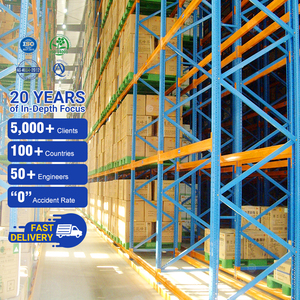
Industrial Narrow Aisle Movable Pallet Storage Steel System
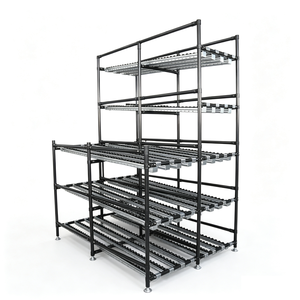
Lean Pipe Flow Rack Roller Sliding Shelf Flow Through System
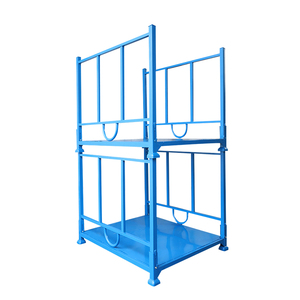
Foldable Metal Pallet Heavy Duty Customized Stacking Frames
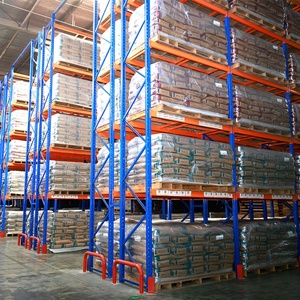
Custom Heavy Duty Pallet Storage Racks & Industrial Shelves
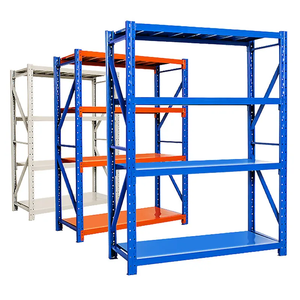
Factory Custom Adjustable Storage Shelving Unit Warehouse Rack
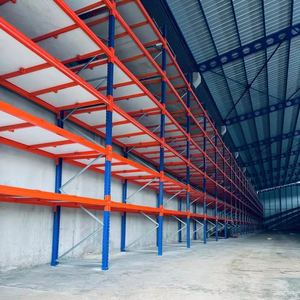
Peterack Heavy Duty Stacking Shelf Multi-Layer Storage Rack
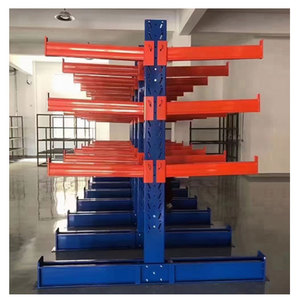
DJ Heavy-Duty Steel Cantilever Rack for Sheet Metal & Pipes
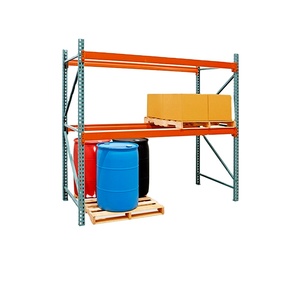
Selective Industrial Teardrop Pallet Racking System
Top 10 Live Pallet Racking Factories & Exporters Worldwide
Live pallet racking (also known as gravity flow racking) relies on dynamic gravity-fed roller tracks inclined at precise gradients (2.8% to 4.0%) to deliver automatic First-In, First-Out (FIFO) pallet rotation. Selecting an OEM manufacturer requires assessing structural cold-roll forming capacity, roller brake engineering, surface passivation against warehouse moisture, and compliance with EN 15512, FEM 10.2.02, and RMI MH16.1 codes. Below is an engineering comparison of the ten foremost global manufacturers and industrial exporters.
Guangzhou HEDA Shelves Co., Ltd.
- Capacity: 30,000 Tons/Month; 323,000 sq ft factory.
- Specialty: Heavy-duty gravity flow & teardrop racking.
- Braking Tech: Magnetic eddy current & centrifugal rollers.
- Direct Export: Over 10,000 international projects shipped.
BITO-Lagertechnik Bittmann GmbH
- Capacity: High precision European automated flow beds.
- Specialty: Multi-tier order picking & live pallet lanes.
- Braking Tech: Integrated twin-roller speed controllers.
- Export: Global distribution network across 30+ nations.
Interroll Group
- Capacity: Global dynamic flow roller component OEM.
- Specialty: Magnetic Speed Controller MSC 50 & flow modules.
- Braking Tech: Contact-free permanent magnet braking.
- Export: Key system component supplier to major racking OEMs.
SSI SCHAEFER Group
- Capacity: Tier-1 turnkey intralogistics system builder.
- Specialty: Heavy pallet live storage integrated with cranes.
- Braking Tech: Mechanical and pneumatic separator releases.
- Export: Global enterprise-scale megawarehouse deployments.
Mecalux, S.A.
- Capacity: 11 production facilities in Europe and the Americas.
- Specialty: Live dynamic pallet racking & stacker crane flow.
- Braking Tech: Dual centrifugal brake drums with anti-rebound.
- Export: Extensive footprint across the Americas and EU.
Stow Group
- Capacity: Mass European manufacturing for high-load racking.
- Specialty: Pallet flow and semi-automated shuttle systems.
- Braking Tech: Continuous roller tracks with load separators.
- Export: Global distributor channels & turnkey integrators.
Frazier Industrial Company
- Capacity: Largest structural steel racking maker in North America.
- Specialty: Structural tube steel live pallet flow racks.
- Braking Tech: Heavy duty centrifugal dynamic braking tracks.
- Export: Dominant supplier across USA, Canada, and Mexico.
Dexion / Gonvarri Material Handling
- Capacity: Broad European manufacturing network.
- Specialty: Deep gravity pallet lanes for food & cold chains.
- Braking Tech: Modular roller cartridge assemblies.
- Export: Middle East, Europe, Australia, and Africa.
Jungheinrich AG
- Capacity: Integrated intralogistics machinery and racking.
- Specialty: AGV-compatible live pallet gravity systems.
- Braking Tech: Engineered low-speed retarder units.
- Export: Complete logistics solutions exported worldwide.
Dematic (KION Group)
- Capacity: Advanced automated material handling systems.
- Specialty: High-speed buffer pallet live lanes & dispatch.
- Braking Tech: Integrated intelligent speed control and stops.
- Export: Global enterprise contracts and airport logistics.
| Manufacturer / Exporter | HQ Location | Manufacturing Standard | Roller / Braking Mechanism | Primary Strengths | Factory Inquiries |
|---|---|---|---|---|---|
| Guangzhou HEDA Shelves Co., Ltd. | Guangzhou, China | ISO 9001:2015, CE (EN 15512), RMI Support | Centrifugal mechanical & contactless eddy-current | Direct-factory pricing, 24h CAD layouts, imperial/metric engineering, flexible container loading | Inquire Now |
| BITO-Lagertechnik | Meisenheim, Germany | DIN EN 15512, RAL-RG 614 | Twin-roller friction speed control tracks | Extremely tight component tolerances, ergonomic picking integrations | Inquire Now |
| Interroll Group | Sant'Antonino, Switzerland | ISO 9001, ISO 14001, CE | MSC 50 eddy-current non-wearing rollers | Proprietary magnetic rollers that eliminate maintenance downtime in frozen environments | Inquire Now |
| SSI SCHAEFER | Neunkirchen, Germany | EN 15512, FEM, ISO 9001 | Pneumatic & mechanical pallet separators | Automated high-bay warehouse integration with cranes and WMS software | Inquire Now |
| Mecalux, S.A. | Barcelona, Spain | EN 15512, ANSI/RMI MH16.1 | Dual centrifugal brake drums with safety arrestors | Substantial manufacturing presence in both Europe and North America | Inquire Now |
| Frazier Industrial | Long Valley, NJ, USA | ANSI / RMI MH16.1, IBC Certified | Heavy-gauge structural channel dynamic flow | High-impact resistance to forklift collisions; robust American structural steel | Inquire Now |
Mechanical Principles & Gravity Flow Tolerances
Unlike static selective racking, live pallet racking is a dynamic machine governed by kinetic friction, gravitational acceleration, and material deflection. Achieving reliable pallet flow without catastrophic lane blockages requires strict adherence to four foundational engineering metrics.
1. Gradient Slope Dynamics
Standard pallet flow lanes are engineered with a slope gradient between 3.0% and 3.5% (approx. 35 mm per meter). For corrugated skids or rubberized bottoms, slope is calibrated to 4.0%, while rigid plastic runners utilize 2.8% to prevent excessive terminal acceleration.
2. Retarder & Brake Pitch
Brake rollers regulate pallet velocity below 0.3 m/s (1 ft/s). Centrifugal brake rollers engage proportionally to load speed. In deep lanes (8 to 20 pallets deep), brake rollers are spaced at 1-pallet-length intervals to completely neutralize runaway acceleration hazards.
3. Pallet Separators at Unload
At the picking face, line pressure from upstream pallets can exert several tons of force, jamming forklifts during extraction. Mechanical load separators isolate the front pallet until it is lifted, automatically feeding the subsequent pallet only after pick clearance.
4. Deflection & Dynamic Tolerances
Beams supporting roller beds must satisfy an allowable deflection ratio under maximum live load not exceeding L/200 (per FEM 10.2.02). Excessive beam sagging warps roller alignments, altering contact angle and causing pallet drift against side guides.
Future Sourcing & Procurement Trends in Pallet Flow
The international supply chain is transitioning from manual, labor-intensive storage toward software-monitored, semi-automated dynamic flow facilities. Procurement teams must integrate these macro trends into multi-year capital expenditure (CapEx) schedules.
1. Direct Mill-to-Site Factory Purchasing
Distributors and 3PLs are bypassing local trading middlemen to contract directly with large-scale Asian manufacturers like HEDA Shelves. Direct factory engagement secures up to 30–45% CapEx savings, guarantees traceability of virgin steel certifications, and enables custom roller track configurations tailored to precise pallet footprints.
2. Cold-Chain Energy Conservation Sourcing
Refrigerated and blast freezer facilities carry cubic storage costs up to 4.5x higher than ambient warehouses. Live pallet racking is rapidly replacing selective racking because it removes 70% of forklift aisles, dramatically lowering refrigerated volume, cutting kilowatt-hour cooling consumption, and maintaining strict FIFO expiration integrity for frozen foods and biopharmaceuticals.
3. AMR & Automated Pallet Tugger Interfaces
Facilities are designing live racking lanes with extended entry guides and optical sensors to interface directly with Autonomous Mobile Robots (AMRs) and automated forklifts. Racking manufacturers are optimizing unload stops to ensure sub-millimeter repeatable pallet presentations required by machine vision forks.
Next-Gen Technological Advancements in Live Racking
Engineering breakthroughs in metallurgy, contact-free eddy-current braking, and intelligent modular track systems are eliminating historical friction bottlenecks and maintenance vulnerabilities.
Permanent Magnetic Retarders
Traditional friction brake rollers suffer from mechanical gear wear and fluid viscosity breakdown in sub-zero freezers (-30°C). Modern systems utilize contact-free neodymium magnetic eddy currents, generating dynamic resistance proportional to pallet speed with zero physical wear.
Hybrid Dual-Roller Split Tracks
Full-width steel cylindrical rollers are being replaced by high-impact polymer split rollers arranged on galvanized c-profiles. This architecture permits three lines of contact, supports weak center boards on disposable wooden pallets, and reduces overall structural steel deadweight.
IoT Lane Fill-Rate Telemetry
Integration of low-energy wireless photoelectric sensors within roller rails provides real-time WMS visibility into exact pallet inventory levels per gravity lane. Operators prevent blind spots, identify stalled pallets instantly, and trigger automatic replenishment triggers.
Corrosion-Proof Passivated Finishes
In high-moisture agricultural, beverage, and marine distribution hubs, standard powder coatings risk filiform rust creeping under impact points. Modern factories utilize hot-dip galvanization and electrostatically cured thermo-reactive epoxy-polyester hybrids certified under 1,000-hour salt spray ASTM B117 tests.
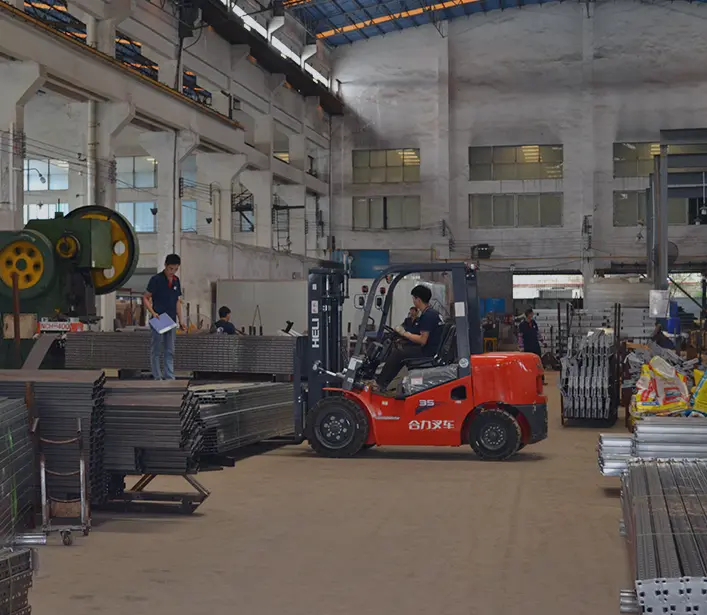
10-Step Controlled Racking Manufacturing Sequence
Every upright column, box beam, and roller bed assembly undergoes standardized manufacturing in our Guangzhou industrial complex.
Certified Raw Steel
Prime certified Q235B/Q355B coils verified for tensile yield limits.
Precision Slitting
High-speed CNC coil uncoiling, leveling, and longitudinal slitting.
Automated Punching
Continuous hydraulic stamping for teardrop and 50/75mm upright pitches.
Cold Roll-Forming
24-station continuous roll-forming mills for heavy omega uprights.
Box Beam Seaming
Continuous twin-C beam interlocking and automated seam welding.
Deburring & Polish
Automatic chamfering, robotic edge grinding, and slag removal.
Robotic Connector Weld
Automated MIG welding of heavy 3-claw/4-claw connector plates.
Pickle & Phosphate
Multi-stage acid chemical washing for ultimate powder adhesion.
Electrostatic Powder
Automated powder coating and 200°C curing for scratch resistance.
Containerized Packing
Batch dimensional checks, bundle banding, and ocean container export.
Frequently Asked Questions: Technical Sourcing & Compliance
Essential engineering and logistics guidelines for warehouse operators and procurement managers evaluating factory-direct live pallet flow shipments.
How is slope gradient determined for custom pallets?
Gradient calculation depends on pallet bottom deck configuration and total weight. Standard 48"x40" hardwood GMA pallets operate reliably at a 3.0% to 3.5% slope (approx. 7/16" per foot). Plastic pallets with smooth perimeter runners require 2.8% to 3.0% to prevent excessive speed. HEDA offers physical testing in our factory: clients ship pallet samples, and our engineers run dynamic velocity trials before finalizing manufacturing shop drawings.
What prevents pallets from jamming in deep gravity flow lanes?
Lane jams stem from three factors: incorrect slope, warped pallet bottom boards, or inadequate brake roller spacing. We prevent jamming by employing three-roller split tracks that support all three bottom runners, installing entry guide cones to center pallets at loading, and utilizing speed retarders every 36 to 48 inches to ensure smooth, controlled kinetic progression.
Do you supply engineering calculations for local building permits?
Yes. For projects in the United States, Canada, and the EU, HEDA delivers complete structural calculation packages, load tables in Imperial units (lbs, ft, in) and Metric (kg, mm), and detailed assembly schematics. These documents are prepared in strict compliance with RMI MH16.1, IBC (International Building Code), and EN 15512, allowing your local Engineer of Record (EOR) to stamp permit drawings efficiently.
How are live racking roller beds packed for ocean container shipping?
Upright frames and roll-formed beams are pre-bundled with steel strapping and heavy protective cardboard corner guards. Roller tracks and brake assemblies are packed in reinforced, fumigated wooden crates or steel dunnage cages to prevent roller pin misalignment during ocean transit. Each container is 3D modeled using loading software to maximize weight-to-cube ratios in 40ft High Cube containers.
Can live pallet racking operate in sub-zero cold storage freezers?
Yes, live pallet racking is highly efficient in cold storage because its high density cuts expensive refrigerated air volume. For blast freezers and cold storage down to -30°C (-22°F), we specify cold-resistant steel grades, low-temperature synthetic lubricants inside roller bearings, or contactless magnetic eddy-current brake rollers that completely eliminate freeze-up failures.
What is the typical lead time from design sign-off to container loading?
Upon CAD layout approval and structural sign-off, our 323,000 sq ft manufacturing campus delivers complete systems in 15 to 25 business days for standard selective and gravity flow configurations. Full FOB, CIF, or DDP delivery options are available to major container ports including Los Angeles, Houston, Savannah, New York/New Jersey, and Vancouver.
Accelerate Your Warehouse Density with Factory-Direct Engineering
Whether planning a new cold-chain distribution center, converting a selective facility to dynamic FIFO gravity flow, or sourcing high-tolerance OEM racking components, consult with HEDA Shelves' technical engineering team today.