Featured Industrial Racking & Structural Solutions
Precision roll-formed and structural steel storage solutions built to international standards, designed for automated material handling, harsh ambient temperatures, and maximum cubic space utilization.
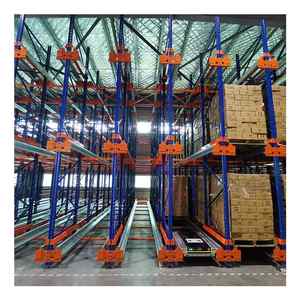 Cold Chain Automation
FIFO Automatic Radio Shuttle Pallet Racking for Cold Storage
- Low-temperature rated lithium shuttles (-25°C)
- FIFO & LIFO configurable logic control
- Maximum storage density with minimal forklift aisle
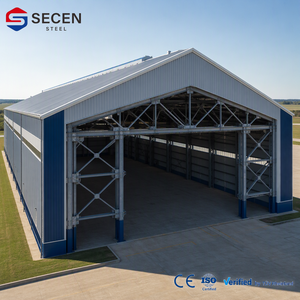 Pre-Engineered Steel
Direct Steel Structure Industrial Storage Warehouse
- High-strength H-section columns and roof purlins
- Turnkey 3D architectural design & structural engineering
- Pre-drilled modular bolt connection assembly
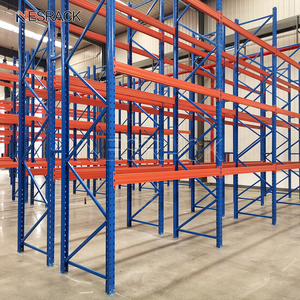 100% Selectivity
Heavy Duty Industrial Selective Pallet Storage Rack
- 100% direct access to every individual SKU position
- Up to 4,500 kg per beam level capacity
- 75mm / 50mm pitch adjustable vertical uprights
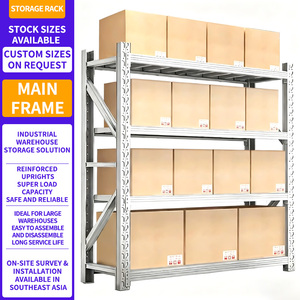 Medium-Duty Logistics
500kg/Layer Adjustable Pallet Racking Shelving
- Optimized for e-commerce picking and carton buffer
- High-durability powder coat finish in RAL choices
- Toolless snap-in safety pin locking mechanisms
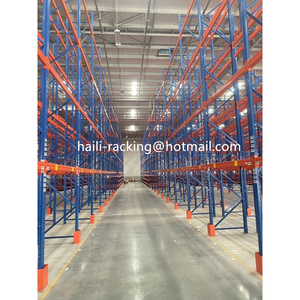 High-Density Mobile
500-9000Kg Heavy Duty Mobile Storage Bin Rack
- Floor-guided electric carriages with optical safety sensors
- Doubles floor utilization by opening a single dynamic aisle
- CE, SGS, TUV and ISO quality certified production
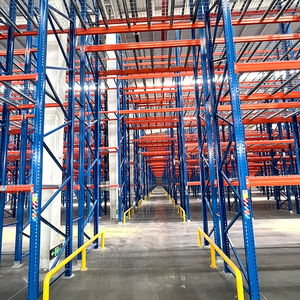 EURO Norms (FEM/EN)
EURO Standard Steel Pallet Racking (CE Certified)
- Compliant with EN 15512 & FEM 10.2.02 European standards
- High yield strength cold-formed Q235B / Q355B steel
- Engineered for heavy manufacturing & heavy export transit
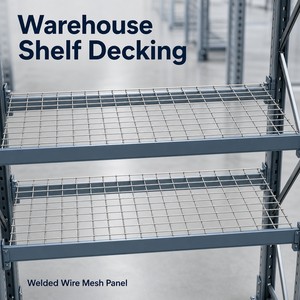 Fire Safety (NFPA)
Drop-In Galvanized Steel Wire Mesh Decking Panel
- Compliant with NFPA 13 sprinkler water-penetration codes
- Welded support channels fit step beams & box beams
- Heavy load capacities up to 1,500 kg uniformly distributed
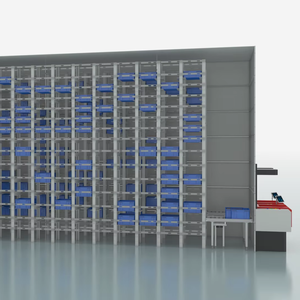 Small Parts Logistics
Smart Galvanized Steel Warehouse Shelving System
- High anti-corrosion hot-dip zinc galvanization process
- Modular bin integration for SKU categorization & sorting
- Rapid bolt-free adjustable shelf height levels
Architectural Breakdown: Top 10 Industrial Racks For Modern Distribution Centers
Material handling engineers and plant operations managers face a strategic trade-off between cubic storage density, direct pallet accessibility, structural seismic demands, and overall capital expenditure (CapEx).
Industrial warehousing in the era of high supply chain volatility requires structural racking systems designed not merely as steel framing, but as integrated material handling ecosystems. Selecting the optimal rack architecture requires a deep calculation of warehouse footprint, building clear height, slab structural capacity, forklift turning radius, SKU velocity, and inventory rotation rules (FIFO vs. LIFO). Below is the comprehensive technical analysis of the top 10 industrial rack architectures engineered for modern industrial plants, 3PL distribution centers, and export-focused hubs.
1. Selective Pallet Racking (Single-Deep & Double-Deep)
Selective pallet racking represents the worldwide gold standard for general manufacturing and fast-moving retail distribution. Configured as either single-deep rows or back-to-back double-deep bays, this system provides 100% immediate access to every pallet position. Fabricated with continuous cold-roll-formed upright columns and step or box beams secured by heavy-duty 3-to-4 claw connectors, selective racks accommodate varied beam lengths (standard 96-inch, 108-inch, and 144-inch spans) designed specifically for 48×40 inch GMA pallets, Euro-pallets (1200×800mm), and heavy industrial skids. While floor area utilization is moderate (typically 35% to 40% building volume utilization due to 10-to-12 foot standard counterbalanced forklift aisles), its versatility and low cost-per-pallet position make it the cornerstone of universal distribution.
2. Radio Shuttle High-Density Automated Pallet Racking
Combining structural deep-lane steel channels with autonomous, self-powered motorized pallet carriers, Radio Shuttle systems eliminate internal forklift travel aisles entirely. The automated shuttle runs on dedicated precision tracks within deep storage bays (often exceeding 20 pallets deep), automatically lifting, transporting, and depositing pallets at the pick face via remote wireless controller or warehouse execution software (WES). Shuttles operate seamlessly in deep-freeze cold environments down to -25°C where human forklift operations are costly and hazardous. Shuttle racking increases storage capacity by up to 80% compared to selective racking while reducing forklift cycle times and virtually eliminating rack column impact damage.
3. Drive-In & Drive-Through Racking
Drive-In and Drive-Through systems are designed for high-density bulk storage of uniform SKUs where inventory operates on strict batches. Forklift operators drive directly into the racking bays to deposit or retrieve pallets supported on continuous structural side cantilever rails. Drive-In racking operates on a Last-In, First-Out (LIFO) schedule with a single entry/exit face, making it an exceptional cost-effective solution for non-perishable goods, seasonal stockpiles, and chemical drum storage. Drive-Through racks allow drive-through access from both ends, enabling First-In, First-Out (FIFO) logistical flow. Both systems require heavy guide rails and column guard protection to prevent collision during deep-lane vehicle navigation.
4. Gravity Pallet Flow Racking (Live Pallet Storage)
Pallet Flow racking utilizes inclined roller tracks or dynamic skate-wheel conveyors positioned at a precise 2% to 3.5% downward slope across deep multi-pallet lanes. Pallets are loaded from the rear replenishment aisle and glide smoothly by natural gravitational force toward the front pick face. Integral mechanical speed-limiting centrifugal rollers ensure a constant, safe gliding speed regardless of pallet weight (from 300 kg to 1,500 kg), while mechanical separation stops prevent line pressure against the front pallet during forklift extraction. Pallet Flow is the definitive mechanical system for high-velocity perishable goods, food and beverage processing, and pharmaceutical validation where strictly certified FIFO inventory turnover is legally mandated.
5. Push-Back Cart Racking Systems
Push-back racking delivers the high storage density of drive-in racking combined with significantly faster selectivity across diverse SKUs. Built with nested, telescoping structural wheeled carts that ride along inclined steel structural channels, each bay can store 2, 3, 4, 5, or 6 pallets deep. When loading, the forklift gently pushes the front pallet back to expose the subsequent nested cart underneath. During retrieval, the front pallet is lifted and gravity gently moves the trailing carts forward to the aisle face. Because forklift trucks never physically enter the racking frame, push-back systems offer exceptionally low maintenance overhead and rapid pick cycles on a LIFO basis.
6. Very Narrow Aisle (VNA) Pallet Racking
Very Narrow Aisle racking is an engineered configuration of selective racking where aisle widths are drastically reduced from the conventional 3.5 meters down to just 1.5 to 1.8 meters. Special turret trucks, articulated forklifts, or wire-guided reach trucks operate within these aisles, guided by physical low-profile floor rails or inductive floor-embedded wire guidance systems. Racking heights frequently scale up to 15 to 18 meters to exploit vertical building clearances fully. VNA architecture delivers maximum cubic density while maintaining 100% individual pallet selectivity, making it the preferred setup for large pharmaceutical central depots, aerospace parts distribution, and high-value 3PL hubs.
7. Heavy-Duty Cantilever Racking Systems
Traditional pallet racking uprights impede the storage of elongated, irregularly shaped, or continuous materials. Cantilever racks overcome this limitation through solid vertical central columns anchored to massive horizontal bases, supporting horizontal load arms that extend outward without front vertical upright obstructions. Manufactured from heavy hot-rolled I-beams or structural steel sections, cantilever systems handle structural lumber packs, steel pipes, aluminum extrusions, sheet metal, and plasterboard. Load capacities frequently surpass 3,000 to 5,000 kg per arm level, with outdoor versions hot-dip galvanized and equipped with custom roof canopies for weatherproofing.
8. Multi-Tier Rack-Supported Mezzanines & Catwalk Systems
Rack-supported mezzanines eliminate the colossal cost of building expansion by turning vertical overhead air rights into multi-tiered usable floor space. The structural pallet racking or heavy longspan shelving serves as the primary load-bearing foundation that supports suspended steel beams, sub-flooring, stairs, safety gates, and catwalk picking walkways above. These multi-level systems often rise 2, 3, or 4 levels high, enabling thousands of manual carton picking faces overhead while retaining bulk palletized forklift loading on the ground floor level. Ideal for e-commerce fulfillment centers, automotive parts distribution, and light assembly plants.
9. Mobile Powered Racking Systems
Mobile racking places heavy-duty selective or cantilever rack superstructures on motorized steel carriages that traverse flush-embedded floor rails. Electronically activated via automated PLC controls, remote pendants, or warehouse management software (WMS), the dense solid block of racks opens an operating aisle only where access is needed. By consolidating multiple fixed forklift aisles into a single movable dynamic aisle, mobile racking reduces required warehouse footprint by 45% to 50% or increases storage capacity by up to 90% within the same structural building envelope. This dramatic spatial economy is widely adopted in cold storage warehouses where ambient refrigeration power costs represent a primary operational expenditure.
10. Automated Storage and Retrieval Systems (AS/RS) Racking
AS/RS represents the zenith of automated warehouse engineering. Rising up to 30 to 40 meters in "rack-clad" building designs (where the racking itself forms the structural framework of the warehouse walls and roof), these ultra-rigid steel structures interface with automated robotic stacker cranes operating at high horizontal and vertical travel speeds. AS/RS racking demands micro-millimeter engineering tolerances, tight deflection controls, and continuous seismic stability bracing under severe acceleration forces. Serving dark warehouses, automated distribution hubs, and cold-chain mega-centers, AS/RS eliminates human labor constraints and delivers continuous 24/7 inventory throughput.
Comprehensive Industrial Racking Engineering Comparison
The following engineering data table highlights operational benchmarks across primary racking architectures to assist procurement and operations directors in conducting rigorous preliminary feasibility audits:
| Racking Architecture | Access Selectivity | Density Efficiency | Inventory Flow | Typical Clear Height | Forklift / MHE Match | Relative CapEx Index |
|---|---|---|---|---|---|---|
| Selective Racking | 100% Direct | Moderate (35-40%) | FIFO / LIFO Flexible | Up to 12m | Standard Counterbalance / Reach | Baseline ($) |
| Radio Shuttle | Channel-Level (10-20%) | Very High (75-85%) | FIFO or LIFO Selectable | Up to 24m | Reach Truck + Auto Shuttle | Medium-High ($$$) |
| Drive-In / Drive-Thru | Lane-Level (10-15%) | High (65-75%) | LIFO (Drive-In) / FIFO (Thru) | Up to 12m | Counterbalance / Narrow Cab | Low-Medium ($$) |
| Gravity Pallet Flow | Pick-Face (15-25%) | High (70-80%) | Strict FIFO Flow | Up to 15m | Standard Forklifts | Medium-High ($$$) |
| Push-Back Carts | Lane-Face (20-30%) | High (60-70%) | LIFO per Lane | Up to 10m | Counterbalance / Reach Truck | Medium ($$) |
| Very Narrow Aisle (VNA) | 100% Direct | High (55-65%) | FIFO / LIFO Flexible | Up to 18m | Man-Up / Turret Truck (Wire Guided) | Medium ($$) |
| Heavy Cantilever | 100% Arm-Level | Application Specific | Open / Any | Up to 12m | Side-loader / 4-Way Multi-Directional | Medium ($$) |
| Rack-Supported Mezzanine | 100% Pick-Face | Extremely High | Omni-Channel Picking | Up to 15m (Multi-deck) | Hand Pallet / Order Pickers / Chutes | Medium-High ($$$) |
| Mobile Heavy Racks | 100% when opened | Maximum (85-90%) | FIFO / LIFO Dynamic | Up to 14m | Standard Reach / Counterbalance | High ($$$$) |
| AS/RS High-Bay Racks | 100% Automated | Maximum (90%+) | Software Driven (WMS) | Up to 40m | Automated Stacker Cranes (SRM) | Premium ($$$$$) |
Future Procurement Trends in Warehouse Racking (2026–2030)
The international warehouse storage sector is shifting rapidly in response to automation, stricter building safety mandates, ESG carbon compliance, and global trade dynamics.
Convergence with Autonomous Mobile Robots (AMRs)
Traditional static racking designs are being adapted with clear ground-level robot transit tunnels, magnetic guidance floor strip accommodations, and drop-and-swap transfer stations to interface directly with AMR fleets and automated tote-shuttle elevators.
Higher Seismic Rigidity & Non-Linear Finite Element Analysis
Seismic compliance under international building codes (such as US IBC/RMI ANSI MH16.1 and Eurocode 3 / EN 15512) demands higher grade micro-alloyed steels, widened base plates with heavy dual-anchor embeds, and full non-linear dynamic FEA modeling under full operational load.
Cold-Chain Optimization & Energy Densification
With industrial refrigeration energy costs accounting for substantial OpEx, facilities are moving away from selective racks in temperature-controlled spaces, heavily standardizing on high-density automated shuttle and mobile systems that cut refrigerated volume loss per stored metric ton by 40%.
Green Steel & Eco-Compliant Surface Chemistry
Export compliance to North American and European markets now mandates zero-heavy-metal powder finishes (RoHS compliance), closed-loop chemical phosphating and pickling recovery lines, and full transparency on scrap steel recycled content metrics to satisfy enterprise ESG reporting.
Modular Containerized Stacking & International Cubing
Skyrocketing ocean freight rates require intelligent export nesting design. Frame knock-down designs, nested upright profiles, and modular bolted bracing geometry allow exporters to hit maximum container weight thresholds (26 to 28 tons per 40ft HQ) without wasting volumetric space.
Digital Twin & IoT Integrated Load Sensors
Large mega-logistics facilities are increasingly retrofitting rack systems with IoT impact detection accelerometers and deflection strain gauges on lower uprights to alert maintenance teams in real-time if a forklift strike exceeds structural safety thresholds.
Why Top Global Warehouses Partner with HEDA Shelves
Founded in 2001, Guangzhou Heda Shelves Co., Ltd. is an established industry pioneer delivering factory-direct warehouse storage equipment, structural mezzanines, and automated racking to over 130 countries worldwide.
25+ Years of Proven Manufacturing Heritage
Since 2001, our facility has expanded to 30,000 square meters (over 323,000 sq ft) equipped with heavy-duty cold roll-forming lines, automated punching presses, high-precision robotic welding arms, and twin automated electrostatic powder coating lines. Over 300 experienced engineers, technicians, and QA specialists oversee every batch, sustaining a monthly production capacity of 30,000 metric tons of finished racking steel.
Compliant with US, Canadian, European & Global Standards
Our structures and load engineering meet strict global construction codes. HEDA Shelves holds official certifications including ISO 9001:2015 Quality Management, CE Marking (No. 2435-CPR-8605159), SGS, and RoHS compliance. We furnish fully certified calculation sheets, imperial/metric engineering documentation, and deflection analyses (L/200) tailored to your local building department permits and Professional Engineer (PE) seismic stamping requirements.
Free 3D Architectural CAD & Structural Layouts in 24 Hours
Our dedicated engineering department converts your building drawings, clear height limitations, pallet load metrics, and forklift turning specifications into detailed AutoCAD floor plans, elevation schematics, and photorealistic 3D warehouse renderings within 24 hours at zero cost. We optimize your aisle spacing to extract up to 35% more pallet positions than standard distributor layouts.
Container-Optimized Ocean Packaging & Global Port Delivery
Exporting heavy steel components requires meticulous bundling and protective packaging. We engineer container stowage schemes that protect finished epoxy surfaces with cardboard corner shields, bubble cushioning, and heavy steel banding. Our shipments sail regularly to major gateway ports across the US, Canada, Europe, South America, the Middle East, and Australia under FOB, CIF, or DDP delivered logistics terms.
Frequently Asked Questions on Importing & Installing Industrial Racks
Expert answers to the most common engineering, permitting, freight, and safety questions asked by warehouse operators and procurement managers.
How do we verify that imported racking complies with North American and European seismic codes?
What key technical variables are required to generate an accurate layout and quote?
- Warehouse Architectural Plan: Total building dimensions, column grid spacing, door locations, and clear height to roof obstructions or sprinkler heads.
- Pallet Profile: Pallet width, depth, overall height including load overhang, and maximum pallet gross weight.
- Forklift Specifications: Forklift make/model, maximum lift height, mast collapsed height, and required minimum right-angle aisle stacking width.
- Inventory Dynamics: Target SKU count, batch turnover frequency, and FIFO vs. LIFO operational preference.