High-Density Dynamic & Structural Pallet Storage Lines
Engineered for high-throughput distribution hubs, automated carton-picking cells, and cold-chain storage facilities. All systems comply with RMI MH16.1, CE Marking, and ISO 9001 quality controls.
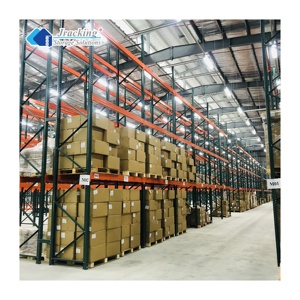
Jracking Heavy-Duty Teardrop Pallet Racking for Logistics
- Standard 2-inch pitch adjustability
- Compatible with standard GMA 48x40 pallets
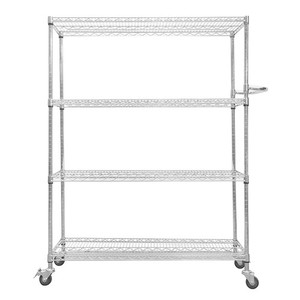
21" x 42" x H72" Multi-Functional 4-Tier Chrome Wire Shelving
- Anti-corrosion triple chrome plating
- Tool-free shelf height repositioning
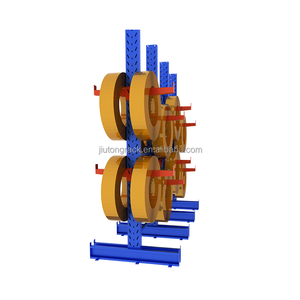
Heavy-Duty Cable Drum & Reel Storage Rack for Wire Spools
- High-capacity axle bar supports up to 3,500 lbs
- Unrestricted rotational unspooling channel
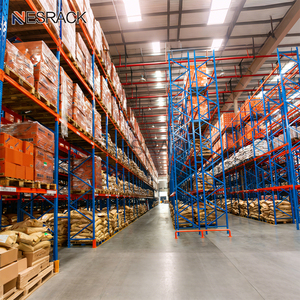
Galvanized Heavy-Duty Double Deep Industrial Pallet Racking
- Eliminates 50% of access aisles vs selective
- Deep-reach forklift compatible upright geometry
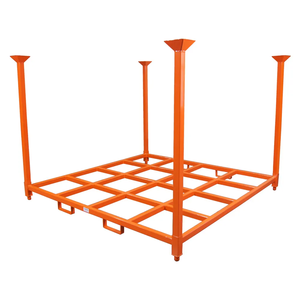
Inverted Steel Post Pallet Stack Rack for Bulk Buffer Zones
- 4-high stack rating without building anchoring
- Removable corner posts for nested return shipping
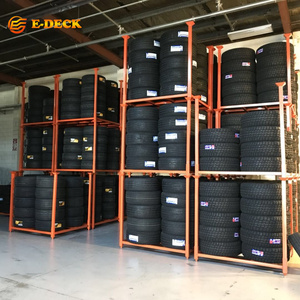
Foldable Heavy-Duty Portable Steel Tire Stacking Racks
- Optimized for tread barrel or passenger rim storage
- Collapsible scissor-hinge design saves 80% volume
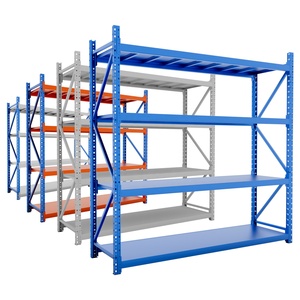
4-Tier 800kg Longspan Medium Heavy Duty Pallet Racks
- High-tensile Q235B cold rolled steel box beams
- 1,760 lbs (800 kg) uniformly distributed per tier
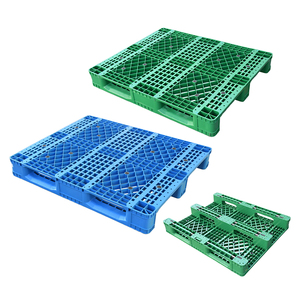
Multilevel Heavy-Duty Warehouse Storage Shelf System
- Engineered for 1200x800mm Euro & industrial pallets
- Heavy structural beam connectors with locking safety pins
The Physics of Gravity Pallet Flow: Engineering High-Throughput Reliability
Gravity flow racking systems—commonly designated as dynamic pallet flow—utilize inclined roller tracks to transport palletized unit loads from loading faces to picking faces by natural gravitational potential energy. While conceptually elegant, engineering a continuous-flow dynamic rack lane requires careful calculation of pitch angles, centrifugal brake spacing, and pallet runner interface dynamics.
1. Pitch Angle Dynamics & Gradient Equilibrium
The standard incline gradient in industrial pallet flow racking ranges between 2.5% to 3.5% (translating directly to 3/8-inch to 1/2-inch per foot of lane run). Deviating from this precise geometric envelope introduces critical mechanical operational risks:
- Insufficient Slope (< 2.5%): Pallets with softer wood bottom boards, warped stringers, or loads exhibiting lower mass fail to overcome initial static rolling resistance, resulting in mid-lane hang-ups.
- Excessive Slope (> 3.8%): Kinetic velocity escalates quadratically ($E_k = \frac{1}{2}mv^2$), imparting excessive dynamic impact forces against the unloading stop plates and inducing catastrophic pallet crushing.
2. Centrifugal Speed Controllers vs. Contactless Magnetic Retarders
To restrict terminal pallet velocity to safe operational limits (typically below 0.3 meters per second / ~60 feet per minute), dynamic roller lanes employ speed controllers. In mechanical centrifugal governors, internal planetary gears expand friction shoes against an outer housing proportionally to rotational speed. In cryogenic environments (-20°F to -30°F), modern logistics hubs specify eddy-current magnetic retarders, eliminating liquid grease that congeals in freezers and removing frictional contact wear entirely.
3. Hydraulic and Mechanical Pallet Separator Architecture
In deep-lane configurations exceeding 5 pallets (up to 20 pallets deep), cumulative line pressure represents a significant safety hazard. A train of twenty 2,500-lb pallets exerts upwards of 1,800 to 2,500 lbs of lateral back-pressure on the frontmost pallet. Pallet separators isolate the discharge pallet from the preceding queue by mechanically locking the trailing pallets behind an automatic safety latch until the front pallet is completely extracted by the forklift truck.
Top 10 Gravity Flow Racking System Manufacturers & Engineering Evaluation
A comprehensive technical appraisal of leading international manufacturers evaluated across structural steel roll-forming tolerances, brake roller integration, deep-lane engineering, and North American seismic certification capabilities.
Guangzhou HEDA Shelves
Operating a 323,000 sq ft manufacturing campus with 30,000 metric tons monthly output, HEDA Shelves engineers heavy-duty gravity flow racking systems tailored to North American GMA 48x40 standards. Renowned for rapid 24-hour CAD/3D drafting, precision roll-forming, and strict compliance with ISO 9001:2015 and CE certification standards.
- Core Strength: Custom deep-lane engineering & factory-direct supply
- Track Geometry: Full-width triple-roller tracks, 2.8%–3.3% precision pitch
- Quality Mark: CE (2435-CPR-8605159), ISO 9001:2015, RoHS
Interroll Group
Interroll represents the global standard for dynamic storage components, specializing in high-durability conveyor rollers, centrifugal speed controllers, and Time Delay Safety Separators. Their dynamic components are widely integrated into structural racking systems worldwide.
- Core Strength: Mechanical speed controllers and magnetic speed retarders
- Applications: High-throughput FIFO distribution and e-commerce picking
- Footprint: Direct distribution and production facilities across 30+ nations
SSI SCHAEFER
A global powerhouse in intralogistics systems, SSI Schaefer manufactures pallet live storage systems optimized for automated warehousing. Their systems feature reinforced upright frames, robust entry funnels, and integrated pick-to-light picking tunnels.
- Core Strength: High-tier automated system integration and pick tunnels
- Structural Class: Cold-formed heavy-duty profiles with boltless beams
- Best For: Complex enterprise distribution and grocery fulfillment
BITO Storage Systems
BITO specializes in dynamic pallet flow and carton flow racks engineered for exact FIFO requirements. Their proprietary flow tracks feature staggered split-rollers designed to accommodate plastic slipsheets and irregular bottom-runner pallet geometries.
- Core Strength: Split-roller technology for damaged or non-GMA pallets
- Safety Module: Floor-mounted ergonomic pick separators
- Market Focus: European manufacturing and pharmaceutical logistics
Advance Storage Products
Advance Storage Products is an acknowledged leader in deep-lane dynamic storage across North America, famously known for their Lo-Pro Pushback and structural pallet flow racking systems. They specialize in heavy structural channel manufacturing designed to endure severe forklift impacts.
- Core Strength: Structural C-channel steel systems resistant to fork truck abuse
- Standards: RMI (Rack Manufacturers Institute) standard certification
- Typical Deployment: Cold storage freezers and heavy beverage distribution
Frazier Industrial
Operating as the largest producer of 100% structural steel storage racking in North America, Frazier constructs high-density gravity flow lanes using hot-rolled structural C-channels. These systems offer superior torsional rigidity and long service life in heavy seismic zones.
- Core Strength: Hot-rolled structural steel construction
- Capacity: Heavy load ratings exceeding 4,000 lbs per pallet position
- Durability: Immune to typical front-column fork impact damage
Mecalux / Interlake
Mecalux delivers comprehensive live pallet racking systems worldwide, blending roll-formed teardrop profiles with heavy-duty dynamic gravity flow modules. Their Easy WMS warehouse software seamlessly pairs with gravity flow pick faces for optimized replenishment.
- Core Strength: Dual roll-formed and structural manufacturing facilities
- Engineering: Integrated braking rollers and flow bed testing labs
- Global Presence: 11 production plants across North America and Europe
Dematic
Dematic approaches gravity flow systems as integral velocity modules within macro-automated order fulfillment centers. Their pallet and carton flow lanes feature advanced sensors and interfaces that connect directly to automated stacker cranes and AGVs.
- Core Strength: Sensorized dynamic lanes for AGV and AMR induction
- System Role: Buffer sorting for automated truck load-staging
- Focus: Ultra-high-throughput enterprise distribution
Ridg-U-Rak, Inc.
Known throughout the American material handling sector for patented beam connections and cylindrical column designs, Ridg-U-Rak provides gravity flow systems engineered with reinforced base plates and seismic-tested anchoring packages.
- Core Strength: High seismic-capacity engineering (Seismic Zones 3 & 4)
- Connection Type: Patented Hook-and-Slot and slotted structural framing
- Engineering: Full in-house PE stamping across all 50 US states
Stow Group
Stow is a top European racking manufacturer known for high-volume automated production and dynamic pallet flow systems. Utilizing high-yield cold-formed steel alloys, Stow produces competitive pallet flow lanes complying with EN 15512 and FEM regulations.
- Core Strength: Cost-efficient automated roll-forming and modular components
- Design Standard: FEM (Fédération Européenne de la Manutention) 10.2.02
- Application: High-density pallet storage across EMEA and global markets
| Manufacturer | Structural Profile | Speed Control Mechanism | Standard Pitch Angle | Pallet Compatibility | Direct OEM Turnaround |
|---|---|---|---|---|---|
| Guangzhou HEDA Shelves | Heavy Roll-Formed & Structural Q235B | Centrifugal / Magnetic Eddy-Current | 2.8% – 3.3% (Adjustable) | GMA 48x40, Euro, Custom Drums | Rapid: 2-3 Weeks |
| Interroll Group | Conveyor Bed / Frame Adaptable | Centrifugal & Magnetic Contactless | 3.0% – 3.5% | Global Standard Sizes | Component Sourcing Only |
| SSI SCHAEFER | Cold-Formed High-Tensile Steel | Heavy Mechanical Governor Rollers | 3.0% Standard | Euro 1200x800, Industrial | 6-10 Weeks |
| Advance Storage Products | Structural C-Channel Steel | Internal Mechanical Brake Rollers | 3/8" per foot (~3.1%) | North American GMA & Slip Sheet | 8-12 Weeks |
| Frazier Industrial | Hot-Rolled Structural C-Shape | Friction Brake Rollers | 3/8" to 1/2" per foot | Heavy Unit Loads (Up to 4,500 lbs) | 10-14 Weeks |
| Interlake Mecalux | Hybrid Roll-Formed & Structural | Centrifugal Speed Regulators | 3.0% – 3.4% | Standard GMA, Euro Pallets | 6-8 Weeks |
Emerging Procurement Trends in Dynamic Gravity Flow Racking
Dynamic storage systems are evolving from standalone manual storage into connected intralogistics nodes. Procurement teams are specifying next-generation features to lower total lifecycle cost of ownership.
1. Friction-Free Magnetic Speed Retarders
Traditional centrifugal speed controllers rely on mechanical brake shoes subject to wear, periodic inspection, and friction dust contamination—a serious issue in pharmaceutical cleanrooms. Next-generation systems feature contactless eddy-current magnetic retarders. By passing conductive copper or aluminum through permanent magnetic fields, resistance increases proportionally to velocity without physical contact or wear, operating reliably down to -30°F in cold stores.
2. Interfacing with Autonomous Forklifts & AMRs
As distribution centers replace manual reach trucks with Automated Guided Forklifts (AGVs) and Autonomous Mobile Robots (AMRs), gravity flow discharge tolerances have tightened dramatically. Modern flow lanes incorporate dual pneumatic indexers and laser-guided discharge stops, presenting pallets at precise coordinates ($\pm 2\text{mm}$) to eliminate robotic grab errors.
3. Green Steel & Scope-3 Carbon Accounting
Global ESG mandates, including the EU’s Carbon Border Adjustment Mechanism (CBAM) and North American sustainability standards, are reshaping steel procurement. Tier-1 buyers increasingly select racking manufactured via Electric Arc Furnace (EAF) processing using recycled scrap, paired with zero-VOC powder coating lines that replace solvent-borne primers.
4. Hybrid Multi-Pallet Adaptive Flow Lanes
Managing supply chains with mixed pallet inventories (wooden GMA 48x40, plastic 9-leg export pallets, and heavy wire containers) historically caused lane jamming. Emerging gravity flow beds feature continuous staggered split-polyurethane roller tracks with self-adjusting side guide tracks, enabling facilities to run varied pallet designs down the same channel without reconfiguring.
Why Tier-1 Warehouses Partner with HEDA Shelves
Combining 25+ years of production experience with advanced in-house roll-forming and powder-coating technologies, Guangzhou HEDA Shelves delivers high-precision pallet racking worldwide with full structural engineering accountability.
Direct OEM Engineering Without Intermediary Markups
Unlike regional distributors who resell imported components, HEDA operates a dedicated 30,000 square meter manufacturing campus. Our engineering team prepares complete structural calculations and CAD/3D schematics tailored to your specific clear height, pallet dimensions, and local seismic factors.
- Imperial & Metric Dual-Unit Engineering: Fully converted load tables (lbs/kg, inches/mm) ready for Engineer of Record (EOR) review.
- 10-Stage Precision Production: Automated coil slitting, multi-station column punching, cold-bending, robot-welding, and electrostatic powder coating.
- Certified Compliance: Fully accredited under ISO 9001:2015 (Cert No. 18624Q00169R0M), CE Marking (No. 2435-CPR-8605159), and RoHS.
- Containerized Port Protection: Pallet rack frames and beams strapped with protective edge boards and rust-inhibiting film for ocean shipping.
HEDA Engineering Capabilities
Every production batch undergoes tensile steel testing, weld penetration ultrasonic verification, and cross-hatch coating adhesion checks before container dispatch to Los Angeles, Long Beach, Houston, Savannah, New York, or Vancouver.
Frequently Asked Questions on Gravity Flow Racking Sourcing
Detailed engineering answers to critical operational, seismic, compatibility, and safety questions asked by warehouse managers and corporate buyers.
What is the optimal incline slope for gravity flow pallet racking?
The industry standard slope is 3/8" to 1/2" per linear foot, representing an incline between 2.5% and 3.5%. Softer wooden pallets or lighter loads (under 1,000 lbs) typically require around 3.2% to ensure dependable rolling restart after stopping. Stiff plastic or composite pallets, or unit loads exceeding 2,500 lbs, perform best near 2.8% to avoid excessive terminal kinetic energy.
How are speed controllers positioned along a deep-lane gravity flow track?
Speed controllers (brake rollers) are typically spaced one pallet position apart, starting at the second pallet position from the charge end. For standard GMA 48x40 pallets (48" deep), a brake roller is installed every 48 to 54 inches along the lane. This ensures a moving pallet engages a speed controller before reaching its terminal velocity of 60 ft/min.
Are gravity flow racks compatible with both Euro pallets and US GMA pallets?
Yes, provided the roller tracks are designed for the bottom-deck configurations of both styles. Standard GMA pallets feature bottom runners oriented parallel to the flow direction, running smoothly on two or three narrow roller tracks. Euro pallets (1200x800mm) often travel with runners perpendicular to flow, requiring full-width steel rollers or staggered 3-track layouts to prevent the bottom boards from catching between rollers.
How does gravity flow racking compare to push-back and drive-in systems?
Gravity flow racking operates on a First-In, First-Out (FIFO) rotation with dedicated loading and unloading aisles, making it ideal for date-coded food, pharmaceuticals, and fast-moving SKUs. Push-back and drive-in racking operate on Last-In, First-Out (LIFO) principles using a single operating aisle. While push-back is cost-effective for 2 to 6 pallets per SKU, dynamic flow supports deep lanes of 10 to 25 pallets while keeping pick and replenishment traffic separated.
How do gravity flow racks perform in cold storage and blast freezers?
Gravity flow systems excel in sub-zero freezers (-10°F to -30°F) by condensing storage density and cutting costly refrigerated air volume. However, cold environments require low-temperature synthetic lubricants inside roller bearings to prevent grease freeze-up, along with galvanized steel finishes or heavy powder coatings to resist condensation corrosion during defrost cycles.
What documentation is provided to support local building permits and seismic reviews?
HEDA Shelves supplies comprehensive engineering packages including detailed 2D CAD floor plans, elevation profiles, steel cross-section properties, and structural calculation summaries covering dead, live, and seismic design acceleration parameters ($S_s, S_1$). These documents are prepared to help your local certified Engineer of Record (EOR) review and stamp drawings for municipal permits.
Plan Your High-Density Gravity Flow System Today
Send your building dimensions, clear ceiling heights, pallet dimensions, and SKU turnover targets. Our engineering department delivers a complimentary 3D layout, pallet capacity optimization model, and detailed quote within 24 hours.