Engineered Extra Heavy-Duty Storage Configurations
Precision-formed structural cold-rolled steel, verified load-carrying deflection tolerances (L/180 & L/200), and custom powder-coated warehouse components tested for zero catastrophic shear failure under dynamic forklift impact.
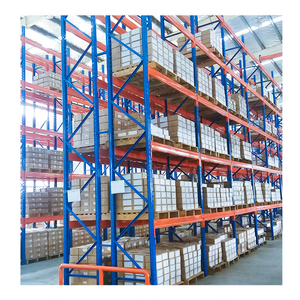
Heavy Duty Selective Steel Pallet Racking System
- Max Bay Load: Up to 35,000 lbs (16,000 kg)
- Standard: Compatible with 48"x40" GMA Pallets
- Safety Connector: 4-to-5 Tooth Spring Clamping
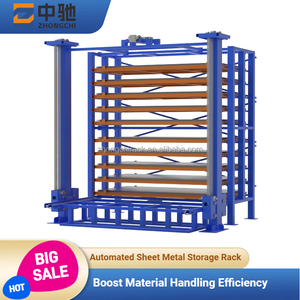
8-Layer Automated Warehouse Rack for Sheet Metal
- Density: High-density cassette cartridge pull-out
- Structure: Heavy-gauge I-Beam structural base
- Duty Level: 5,000 kg per drawer layer
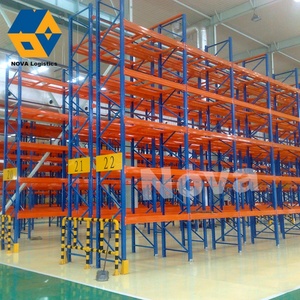
Customized Industrial Warehouse Heavy Duty Pallet Rack
- Profile: Omega section cold-rolled upright post
- Adjustability: 50mm / 75mm pitch precision holes
- Finish: Thermoset electrostatic polymer shield
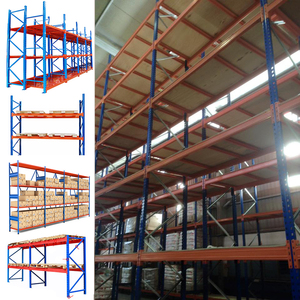
Adjustable Gravity Storage Shelf Heavy Duty System
- Inventory Rotation: Strict First-In First-Out (FIFO)
- Rollers: Galvanized heavy cylindrical brake rollers
- Separation: Dynamic end-stop pallet isolator
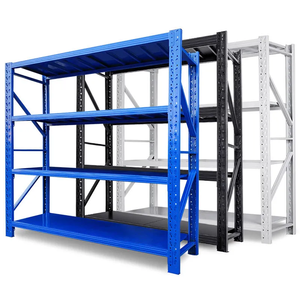
4-Layer Long Span Industrial Storage Rack Set
- Warranty: 10-Year Factory Structural Guarantee
- Assembly: Interlocking step beam and drop-in pins
- Shelf Decking: Steel plate / solid laminated veneer
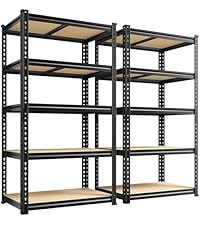
5-Layer Industrial Boltless Rivet Heavy Storage Rack
- Corrosion Barrier: Multi-stage acid pickling rinse
- Rivet Mechanism: Heavy-gauge teardrop keyhole slot
- Payload: Up to 1,760 lbs (800 kg) per shelf level
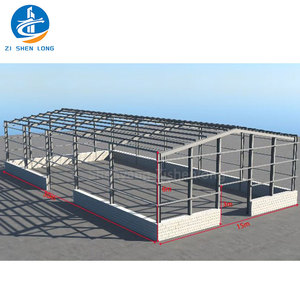
Prefabricated Steel Frame Warehouse & Mezzanine Building
- Engineering: Integrated rack-clad building layout
- Seismic Standard: Calculated to ASCE 7 / IBC Codes
- Primary Steel: Hot-rolled Q355B H-beam columns
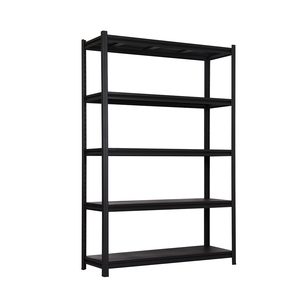
Heavy Duty Steel Welded Wire Chrome Shelving Rack
- Safety Compliance: NFPA 13 Fire Sprinkler Flow
- Reinforcement: Inverted U-channel welded support
- Surface Options: Bright zinc electroplate or chrome
1. Engineering Integrity: Why Mill-Certified Cold-Formed Steel Defines Heavy-Duty Racks
In modern warehousing, the phrase "extra heavy duty" is not merely a marketing term; it is an exact structural metric governed by yield strength tolerances, cross-sectional geometry, and dynamic load redistribution under cyclic stress. Industrial logistics operators, automated third-party logistics (3PL) providers, and multi-tier fulfillment hubs require pallet racking columns capable of bearing unit loads exceeding 3,000 lbs to 5,000 lbs per pallet position, with system bays carrying up to 40,000 lbs in continuous vertical loading.
At HEDA Shelves (established in 2001), our structural engineering division subjects every production run to rigorous mechanical testing. Unlike generic distributors, our manufacturing campus leverages continuous cold-roll forming lines that fabricate high-tensile Q235B and Q355B (equivalent to ASTM A572 Grade 50) structural coils into multi-flanged Omega upright profiles. This geometric design creates twelve distinct load-bearing cold-worked bends across the upright cross-section, drastically elevating torsional rigidity and counteracting Euler buckling forces under extreme eccentric loading.
Factory Production Sequence & Metallurgical Surface Treatment
Structural degradation in industrial environments is predominantly accelerated by micro-corrosion and micro-fissure expansion at mechanical joint interfaces. HEDA Shelves mitigates these failure modes through an automated 10-step precision manufacturing sequence:
CNC In-Line Pitch Punching
Automated high-speed punch dies create continuous 50mm or 75mm teardrop/diamond pitch slots with zero thermal stress, eliminating localized heat-affected zones that induce metal fatigue.
Robotic Gas Shielded Welding
Beam end-plates are fusion-welded to interlocking step beams using automated Panasonic robotic MIG welding cells, guaranteeing full-penetration structural fillets without porosity or slag inclusion.
9-Stage Pretreatment & Powder Coat
Every profile undergoes degreasing, acid pickling, rust removal, and zinc phosphating prior to electrostatic thermoset polymer powder deposition cured at 200°C for exceptional salt-spray resistance.
2. Future Procurement Trends: Sourcing Extra Heavy-Duty Pallet Racks (2025–2030)
Warehouse design and industrial racking procurement are undergoing a fundamental structural transition. Driven by escalating commercial real estate costs per square foot in North America and Western Europe, enterprise supply chain directors are rapidly shifting away from single-tier floor layouts toward high-density, high-bay automated integration.
1. Automated Storage & Retrieval (AS/RS) and Shuttle Integration
Traditional selective racking requires wide forklift transfer aisles ranging from 10.5 to 13.5 feet. Future procurement frameworks prioritize deep-lane systems such as 4-Way Radio Shuttle Racking and rack-supported clad buildings. These systems condense vertical clear heights up to 40 meters, reducing required floor footprint by up to 60% while simultaneously lowering energy dissipation in cold chain storage applications. Racking uprights must be engineered with millimeter-level tolerances to accommodate automated optical guidance systems and high-speed robotic shuttles.
2. Stringent Seismic Performance Modeling (IBC & Eurocode Compliance)
Procuring from overseas manufacturers historically carried regulatory friction regarding seismic approval. Today, high-tier factories must utilize dynamic finite element analysis (FEA) to simulate seismic accelerations ($S_s, S_1$) conforming to the International Building Code (IBC) and ASCE 7-22. Enterprise buyers now mandate that suppliers furnish verifiable load plaque documentation, anchor bolt pull-out calculations, and structural PE (Professional Engineer) stamped calculation packages directly corresponding to local municipal seismic design categories (C, D, E, and F).
3. Total Cost of Ownership (TCO) vs. Spot Metric Tonnage
Discerning procurement executives evaluate vendor proposals based on TCO rather than raw ex-factory steel weight. Factors like standardized container packaging design (optimizing 40HQ ocean freight stuffing to prevent transit abrasion and deformation), hot-dip galvanized base options for harsh environments, and modular expansion compatibility determine project profitability across a 15-to-25-year structural lifecycle.
3. Industrial Structural Systems: Engineering Comparison & Application Matrix
Selecting the appropriate extra heavy-duty structural geometry requires balancing selectivity against density, FIFO vs. LIFO rotation profiles, and capital expenditure allocation. The following engineering matrix provides technical benchmarks:
| System Classification | Typical Payload / Level | Space Utilization | Stock Rotation | Primary Industrial Application |
|---|---|---|---|---|
| Heavy Duty Selective Rack | 2,000 – 9,000 lbs | 40% – 50% | 100% Selectivity | FMCG, 3PL Distribution, General Manufacturing |
| Drive-In / Drive-Thru | 2,000 – 4,500 lbs | 65% – 75% | LIFO / FIFO | Cold Storage, Seasonal Stock, Low SKU High Batch |
| Push-Back Cart System | 2,500 – 4,000 lbs | 70% – 80% | LIFO (2–6 Deep) | Food & Beverage, Pharmaceutical Staging |
| Gravity Roller Flow Rack | 2,000 – 3,500 lbs | 80% – 85% | Strict FIFO | Perishable Goods, Date-Coded Chemical Lots |
| Radio Shuttle Automation | 2,200 – 4,400 lbs | 85% – 90% | FIFO / LIFO Hybrid | Freezer Warehouses, Automated High-Volume DCs |
| Heavy Duty Cantilever | 4,000 – 15,000 lbs | 50% – 60% | Full Open Face | Structural Steel, Timber, Extrusions, Sheet Metal |
| Rack-Clad Building / Mezzanine | 60 – 250 lbs / sq ft | 150% – 200% | Custom Layered | Multi-Level E-Commerce Fulfillment, High-Bay Hubs |
4. Enterprise Manufacturing Excellence: Guangzhou Heda Shelves Co., Ltd.
For international logistics managers, supply chain integrators, and industrial rack distributors across the United States, Canada, Australia, and Europe, supplier stability and certified quality management are paramount. HEDA Shelves operates as an authoritative single-source design, engineering, and manufacturing institution.
Certified Compliance Matrix
Fully certified quality management conforming to ISO 9001:2015 (Cert No. 18624Q00169R0M), European Conformity CE Marking (No. 2435-CPR-8605159), and RoHS non-hazardous materials verified.
Imperial Engineering Packages
Deliverables provided in true imperial measurements (feet, inches, fractional increments, and pounds) ready for immediate submission to local Engineers of Record (EOR), fire marshals, and permitting bodies.
Direct Port Logistics
Standard export packaging utilizing automated wood dunnage strapping, profile protective sleeves, and containerized volume optimization into 20GP, 40GP, and 40HQ containers destined for major ports globally.
Whether designing an automated 8-layer sheet metal tower, setting up a cold chain logistics center operating at -30°C, or retrofitting a 500,000 sq ft regional distribution hub with tear-drop selective racks, our engineering staff handles 3D spatial optimization, finite load simulations, and turnkey OEM/ODM manufacturing under one roof.
5. Frequently Asked Questions: Industrial Procurement & Engineering Due Diligence
Direct answers to critical structural, regulatory, and logistics inquiries encountered by warehouse developers, procurement officers, and structural engineers.
How do you verify rack deflection limits under maximum rated capacity?
Can HEDA Shelves supply seismic design calculations stamped for US or Canadian permits?
What is the difference between roll-formed steel and structural C-channel racking?
How do you address NFPA fire safety and in-rack sprinkler clearance?
What anti-corrosion protection is specified for cold storage and freezer applications?
What documentation and information are required to issue an accurate CAD quotation?
Transform Your Warehouse Cubage Into Productive Capacity
Consult directly with our senior application engineers. Receive a comprehensive CAD floor layout, 3D visualization, seismic design review, and transparent factory-direct pricing tailored to your operational specifications.