High-Density Heavy-Duty Warehouse Storage Systems
Explore our export-certified industrial pallet racking configurations engineered to custom OEM/ODM parameters, backed by rigorous FEM 10.2.02 deflection verification and automated precision cold roll forming.
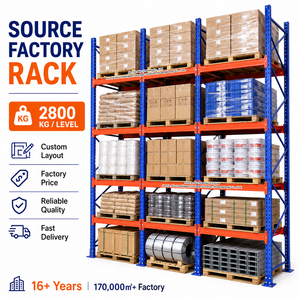
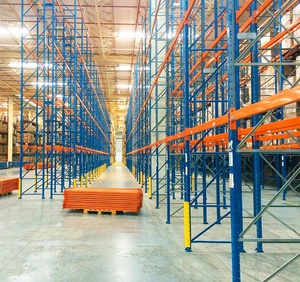
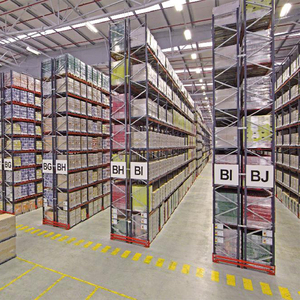
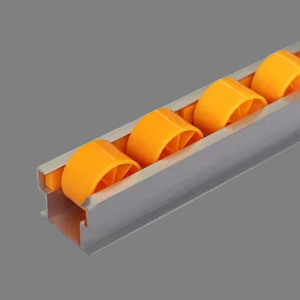
Architectural Precision & Structural Mechanics of VNA Pallet Racking
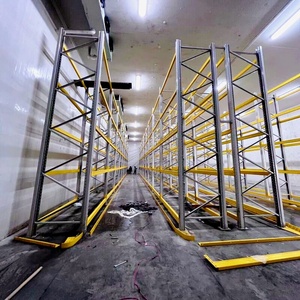
Very Narrow Aisle (VNA) racking systems represent the apex of selective space compression within high-throughput distribution environments. Unlike standard wide-aisle counterbalance configurations that mandate operating corridors between 3,200 mm and 3,800 mm, an engineered VNA system constricts operating clearances to 1,500 mm – 1,800 mm. This 50% spatial reduction immediately unlocks up to 45% additional cubic floor utilization while sustaining 100% selective SKU accessibility. However, this level of physical density introduces complex mechanical loads, requiring exacting mill-tolerance manufacturing standards such as EN 15512, RMI ANSI MH16.1, and FEM 10.2.02 deflection limits.
- Superflat Slab Tolerances (DIN 15185 / ASTM E1155): Because specialized man-up or man-down turret trucks elevate loads up to 18 meters, microscopic slab undulations translate to severe mast oscillations at high elevations. VNA engineering mandates precision baseplate shimming, anchoring with seismic expansion anchors, and rigorous ground rail alignment within ±1.5 mm tolerance.
- Structural Guide Rail & Inductive Wire Steering: Lateral navigation within 1,600 mm clear aisles relies on either floor-mounted structural low-profile steel guide rails (75×50×5 mm or 100×50×6 mm angle steel with lead-in entry funnels) or embedded wire-guided induction systems emitting low-frequency guidance signals.
- High-Tensile Cold Roll-Formed Profiles: Fabricated exclusively from certified Q235B and high-yield Q355B structural steel coils. Upright columns feature multi-bend omega (Ω) geometries that maximize polar moments of inertia, resisting high torsional buckle forces caused by eccentric turret mast movements.
- Beam-to-Column Locking Connectors: Fitted with 4-to-5 tooth high-rigidity stamped connectors engineered with integrated gravity-lock or high-shear spring safety pins. Deflection parameters are kept strictly below L/200 under maximal nominal working loads to ensure turret forks clear pallet profiles without snagging.
When engineering for global supply chain operations across the United States, Canada, and Europe, our Guangzhou automated manufacturing center integrates bespoke seismic bracing layouts, rack upright impact column protectors, longitudinal flue space stops, and flame-retardant heavy-gauge wire mesh decks compliant with NFPA 13 sprinkler penetration standards.
Future Procurement Trends in High-Bay VNA Warehousing
Strategic analysis of technological shifts, automation convergence, and regulatory dynamics dictating warehouse rack procurement through 2030 and beyond.
Autonomous Mobile Robot (AMR) & AGV Turret Synergy
Global procurement is rapidly pivoting from manually operated articulated forklifts to fully automated VNA guided vehicles. Racking infrastructure now requires precision laser-cut target brackets, barcode/QR location integration across bottom rails, and tighter beam spacing tolerances to ensure robotic end-effectors achieve millimeter-accurate pallet insertion without operator correction.
Stringent Seismic & Site-Specific Engineering Mandates
With distribution hubs expanding across seismic regions in the American West Coast, Latin America, and Southern Europe, blanket load tables are obsolete. Enterprise buyers demand dynamic finite element analysis (FEA) validating base shear resistance, ductility factors, and post-yield performance, accompanied by stamped calculation dossiers satisfying local building codes.
Circular Metallurgy & Low-Carbon Epoxy Finishing
Scope 3 carbon reduction pledges are altering steel purchasing criteria. Forward-looking 3PLs and Fortune 500 manufacturers prioritize supply partners utilizing closed-loop pickle-and-phosphating pretreatment lines, zero-VOC electrostatic powder systems, and high-tensile optimized cross-sections that reduce raw steel volume while enhancing total pallet carrying capacities.
VNA vs. Alternative High-Density Racking Topologies
A data-backed technical comparison to assist industrial logistics engineers and facility directors in evaluating operational velocity, spatial density, and total cost of ownership (TCO).
| Racking Architecture | Operating Aisle Width | Floor Footprint Utilization | Direct Pallet Accessibility | Maximum Practical Height | Stock Rotation Strategy | MHE Investment Level |
|---|---|---|---|---|---|---|
| Very Narrow Aisle (VNA) | 1,500 – 1,800 mm | 85% – 90% Efficiency | 100% Immediate (Individual) | Up to 18 – 20 Meters | FIFO / Arbitrary Picking | High (Specialized Turret / AGV) |
| Standard Selective Rack | 3,200 – 3,800 mm | 40% – 50% Efficiency | 100% Immediate (Individual) | Up to 10 – 12 Meters | FIFO / LIFO Compatible | Low (Standard Counterbalance) |
| Double Deep Pallet Rack | 3,000 – 3,400 mm | 60% – 65% Efficiency | 50% (Trailing Pallet Blocked) | Up to 10 – 12 Meters | LIFO Priority | Medium (Pantograph Reach Truck) |
| Drive-In / Drive-Through | Non-Aisle Lane Entry | 70% – 80% Efficiency | Low (Last In, First Out Only) | Up to 10 – 12 Meters | Strict LIFO (FIFO if Drive-Thru) | Medium (Standard Reach with Guards) |
| Radio Shuttle Automation | Buffer Aisle Only | 80% – 85% Efficiency | Lane-Dependent Access | Up to 16 – 20 Meters | Software Configurable (FIFO/LIFO) | High (Automated Carts + MHE) |
End-to-End OEM/ODM Manufacturing & Fulfillment
From initial DWG slab layout modeling to automated electrostatic polymer encapsulation, our 6-phase engineering workflow ensures complete defect elimination and rapid field installation.
Data Input & Space Geometry
Analysis of building drawings, column grids, overhead truss clearances, floor flatness certifications, sprinkler piping elevations, and exact pallet weight distributions (both imperial and metric).
3D CAD & Structural Calculations
Generation of comprehensive plan views, frame load capacity tables, section elevations, and finite element moment connections delivered within 24 hours for review by your engineer of record.
Automated CNC Roll Forming
Continuous slitting, high-speed automated multi-station punching for precise pitch synchronization, and cold profile shaping on continuous roll-forming lines producing rigid, straight columns.
Acid Pickling & Powder Coating
Full-immersion multi-stage chemical degreasing, rust stripping, and phosphating followed by thermosetting epoxy-polyester powder spraying cured at 200°C for superior impact resilience.
Batch QA & Deflection Testing
Full dimensional, weld integrity, and coating thickness verification (60–80 μm). Sample lot destructive yield testing and weld penetration checks guaranteeing zero field failure under load.
Containerization & Site Dispatch
High-density banded bundling with edge protective channeling, anti-chafing film, balance-engineered container stowage plans, and complete color-coded installation schematics.
Frequently Asked Technical & Engineering Questions
Direct answers from our senior structural engineers covering specification, floor preparation, local seismic code compliance, and export logistics.
What floor flatness tolerance is required for a VNA racking installation?
VNA installations with lift elevations exceeding 8 meters mandate specialized floor flatness classes defined under DIN 15185 or ASTM E1155 (F-min 75 to F-min 100). If the floor does not meet superflat criteria, grinding of the designated wheel paths or structural laser-assisted shimming beneath our heavy baseplates must be executed to prevent extreme lateral mast sway.
Can HEDA Shelves supply stamped calculations for US / Canadian permitting?
Yes. Our engineering department prepares comprehensive structural engineering dossiers including member cross-sectional properties, dead/live load combinations, beam-to-column rotational stiffness curves, and site-specific seismic acceleration factors (Ss, S1). These documents are structured specifically for seamless review and local stamping by your project's licensed Engineer of Record (PE/SE).
How are guide rails anchored and integrated with VNA upright bases?
We supply continuous heavy hot-rolled angle guide rails (commonly 100×50×6 mm or 125×75×8 mm) fixed to the floor slab via chemical capsule or heavy mechanical drop-in anchors at 500 mm centers. The lead-in entry features flared round-bar funnels to ease truck entry. Upright bases are shielded with welded wrap-around wrap-post protectors to eliminate direct impact transfer to vertical columns.
What are the minimum flue space dimensions for NFPA 13 sprinkler compliance?
For back-to-back high-bay VNA racks exceeding 25 feet, NFPA 13 typically mandates a continuous vertical longitudinal flue space of at least 6 inches (152 mm) and transverse flue spaces of 3 inches between pallets. We integrate mechanical row spacers and backstop safety beams that physically prevent operators from pushing pallets into the open sprinkler flue pathway.
What is the standard manufacturing lead time and container packing efficiency?
Standard lead times for a 10 to 50 container project typically range between 20 to 30 calendar days from drawing sign-off. Our export nesting procedures bundle uprights, cross braces, and step beams using custom steel cradles that maximize 40ft High Cube container cube rates up to 98%, dramatically reducing ocean freight cost per pallet position.
Do you support customized colors, private labeling, and OEM brand requirements?
Yes. As a primary OEM/ODM manufacturer, we offer complete corporate identity matching using the RAL color standard. Beam punch geometries, connector styling, column stamp embossing, custom labeling, and installation manuals can all be branded for distributors and material handling system integrators worldwide.
Request an Engineered VNA Layout & Landed Quote
Send us your building CAD file (.DWG/.PDF), clear ceiling height, pallet dimensions, and target forklift specifications. Our engineering team delivers a comprehensive layout, structural calculation summary, and itemized CIF/FOB pricing within 24 hours.