Precision-Engineered Heavy Duty Racking & Storage Platforms
From single-bay selective pallet interfaces to robotic AS/RS installations and multi-tier structural mezzanines, every system is roll-formed with high-tensile structural coil and batch-certified for industrial safety.
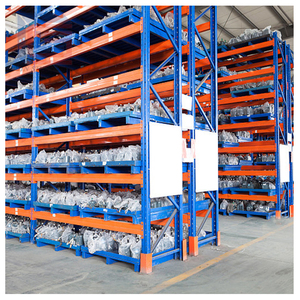
Industrial Pallet Storage Rack Steel Warehouse Racking Adjustable Shelving
- 100% Direct SKU Accessibility
- Load Capacity: 1,000–4,500 kg/Beam Level
- Adjustable 50mm / 75mm Connector Pitch
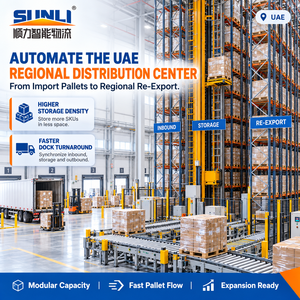
Heavy Duty Automated AS/RS Pallet Stacking Rack System 500kg-1500kg
- High-Bay Vertical Clearances Up to 35m
- Stacker Crane & WCS/WMS Native Pairing
- Micro-Tolerance Cold-Formed Guides
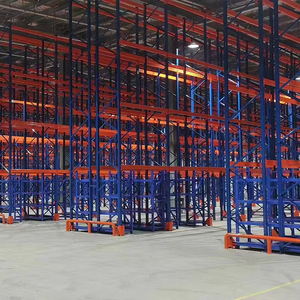
Heavy Duty Double Deep Pallet Racking Industrial Storage Solution
- Increases Floor Density by 50% vs Selective
- Optimized for Pantograph Deep-Reach Trucks
- Heavy Welded Baseplates & Upright Guards
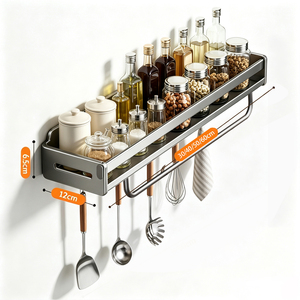
Drill-Free Carbon Steel Modular Storage Shelf Commercial Storage Rack
- Corrosion-Resistant Powder Coat Matrix
- Multi-Functional Modular Assembly
- High-Strength Compact Profile Fabrication
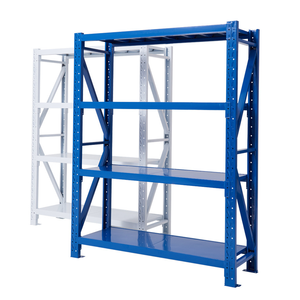
Heavy-Duty Steel Warehouse Storage Shelves Multi-Layer Longspan Racks
- Manual Picking Load: 300–800 kg/Tier
- Steel Decking, Wire Mesh or Plywood Infill
- Interlocking Beam-to-Upright Keyhole Slots
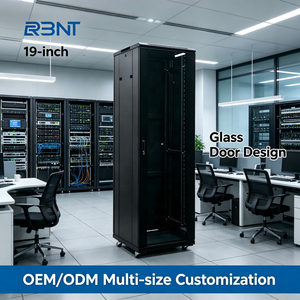
19-Inch Server Rack Network Cabinet 22U–47U Enclosure OEM/ODM
- 19" EIA-310-D Structural Standard
- Perforated High-Airflow Ventilation Doors
- Static Load Capacity Exceeding 1,000 kg
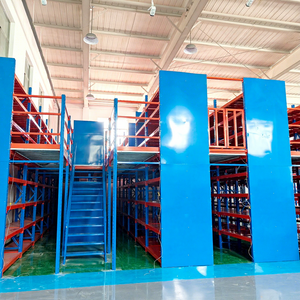
Industrial Warehouse Steel Mezzanine Floor Multi-Tier Platform System
- Doubles/Triples Footprint Cubic Capacity
- Floor Load Ratings: 300–1,500 kg/m² (60–300 psf)
- OSHA & IBC Compliant Stairwells & Railings
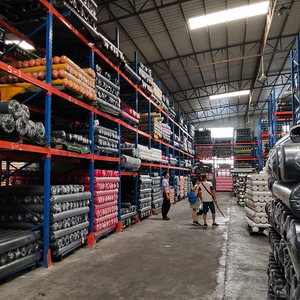
Customizable Structural Heavy Duty Storage Rack 1000kg–3000kg Rating
- Tailored Column Cross-Sections & Web Steel
- Hot-Dip Galvanized or Epoxy Powder Options
- Turnkey Finite Element Analysis (FEA) Verified
Heavy-Duty Racking Metallurgy, Structural Engineering & Factory Prowess
Industrial warehouse racking serves as the backbone of global supply chain infrastructure. When procurement teams evaluate international OEM/ODM manufacturing partners, material provenance, structural deformation thresholds under dynamic live loading, and seismic engineering rigor separate critical infrastructure from catastrophic failure.
Structural Steel Metallurgy & Cold-Roll Integrity
We utilize certified prime structural carbon steel coils, specifically high-yield Q235B and Q355B grades (comparable to ASTM A36 and ASTM A572 Grade 50). By strictly controlling sulfur and phosphorus content to under 0.035%, our cold-roll formed omega upright sections preserve outstanding tensile ductility and fracture toughness under maximum cyclic warehouse load conditions.
Finite Element Analysis & Seismic Engineering
Our in-house design engineering department executes rigorous 3D modeling and ANSYS Finite Element Analysis (FEA) on every custom system geometry. Upright frame moment frames, semi-rigid beam end connectors, and floor anchorage calculations are configured to conform with RMI (MH16.1), EN 15512:2020, AS4084-2023, and localized IBC seismic acceleration parameters (Ss and S1 spectral response values).
Thermoset Powder Coating & Anti-Corrosion
Prior to automated powder coating, all roll-formed profiles transit through a continuous multi-stage chemical pretreatment line featuring immersion degreasing, ultrasonic acid pickling, and micro-crystalline zinc phosphating. Electrostatic deposition of high-grade TGIC polyester thermosetting powder achieves 60–90µm uniform dry film thickness, passing 500-hour ASTM B117 salt spray ratings.
Industrial Storage Architecture Benchmark & Engineering Specifications
Compare structural profiles, spatial volumetric utilization, and operational equipment dependencies across core industrial formats.
| Storage Architecture | Volumetric Space Efficiency | Pallet Selectivity | Design Load Range (Uniformly Distributed) | Material Handling Equipment Profile | Applicable Industrial Standard |
|---|---|---|---|---|---|
| Standard Selective Racking | 40% – 50% (Aisle Dependent) | 100% Direct Immediate Pick | 1,000 – 4,500 kg per beam level | Standard Counterbalance, Reach Trucks | EN 15512, RMI MH16.1, AS4084 |
| Double-Deep Pallet System | 60% – 65% Utilization | 50% Immediate (Last-In First-Out) | 1,000 – 3,000 kg per beam level | Deep-Reach Pantograph Forklifts | FEM 10.2.02, RMI Standards |
| Drive-In / Drive-Through | 70% – 85% High Density | Filo / FIFO Batch Rotation | 800 – 1,800 kg per pallet runner | Counterbalance & Narrow Carriage Reach | EN 15620, RMI MH16.1 Class 400 |
| Radio Shuttle Automation | 80% – 90% Ultra High Density | Automated FIFO or LIFO Lane Indexing | 500 – 2,000 kg per autonomous shuttle | Standard Lift Trucks (No rack entry needed) | CE Machinery Directive 2006/42/EC |
| Automated AS/RS High-Bay | 90% – 95% Vertical Footprint Maximized | 100% Automated High-Speed Buffer | 500 – 1,500 kg per crane hoist cradle | Automated Stacker Cranes & Rail AGVs | DIN 15201, FEM 9.831, EN 528 |
| Structural Steel Mezzanine | Multiplies Usable Floor Footprint 2x–3x | 100% Floor Access for Manual/Sortation | 300 – 1,500 kg/m² Uniform Live Load | Pallet Jacks, VRC Lifts, AGV Robots | AISC 360, IBC 2024 Chapter 16 |
10-Step In-House Production & Quality Control Flow
Every beam connector, welded baseplate, and cold-rolled upright profile transits our ISO 9001 certified sequence before seaworthy bundling.
Prime Steel Slitting
Mill-certified coil slitting with automated strip edge deburring to exact web widths.
CNC Punching
High-speed mechanical pressing for uniform teardrop, diamond, or hex pitch holes.
Cold-Roll Forming
Continuous 16–24 station roller stands shaping complex omega and step-beam profiles.
Precision Cut-to-Length
Flying hydraulic shear ensuring tight length tolerance within ±1.0mm per section.
Robotic Welding
MIG automated multi-axis robot arms welding beam end connectors and heavy footplates.
Surface Pickling
Complete chemical immersion stripping oxidation, grease, and mill scale.
Zinc Phosphating
Dense micro-crystalline pre-coat ensuring maximum resin adhesion and cathodic defense.
Electrostatic Powder
Swiss Gema automatic spray guns applying uniform TGIC polyester powder at 75kV.
Thermal Curing
High-temperature convection tunnel baking at 200°C for superior cross-link hardness.
Container Packing
Wrapped steel dunnage strapping, timber base separators, and shrink wrap for export.
Technological Innovations & Global Procurement Trends
As automated material handling, artificial intelligence, and ESG directives reshape supply chain economics, procurement directors must anticipate how static steel frameworks adapt to dynamic warehouse robotics and stringent commercial covenants.
1. AMR & Shuttle Hybrid Ecosystems
Warehouses are moving rapidly away from pure manual forklift handling. Future-proof rack design requires integrated runway profiles, floor-level docking stations, and optical reflector bracket alignments designed specifically for Autonomous Mobile Robots (AMRs) and 4-way pallet shuttles.
2. Cold-Chain Cryogenic Metallurgy
With the global expansion of frozen pharmaceuticals and grocery fulfillment centers operating at -25°C to -30°C, steel embrittlement is a primary vulnerability. Racking procurement specifies micro-alloyed, aluminum-killed structural steel verified via Charpy V-Notch impact testing at sub-zero temperatures.
3. IoT Structural Health Monitoring
Modern distribution hubs are adopting wireless strain gauges, ultrasonic impact sensors, and continuous tilt monitoring embedded directly into heavy upright columns. This enables automated alerts for forklift collisions, seismic displacement, and overloading before progressive collapse hazards materialize.
4. Sustainable Decarbonized Steel
Corporate ESG mandates are influencing supplier scorecards. Leading OEMs utilize Electric Arc Furnace (EAF) steel with recycled scrap ratios exceeding 60%, alongside low-VOC non-toxic powder coating chemistries, providing verifiable Environmental Product Declarations (EPDs) for LEED-certified distribution parks.
Frequently Asked Questions for B2B Racking Buyers
Answers to common technical, logistics, and compliance inquiries from industrial supply chain leaders, procurement heads, and structural consulting engineers.
What international structural engineering standards do your racking systems comply with?
Our warehouse storage systems are engineered in strict compliance with major international standards. For the North American market, calculations adhere to RMI (Rack Manufacturers Institute) MH16.1 and AISC specifications, accommodating IBC (International Building Code) seismic requirements. For European and British Commonwealth jurisdictions, our calculations conform to EN 15512:2020 (Steel Static Storage Systems) and EN 15620/15629, while Australian projects are tailored to AS4084-2023.
We provide full structural calculation packages, load table certifications in imperial (lbs/ft) and metric units, and component engineering submittals ready for review by your licensed local Professional Engineer (PE) or Engineer of Record (EOR).
How do you handle seismic design categories and dynamic floor anchoring?
Seismic vulnerability depends directly on building site coordinates, soil site classification (A through E), and mapped spectral acceleration factors ($S_s$ and $S_1$). For high seismic zones (such as California, the US Pacific Northwest, or Japan), our engineers incorporate oversized baseplates with dual wedge anchors or heavy-duty chemical resin anchors (Hilti / Simpson Strong-Tie compatible).
Furthermore, we reinforce upright column cross-sections, increase diagonal bracing node frequencies, and introduce heavy portal ties or cross-aisle top ties to counteract dynamic torsional overturning forces.
What steel grades are used and how is coil quality verified during manufacturing?
We utilize certified high-tensile hot-rolled and cold-rolled carbon steel coils, predominantly Q235B and Q355B, sourced from state-certified tier-one steel mills. Every inbound coil batch is accompanied by Mill Test Certificates (MTC / EN 10204 Type 3.1) detailing chemical composition (Carbon, Manganese, Silicon, Phosphorus, Sulfur) and mechanical parameters (yield strength $R_e$, ultimate tensile strength $R_m$, and percentage elongation at break).
Our internal metallurgical lab routinely conducts random tensile pull tests, universal testing machine (UTM) compression tests on welded connectors, and coating thickness verification.
Can you supply teardrop style racking compatible with existing US warehouse systems?
Yes. As an experienced OEM/ODM provider, we manufacture universal teardrop punch patterns on a standard 2-inch vertical pitch, ensuring 100% mechanical interchangeability with mainstream North American systems (such as Interlake, Wireway Husky, and Speedrack). We also manufacture 50mm and 75mm European pitch hexagonal and diamond slot patterns for international distribution networks.
Custom beam connector pin configurations, step-beam profiles for drop-in wire decking, and custom color matching in industrial RAL shades are fully supported.
What are your production lead times, shipping terms, and ocean container optimization methods?
Standard fabrication lead time is 15 to 25 calendar days from finalized approval of CAD shop drawings and engineering submittals. Our monthly capacity of 30,000 metric tons guarantees scalable output for multi-phase mega-distribution logistics projects.
We execute advanced 3D container packing simulations to maximize weight-to-cube ratios in 40ft High Cube (40HQ) containers. Heavy upright frames and beams are nested with protective timber dunnage, high-strength PET strapping, and corner edge shields to eliminate abrasion damage during transpacific or transatlantic voyages. Standard delivery terms include FOB, CIF, CFR, and DDP to major global ports.
What information is needed to obtain a comprehensive layout proposal and quotation?
To provide an itemized Bill of Materials (BOM), CAD layout, and structural load analysis within 24 hours, our engineering department requests:
1. Architectural warehouse drawings or dimensions (Length, Width, Clear Height beneath building joists, and column spacing).
2. Pallet specifications (Width, Depth, total Load Height including pallet runner, and maximum gross weight in lbs or kg).
3. Material handling equipment details (Forklift make/model, mast collapsed height, maximum lift height, and minimum right-angle stacking aisle requirement).
4. Concrete floor slab specifications and seismic site classification, if available.
Request Your Structural CAD Layout & Factory-Direct Quotation
Partner directly with an established high-capacity manufacturer. Our engineering desk delivers comprehensive 2D CAD floor plans, 3D conceptual renderings, and competitive landed-cost estimates within 24 hours.