Standard & Custom Industrial Pallet Rack Frames
Manufactured using CNC-automated continuous roll-forming lines with multi-point profile punching, yield strength verification, and anti-corrosion electrostatic epoxy finishing.
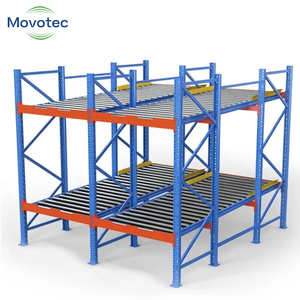
Movotec MTG100 Gravity Roller Flow Rack Frame
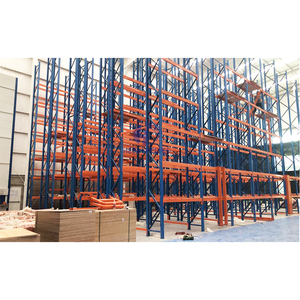
Heavy Duty Steel Selective Pallet Rack Frame
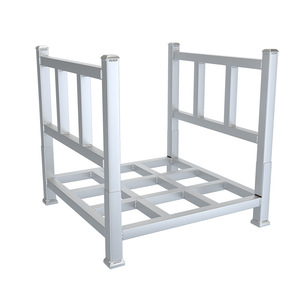
Heavy Duty Folding Stacking Storage Frame
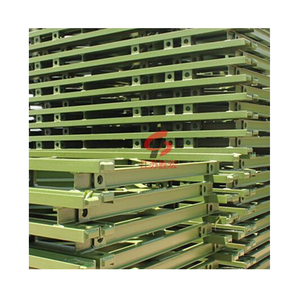
Structural Base Frame Structural Support System
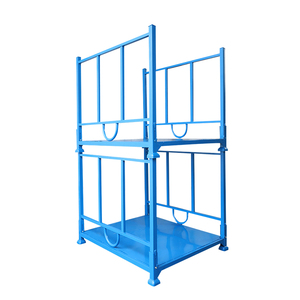
Foldable Metal Pallet Stacking Posts Frame
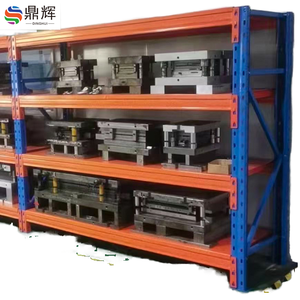
Cold-Rolled Steel Medium/Heavy Upright Column
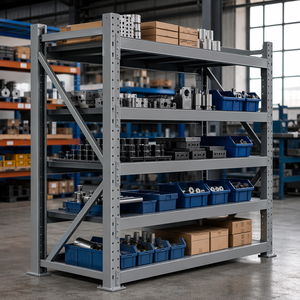
Custom OEM Heavy Welded Pallet Storage Frame
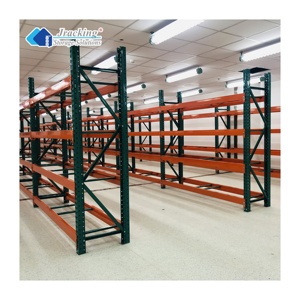
US Teardrop Standard Warehouse Upright Frame
Structural Mechanics, Load Path Design & Section Geometry of Upright Frames
A technical examination of column profile optimization, torsional-flexural buckling resistance, and cold-formed metallurgical properties for industrial OEM frame fabrication.
The pallet rack upright frame serves as the core vertical load-bearing sub-assembly within any intralogistics facility. Unlike standard architectural structural columns subjected primarily to concentric static compression, pallet rack upright columns function under a continuous combination of high axial compressive forces, eccentric rotational moments induced by beam deflection, and dynamic lateral shear stresses generated by forklift operations and seismic accelerations. As an OEM and ODM tier-1 manufacturer, HEDA Shelves addresses these multi-axis limit states through rigorous cold-formed profile geometry and precision manufacturing tolerances compliant with the Rack Manufacturers Institute (RMI MH16.1), American Iron and Steel Institute (AISI S100), and European Norm EN 15512.
Multi-Bend Omega Profile Geometry & Stiffening Ribs
The structural performance of an upright column is primarily dictated by its cross-sectional geometry rather than mere plate thickness. Standard flat-flange columns are prone to local flange buckling under high compressive loads. Our continuous roll-forming tooling produces proprietary 8-to-12-bend open profiles (commonly designated as Omega or modified C-sections) featuring continuous return lips and intermediate stiffening ribs along both the face and side webs.
By strategically redistributing steel coil mass away from the neutral axis toward the outer profile perimeters, this multi-bend geometry dramatically increases both the cross-sectional moment of inertia ($I_x$, $I_y$) and the torsional warping constant ($C_w$). The result is an exceptional strength-to-weight ratio that optimizes tonnage consumption while elevating the critical elastic buckling stress threshold ($\sigma_{cr}$), mitigating the incidence of flexural-torsional failure in tall, unbraced bay configurations.
- High-Yield Certified Coil: Fabricated from structural carbon steel Q235B, Q355B, and ASTM A1011 Grade 50 possessing guaranteed minimum yield points between 33,000 PSI (235 MPa) and 50,000 PSI (355 MPa).
- Seismic K-Bracing & D-Bracing: High-tensile structural diagonal and horizontal bracing tubes (bolted or automated MIG welded) distribute shear forces into dual floor anchor plates.
- Punching Pitch Consistency: Fully automated multi-stage progressive CNC punching guarantees hole center distance tolerance within ±0.15 mm over an entire 12-meter single column length.
RMI & AISI S100 Buckling Analysis
In accordance with cold-formed steel engineering principles, net effective section area ($A_{eff}$) is calculated by deducting the perforated hole cross-section from the gross area, adjusted by effective width reduction factors for unstiffened compression elements. Our computerized profiling ensures that column punching pitch maintains sufficient net section integrity without creating stress concentrations during dynamic forklift impact loading.
Surface Passivation & Micro-Crack Prevention
During cold roll-forming, tight radius bends generate high localized residual stress. HEDA Shelves utilizes a gradual 22-station roll-forming progression line that shapes steel coils incrementally at controlled feed rates. This eliminates micro-fractures along inner bend radii, ensuring structural ductility and impact resistance under sub-zero freezer logistics environments down to -30°C (-22°F).
Structural Comparison: Cold-Formed Roll-Formed Profiles vs. Structural Hot-Rolled Channels
Selecting the appropriate structural configuration is essential for balancing material expenditure, installation speed, building clear height utilization, and environmental durability.
| Engineering Attribute | Cold-Formed Omega Upright (HEDA Roll-Formed) | Hot-Rolled Structural Channel (C-Channel) | Standard Light-Gauge Uprights |
|---|---|---|---|
| Steel Substrate Grade | ASTM A1011 Gr 50 / Q355B (Yield ≥ 355 MPa) | ASTM A36 / Q235B Structural C-Channel | Commercial Grade Q195 / Low-Tensile Coil |
| Section Stiffening | Multi-bend profile with 8–12 longitudinal stiffeners | Standard hot-rolled constant wall thickness | Flat open channel with single 90° return lip |
| Weight-to-Capacity Ratio | Optimized: 30–45% lighter for identical axial load | Heavy dead-load; requires reinforced slab | High risk of localized web crippling under loads |
| Hole Punching Geometry | Teardrop, 50mm, 75mm, 76.2mm CNC auto-punched | Standard drilled/punched 4″ bolting centers | Single punch layout with looser tolerances |
| Seismic Zone Performance | High Ductility (SDC A through F with site calculations) | High shear capacity, low torsional warping recovery | Restricted to Low Seismic Design Categories (SDC A–B) |
| Coating & Finish Integrity | 10-Stage Zinc-Phosphated Electrostatic Powder (60-80 μm) | Primed / Hot-Dip Galvanized / Industrial Enamel | Basic single-pass flash spray coating (<40 μm) |
| Assembly & Reconfigurability | Boltless connector pins with safety locks; instant adjustment | Fully bolted structural connections; high field labor | Boltless, but loose connector fitting tolerances |
Precision Tooling, Custom Punching & High-Volume Production
From private-label branding for major racking integrators to tailor-made punching pitch dies for legacy warehouse expansions, HEDA delivers complete engineering flexibility.
Universal OEM Tooling Dies
We engineer and house customized cold-forming roll dies and progressive punch tooling matching universal North American teardrop configurations (2-inch increment), European metric pitch (50mm / 75mm), Australian AS 4084 pitch, and specialized slotted patterns.
Heavy Structural Baseplates
Upright base connections are laser-cut and robotic-welded to client specifications, providing standard, oversized, or seismically certified anchor patterns with multi-hole drillings to avoid rebar interference during on-site concrete core drilling.
Automated Robotic MIG Welding
Continuous robotic metal inert gas (GMAW/MIG) welding systems execute frame bracing welds without spatter or cold laps. Full weld penetration across tubular diagonals guarantees monolithic frame behavior under cyclic dynamic loadings.
10-Stage Electrostatic Coating
All upright columns and bracing channels undergo continuous degreasing, ultrasonic cleaning, acid pickling, zinc-iron phosphating, and deionized water rinsing before receiving an automated electrostatic powder coat cured at 200°C for superior scratch and chemical resistance.
Full Turnkey Support: CAD, Structural Calculations & Stamped Documentation
Procuring pallet rack frames via an overseas OEM partner requires absolute engineering rigor to prevent permit delays with municipal building authorities or compliance failures during third-party structural inspections. HEDA Shelves provides a direct bridge between overseas manufacturing scale and local North American, European, and Australian engineering standards.
Our dedicated team of 30+ structural draftsmen and mechanical engineers delivers complete parametric 2D CAD layouts, Tekla 3D BIM structural models, elevation drawings, load capacity placards, and comprehensive structural calculation packages within 24 to 48 hours. Calculations detail maximum permissible frame load ($P_{allowable}$), effective column length factor ($K_x$, $K_y$), base plate bearing stress, anchor bolt pull-out shear vectors, and frame drift under seismic spectral accelerations ($S_s, S_1$).
This detailed documentation package is tailored specifically to facilitate smooth, immediate review and structural stamping by your local licensed Professional Engineer (PE) or Structural Engineer (SE) of record.
OEM Batch Quality Control & Testing Protocol
- Spectrographic Steel Chemistry Analysis: Verifies carbon, manganese, phosphorus, and sulfur content per heat number to ensure weldability and yield values.
- Tensile & Elongation Testing: Coupon testing performed per ASTM A370 standards to verify ultimate tensile strength ($F_u$) and yield point ($F_y$).
- Cross-Hatch Adhesion & Salt Spray: Powder coat tested per ASTM D3359 cross-cut tape test (Class 5B) and ASTM B117 neutral salt spray test exceeding 500 hours without creepage.
- Dimensional Tolerance Verification: Laser inspection verifies web perpendicularity, upright twist (≤ 1 mm per 1000 mm), and frame camber.
Next-Generation Engineering & Future Market Dynamics in Pallet Racking
Anticipate supply chain evolutions, automation integration parameters, and structural standard updates transforming global warehouse rack procurement through 2030.
ASRS & Autonomous Mobile Robot (AMR) Integration
As distribution centers transition toward high-bay automated storage and retrieval systems (ASRS) and autonomous mobile base carriers, tolerance limits for upright frame plumbless are narrowing dramatically. While traditional forklift rack tolerances permit installation deviations up to 1/350 of clear height, crane-bound and AMR-interfaced racks require tolerances as strict as 1/750 to 1/1000. Upright frame manufacturers must now engineer higher torsional stiffness to prevent crane sensor trips and guarantee millimeter-accurate beam slot engagement along vertical runs exceeding 16 meters (52 feet).
High-Strength Low-Alloy (HSLA) Steels for ESG & Freight Optimization
Rising oceanic shipping freight rates and corporate carbon accounting mandates have accelerated the procurement shift toward High-Strength Low-Alloy (HSLA) hot-rolled coils. By upgrading from conventional Q235B (yield strength ~34 ksi) to high-performance micro-alloyed Q355B or ASTM A1011 Gr 50 (yield strength ~50 ksi), profile wall thickness can be decreased from 2.0 mm to 1.75 mm or 1.5 mm while preserving equivalent frame axial capacities. This reduces total steel dead-weight by 15% to 25%, drastically minimizing ocean container tonnage, lowering carbon footprints, and driving down total landed procurement cost per pallet position.
Supply Chain Regionalization & Hybrid Inventory Stocking
North American and European rack distributors are migrating away from purely domestic procurement or purely speculative offshore spot-buying. Instead, enterprise buyers are establishing formalized OEM agreements with Tier-1 manufacturers like HEDA Shelves. Racking distributors maintain steady container flows of standard unfinished or standardized upright profiles and baseplates, which are warehoused regionally and custom-finished or modified on demand. This hybrid supply model mitigates domestic mill price volatility while insulating buyers from geopolitical supply chain bottlenecks.
Frequently Asked Questions for Enterprise Racking Buyers
Clear, direct answers regarding engineering calculations, material specifications, import customs protocols, and OEM manufacturing customization.
What specific steel grades and structural mill certifications do you supply?
HEDA Shelves fabricates pallet rack upright frames primarily from prime quality structural carbon steel coils certified to Q235B and Q355B (equivalent to ASTM A36 and ASTM A1011 Grade 50). Every steel batch is delivered with certified Mill Test Certificates (MTC) conforming to EN 10204 Type 3.1, detailing carbon equivalent, tensile yield ($F_y$), ultimate tensile strength ($F_u$), and elongation percentage.
Can your upright frames be engineered to integrate with existing legacy racking?
Yes. As an OEM and ODM specialist, we routinely fabricate frames that are backwards-compatible with existing warehouse installations. We can match legacy hole punch configurations—including classic teardrop, metric 50mm pitch, slotted 75mm/76.2mm, and keyhole patterns. Simply provide an engineering profile drawing or physical sample piece, and our tooling division will match the geometry and connector interlock points.
Do your calculations and shop drawings support US/Canada municipal permitting?
Yes. We provide complete CAD layout plans, frame elevations, section details, and structural calculation summaries prepared in dual imperial and metric units. Our calculation methods follow the provisions of RMI MH16.1 and the International Building Code (IBC). These technical documents are structured specifically for presentation to your local licensed Professional Engineer (PE) or Structural Engineer (SE) for final review and state/provincial stamping.
What is the standard production lead time and ocean container stuffing capacity?
Standard fabrication lead time is 15 to 25 days following engineering drawing sign-off and deposit receipt. Upright frames can be shipped knocked-down (KD) for field bolting, or fully welded. Knocked-down shipping allows exceptional container density—a standard 40ft High Cube container typically holds between 22 and 26 metric tons (approx. 48,000 to 57,000 lbs) of pallet rack components, significantly lowering freight costs per unit.
How do your upright frames perform in seismic zones and cold storage freezers?
For high-seismic jurisdictions (SDC D, E, and F), we configure frames with heavy-duty structural baseplates (up to 12 mm or 1/2-inch thickness) with multi-anchor patterns and reinforced tubular bottom bracing panels to dissipate dynamic base shears. For cold-storage freezers down to -30°C, we specify low-temperature impact-tested steel coils and flexible epoxy-polyester powder chemistries that prevent brittle fracture and paint flaking under extreme thermal contraction.
What minimum order quantities (MOQ) apply to custom OEM roll-forming dies?
For our existing catalog of standard tooling configurations (including teardrop, 50mm, and 75mm patterns), the standard MOQ is one 20ft container (approx. 10–12 metric tons). For completely custom, proprietary profile geometries or non-standard punch patterns requiring newly cut roll dies, we typically require an initial commitment of 50 to 100 tons, or a nominal tooling die amortization deposit that is refunded against future container volumes.
What third-party quality certifications and factory audit standards do you maintain?
HEDA Shelves operates under a verified ISO 9001:2015 Quality Management System (Cert No. 18624Q00169R0M, valid through June 2027), European CE Marking compliance (No. 2435-CPR-8605159), and material RoHS testing compliance. Our factory campus undergoes routine periodic audits by international inspection bodies such as SGS and TÜV Rheinland to verify robotic weld consistency and coating integrity.
How do you prevent corrosion and transit damage during long-distance ocean shipping?
In addition to zinc-iron phosphating and continuous automated powder coating, all components are wrapped in protective polyethylene foam films, bundled with heavy steel strapping, and fitted with corner edge protectors. Container floors are lined with moisture barrier membranes, and high-absorption industrial desiccant bags are hung throughout the container to prevent condensation and sweat corrosion during maritime transit across changing thermal zones.
Accelerate Your Project with Direct Factory Pricing & Engineering Precision
Send your building floor plan, clear ceiling height, seismic requirements, and pallet loading parameters. Our structural engineering team will deliver a fully itemized project quotation, 2D CAD layout, and preliminary load calculation package within 24 hours.