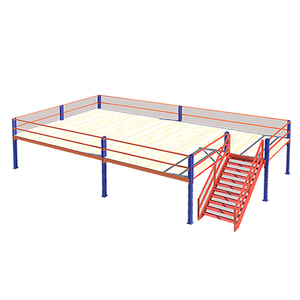
Engineered Gravity Flow & Heavy-Duty Racking Series
Explore our heavy-duty industrial gravity flow lanes, carton live storage modules, and rack-supported multi-tier platforms built under ISO 9001:2015 and CE certification standards.
Strategic Procurement Trends in Global Pallet Flow Systems
Analysis for Supply Chain Executives, Facility Engineers & Logistics Procurement Directors
Cold Chain Cubic Optimization
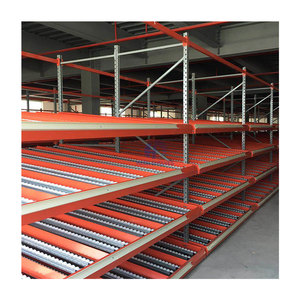
With refrigerated warehouse energy expenditure surging up to 35% across Europe and North America, operators are aggressively migrating from static selective racks to deep-lane dynamic pallet flow racking. By compressing storage volume up to 60% and maintaining strict First-In, First-Out (FIFO) rotation, operators drastically slash cooling consumption per pallet footprint.
Forklift Route Segregation & Safety
Global warehouse safety protocols (including OSHA, FEM, and EN standards) emphasize zero-collision traffic routing. Pallet flow eliminates cross-aisle interference by permanently separating loading personnel at the charge face from picking personnel at the discharge face, minimizing aisle congestion and pedestrian collision exposure by over 45%.
Total Cost of Ownership (TCO) vs AS/RS
While automated storage and retrieval systems (AS/RS) provide stellar automation, their 7-figure CAPEX and long ROI horizons deter mid-to-large distributors. Gravity pallet flow provides equivalent deep-lane storage density with 100% mechanical reliability, completely free from continuous sensor maintenance, software licenses, or high electric operational utility costs.
Gravity Flow vs Alternative High-Density Racking Configurations
Compare mechanical kinetics, forklift handling times, selectivity rates, and structural load factors to specify the ideal system for your facility layout.
| Storage Racking System | Rotation Principle | Storage Density | Loading vs Retrieval Face | Forklift Operating Travel | Recommended Applications |
|---|---|---|---|---|---|
| Pallet Flow (Gravity Racking) | Strict FIFO (First-In, First-Out) | Ultra High (Up to 85% footprint utilization) | Dedicated Separated Aisles | Shortest (Zero entry into rack bays) | Cold storage, perishable foods, pharmaceutical batches, high-volume fast FMCG |
| Drive-In / Drive-Through | LIFO (FIFO only in Drive-Through) | High (Aisles replaced by lane tracks) | Single Face (Drive-in) / Dual (Drive-thru) | Long & Complex (Forklift enters structural lanes) | Homogenous SKUs, seasonal manufacturing buffers, bulk commodities |
| Push Back Racking | Strict LIFO (Last-In, First-Out) | Medium-High (2 to 6 pallets deep) | Combined Single Aisle | Moderate (Push force against cart nested lanes) | Medium batch sizes, staging docks, non-perishable consumer packaged goods |
| Radio Shuttle Racking | Configurable FIFO / LIFO | Ultra High (Deep-lane shuttle tracks) | Single or Opposed Aisles | Minimal (Automated robotic carriage transfer) | Large cold warehouses, high-bay automated hub depots, heavy production plants |
| Standard Selective Racking | 100% Selective Random Access | Low-Medium (Aisle-heavy floor space) | Shared Operational Aisles | Extensive (Forklift travels every rack lane) | High SKU counts, low pallet counts per SKU, third-party logistics fulfillment |
Engineering Evolution: Next-Generation Pallet Flow Innovations
How Modern Mechanical Damping, Hybrid Telemetry & Specialized Steels Redefine Gravity Flow Efficiency
Self-Regulating Centrifugal Speed Controllers
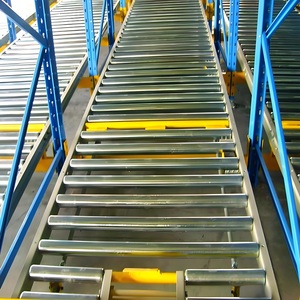
Traditional gravity rollers often risked pallet runaway or impact crushing on deep runs exceeding 10 positions. Modern HEDA flow racks utilize calibrated internal planetary brake rollers that mechanically exert counter-resistive braking directly proportional to load velocity, ensuring uniform travel speeds between 0.2 m/s and 0.3 m/s regardless of pallet weights ranging from 300 kg to 1,500 kg.
Automatic Back-Pressure Separator Mechanisms
At the picking face, static hydraulic or mechanical load separators isolate the forwardmost picking pallet from the cumulative weight of the upstream queue. When the forklift lifts the lead pallet, the secondary pallet is held securely until the safety latch resets, eliminating dangerous back-pressure forces against forklift tines and mast assemblies.
AGV/AMR End-Effector Precision Interfaces
The rise of Autonomous Mobile Robots (AMR) and driverless counterbalanced forklifts demands millimeter-precision pick locations. Advanced pallet flow channels now integrate structural entry funnels, heavy-duty guide flanges, and pneumatic release stops compatible with optical positioning sensors for lights-out dynamic warehousing.
Why Global Distributors Choose HEDA Shelves as OEM/ODM Partner
Direct manufacturer capabilities engineered to deliver high-capacity structural racking on schedule, compliant with strict international building codes and project engineering mandates.
CAPABILITY 01
High-Grade Certified Steel
All upright columns and heavy box beams are cold-roll-formed from high-tensile certified Q235B and Q355B structural steel, tested batch-by-batch for elongation, yield point, and ultimate tensile capacity.
CAPABILITY 02
Turnkey CAD & Structural FEA
Our team of 30+ dedicated racking design engineers delivers complimentary 2D CAD engineering layouts, 3D realistic rendering, and finite element analysis (FEA) calculations within 24 hours.
CAPABILITY 03
Precision Roller Automation
In-house computerized punching, continuous automatic welding lines, and high-efficiency pre-treatment wash systems (pickling & phosphating) guarantee lasting electrostatic epoxy powder coating bond strength.
CAPABILITY 04
Export Container Logistics
We pack uprights, beams, and roller modules using automated bundle banding, corner guards, and moisture-barrier shrink wraps designed to maximize container cubic capacity and survive ocean transit safely.
Pallet Flow Racking Procurement: Frequently Asked Questions
Key technical, structural, and commercial considerations addressed by senior racking design engineers.
Q: How is the gravity lane incline slope calculated?
Standard pallet flow tracks are engineered with a pitch between 3.5% and 4.0% (approx. 7/16" rise per linear foot). The exact gradient is tailored based on the pallet bottom runner configuration (GMA wooden pallets, Euro blocks, plastic skids, or metal containers), total payload range, and whether the system operates at ambient or freezing temperatures.
Q: Can pallet flow systems accommodate damaged or variable wooden pallets?
Weak, cracked, or warped bottom boards can flex and wedge between rollers. For mixed or low-grade pallet pools, our engineers specify full-width galvanized steel rollers with triple-track configurations or supplemental slave boards to guarantee smooth transit and prevent expensive lane jams.
Q: Are HEDA flow racking systems suitable for blast freezer cold rooms?
Yes. We deploy cold-resistant synthetic lubrication on roller bearings rated to -30°C (-22°F), heavy-duty zinc-galvanized roller casings, and specialized cold-room powder coating blends that prevent paint embrittlement and surface peeling caused by condensation cycles.
Q: What documentation is provided for building permit and seismic reviews?
We supply complete imperial and metric dimensional shop drawings, certified steel mill test certificates, member cross-section properties, baseplate anchor calculation sheets, and component load ratings prepared for your local structural Engineer of Record (EOR) to stamp.
Q: How many brake rollers are required per lane?
As an engineering baseline, one centrifugal brake roller is positioned at every pallet position after the second load slot in lanes exceeding 3 pallets deep. Lanes with ultra-heavy payloads (over 1,200 kg) or steeper slopes may incorporate dual side-by-side brake units to ensure gentle deceleration.
Q: What is the typical production and lead time for export orders?
Standard custom container orders (20GP or 40HQ) require 15 to 25 production days following drawing approval. Fast-track production slots are available for high-priority logistics center relocations and expansion projects.
Transform Your Warehouse Throughput & Storage Density
Connect with our senior intralogistics engineering team today. Get a tailored 2D/3D warehouse CAD design, structural load calculations, and factory-direct volume pricing within 24 hours.
Get Catalog