Featured Industrial Wire Shelving & Mesh Decking Systems
Constructed from high-tensile Q235B steel wire with automated robotic matrix welds. Sized perfectly for North American 48" × 40" GMA pallets, cold chain walk-ins, and high-density industrial racking.
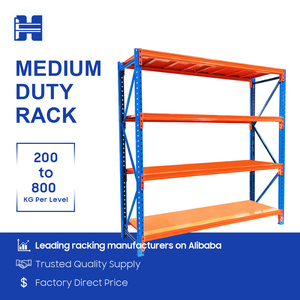
Adjustable Galvanized Steel Boltless Medium Duty Industrial Warehouse Rack Shelves
- Load: 300 - 800 kg / level
- Finish: Electro-galvanized / Zinc
- Toolless snap-in post adjustability
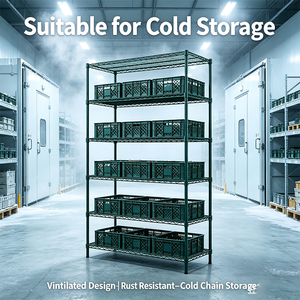
Heavy Duty Rust Resistant 6-Tier Wire Shelving Rack for Cold Storage & Freezers
- Anti-Bacterial Epoxy Coating
- Rated for -35°C Sub-Zero Duty
- 800 lbs per shelf uniform load
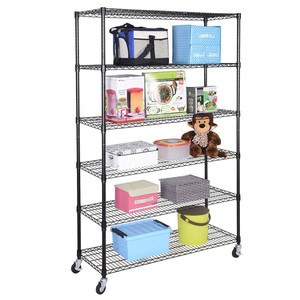
48" × 18" × 82" 6-Tier Metal Wire Shelf Multi-Functional Warehouse Unit
- True 1-inch Post Grooves
- Heavy 4.8mm Perimeter Wire
- Industrial Chrome / Powder Coat
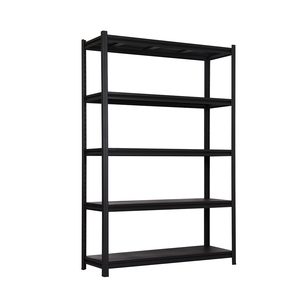
Heavy Duty Welded Wire Chrome Storage Rack with Reinforced Truss Beams
- Heavy-Gauge Carbon Steel
- Triple-Wire Truss Reinforcement
- High-Shear Weld Joints
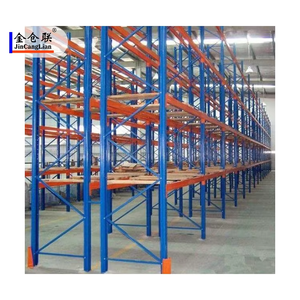
Medium Duty Selective Pallet Rack 5-Layer Wire Mesh Decking with Anti-Corrosion
- Waterfall Perimeter Flange
- NFPA 13 Fire Sprinkler Openings
- Up to 1,500 kg / Tier Uniform Load
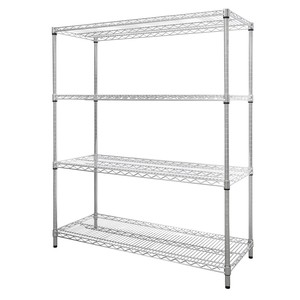
Competitive Price Industrial Chrome Wire Shelving 4-Tier Heavy-Duty Unit
- Mirror Chrome Plated Finish
- High Dust-Free Ventilation
- Cleanroom & Electronics Ready
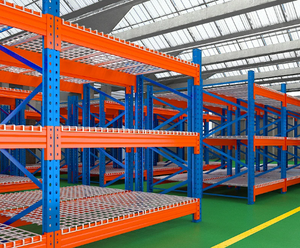
High-Capacity Boltless Wire Pallet Racking Decking (1000kg - 3000kg / Level)
- Under-Deck Support Channels
- Q355B Steel Reinforcements
- Anti-Sag Dynamic Load Safety
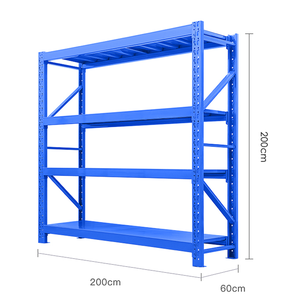
Heavy Duty 5-Layer Selective Industrial Steel Wire Shelving System
- Multi-Tier Mezzanine Compatible
- Electrostatic Epoxy Powder Coat
- Standard GMA & Euro Pallet Fit
Global Manufacturing Powerhouse & Technical Capabilities
Operating directly from our cutting-edge manufacturing campus in Guangzhou since 2001. We deliver ISO-certified structural precision, high-volume capacity, and end-to-end OEM/ODM custom engineering to North America, Europe, and worldwide logistics hubs.
Free CAD & 3D Engineering in 24 Hrs
Our in-house team of structural engineers translates warehouse blueprints, seismic requirements, and floor plans into production-ready CAD and 3D architectural models within 24 hours.
- Full Imperial (lbs, in, ft) & Metric calculations
- Ready for Local Professional Engineer (PE) stamping
- Finite Element Analysis (FEA) for dynamic deflection
ISO 9001 & CE Third-Party Audited
Certified under ISO 9001:2015 (Certificate 18624Q00169R0M) and CE Marking for Structural Steel Racking (2435-CPR-8605159), ensuring continuous batch consistency and verified tensile thresholds.
- EN 15512 & RMI ANSI MH16.1 compliance
- RoHS raw material environmental compliance
- Mill Test Certificates (MTC) supplied with every lot
Container-Optimized Global Logistics
Direct ocean export packaging optimized for 20GP, 40GP, and 40HQ ocean containers. Designed to protect wire waterfall edges from transit distortion while maximizing maritime freight cube utilization.
- Direct shipments to LA, Long Beach, Houston, NY, Vancouver
- Rust-inhibiting VCI wrapping & heavy timber skids
- FOB, CIF, and door-to-door DDP logistics management
Why Welded Wire Shelving Racks Dominate Modern Warehousing
From NFPA 13 fire code conformance to high-velocity airflow in automated intralogistics facilities, industrial wire shelving offers profound structural, fiscal, and operational advantages over solid steel or timber decking.
1. Fluid Mechanics & ESFR Fire Sprinkler Penetration
Modern high-bay distribution centers utilize Early Suppression Fast Response (ESFR) ceiling sprinkler arrays. Under International Fire Code (IFC) and NFPA 13 standards, shelf surfaces exceeding solid parameters act as water baffles, creating severe dry shadows beneath load levels. Open industrial wire mesh decks provide an engineered open surface area exceeding 50% to 70%, allowing fire suppression water to cascade freely to low tiers without accumulating deadweight hydraulic loads on beam levels.
2. Cold-Chain Thermal Circulation & Sub-Zero Dynamics
In cold storage walk-in freezers and refrigerated distribution facilities, static boundary air layers cause localized thermal gradients, inflating compressor utility overhead. Wire rack decks maintain 360-degree aerodynamic convection around palletized cold merchandise. This eliminates thermal pockets, shortens temperature pulldown cycles by up to 28%, and prevents frost formation along decking undersides.
3. Structural Weight-to-Strength Ratio & Metallurgy
Utilizing drawn low-carbon steel wire (ASTM A510 / Q235B) resistance-welded into structural 2" × 4" or 2" × 2" matrices, wire decking provides an exceptional strength-to-weight ratio. Formed structural channel stiffeners (U-channels or flared universal channels) welded to the mesh underside transfer vertical point loads directly into rack step beams, preventing catastrophic beam roll or deck collapse during high-speed forklift pallet placement.
4. Dust Abatement, Illumination & Cleanroom Hygiene
Solid wood or particle board decks deteriorate, shed particulates, and harbor organic contaminants, making them unacceptable in FDA, USDA, and NSF-monitored environments. Open wire grids eliminate flat particulate collection zones, allowing facility dirt to drop to warehouse slabs where industrial scrubbers remove it. Furthermore, ambient facility overhead LED lighting penetrates the lower shelf bays, improving picking visibility and forklift driver safety.
| Evaluation Parameter | Industrial Wire Decking | Solid Steel Decking | Plywood / Particle Board | Heavy Bar Grating |
|---|---|---|---|---|
| NFPA 13 Fire Code Rating | 100% Compliant (>50% Open) | Non-Compliant (Requires In-Rack Sprinklers) | Hazardous Combustible Fuel Source | Compliant (>60% Open) |
| Deadweight per Square Foot | 1.8 - 2.8 lbs / sq.ft | 6.5 - 9.0 lbs / sq.ft | 3.0 - 4.5 lbs / sq.ft | 8.0 - 14.0 lbs / sq.ft |
| Cold Air Thermal Transmittance | Maximum 360° Convective Flow | Zero Vertical Permeability | Insulating Barrier (Poor Flow) | Excellent Vertical Permeability |
| Sanitation & Dust Accumulation | Minimal (Dust drops through) | High (Flat surface particulate trap) | Severe (Dust, splinters, rot) | Moderate (Grating crevices trap grime) |
| Forklift Safety / Shelf Drop-In | Universal Waterfall Flange Retainers | Fastened or Tek-screwed | Prone to shift / crack under pallets | Heavy drop-in / mechanically locked |
| Total Landed System Cost | Optimal Capital Efficiency | High (+70% vs Wire) | Low initial / High maintenance replacement | Extremely High (+180% vs Wire) |
Future Procurement Trends for Industrial Wire Shelving Racks
As automated material handling (AMH) scales and environmental compliance tightens globally, industrial procurement teams must anticipate key technological shifts when specifying wire shelving frameworks.
1. Convergence with AMR & AGV Robotics
Modern fulfillment hubs are transitioning toward Autonomous Mobile Robots (AMRs) and automated shuttles. Procurement requirements are shifting from manual static tolerances to ultra-tight millimetric flatness tolerances (±1.0mm) to prevent robotic sensors from misinterpreting shelf elevations or sagging wire overhangs.
Robotics-Ready Engineering2. Eco-Friendly Metallurgy & Circular Supply Chains
Procurement directors in Europe and the Americas are demanding Environmental Product Declarations (EPDs). Forward-thinking factories are adopting closed-loop acid pickling, zero-discharge wastewater recycling, and replacing toxic hexavalent chromium finishes with heavy-duty trivalent zinc or zero-VOC polyester powder coatings.
RoHS & REACH Compliant3. Near-Zero Deflection Engineering (L/240 Standards)
While traditional warehouse shelves tolerated an allowable elastic deflection of L/180, high-density narrow aisle (VNA) and automated crane racking now mandate L/240 or L/300 under dynamic loading. OEM manufacturers are incorporating pre-stressed high-tensile wire and dual-formed boxed channel cross-members.
High-Rigidity EngineeringTechnological & Production Trends Inside Modern Factories
How advanced roll forming, multi-axis robotic welding, and automated surface nanotechnology are redefining the structural integrity and corrosion threshold of industrial wire shelving systems.
Automated Multi-Point Direct Resistance Welding
Traditional manual spot welding frequently generates inconsistent shear resistance and thermal heat-affected zone (HAZ) wire embrittlement. Next-generation production facilities utilize 64-head computerized resistance mesh welders. Every wire intersection is fused under microsecond electronic current monitoring, ensuring a guaranteed weld shear strength surpassing 4.5 kN per intersection without metallurgical micro-fracturing.
- Uniform penetration depth on 3.5mm to 6.0mm wire
- Zero burrs or sharp slag to protect warehouse operator hands
- Consistent dimensional repeatability across million-unit production runs
Advanced Anti-Corrosion Finishing: Nanoceramic & Hybrid Powder
Standard zinc electroplating degrades rapidly under humid distribution environments or cold storage freeze-thaw condensation cycles. Cutting-edge manufacturing lines integrate an automated 10-stage pre-treatment system: degreasing, ultrasonic cleaning, micro-crystalline zinc phosphating, and zirconium nanoceramic sealing, followed by electrostatic thermosetting polyester powder coating baked at 200°C.
- Exceeds 500-1000 hours of continuous ASTM B117 salt spray testing
- Anti-microbial additive packages for commercial food cold chain facilities
- Cryogenic flexibility preventing finish flaking at sub-zero cold temperatures
Frequently Asked Questions (FAQ) for Global Buyers & Integrators
Clear, direct answers regarding technical specifications, container consolidation, imperial load ratings, and North American warehouse permit compliance.
What is the standard lead time for high-volume OEM/ODM production runs?
Standard production lead times for 1 to 5 full container loads (FCL) average 15 to 20 working days following final CAD blueprint approval. For custom tooling projects (bespoke wire mesh pitch or customized channel forms), sample prototyping takes 5 to 7 days, with mass production commencing immediately upon prototype client sign-off.
Can you provide load calculation data tables in Imperial units (lbs & feet)?
Yes. We routinely provide engineering documentation, CAD elevation shop drawings, and load capacity plaques in dual units (Imperial pounds/feet and Metric kg/mm). All calculations align with the Rack Manufacturers Institute (RMI) ANSI MH16.1 specifications and CSA S16 standards for North American commercial deployment.
What is the difference between standard Step Channel and Flared Channel wire decking?
Step channel wire decking features vertical ends formed specifically to rest securely inside the internal 1-5/8" recessed step of standard warehouse step beams. Flared (universal) channel decks have flattened wing ends that rest over the top surface of box beams, structural channel beams, or step beams, offering complete interchangeability across mixed-beam facilities.
How are wire decks packed to prevent damage during long-distance maritime shipping?
Wire decks are stacked nested in interlocking sets on custom-built heavy-duty wooden skids or steel pallets. Stack corners are protected with high-density composite edge boards, tightly strapped with heavy-gauge polyester strapping, and wrapped in industrial VCI (Vapor Corrosion Inhibitor) stretch film with desiccant canisters placed inside the container to prevent moisture sweating.
Do your industrial wire shelving systems comply with NSF hygiene standards?
Yes. Our industrial wire shelving lines can be manufactured to conform fully with NSF/ANSI Standard 2 for food equipment environments. Our commercial chrome and multi-layer green/black epoxy finishes are engineered for cleanability, non-toxicity, and resistance to standard cleaning sanitizers and organic acids in food retail and commercial walk-in coolers.
Can you provide seismic load validation for regional building code permits?
We work in close coordination with your local Engineer of Record (EOR). We supply complete structural shop drawings, steel mechanical properties, baseplate hole configurations, weld certifications, and section modulus metrics required for local municipal permitting in high seismic zones across the US West Coast, Canada, and seismic-sensitive territories.
Accelerate Your Racking Project with Factory-Direct Engineering
Submit your facility dimensions, clear heights, pallet load weights, and beam types today. Our senior structural engineers will deliver a complete CAD layout, 3D render, and an itemized factory-direct quotation within 24 hours.