NSF Certified
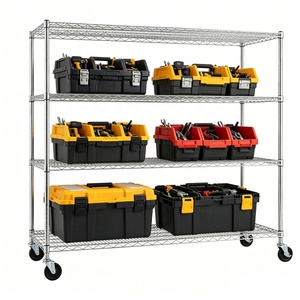
Directly sourced from our ISO 9001:2015 and CE certified fabrication campus. Every system is engineered to handle concentrated, uniform, and asymmetrical dynamic loads with full imperial or metric calculation packets.
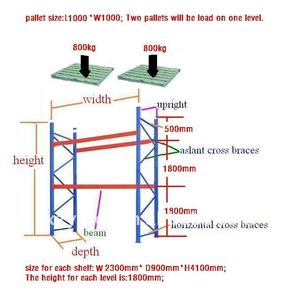
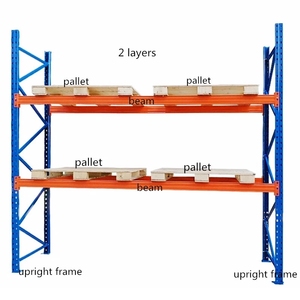
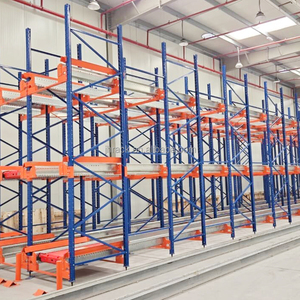
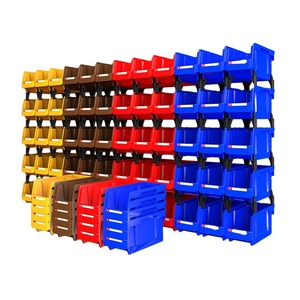
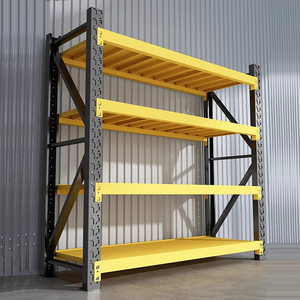
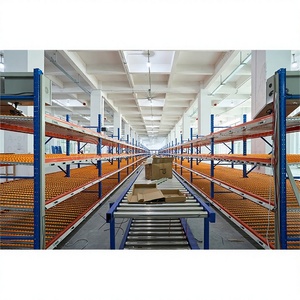
Cantilever racking is fundamentally distinct from traditional pallet racks. By eliminating frontal vertical columns, it allows unrestricted longitudinal loading for non-palletized, long-format, and awkwardly proportioned freight.
We engineer both cold-roll-formed steel uprights (for light-to-medium profiles up to 4,000 lbs per column side) and heavy hot-rolled structural steel I-beams (W-shapes / ASTM A572 Grade 50) capable of bearing in excess of 45,000 lbs total vertical column load.
Cantilever arms must be engineered with a compensating positive camber (inward slope of 2° to 3°). As weight settles, the arm naturally deflects downward; precision tapering prevents stored loads from tipping outward during full load capacity operations.
Unlike pallet racks that derive lateral stability from beam-to-frame box frames, cantilever columns require high-tensile structural diagonal X-bracing and horizontal strut channel sets to eliminate longitudinal buckling across aisles.
| System Category | Typical Column Profile | Arm Length Spectrum | Load Rating per Arm | Standard Surface Finish | Primary Industrial Use Case |
|---|---|---|---|---|---|
| Light-Duty Cantilever | Roll-formed C-Channel (2.0–2.5mm) | 20" – 36" (500–900mm) | 500 – 1,200 lbs (220–550 kg) | Epoxy Powder Coat (60–80µm) | PVC conduits, aluminum trims, molding, hardware |
| Medium-Duty Cantilever | Heavy Cold-Roll Box Profile | 36" – 48" (900–1200mm) | 1,200 – 3,000 lbs (550–1360 kg) | Hybrid Polyurethane Coating | Plywood crates, furniture manufacturing, bar bundles |
| Heavy Structural Cantilever | Hot-Rolled W-Beams (W8–W12) | 48" – 72" (1200–1800mm) | 3,000 – 8,000+ lbs (1360–3600 kg) | Industrial Polyester Powder | Steel pipes, solid billet steel, structural angles |
| Exterior Yard (T-Shed / Canopy) | Structural I-Beam with Integrated Rafters | 48" – 60" (1200–1500mm) | 3,500 – 7,500 lbs (1580–3400 kg) | Hot-Dip Galvanized (ASTM A123) | Outdoor lumber yards, outdoor metal stock, rebar |
Cantilever capacity ratings are computed strictly on Uniformly Distributed Loads (UDL). Placing concentrated loads on the outer tip of an arm increases the bending moment significantly ($M = P \times L$), reducing load capacity by up to 50%. Our engineering team provides custom-modeled moment diagrams and FEA stress maps for clients handling high-density asymmetrical dies or coiled coils.
Modern distribution centers and heavy industrial mills are moving away from manual, low-density floor stacking toward verticalized, automated, and environmentally verified storage assets.
Aisle width is the largest operational expense in long-load warehouses. Procurement managers are standardizing on guided narrow aisle (VNA) cantilever runs, shrinking aisle requirements from 18 feet down to 7.5 feet when paired with omni-directional and 4-way electric reach equipment.
With warehouse construction costs exceeding $180/sq ft, enterprises are shifting weather-tolerant stock to outdoor cantilever T-sheds. These roof-integrated racks expand footprint utilization by 300% without triggering indoor building expansion taxes.
Ocean freight volatility demands high cubic pack efficiency. Our factory custom-bundles cantilever uprights and arms using automated nesting fixtures and anti-scratch banding, ensuring zero shipping air volume and avoiding LCL demurrage penalties.
Tier-1 EPC contractors and global distribution giants now require comprehensive Mill Test Certificates (MTC per EN 10204 Type 3.1) guaranteeing structural yield points ($F_y \ge 345\text{ MPa}$) and low embedded carbon manufacturing footprints on all export shipments.
Explore how mechanical modifications, finite element modeling, and sensor-driven hardware are transforming inert steel structures into intelligent, impact-resilient material handling assets.
Using ANSYS non-linear static stress simulation, every OEM custom run is subjected to virtual failure testing under asymmetrical loading before steel coils are fed into production. This optimizes steel wall thickness without over-weighting columns, lowering base metal procurement costs by 12–18%.
Traditional rigid bolt connections experience shearing failure during mast collisions. Our next-gen high-tensile pin-coupled pivot arms absorb vertical and horizontal shock vectors, swinging harmlessly upward before reseating themselves via gravity into the CNC-milled locator groove.
Warehouses evolve rapidly. Our patented field-convertible base members allow clients to convert a single-sided cantilever upright into a balanced double-sided tower in the field by bolting on our engineered rear extension base without ripping up sub-floor chemical anchors.
Operating since 2001, Guangzhou Heda Shelves Co., Ltd. has grown into one of Asia’s preeminent heavy-duty warehouse storage equipment manufacturers, serving distribution centers across the USA, Canada, Europe, Australia, and 130+ countries.
Every structural cantilever column and roll-formed arm produced in our Guangzhou facility is subjected to rigorous traceability checks throughout our integrated production line:
Spectrometric analysis of Q235B/Q355B coils for tensile yield and chemical purity.
Automated high-speed slitting lines cut wide master coils to precise millimeter profile blanks.
Continuous punching dies create uniform connection pitches with 0.1mm dimensional tolerance.
Multi-pass heavy-duty rolling mills form rigid structural column profiles with zero micro-cracking.
Precision arm taper cutting ensuring positive camber angles for calculated deflection compensation.
Mechanical edge dressing removes all cutting burrs and weld flash for smooth worker contact.
CO2 shielded automated multi-axis welding guarantees deep structural base-plate penetration.
9-stage automated immersion chemical bath eliminates rust and deposits a crystalline zinc-phosphate key.
Automated powder line applying DuPont/Tiger thermoset polyester resins baked at 200°C.
Ultrasonic weld inspection, destructive batch pull tests, and steel-banded flatpack bundling.
Get authoritative answers on engineering standards, seismic permitting, load ratings, and ocean freight logistics directly from our senior structural engineering team.
The choice between roll-formed and structural steel centers on load density, forklift operating speed, and operating environment:
Roll-Formed Cantilever: Fabricated from high-strength sheet coil cold-rolled into specialized C-channels. It is most cost-effective for capacities under 2,000 lbs (900 kg) per arm, such as plastic pipes, architectural aluminum extrusions, lightweight lumber packages, and furniture. It offers flexible vertical hole-pitch spacing (typically 3" or 76.2mm).
Structural I-Beam Cantilever: Manufactured using hot-rolled structural steel shapes (W-sections or IPE/HEB profiles). This is mandatory for heavy industrial applications (3,000 to 12,000+ lbs per arm) such as solid steel billets, heavy plate stock, steel rebar, and exterior timber packs. Structural steel offers vastly superior resistance to forklift impacts in high-velocity yard environments and handles low-temperature freeze cycles without embrittlement.
Yes. For our clients in the United States, Canada, and Mexico, we provide fully detailed 2D CAD floor plans, elevation schematics, 3D BIM models, and structural calculation submittals. Our calculations conform strictly to ANSI MH16.1 (Specification for the Design, Testing and Utilization of Industrial Steel Storage Racks), the Rack Manufacturers Institute (RMI) standards, and local International Building Code (IBC) seismic and geotechnical design provisions.
We work seamlessly with your local Engineer of Record (EOR) or can connect you through our engineering network to provide state- or province-specific professional engineering (PE / P.Eng) review and structural calculation stamps.
Cantilever load capacity is evaluated using allowable stress design (ASD) or load and resistance factor design (LRFD) based on Uniformly Distributed Loads (UDL). The rated capacity assumes the load weight is distributed evenly across the full length and depth of the arms supporting that product layer.
We apply a structural safety factor of 1.65 to 1.92 against steel yield strength ($F_y$), ensuring the arm will not experience permanent plastic deformation even under dynamic loading conditions caused by forklift placement. However, if goods are point-loaded on the front tip of the arm, the bending moment doubles, reducing allowable arm capacity by 50%. Our engineering proposals include exact loading charts indicating both point and uniform load limits.
For indoor environments, our standard 9-stage pre-treated electrostatic powder coating (70–90 micron dry film thickness) offers exceptional durability, scratch resistance, and custom corporate color coding (standard RAL colors).
For outdoor yard storage, lumber facilities, or coastal marine environments, we recommend Hot-Dip Galvanizing (HDG) per ASTM A123 / ISO 1461. Components are submerged in molten zinc at 450°C, forming a metallurgically bonded zinc-iron alloy barrier of 85–120 microns. This provides self-healing sacrificial galvanic protection against rust, standing rainwater, snow buildup, and ultraviolet degradation with an expected outdoor service life exceeding 25 years.
Improper shipping can ruin structural columns. Our specialized container export packaging protocol guarantees pristine on-site delivery:
1. Nesting & Spacers: Upright columns are nested alternately with non-abrasive timber dunnage and heavy corrugated protective separation to prevent paint abrasion and metal-to-metal rubbing during transoceanic crossings.
2. Heavy Steel Banding: Bundles are secured with high-tensile 32mm steel tension banding and steel corner edge protectors.
3. Container Loading Optimization: Using 3D container stowage simulation, we balance axle weight distribution for 40ft High Cube (40HQ) and 20ft General Purpose (20GP) containers, maximizing container weight capacity up to the legal maritime limit (approx. 26 to 28 metric tons) while leaving clean rigging points for rapid forklift unloading on site.
Absolutely. While standard cantilever arms store rigid, self-supporting items like pipes and lumber, many warehouses manage varying product lengths, broken crates, or standard 48"x40" GMA pallets on the same rack run. We engineer three distinct decking accessories:
• Drop-In Welded Wire Decking: Welded wire mesh fitted with structural saddle channels that straddle two adjacent cantilever arms, allowing sprinkler penetration and high visibility.
• Heavy Bar Grating: Welded steel bar grating designed for concentrated point loading of heavy dies, steel motors, or irregular machinery components.
• Solid Steel Deck Plates: Heavy-gauge galvanized or powder-coated sheet metal with return bends for clean manual picking of small parts, hardware boxes, or short pieces.
For standard cantilever project configurations, our production lead time is typically 15 to 25 calendar days from finalized engineering approval to container stuffing at Guangzhou or Shenzhen ports. Highly customized structural I-beam hot-dip galvanized runs require approximately 25 to 35 days.
Our standard MOQ is one 20ft container (approx. 18–20 tons), though mixed orders featuring cantilever uprights, pallet racking, and wire shelving can be combined. All HEDA structural cantilever installations carry an industry-leading 5-year structural integrity warranty against manufacturing defects.
Whether designing an indoor multi-tiered cantilever rack or an outdoor hot-dip galvanized lumber yard with integrated canopy roofing, our senior engineering department delivers stamped CAD layouts, 3D renderings, and transparent FOB/CIF quotations within 24 hours.