OEM/ODM High Density Racking System Manufacturers & Manufacturer Solutions
Global engineering authority in high-density warehouse storage, providing ISO 9001:2015 & CE-certified pallet racks, structural mezzanines, and tailored OEM/ODM manufacturing for mission-critical supply chain hubs.
Precision Engineered Systems
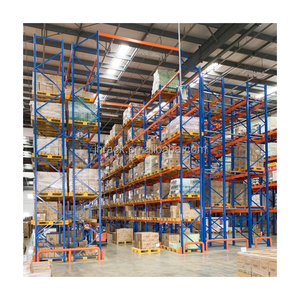
Heavy-Duty & High-Density Racking Systems for Demanding Logistics
Engineered to ANSI MH16.1, RMI, and FEM standards, our high-density racking configurations resolve cubic utilization constraints, accelerate multi-SKU picking velocity, and withstand severe seismic profiles. Explore our factory-direct OEM/ODM production portfolio below.
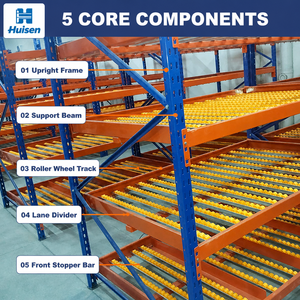
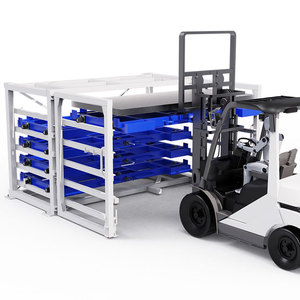
Telescoping nested cart system storing 2 to 6 pallets deep per lane on inclined structural rails. Maximizes bulk footprint while preserving independent aisle picking accessibility.
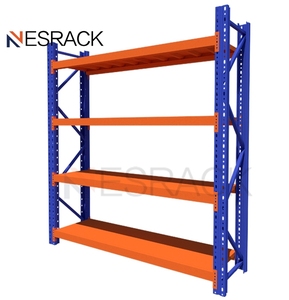
Rigid uprights coupled with precision-punched drop-in beams. Configurable shelf heights tailored for automotive parts, distribution sorting bays, and retail backrooms.
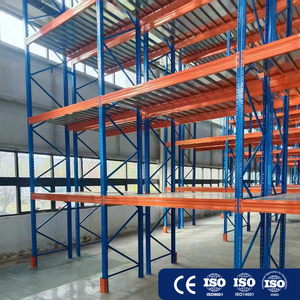
Continuous cold-roll formed box beams engineered for loads up to 4000kg per level. Provides 100% immediate selectivity for dynamic 3PL hubs and high-turnover fast-moving inventory.
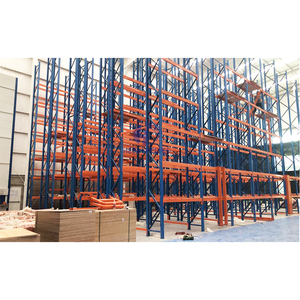
Certified high-tensile Q235B steel upright framing with heavy horizontal and diagonal bracing. Customized beam section modules accommodate standard GMA, EUR, or bespoke custom pallets.
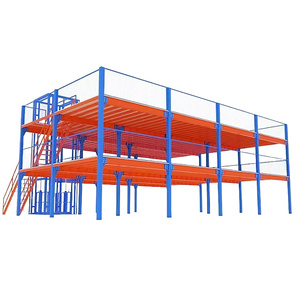
Multi-tier structural or rack-supported mezzanine platforms doubling usable floor footprint without structural building expansions. Fully outfitted with stairs, handrails, and pallet drop gates.
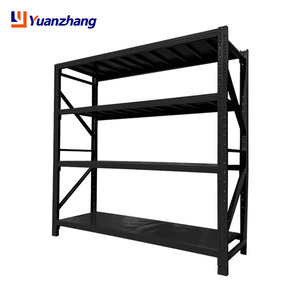
Rapid snap-together tubular and angle steel racking for light industrial parts, e-commerce micro-fulfillment centers, and pharmaceutical distribution centers. Clean and abrasion-resistant.
The Engineering Foundation of High-Density Racking Systems
Optimizing volumetric warehouse space is fundamentally a structural engineering discipline. High-density racking alters load paths, live-load vibrations, and horizontal shear dynamics compared to standard single-selective systems. As a primary OEM/ODM manufacturer, HEDA Shelves addresses these dynamics through precision roll-forming and advanced FEA (Finite Element Analysis).
Metallurgical Steel Grades & Tensile Profiles
High-density installations rely predominantly on cold-formed continuous Q235B and high-yield Q355B structural steel coil. Q355B allows thinner gauge wall thicknesses without sacrificing load-bearing capacity, cutting dead weight on facility foundations while boosting seismic resilience.
Every coil batch undergoes certified tensile yield testing, elongation inspection, and chemical composition analysis to eliminate micro-cracking during deep cold roll-forming operations.
Yield Strength ≥ 235–355 N/mm²
Cold-rolled profiles from 1.5mm to 3.0mm
Automated 50mm, 75mm, and 76.2mm pitch punching
Dynamic Kinetic Control & Damping Systems
Dynamic deep-lane racking—including Pallet Flow, Push Back, and Carton Gravity racks—demands strict kinetic deceleration engineering. Pallet flow tracks operating under gravity slopes between 3% and 4% must safely control pallet velocities regardless of weight variances (e.g., from 300kg to 1,200kg).
We integrate progressive centrifugal speed controller rollers, rubberized impact dampers, and mechanical entry separators that decouple lead pallets from line pressure, preventing carton crush and unloading hang-ups.
Centrifugal brake rollers at 1-pallet intervals
Drop-away entry separators for forklift safety
High-strength polyurethane tracking wheels
Seismic Integrity & Second-Order P-Delta Analysis
As clear building heights surpass 12 to 18 meters, high-density structures become susceptible to harmonic resonance, base-shear torsion, and lateral P-Delta amplification under seismic or forklift impact loads. Rigorous frame analysis ensures compliance with global seismic requirements.
Our design office configures heavy forged upright base plates, oversized chemical anchor bolt layouts, and spine-braced structural towers to ensure high lateral stiffness and structural redundancy in critical seismic zones (SDC D, E, and F).
Selectivity, storage density, and capital investment vary dramatically across structural topologies. Use this empirical comparison to match your SKU velocity, pallet turn frequency, and forklift capital expenditures with the optimal system architecture.
Global supply chain disruptions, escalating industrial square footage rents, and decarbonization mandates are radically reshaping how operations executives procure storage systems. Supply chain directors are prioritizing long-term modularity and green steel certifications over low-cost catalog models.
TREND 01
Automation-Ready Modular Framing
Forward-looking logistics centers are commissioning manual high-density systems designed for future robot integration. Uprights, beam punch patterns, and aisle guide angles are pre-engineered with precision tolerances (+/- 0.5mm) to seamlessly support Autonomous Mobile Robots (AMRs), automated pallet shuttles, and narrow-aisle AGVs without tearing down existing infrastructure.
TREND 02
Scope 3 Decarbonization & Green Steel
Corporate ESG disclosures demand verified Scope 3 carbon emission reductions across all capital equipment. Racking procurement now evaluates the recycled scrap content in steel coils and favors cold-cure, low-VOC electrostatic powder coatings that eliminate toxic sludge wastewater and reduce kilowatt consumption per ton manufactured.
TREND 03
Total Landed-Cost (TCO) Containerization
Volatile ocean container freight rates make logistics packaging engineering paramount. Procurement leaders partner with OEM manufacturers capable of delivering high-density nesting bundles that achieve 95% to 98% cubic container loading efficiency, effectively slashing per-pallet sea freight overhead from Asian manufacturing centers to North American and European ports.
TREND 04
Low-Temperature Metallurgical Ductility
The global expansion of cold-chain pharmaceutical and frozen grocery distribution centers requires specialized steel metallurgy. Procurement engineers reject conventional low-cost mild steel in sub-zero environments (-20°C to -35°C), demanding high-notch-toughness alloy formulations that eliminate cold embrittlement and catastrophic dynamic cracking.
Next-Generation Engineering
Technological Advancements in Modern High-Density Racking
Static warehouse shelving has evolved into an active, data-driven structural subsystem. Contemporary material handling hubs are deploying integrated structural sensing, smart telemetry, and clad-rack structural envelopes.
Smart Structural Strain & Impact Telemetry
Next-generation rack uprights integrate wireless micro-electro-mechanical (MEMS) sensors. These IoT strain gauges continuously measure upright deflections, beam sagging, and seismic acceleration. When an accidental forklift collision impacts an upright, automated alerts trigger an immediate safety inspection, eliminating unchecked micro-fatigue failures.
Real-time collision force vector logging
Predictive overload deflection alerts
Battery life exceeding 5 years via BLE
Rack-Supported Building Envelopes (Clad-Rack)
Clad-rack engineering eliminates conventional standalone warehouse buildings entirely. The high-density racking system forms the structural skeleton supporting roof trusses, insulated sandwich wall cladding, and sprinkler lines. This reduces project timelines by 30% and maximizes cubic storage density up to 40 meters high.
Surface engineering innovations have extended rack operational lifespans past 25 years. Automatic immersion pickling, zinc phosphating, and multi-stage cascade rinsing prepare steel surfaces for thermosetting powder cures. Formulations can be enhanced with silver-ion antimicrobial coatings tailored for cleanrooms and certified food processing hubs.
Salt spray resistance > 500 hours
Impact resistance exceeding 50 kg/cm
Food-contact and cleanroom safe formulations
Direct Manufacturer Infrastructure
Why Global Integrators Choose HEDA Shelves as OEM/ODM Partner
Operating from our 323,000 sq. ft. modern production center, Guangzhou Heda Shelves Co., Ltd. (HEDA Shelves) acts as the direct manufacturing backbone for multinational rack brands, system integrators, and industrial material distributors worldwide.
Full OEM Custom Profile Tooling
We engineer custom roll-forming dies to replicate or build custom proprietary upright and beam cross-sections. Whether your domestic market relies on American Teardrop, British Dexion-compatible, or European Omega punch formats, our in-house CNC machining tooling center delivers exact OEM matches.
Custom beam connector claw stamping (3, 4, 5-pin)
Bespoke column roll-forming lines (up to 120mm web)
Private label stamping, silk-screening, and packaging
Rigorous Dual-Standard Certification
Eliminate permitting roadblocks with building departments. Our production systems, certified under ISO 9001:2015, satisfy both North American and European structural codes, including CE marking (EN 1090 / Construction Products Regulation) and comprehensive RoHS environmental material compliance.
ISO 9001:2015 Quality Management System
CE Certificate No. 2435-CPR-8605159
Mill test certificates & AWS-qualified welding logs
24-Hour Engineering Support
Speed wins contracts. Share your warehouse CAD floor plan, clear height specifications, pallet load limits, and lift truck models. Our dedicated structural engineering team delivers complete CAD layouts, 3D renderings, and detailed price quotations within 24 hours.
Imperial (lbs, ft, in) & metric calculations
BIM / Revit family 3D spatial models
Step-by-step structural erection shop drawings
Procurement & Engineering Advisory
Frequently Asked Questions for High-Density Racking Procurement
In-depth answers addressing structural engineering compliance, overseas logistics, and installation management for commercial procurement heads, engineers, and facility managers.
How do high-density push-back and drive-in racks differ in SKU access and floor footprint?
+
While both systems deliver high cubic density compared to standard selective racking, their operational dynamics differ fundamentally:
Drive-In Racking: Forklifts drive directly into the racking matrix. This requires all pallets in a given lane to contain the same SKU to prevent unnecessary stock shuffling. Storage density is exceptionally high (up to 75–80% cube utilization), but throughput speed is slower, and the risk of forklift mast collision with upright columns is higher.
Push-Back Racking: Pallets sit on nested carts running on inclined structural channels. Forklifts remain in the access aisle, pushing back previous pallets when loading and using controlled gravity return during extraction. Each lane operates independently, allowing distinct SKUs per level and lane face. Push back cuts forklift transit cycles while delivering 80% of drive-in density.
What structural documentation is provided to support municipal building permits and seismic reviews?
+
For municipal building department reviews in North America (IBC/CBC codes) and across global jurisdictions, we provide a complete structural engineering submittal package. This includes factory material test reports (MTRs), FEA calculations based on ANSI MH16.1 or EN 15512 specifications, connector moment-rotation curves, base-plate punching shear data, and detailed plan/elevation shop drawings.
These documents provide local licensed Professional Engineers (PE or SE) with the verified structural data needed to apply their engineer-of-record stamp, calculate specific site Seismic Design Category (SDC) values, and finalize municipal permitting.
How does HEDA Shelves prevent beam deflection and ensure safe working capacities under continuous load?
+
Beam deflection is regulated strictly by international safety thresholds: under rated full safe working load, maximum vertical deflection cannot exceed L/180 (for RMI) or L/200 (under strict European FEM 10.2.02 codes), where L is clear beam length.
HEDA achieves this by using continuous, roll-formed interlocked box beams joined by automated robotic welding to multi-prong ductile alloy end connectors. Every beam calculation incorporates safety factors of 1.5 to 1.65 against structural yield, preventing permanent plastic deformation even under continuous maximum loading cycles.
What precautions and material grades are required for sub-zero cold storage facilities (-30°C)?
+
Standard carbon steel undergoes a ductile-to-brittle transition when exposed to sub-zero temperatures, which can lead to sudden brittle fracture under forklift impact. For freezer environments, we specify fine-grain killed Q355D or Q355E structural steels tested for Charpy V-notch impact energy at -20°C and -40°C.
Furthermore, our surface preparation uses specialized cold-cure epoxy-polyester electrostatic powder formulations that resist thermal shock, preventing peeling and flaking caused by rapid temperature fluctuations during warehouse defrost cycles.
Can your manufacturing line produce custom pitch patterns and private-label components for overseas distributors?
+
Yes. As a dedicated OEM/ODM manufacturing facility, more than 40% of our capacity is dedicated to private-label fabrication for overseas racking brands and regional integrators. We offer custom punching profiles (Teardrop, 50mm pitch, 75mm pitch, 76.2mm 3-inch pitch, and hexagonal slots), custom roll-formed column cross-sections, and specialized beam connector dies.
Components can be supplied in custom RAL color palettes, stamped with your company's proprietary brand markings, and packaged with customized installation manuals and bundled barcodes ready for direct project distribution.
How are ocean freight shipping containers optimized to minimize freight costs and prevent transit damage?
+
Racking components are heavy and unwieldy, making inefficient ocean packing a significant hidden cost. Our shipping department uses custom nesting timber dunnage, steel support saddles, and specialized strapping arrays to load 40-foot High Cube (40HC) containers to 95–98% cubic and weight limits.
Uprights are nested back-to-front with protective foam interleaving; beams are steel-strapped in block pallets with protective corner boards; hardware and footplates are boxed and palletized. This eliminates rubbing, moisture abrasion, and cosmetic damage during maritime transit, allowing quick unloading by forklift upon port arrival.
What are the typical project lead times from CAD approval to port shipment?
+
Standard production timelines for customized high-density racking projects (1 to 5 full 40HC shipping containers) range between 15 and 25 working days following final CAD sign-off and color approval. Large-scale distribution center rollouts (10 to 50+ containers) are staged in rolling container shipments aligned with the customer's on-site installation schedule.
Expedited manufacturing runs for replacement frames, emergency retrofits, or priority jobs can be accommodated through our multi-shift production scheduling.
How do rack-supported mezzanines compare in ROI against structural steel platforms?
+
Rack-supported mezzanines use standard high-density uprights and beam profiles as vertical structural columns to support upper walkable floor decks. Because the ground-level support structure also functions as productive inventory storage, cost-per-square-foot is roughly 30% to 45% lower than freestanding structural wide-flange I-beam mezzanines.
Freestanding structural mezzanines provide wide, unobstructed clear spans below (ideal for ground-floor forklift traffic or assembly cells), whereas rack-supported designs excel in parts-distribution hubs, garment fulfillment centers, and archive facilities where dense picking is required across both tiers.
Transform Your Warehouse Cube Density & Throughput Today
Send our engineering team your building dimensions, pallet load parameters, and project target dates. We will deliver a comprehensive CAD layout, structural calculation summary, and itemized factory-direct quotation within 24 hours.