Corrosion-Proof
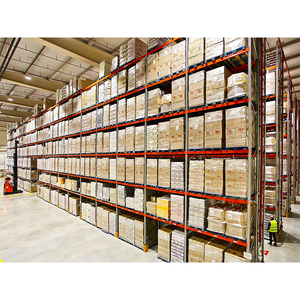
Precision-manufactured pallet and cantilever racking compliant with RMI, FEM 10.2.02, and AS4084 engineering tolerances. Custom-configured for North American, European, and Asia-Pacific intralogistics specifications.
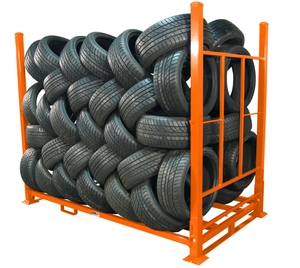
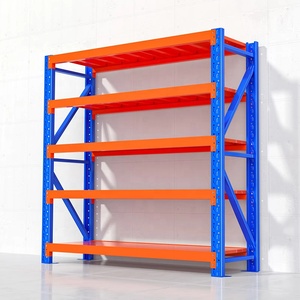
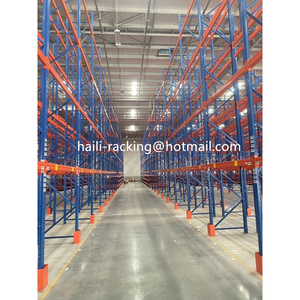
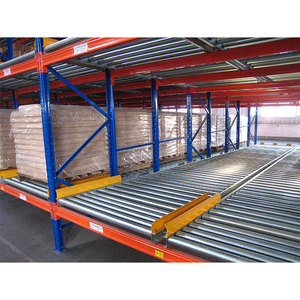
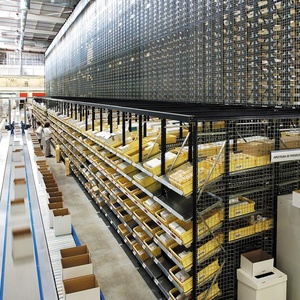
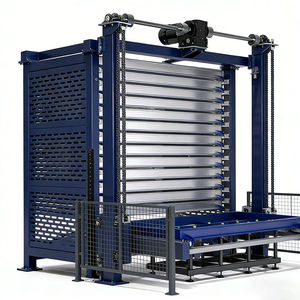
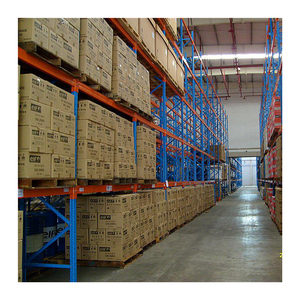
Modern industrial supply chains face unprecedented pressure on square footage economics. Escalating commercial real estate land acquisition valuations, heightened urban fulfillment land constraints, and compounding building maintenance costs have made horizontal facility sprawl financially unsustainable. For chief procurement officers, supply chain operations directors, and third-party logistics (3PL) project engineers, the structural transition to high bay vertical warehouse configurations (operating in ceiling clearances exceeding 12 to 40 meters) represents the most direct lever to multiply pallet positions without expanding warehouse foundations.
As premier OEM/ODM high bay storage racks manufacturers and exporters, our structural engineering focuses on resolving the critical trade-offs between static weight-to-mass optimization, dynamic load dissipation, and automated material handling system (ASRS) mechanical interfaces. High bay structural engineering demands tight cold-roll forming tolerances. Unlike low-level industrial shelving, a structural deflection of just 1.5mm at an upright base plate can amplify to an impermissible 40mm angular deviation at a 30-meter high picking aperture, causing laser misalignment on high-reach turret trucks or automated crane interlock lockouts.
Our manufacturing philosophy leverages ultra-high tensile certified Q235B and Q355B structural coil steel, cold-formed across 18-stage roll-forming profiling lines. Each upright column incorporates engineered omega-profile or closed-box cross sections configured with multi-point hook connectors and safety locking mechanisms. By preserving structural elasticity while optimizing axial load transmission down to anchored baseplates, our systems maintain complete compliance with global seismic design criteria—including ANSI MH16.1 (Specification for the Design, Testing and Utilization of Industrial Steel Storage Racks), Eurocode EN 15512, and strict AS4084 guidelines.
| System Architecture | Volumetric Space Utilization | Pallet Accessibility Factor | Throughput Cycle Speed | Optimal Industry Application |
|---|---|---|---|---|
| Automated High-Bay AS/RS | 90% – 95% Vertical Cube | 100% Individual SKU Selectivity | High Speed (Crane Automated) | E-Commerce Hubs, Cold Storage, FMCG Mega-DCs |
| Gravity Pallet Flow (FIFO) | 75% – 85% Floor Density | First-In, First-Out Lane Faces | Continuous High Gravity Velocity | Perishables, Pharmaceuticals, High-Velocity Cross Docks |
| Radio Shuttle Cart Racking | 80% – 88% Floor Density | Configurable FIFO or LIFO Lanes | Semi-Automated Pallet Cycle | Beverage Distribution, Cold Stores (-25°C), Raw Materials |
| Very Narrow Aisle (VNA) High Bay | 70% – 80% Vertical Cube | 100% Direct Pallet Access | Medium-High (Wire/Rail Guided) | Industrial Manufacturing Spares, Multi-SKU Distribution |
When engineering high bay storage, structural engineers must calculate cumulative vertical dead loads along with severe transient kinetic forces. These forces include forklift mast sway, high-velocity deceleration impacts from autonomous mobile robots (AMRs), seismic ground shear accelerations, and asymmetrical pallet loading dynamics. We deploy finite element analysis (FEA) software before initiating coil slitting, simulating localized torsional stresses, beam weld fatigue limits, and load pin shear points. This empirical engineering discipline guarantees that export projects delivered to seismic fault corridors (such as California IBC seismic zones or Pacific Rim fault lines) pass independent Engineer of Record (EOR) calculations without site retrofits.
How automation readiness, low-carbon steel compliance, and modular standardization are altering the global request-for-proposal (RFP) landscape.
Procurement teams are moving away from manual-forklift-only dimensions. Global tenders now require racking layouts to accommodate automated guided vehicle (AGV) floor navigational clearances, low-profile straddle clearances, retrofitted reflective barcode positioning strips, and automated carton conveyor off-ramp integration.
With refrigerated warehouse electricity costs surging globally, high-bay cold storage demands hyper-dense racking footprints that minimize refrigerated air volumes per pallet position. Racking steel chemistry must be formulated to resist cryogenic embrittlement at -25°C to -30°C without crack propagation under impact.
North American and European enterprise buyers now track embedded carbon per pallet position. Steel sourcing is pivoting toward electric arc furnace (EAF) mills, non-toxic electrostatic thermoset powder coatings that release zero VOCs, and fully dismountable boltless structural systems that can be reconfigured or recycled at end-of-life.
Rather than building dedicated ground footprints, facilities are investing in rack-supported multi-tier mezzanine floors. Integrating heavy-duty selective uprights below with clear-span mezzanine platforms above supports concurrent high-density pallet storage and manual e-commerce multi-tier split-case order picking within the same vertical column.
Industrial storage systems are evolving from passive steel frameworks into instrumented platforms. Large-scale high bay installations are integrating IoT vibration, strain gauge deflection sensors, and impact detection units directly onto lower portal frame columns to alert safety managers of structural forklift strikes in real time.
International procurement friction often stems from unit mismatches. Leading EPCs demand that tier-1 Asian exporters deliver calculation packages natively configured in imperial dimensions (lbs/beam level, inch-gauge framing, clear height in feet) to fast-track municipal permit approvals without conversion errors.
Precision-engineered in Guangzhou, verified by independent testing agencies, and deployed globally since 2001.
Headquartered in Guangzhou, our production campus spans over 30,000 square meters (approx. 323,000 square feet) of dedicated roll-forming, automated CNC stamping, continuous robotic welding, and automatic electrostatic powder-coating lines. With an engineering workforce exceeding 300 technical specialists, our monthly steel transformation output surpasses 30,000 metric tons. We serve as the tier-1 OEM/ODM manufacturing spine for international racking brands, intralogistics system integrators, and Fortune 500 warehouse facilities across North America, Europe, Australia, and Latin America.
Our quality management architecture is strictly auditable. Operating under an ISO 9001:2015 certified quality management regime and carrying valid CE Marking (No. 2435-CPR-8605159), our manufacturing tolerances meet international structural standards. Steel coils undergo rigorous incoming spectrometer chemical testing and tensile yield evaluations. Upright columns and box beams undergo automatic robotic punch indexing to guarantee uniform beam pin hole patterns, followed by automated shot blasting, pickling, and phosphating pretreatments that ensure powder coat adhesion that resists chipping, salt spray, and abrasive warehouse environments.
Crucially for international engineering contractors, our technical office provides full CAD floor plans, 3D structural renderings, and stamped-calculation-ready documentation packages within 24 to 48 hours of project data intake. Whether sizing frame depths around 48"x40" GMA pallets, custom Euro pallets, or non-standard steel containers, our engineers calculate vertical beam clearances, flue space compliance, and seismic shear tie rods to ensure prompt building permit approval.
Direct technical and commercial answers addressing common engineering specifications, shipping logistics, and code compliance queries.
Connect with our senior structural storage engineers. Receive a fully optimized CAD floor plan, 3D structural visualization, and itemized landed-cost export proposal within 24 hours.