Safety Rated
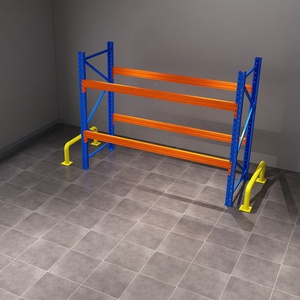
Adjustable Layers Pallet Rack & Heavy Shelving Unit
CE Certified
Row Spacers
Load Safety Plaque
Directly sourced from automated roll-forming and CNC-stamping production lines. Every configuration undergoes structural stress profiling, batch metallographic testing, and salt-spray surface certification to satisfy strict international safety regimes.
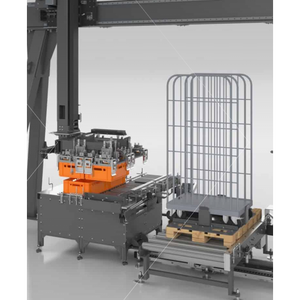
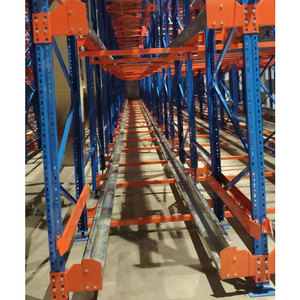
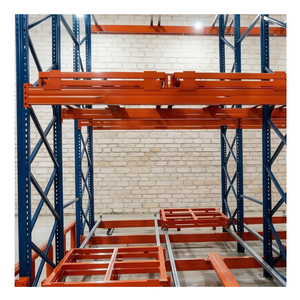
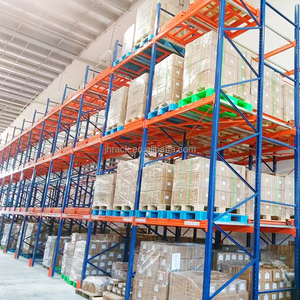
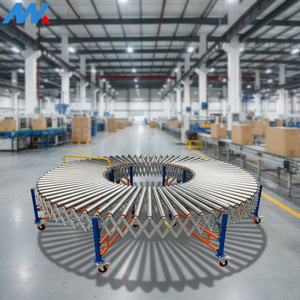
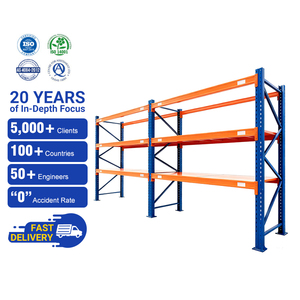
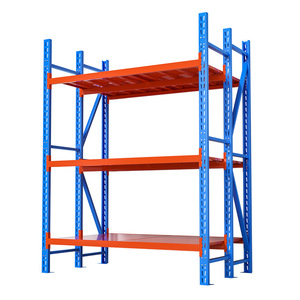
Operating as an industry backbone since 2001, Guangzhou HEDA Shelves Co., Ltd. resolves the trade-off between mass-volume pricing and rigorous structural safety. We combine ISO 9001:2015 quality control, CE construction compliance, and verified seismic engineering.
Fabricated using certified Q235B cold-rolled structural steel coil stock. Structural analyses match RMI (Rack Manufacturers Institute) standards and European FEM/EN codes, backed by certified CE marking (No. 2435-CPR-8605159) and RoHS certifications.
Our dedicated engineering group translates architectural plans, clear-height limits, slab capacities, and forklift turn radii into optimized AutoCAD profiles, 3D parametric models, and precise weight distribution tables in metric or imperial measurements.
Supplying world-class material handling distributors and engineering contractors with customized hole punch patterns, drop-in teardrop connectors, client-branded stamping, customized powder coat RAL matches, and custom packaging designs.
Global supply-chain pressures, rising cost per square foot, and automated handling demand high structural precision. Boltless industrial shelving is shifting from passive static metal frames to modular, mission-critical assets.
Transitioning from thick mild steels to thin-gauge micro-alloyed cold-formed metals. This shift retains dynamic yield strength while lowering dead load, cutting ocean freight costs, and reducing total lifecycle carbon footprints.
Shelving units are now engineered for Autonomous Mobile Robots (AMR) and Goods-to-Person (G2P) pickers. Clear upright faces, flush baseplates, and low-tolerance column alignment eliminate navigation hazards.
Global facilities face stringent building code inspections. Procurement now requires verified base-plate anchoring data, finite element analyses, and local engineering stamps for high seismic risk zones.
Modern distribution centers maximize clear vertical height. Uprights must now support high compression forces to facilitate future upgrades into multi-tier pick modules and rack-supported mezzanines.
Evaluating the engineering differences between conventional bolted shelving and interlocking boltless industrial racks helps procurement teams optimize assembly labor, deflection tolerances, and beam safety factors.
| Engineering Vector | Standard Bolted Shelving | Industrial Boltless Interlocking System | Procurement Impact |
|---|---|---|---|
| Assembly Speed | Requires hand or pneumatic wrenching; 35-45 mins per bay | Self-locking taper pins or rivets; 8-12 mins per bay | Reduces field contractor labor costs by up to 70% |
| Torsional Rigidity | Relies on bolt friction; susceptible to vibration loosening | Beveled lugs fit into tapered keyhole or butterfly slots under load | Joint rigidity increases as shelf loading increases |
| Surface Pretreatment | Basic chemical degrease followed by standard spray dip | Multi-stage pickling, iron phosphating, and electrostatic polymer coat | Prevents corrosion and micro-abrasion wear |
| Dynamic Reconfigurability | Requires complete bolt disassembly; causes thread damage | Adjustable beam placement on 50mm, 75mm, or 2-inch increments | Adapts quickly to changing warehouse SKU heights |
| Impact Failure Mode | Local shear failure at fastener hole locations | Load spreads across rolled upright returns and cross-bracing | Enhances seismic performance and structural load margin |
Clear answers to frequent technical, logistical, and structural compliance questions asked by overseas engineering buyers and distribution operators.
Boltless systems rely on tapered keyholes, butterfly slots, or teardrop joints. Double-rivet horizontal beams drive into laser-cut or cold-punched column slots. Under gravitational payload, the joint seats deeper into the tapered slot. This converts vertical shear force into horizontal clamping friction, increasing joint stiffness without relying on standard threaded hardware.
Yes. Our in-house structural engineering group prepares full calculation packages, covering dynamic wind loads, seismic spectral acceleration values, and overturning moment calculations. These comprehensive packages are formatted for swift review and stamping by your local licensed Professional Engineer (PE) or Engineer of Record (EOR).
Our production facilities employ a fully automated 10-stage finishing line. Components undergo mechanical degreasing, ultrasonic rust removal, pickling, and acid phosphating, followed by high-build thermosetting polyester powder coating baked at 180°C-200°C. For sub-zero freezers (-30°C) or open yard storage, we supply hot-dip galvanized steel components with zinc densities up to 60-80 microns.
Please share: (1) Warehouse architectural drawings indicating clear ceiling height, slab thickness, and column grid spacing; (2) Unit load parameters including width, depth, height, and pallet overhang; (3) Maximum load weight per tier; (4) Material handling equipment models, mast lifting heights, and minimum turning aisle widths.
Upright posts and cross-beams are bundle-packed using custom corrugated saddles, heavy edge protectors, and high-tensile PET strapping. Small connection pins, baseplates, and hardware ship in reinforced crates on wooden skids. Bundles are loaded with weight-balanced spacing for quick forklift discharge, fitting 20GP, 40GP, or 40HQ ocean containers.
We supply private-label fabrication for racking system integrators across the globe. Capabilities include tooling for unique upright punch geometries, integrated company logos, bespoke drop-in wire decking options, custom safety accessories, and client-specified RAL color formulations.
Partner directly with a proven industrial manufacturer. Leverage our 25+ years of production experience, automated fabrication lines, and responsive CAD layout engineering to increase your warehouse capacity.