High-Performance Industrial Storage Systems
Direct manufacturer supply backed by automated cold-roll profiling, robotic structural welding, and certified structural deflection tolerances. Configurable to GMA 48x40-inch pallet footprints, heavy coil, and automated shuttle systems.
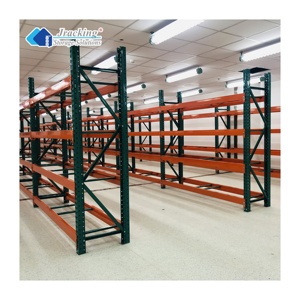
Adjustable CE Certified Warehouse Storage Rack Steel Teardrop Pallet Racking System
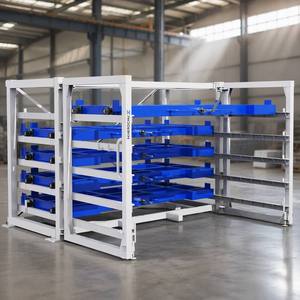
Heavy Duty Roll-out Sheet Metal Storage Rack, 6-Tier Space-Saving Drawer System
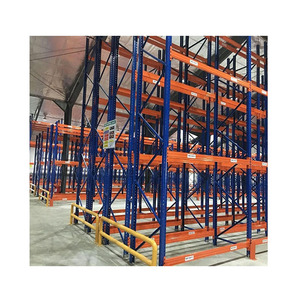
Industrial Galvanized Steel Rack Heavy Duty Pallet Racking System VNA / Double Deep
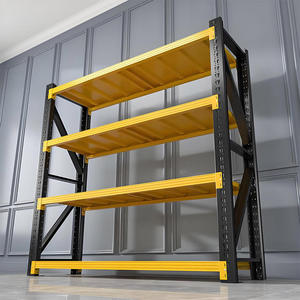
Adjustable Pallet Rack Warehouse Storage Heavy Duty Shelving Pallets Racking
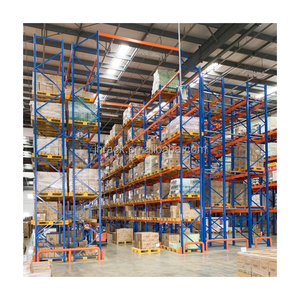
Non-Standard Customized Heavy Duty Metal Shelf Push Back Pallet Shelving System
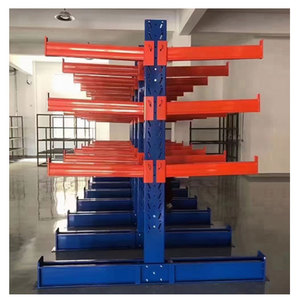
DJ Heavy-Duty Steel Adjustable Cantilever Rack Warehouse Storage 500kg-2000kg
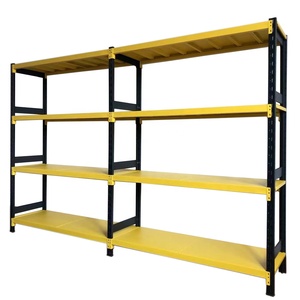
Metal Storage Shelf Rack Heavy Duty 4 Tier Layers Factory Warehouse Shelves
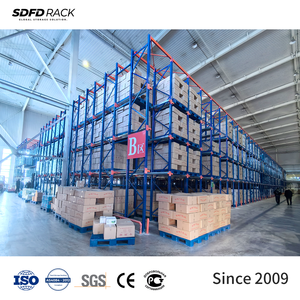
Efficient Drive-In Rack Drive-Through Pallet Racking System Heavy Duty Card Slot
Why Tier-1 Importers Rely on Our Manufacturing Ecosystem
Operating as an end-to-end original equipment manufacturer (OEM) and turnkey engineering exporter, we eliminate supply chain intermediation, delivering repeatable metallurgical tolerances, verifiable finite element calculations, and containerized logistics integrity.
ISO 9001 & CE Certified
Fabrication compliant with EN 15512, ANSI MH16.1, and CE Marking Certificate No. 2435-CPR-8605159. Continuous raw coil tensile verification ensuring uniform yield performance across all upright columns.
- Third-party destructive load test verification
- RoHS compliant pre-treatment eco-chemistry
- Full traceability from melt sheet to final beam
Free 24h CAD & 3D Modeling
Rapid architectural engineering turnaround. Our dedicated in-house structural engineers deliver bilingual CAD shop plans, layout elevations, and BIM-compatible models within 24 hours of space brief receipt.
- Imperial (feet, inches, lbs) and metric layouts
- Seismic and slab shear load calculations
- Aisle dimensioning matched to forklift turn radius
10-Stage Surface Pretreatment
Automated continuous conveyor lines implementing alkaline degreasing, acid pickling, zinc phosphating, and pure water rinses prior to electrostatic thermoset polyester powder deposition.
- Corrosion resistance up to 500h salt spray
- Impact-resistant finish (60–80 micron thickness)
- Custom RAL corporate color-matching
Container-Optimized Bundling
Engineered shipping geometry for 40HQ ocean freight shipping to Los Angeles, Long Beach, Savannah, Houston, and European seaports. Prevents transit abrasion and minimizes dead cube freight losses.
- Channel-iron skidding for forklift staging
- Corrosion-inhibiting polymer stretch wrapping
- Barcoded bundle itemization for rapid erection
Structural Metallurgy & Cold-Formed Racking Specifications
Industrial storage racking performance is governed by Euler column buckling limitations, connection moment capacities, and dynamic horizontal shear loads. Below is the comparative manufacturing specification matrix applied across our standard and custom OEM production runs.
| Structural Sub-Component | Material Grade | Yield Strength ($F_y$) | Tensile Strength ($F_u$) | Forming & Finish Standard | Compliance Reference |
|---|---|---|---|---|---|
| Upright Columns (Omega Profile) | Cold-Rolled Q235B / Q355B | ≥ 235 – 355 MPa | 370 – 510 MPa | Continuous Cold Roll-Forming, 50/75mm Multi-Claw Punching | EN 15512:2020 |
| Box Step & Interlocking Beams | Hot-Rolled Strip Q235B | ≥ 235 MPa | 375 – 460 MPa | Twin C-Profile Seam Robotic MIG Welded, 3/4-Tooth Connector Claws | ANSI MH16.1:2012 |
| Sheet Metal Roll-out Drawers | High-Strength Plate Q355B | ≥ 355 MPa | 470 – 630 MPa | CNC Laser Cut, Sealed Bearings with Guide Rollers | CE Machinery Dir. |
| Galvanized VNA & Drive-In Rails | Pre-Galvanized / HDG Steel | ≥ 235 – 275 MPa | 410 MPa | Continuous Cold Punch, Zinc Layer ≥ 275g/m² (Z275) to 600g/m² | ASTM A123 / ISO 1461 |
| Cantilever Upright Columns & Arms | Structural I-Beam Q235B / H-Steel | ≥ 235 MPa | 370 – 500 MPa | Hot-Rolled Heavy H-Section, Grade 8.8 High-Tensile Fasteners | RMI Specification |
Cold-Forming Mechanical Purity
Unlike basic structural merchant channels, cold-formed thin-walled steel profiles achieve substantial yield hardening along their bends. By implementing multi-pass roll forming stations, we preserve internal grain orientation, eliminating micro-fracture hazards along punch lines and load-bearing card slots.
Beam-to-Column Semi-Rigid Joint Testing
Every proprietary OEM connector profile undergoes canted cyclic test loading to establish exact rotational spring constants ($F_{conn}$). This data is directly integrated into our finite element structural models to calculate authentic maximum load deflections down to $L/200$ thresholds under full capacity.
Seismic Dissipation & Baseplate Geometries
For installations in high seismic acceleration zones (PGA ≥ 0.3g), upright base assemblies are manufactured with thickened ductile anchor brackets, double-gusset stiffeners, and staggered wedge anchor layouts that isolate lateral shear stresses from cracking warehouse concrete slabs.
Emerging Procurement Trends Shaping Industrial Racking
Global supply chain volatility, urban e-commerce fulfillment proximity, and labor dynamics are forcing a strategic transformation in racking procurement. Sourcing directors are prioritizing long-term modular reconfigurability over commoditized steel buying.
Automation-Ready Hybrid Profiles
Procurement teams no longer procure static selective racking in isolation. Forward-thinking operations specify upright punch profiles and beam throat tolerances engineered to interface simultaneously with manual counterbalanced forklifts and future autonomous mobile robots (AMRs), automated pallet shuttles, or rail-guided stacker cranes (AS/RS).
Standardization Around Closed-Loop Galvanization
With massive expansion across cold-chain perishables and temperature-controlled logistics, chemical corrosion and thermal condensates rapidly deteriorate standard powder coats. Direct-from-factory procurement is trending toward inline continuous galvanization and pre-galvanized micro-alloy steels that prevent surface oxidation without costly field retrofits.
Turnkey OEM Direct Integration
Bypassing regional brand relabelers allows industrial end-users to realize 20% to 35% capital expenditure savings while collaborating directly with the metallurgical source. This enables proprietary hole pitches, stamped load plates, and precise beam lengths customized to non-standard European, North American, or hemispherical pallet footprints.
Racking Architectural Developments & Smart Warehousing
The convergence of material sciences and cyber-physical logistics infrastructure is redefining modern warehouse design. Discover the technological architectures revolutionizing heavy-capacity storage systems.
Ultra-High Bay Cold Storage Racking
Clad-rack warehouses, where the pallet racking structure acts as the structural envelope supporting the roof and exterior refrigeration panels. This architecture eliminates secondary building steel, maximizing cold storage volumetric density up to 40 meters in clear height.
Smart Deflection & Overload IoT Sensors
Next-generation OEM beam designs feature recessed housings for wireless strain gauges and accelerometers. These sensors alert logistics managers via warehouse management systems (WMS) when accidental forklift collisions or dynamic overloads exceed elastic structural thresholds.
Lightweight Ultra-High Strength Steels
Transitioning from basic Q235 carbon formulations toward micro-alloyed boron-treated and dual-phase steels. These formulations enable 18% steel weight reduction while maintaining identical column axial load envelopes, drastically lowering transoceanic freight and raw material carbon footprints.
Modular Mezzanine Multi-Tier Platforms
Combining heavy-duty selective rack frameworks with self-supporting cold-formed light gauge joists to create 3-to-4 level pick modules. These architectures double or triple usable square footage for e-commerce sortation without extending external building perimeters.
Frequently Asked Questions: Global OEM Racking Procurement
Key technical, commercial, and structural compliance considerations addressed by our Senior Structural Applications Engineering Team.
Q: How do you ensure imported racking meets regional seismic and building code permits?
Every OEM project is supported with complete structural engineering calculation dossiers including dead load, live load, product load, seismic spectral accelerations ($S_s, S_1$), and wind uplift calculations. Our documentation matches RMI (ANSI MH16.1) requirements in North America and Eurocode 3 (EN 1993-1-3 / EN 15512) in Europe, allowing your local licensed Engineer of Record (EOR) to stamp permit filings smoothly.
Q: What is the typical lead time from CAD sign-off to seaport container dispatch?
Standard production cycles range between 15 and 25 calendar days for 1 to 5 full container loads (FCL). Because our Guangzhou manufacturing plant operates continuous automated roll-forming and powder-coating systems with a 30,000-ton monthly capacity, custom punch stamping, personalized beam lengths, and bespoke RAL powder finishes do not introduce lengthy schedule delays.
Q: Can your beams be engineered to interface with existing racking from other brands?
Yes. Our OEM division manufactures backward-compatible upright frames and beams designed to match universal teardrop profiles, European Dexion-compatible 76.2mm pitches, Apex-compatible slots, and Stow-compatible patterns. We verify critical hole-punch geometries, locking pin shear planes, and throat clearances before initiating mass run manufacturing.
Q: How do you prevent corrosion and transit rubbing during ocean transport?
All structural components receive automated pre-treatment and an electrostatically applied 60–80μm thermoset polyester powder coat. For marine shipping, components are bundled with high-density corrugated spacers, structural timber blocking, corner edge protectors, and air-tight moisture-barrier shrink films to withstand maritime humidity, condensation, and ship roll.
Q: What are the deflection criteria applied to your industrial load beams?
In adherence to international engineering norms, our standard pallet load beams are calculated not to exceed a vertical deflection limit of $L/200$ (where $L$ is the clear distance between column faces) under full design working load. Stricter deflection limits, such as $L/300$ or $L/400$, can be engineered for sensitive automated crane interfaces or specialized sheet metal storage systems.
Q: Do you offer factory audits and third-party quality control inspections?
Absolutely. We welcome independent technical inspection agencies (such as SGS, BV, or TÜV) to perform raw material ultrasonic testing, weld penetration cross-sections, powder adhesion cross-hatch checks, and dimensional verification prior to container sealing. Full raw coil metallurgical mill test certificates (MTC) are archived and provided with every shipment.
Accelerate Your Storage Capacity with Direct Factory Pricing
Send your warehouse architectural drawings, pallet weights, and clear ceiling heights today. Our engineering department will return an optimized CAD layout, structural capacity report, and itemized CIF/FOB export quotation within 24 hours.