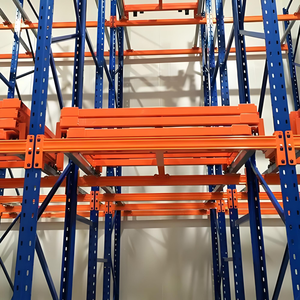
Industrial Grade CE/ISO Push Back Pallet Racking
Engineered with nesting wheeled carts and continuous profile rails. Delivers corrosion-protected, low-maintenance deep-lane storage with 1,000–2,000 kg capacity per level.
Direct factory supply of structural steel beam architectures, selective racking, and high-density deep-lane configurations engineered for high-throughput distribution hubs.
Engineered with nesting wheeled carts and continuous profile rails. Delivers corrosion-protected, low-maintenance deep-lane storage with 1,000–2,000 kg capacity per level.
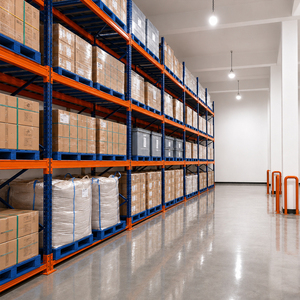
Cold-bent Q235B prime structural steel box beams designed with robotic multi-point weld lugs for extreme stability under dynamic forklift loading.
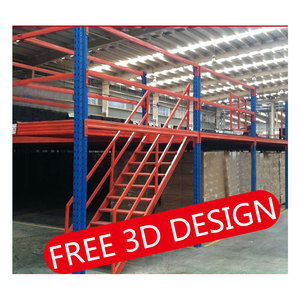
Integrated rack-supported structural mezzanine beam framework. Multiplies usable square footage vertically without structural building alteration.
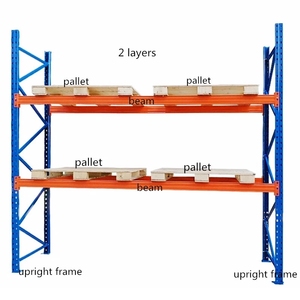
High-tensile tubular horizontal supports specifically tailored for roll-goods, carpets, and suspended heavy textiles with electrostatic powder finish.
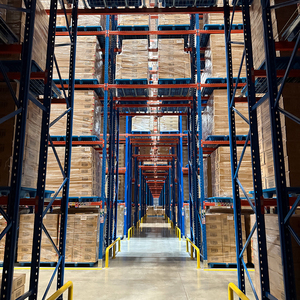
The global benchmark for 100% selective unit handling. Configurable 50mm and 75mm pitch beam connections suitable for standard GMA and Euro pallets.
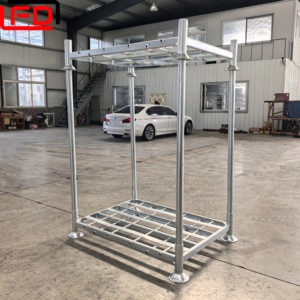
Heavy duty hot-dip zinc immersion creates an impervious barrier against severe environmental moisture, corrosive chemicals, and cold storage condensation.
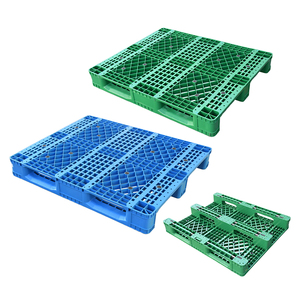
Optimized for 4-way entry forklift navigation and heavy tiered storage. Features dynamic moment-resisting beam connector clips and mechanical lock pins.
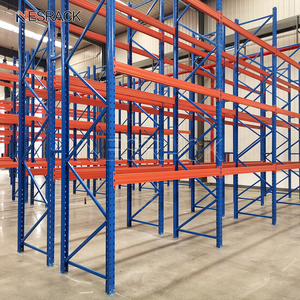
Tailored structural roll-formed profiles featuring full teardrop, slotted, or hex hole patterns compatible with North American and international cross-beams.
In modern industrial logistics, the horizontal load-bearing beam is the primary component governing structural safety, vertical deflection thresholds, and systemic stability. An OEM warehouse racking beam does not merely support static weight; it dissipates dynamic torsional forces induced during pallet placement, forklift deceleration, and cyclic seismic resonance. Selecting the correct cross-sectional profile (step beam vs. continuous box beam) dictates not only structural capacity but also compatibility with drop-in wire decking, pallet support bars, and automated conveyor systems.
At Guangzhou Heda Shelves, our manufacturing protocols rely exclusively on certified Q235B and Q355B structural grade steel coils. By maintaining tight tolerances during automated cold roll-forming and deploying robotic plasma cutting alongside multi-point MIG welding arrays, our end-connectors achieve maximum rotational stiffness. This rotational stiffness reduces effective column length, directly translating into higher load capacities for the entire upright framework while preserving an ANSI MH16.1 deflection limit of L/180 or better.
Features an internal recessed step (typically 7/8″ or 1-1/2″) designed specifically to seat wire mesh decking, galvanized drop-in panels, and cross ties flush with the beam's top surface, preventing snagging during high-speed loading.
Fabricated by joining twin roll-formed C-channels with automated continuous longitudinal seam welding. Box beams offer exceptional torsional rigidity and high section moduli, making them ideal for extra-heavy unit loads exceeding 4,000 kg per tier.
Stamped from high-yield 3.5mm–4.5mm steel plates with 3, 4, or 5-hook engagement. Features integrated spring-loaded safety locking pins that resist accidental forklift dislodgement forces exceeding 1,000 lbs according to RMI regulations.
| Profile Specification | Material Grade | Yield Strength (MPa) | Deflection Criteria | Surface Treatment | Target System Applications |
|---|---|---|---|---|---|
| 50×80 to 50×160 Box Beam | Q235B / Q355B | ≥ 235 – 355 MPa | ≤ L / 180 (ANSI/RMI) | Electrostatic Epoxy-Polyester | Selective Pallet, Drive-In, VNA Racking |
| 50×80 to 50×150 Step Beam | Q235B Cold-Rolled | ≥ 235 MPa | ≤ L / 200 (Stricter Deflection) | Anti-Corrosive Powder Coat (60–80μm) | E-commerce DCs, Wire Mesh Deck Integration |
| C-Channel Structural Beam | Hot-Rolled Structural | ≥ 345 MPa | ≤ L / 240 (Impact Resilient) | Hot-Dip Galvanized (ISO 1461) | Cold Storage Freezers, Heavy Chemical Stores |
| Integrated Mezzanine Joists | High-Tensile Q355B | ≥ 355 MPa | ≤ L / 360 (Floor Comfort) | Pickling, Phosphated + Powder Coat | Multi-Tier Attics, Catwalk Mezzanines |
Procurement teams are shifting from transactional spot-purchasing to total-lifecycle cost calculations. Warehouses are developing vertically rather than horizontally due to accelerating land and construction costs. This operational evolution creates specific technical requirements for warehouse racking beams over the 2025–2030 horizon:
Automated Storage and Retrieval Systems (AS/RS) and automated 4-way radio shuttles demand tighter deflection tolerances (≤ L/300) than conventional forklift operations. Beams must demonstrate zero measurable permanent deformation to prevent automated shuttle track jamming.
With rapid expansion in cold-chain grocery fulfillment, steel beams must be certified against low-temperature embrittlement down to -30°C. Modified metallurgical chemistries with trace micro-alloys prevent micro-fissures caused by rapid thermal cycling.
Future-ready OEM beams feature laser-etched DataMatrix codes and integrated passive RFID asset tags. This allows logistics operators to link each beam profile directly to its original mill test report, nominal load limits, and periodic structural safety audits.
Operating as Guangzhou Heda Shelves Co., Ltd., we combine over two decades of heavy industrial fabrication with end-to-end engineering support for global logistics distributors.
Technical clarity for structural engineers, project estimators, and supply chain directors sourcing factory-direct industrial storage solutions.
Connect directly with our Guangzhou manufacturing engineering office. Receive tailored CAD shop drawings, finite element beam calculations, and itemized factory pricing within 24 hours.