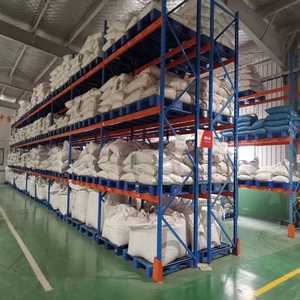
 Teardrop Pattern
Direct OEM Engineered Portfolio
Standard & Custom Precision Storage Systems
Explore our roll-formed, laser-profiled, and robotically-welded warehouse infrastructure solutions. Certified to ISO 9001:2015, CE, and compliant with North American RMI / ANSI MH16.1 specifications.
Teardrop Pattern
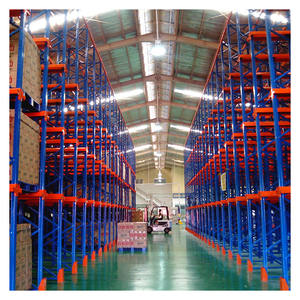 High-Density
 Sanitary Grade
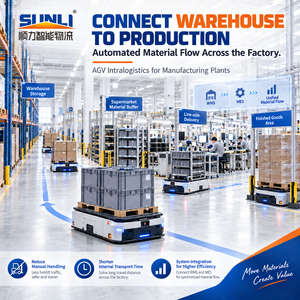 Smart AS/RS
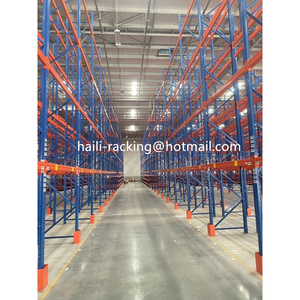 Mobile Heavy
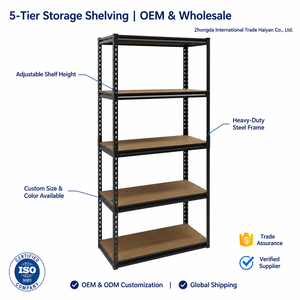 Adjustable Steel
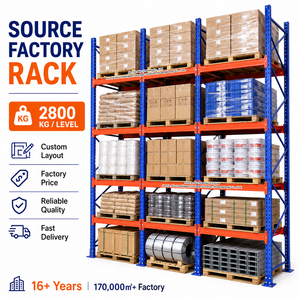 High Bay Heavy
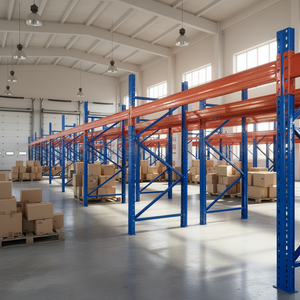 Universal Frame
2001
Manufacturing Since
300+
Engineers & Technicians
30,000t
Monthly Steel Output
323,000
Sq Ft Production Facility
System Architecture
The Mechanics of High-Density Shuttle Storage
Radio Shuttle Racking represents a pivotal technological leap over static high-density systems such as Drive-In and Push-Back configurations. By decoupling the horizontal pallet transport vector within the racking lane from the vertical lift vector operated by counterbalanced or reach trucks, shuttle automation establishes unprecedented volumetric density and throughput velocity.
In traditional Drive-In racking installations, forklift operators must physically navigate deep into structural racking tunnels to pick or place pallets. This physical entry introduces severe operational liabilities: elevated structural collision risks to upright posts, restricted operating cycle speeds, and severe SKU selectivity constraints. Conversely, our custom OEM shuttle systems integrate high-precision CNC roll-formed galvanized guide rails that carry autonomous, low-profile shuttle carts. The lift truck operator deposits the shuttle vehicle at the staging face of the target lane; subsequent pallet movement is handled entirely via an intelligent microprocessor-controlled cart governed by 2.4 GHz radio frequency or integrated WCS (Warehouse Control System) protocols.
Manufactured strictly utilizing Q235B and high-yield Q355B cold-rolled structural steel, the racking profiles are engineered to absorb localized torsional stresses and cyclic load oscillations. The self-weight deflection of the rail sections is kept rigorously below L/750 under maximum safe working loads (SWL) up to 1,500 kg (3,300 lbs) per pallet. This engineering rigor guarantees consistent wheel-to-rail adhesion, eliminates wheel slipping during autonomous rapid acceleration (up to 1.1 m/s loaded), and ensures repeatable positioning accuracy via onboard ultrasonic distance transducers and optical safety sensors.
Zero Rack-Entry Logistics
Forklifts never enter the storage lanes. Upright structural damage is reduced by more than 85% compared to drive-in racks, drastically lowering annual warehouse MRO (maintenance, repair, operations) expenditures.
Dual Mode: FIFO & LIFO
The lane layout can be tailored dynamically. Employ First-In, First-Out (FIFO) with separate loading and retrieval access aisles for perishable goods, or First-In, Last-Out (LIFO) single-aisle setups for maximum footprint density.
Drastic TCO Reduction
By transforming dead horizontal transfer aisles into live revenue storage cubic volume, shuttle racks increase facility density by 70% over selective racking while cutting labor cycle times by up to 50%.
Comparative Matrix
High-Density Storage Topology Comparison
Benchmark analytical performance metrics across primary warehouse racking topologies.
| Storage Topology | Space Utilization | Throughput Velocity | Collision Risk | Cold Chain Energy Efficiency | Inventory Rotation |
|---|---|---|---|---|---|
| Radio Shuttle Racking | Ultra High (85%+) | Fast (Autonomous) | Negligible (External Access) | Superior (Maximum Cube) | Configurable FIFO / LIFO |
| Drive-In Racking | High (65-75%) | Slow (Mast Maneuvering) | Severe (High Column Impact) | Moderate | Strictly LIFO |
| Push-Back Racking | Moderate (60-70%) | Moderate (Gravity Carts) | Low | Fair (Slope Height Loss) | Strictly LIFO (2-6 Deep) |
| Selective Pallet Racking | Low (35-45%) | Fast (100% Selective) | Moderate | Poor (Excess Chilled Volume) | Universal FIFO / LIFO |
| Fully Automated AS/RS | Maximized (90%+) | Maximum (Continuous) | Zero (Unmanned) | Optimal (Lights-Out) | Dynamic Software Governed |
Strategic Outlook 2026-2030
Procurement & Technology Trends in Shuttle Automation
Global logistics procurement teams are navigating intense macro-economic pressures: soaring industrial real estate rates per square foot, persistent shortages of certified lift-truck operators, and corporate carbon-neutrality mandates. Over the next five years, procurement specifications for shuttle racking are pivoting along three transformative vectors.
1. Deep Integration with Autonomous Mobile Robots (AMRs) and AGVs: The traditional boundary separating manual counterbalance forklifts and radio shuttle carts is dissolving rapidly. Progressive distribution hubs are standardizing on OEM shuttle systems engineered with bi-directional optical alignment and mechanical pick-up interfaces compatible with autonomous narrow-aisle stacker cranes and counterbalanced AGVs. In this fully lights-out architecture, AGVs retrieve pallets from incoming cross-docks and deposit them directly on the shuttle rail entry without a single human touchpoint.
2. Lithium Iron Phosphate (LiFePO4) & Supercapacitor Energy Architectures: Older lead-acid and standard ternary lithium battery units suffered from thermal degradation in deep-freeze environments (-25°C to -30°C), requiring frequent battery swaps and warm-room charging cycles. Modern procurement mandates specify zero-maintenance LiFePO4 cells equipped with internal PTC thermal warming circuits, or advanced supercapacitors supporting opportunity charging at the lane entrance. A 15-second charging dwell while the forklift places the next pallet provides continuous 24/7 operational autonomy.
3. Dynamic 4-Way Multi-Directional Shuttling: While standard 2-way shuttles operate strictly in linear longitudinal aisles, next-generation 4-way systems utilize shifting wheel assemblies that can transition from cross-aisles into storage lanes autonomously. Paired with integrated vertical pallet lifts, 4-way shuttle racking effectively transforms standard high-bay racking into an ultra-flexible, modular AS/RS system with significantly lower initial CapEx investment than traditional mammoth stacker cranes.
4. IoT Diagnostics and Predictive Telemetry: Enterprise RFPs increasingly dictate that OEM suppliers provide real-time telemetry protocols (MQTT/OPC-UA). Shuttle health parameters—such as drive wheel torque profiles, motor thermal rise, vibration frequency spectra, and sensor calibration metrics—are monitored continuously in the cloud to preempt unscheduled line stoppages before a physical failure occurs.
Why Partner With Us
Precision Engineering Capabilities & OEM Scalability
Direct factory-level execution designed to support global system integrators, automated logistics contractors, and regional distributors.
Free CAD & Structural Calculations in 24h
Submit your facility floor plan, clear height, pallet dimensions, and operational throughput targets. Our engineering department outputs rigorous AutoCAD layouts, 3D renderings, and stamped-calc review documentation within 24 hours.
Certified Metallurgy & Finishing
High-grade certified steel coils are roll-formed with high-precision continuous cold bend lines. Every component undergoes rigorous automated pre-treatment (acid pickling, phosphating) and electrostatic powder coating resistant to impact and corrosion.
Export Packing & Global Logistics
Container space is optimized via specialized steel bundling fixtures, preventing transit distortion and maritime saltwater oxidation. We offer seamless ocean freight management to Los Angeles, Long Beach, Houston, Savannah, Vancouver, and European hub ports.
Procurement FAQ
Frequently Asked Questions by Global Systems Buyers
Critical engineering, financial, and logistical insights for specifying shuttle racking systems.
What are the key technical parameters required for custom OEM shuttle racking design?
To generate an optimized structural schematic and budgetary quotation, our engineering team requires: (1) Architectural warehouse CAD drawings indicating clear ceiling heights, column grids, slab joint locations, and dock door arrangements; (2) Detailed pallet load profile including pallet type (e.g., GMA 48"x40", Euro 1200x800, perimeter base, or runners), total load dimensions (W x D x H), maximum gross payload weight (lbs/kg), and overhang; (3) Operational ambient temperatures (e.g., ambient vs. -25°C blast freezer); (4) Desired hourly throughput rates (inbound/outbound pallets per hour); and (5) Local seismic zone spectral acceleration parameters (Ss, S1).
How does the shuttle system perform in cold storage and deep freeze environments?
Our cold-chain shuttle units are specifically engineered for sub-zero operation down to -30°C (-22°F). Upgrades include specialized low-viscosity synthetic synthetic gear lubricants, condensation-sealed IP65 electrical junction enclosures, specialized polyurethane traction drive wheels that resist hardening and cracking, and cold-rated LiFePO4 battery management systems with integrated thermistor heaters to prevent rapid cell voltage drops during discharge cycles.
Can custom OEM shuttle rails be adapted to fit existing drive-in or selective racking?
Yes, brownfield retrofit conversions are fully feasible provided that the existing upright columns possess adequate cross-sectional moment of inertia, structural bracing, and baseplate anchorage integrity to handle the concentrated point loads imposed by shuttle guide rails. Our engineering team conducts structural verification calculations and manufactures custom CNC bracket adapters to retrofit shuttle rails onto teardrop, slotted, or proprietary European column patterns.
What are the safety standards, fail-safes, and emergency stops on the shuttle units?
All shuttle carts are equipped with redundant front and rear safety systems: dual ultrasonic collision avoidance sensors, front/rear high-contrast optical proximity switches, mechanical anti-derailment flange guides, and physical emergency stop switches. If an obstacle, misaligned pallet, or human presence is detected within the lane, the shuttle automatically decelerates to an immediate standstill and transmits an audible and wireless telemetry alarm to the handheld operator console.
Do your engineering calculations satisfy North American and European structural codes?
Absolutely. Racking components are engineered and batch-tested in accordance with RMI (Rack Manufacturers Institute) MH16.1 specifications for the United States, CSA S16 for Canada, and EN 15512 / EN 15620 for the European Union. We provide comprehensive load capacity documentation, imperial unit calculations (pounds/feet), and structural submittals tailored to facilitate prompt PE (Professional Engineer) stamping and regional permit approvals.
Ready to Engineer Your High-Density Automated Storage System?
Connect with our technical engineering consultants today. Receive a comprehensive CAD floor layout, structural optimization assessment, and competitive factory-direct OEM proposal within 24 hours.
Get a Quote