High-Throughput Dynamic Storage Systems & Structural Logistics Engineering
Guangzhou HEDA Shelves Co., Ltd. delivers heavy-duty custom push back, flow, and high-density industrial storage configurations engineered to maximize volumetric utilization while safeguarding warehouse operational flow across US, Canadian, and global distribution nodes.
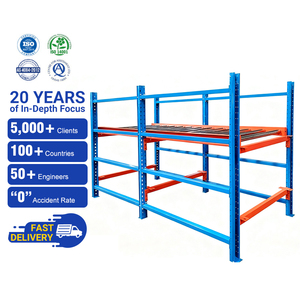
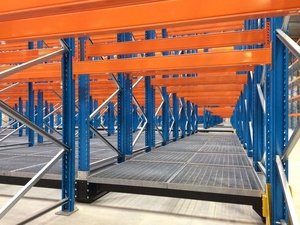
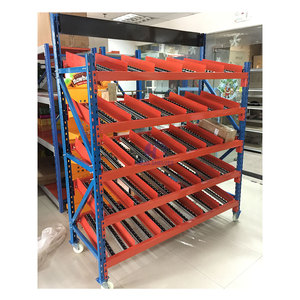
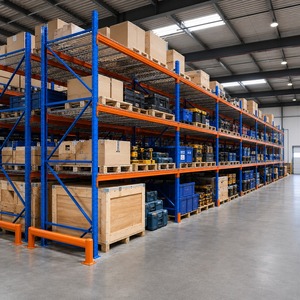
Technical Whitepaper: Engineering Architecture of Custom Push Back Racking Systems
In modern high-velocity fulfillment facilities and temperature-controlled storage operations, floor space optimization is inextricably tied to supply chain margin preservation. A custom push back rack represents the premier accumulation technology for multi-pallet, single-lane inventory architectures. Unlike standard drive-in systems that require lift operators to enter structural framework channels, push back rack engineering relies on a sequence of telescoping, low-profile, nested cart assemblies that glide upon precision-inclined structural steel structural tracks.
1. Kinematic Mechanics & Nested Cart Assemblies
As an authoritative custom OEM rack push back manufacturer, Guangzhou HEDA Shelves utilizes certified Q235B and high-yield cold-rolled steel channels to fabricate robust rolling carriage suites capable of maintaining dynamic stability under severe shock loading. A multi-depth lane (typically configured between 2-deep to 6-deep operations) functions via controlled gravity gradients (graded from 1.5% to 2.5% depending on pallet base materials, footprint rigidity, and unit loads between 500 kg to 2,000 kg per pallet position):
- First Pallet Ingestion: The lift truck deposits the premier unit pallet directly on the topmost nested steel cart.
- Dynamic Accumulation: During secondary pallet insertion, the operator gently pushes the first cart rearward along the structural incline, exposing the second nesting carriage underneath.
- Fail-Safe Retrieval Mechanics: As front pallet loads are extracted, gravitational balance smoothly draws secondary and tertiary pallets to the front discharge plane at controlled velocity, kept stable through precision-ground shielded bearing assemblies and integrated end-stop bumpers.
2. Structural Integrity, Material Formulations, and Seismic Resilience
Push back infrastructure is exposed to sustained horizontal thrust vectors and dynamic impact pressures during pallet positioning. HEDA engineering utilizes advanced finite element analysis (FEA) to confirm beam-to-column rotational stiffness and frame deflection ratios under maximum static and dynamic capacities, in full compliance with ANSI MH16.1 specifications and RMI codes.
Our upright columns feature cold-formed omega profiles with variable wall thicknesses (up to 2.5mm - 3.0mm), reinforced with continuously welded footplates and heavy-gauge anchor configurations engineered to accommodate high seismic zones (Seismic Design Categories A through E). For cold storage and food distribution hubs running at -30°C (-22°F), proprietary low-temperature resilient bearings and synthetic lubricants are paired with multi-stage pretreatment and high-durability electrostatic powder coats to prevent moisture embrittlement and surface micro-fissuring.
| Storage Architecture | Pallet Depth Range | Inventory Access Rotation | Aisle Space Reduction | Lift Impact Vulnerability | Optimal Application Scenario |
|---|---|---|---|---|---|
| Custom OEM Push Back Rack | 2 to 6 Deep Lanes | LIFO (Last-In, First-Out) | 40% - 55% Reduction | Extremely Low (Carts Shield Rails) | High-throughput FMCG, Cold Chains, Multi-SKU Accumulation |
| Standard Drive-In Racking | 4 to 12 Deep Lanes | LIFO (Last-In, First-Out) | 60% - 75% Reduction | High (Mast Enters Structural Bay) | Seasonal Bulk Single-SKU Stock, Low SKU Variance |
| Gravity Pallet Flow Rack | 2 to 20+ Deep Lanes | FIFO (First-In, First-Out) | 50% - 70% Reduction | Low (Dedicated Pick / Drop Faces) | Perishable Groceries, Pharmaceuticals, Batch Expiry Loads |
| Selective Pallet Racking | 1 Deep (Single Face) | 100% Immediate Access | Baseline (Requires Full Aisles) | Moderate (Front-facing Posts Exposed) | High SKU Proliferation, 3PL Warehousing, E-commerce Picking |
3. Global Manufacturing Standards & Quality Assurance Chain
Operating a vertically integrated 30,000 m² (323,000 sq ft) production facility equipped with high-speed automated roll-forming lines, computerized multi-axis punching machinery, and automated robotic welding cells enables HEDA Shelves to uphold strict quality control across every metric ton of steel fabricated. Components undergo mandatory chemical composition verification, tensile load testing, salt-spray corrosion chamber exposure, and dry-film thickness inspection to fulfill strict ISO 9001:2015, CE (EN 15512), and RoHS criteria.
Future Sourcing & Development Trends in Push Back Racking Systems
Logistics engineering is experiencing a structural paradigm shift driven by micro-fulfillment demands, real estate cost compression, and progressive warehouse automation integration.
Hybrid Push Back & AGV / AMR Cross-Compatibility
Future automated distribution designs increasingly require cart push-back channels to integrate seamlessly with Autonomous Mobile Robots (AMRs) and automated counterbalanced forklifts. This demands ultra-precise mechanical tolerances, laser-calibrated end stops, and infrared positioning targets.
Modular Cart Geometries for Non-Standard Pallets
With global supply chains utilizing varying pallet standards (GMA 48"x40", Euro 1200x800mm, Australian 1165x1165mm, and bulk IBC liquid totes), custom OEM manufacturers are shifting to universal telescoping carts featuring quick-adjust lateral stops and bottom-deck anti-slip ridges.
Sub-Zero Ultra-Low Energy Cold Chain Integration
As the construction and energy maintenance costs of refrigerated DC facilities escalate, high-density push back systems are supplanting wide-aisle configurations. Procurement trends emphasize sealed-bearing polymer-coated rollers and specialized powder formulations that resist frost buildup.
Enterprise Advantages of HEDA Shelves Push Back Manufacturing
Direct-from-factory capabilities guarantee structural precision, regulatory compliance, and maximum cost efficiency for engineering firms, rack distributors, and logistics operations.
Rapid CAD Layouts & 3D Engineering in 24h
Send your structural slab dimensions, clear ceiling clearances, pallet metrics, and lift mast specs. Our dedicated structural engineering department provides comprehensive CAD floor plans and load capacity calculations within 24 hours.
Dual Imperial & Metric Engineering Packages
Eliminate cross-border project calculation errors. All technical shop drawings, structural load rating placards, seismic anchor specs, and hardware schedules are delivered in imperial units (lbs, in, ft) or metric standards based on project jurisdiction.
Comprehensive Turnkey Quality Verification
From initial hot-rolled coil slitting to automated cold bending, multi-nozzle chemical pickling, phosphating, electrostatic powder curing, and container nesting optimization, every batch undergoes strict dimensional and non-destructive load inspection.
Frequently Asked Questions on Push Back Rack Engineering & OEM Sourcing
Direct answers from our engineering group addressing structural feasibility, building permits, freight optimization, and operational longevity.
What are the clear structural advantages of push back racking over drive-in racking? +
What slope gradient is standard, and can varying pallet types be mixed within the same lane? +
Do you provide engineering support for local North American seismic permits and calculations? +
What maintenance protocols are essential for high-throughput push back cart wheels and bearings? +
How does HEDA ensure secure export packaging to prevent cart rail distortion during ocean freight? +
Ready to Maximize Your Cubic Storage Density?
Submit your facility layout dimensions, ceiling clear heights, and pallet specifications. Our logistics engineering team will produce a comprehensive 2D/3D CAD push back configuration along with factory-direct OEM quotation within 24 hours.