Heavy-Duty Pallet Racking & Integrated Protection Systems
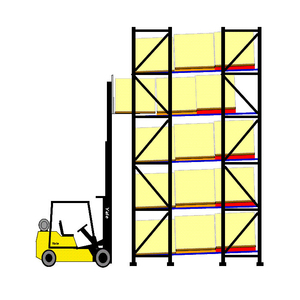
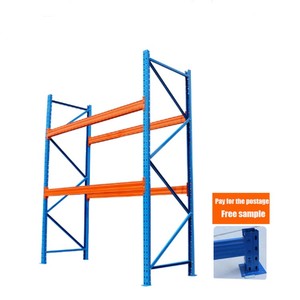
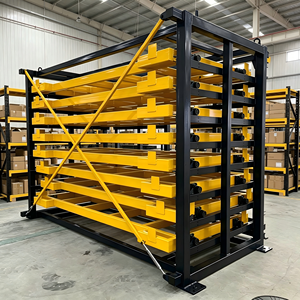
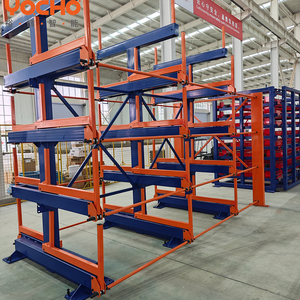
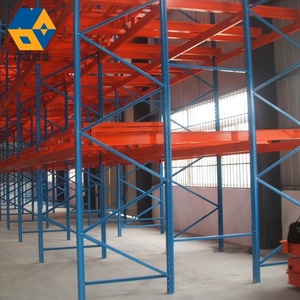
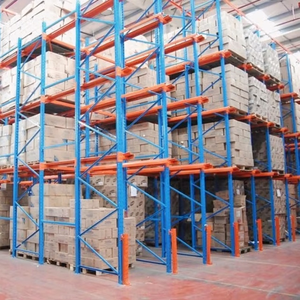
Select from our core catalog of heavy-duty push-back, drive-in, selective, and drive-through configurations engineered with structural integrity, anti-corrosion powder coating, and precision pallet push-through prevention options.
Engineering Push-Through Protection: The Critical Safeguard for High-Density Storage
In modern high-bay distribution hubs and multi-tiered intralogistics centers, pallet push-through incidents represent one of the most persistent operational hazards. When lift truck operators inadvertently index a pallet beyond the rear load beam in single-row racks, or into the flue space in back-to-back configurations, the structural and financial ramifications are severe. Pallets can puncture wall panels, topple into pedestrian egress aisles, sever ESFR (Early Suppression Fast Response) sprinkler piping, or destabilize neighboring storage bays.
As a leading custom OEM pallet racking push-through protection manufacturer and supplier, Guangzhou Heda Shelves Co., Ltd. engineers precision physical barriers, mechanical load stops, and welded wire containment modules. Designed in compliance with ANSI MH16.1 (Specification for the Design, Testing and Utilization of Industrial Steel Storage Racks), OSHA 1910.176(b), and NFPA 13 building codes, our push-through protection systems safeguard inventory, personnel, and structural warehouse assets.
The Mechanical Anatomy of Modern Push-Through Prevention
Push-through protection cannot be approached with a one-size-fits-all mentality. The dynamic force generated by an eight-ton forklift maneuvering a 3,000-lb unit load requires calculated energy dissipation and rigid structural deflection thresholds. Depending on the racking topology—whether selective, double-deep, drive-in, push-back, or automated radio shuttle systems—the engineering mechanism must be matched specifically to clearance requirements:
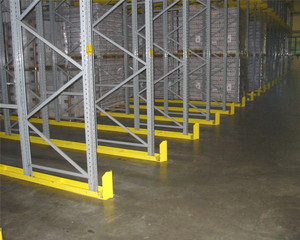
1. Structural Steel Offset Pallet Stops: Formed from heavy-gauge structural channel or rectangular tubing, offset stops provide a fixed mechanical ledge positioned 3 to 4 inches beyond the beam face. This engineered offset allows for standard 3-inch pallet overhang while preventing the pallet stringer or deck board from traversing into the flue space. The mounting brackets bolt directly through the upright column teardrop or slot pattern, distributing impact forces across the structural frame rather than shearing beam locks.
2. Raised Beam Stop Assemblies: Mounted directly to the load beam itself via heavy-duty C-clamps or welded tabs, these stops rise 2 to 4 inches above the top surface of the horizontal beam. Because they are integrated into the beam system, they adjust automatically whenever beam levels are reconfigured, making them an ideal solution for dynamic 3PL warehouses that frequently alter vertical shelf openings.
3. Heavy-Gauge Wire Mesh Containment Screens: Where full product fragmentation containment is required—particularly above pedestrian picking tunnels, cross-aisles, or around perimeter walls—rigid welded wire mesh barriers provide comprehensive dual-axis protection. Constructed from 8-gauge to 10-gauge cold-drawn steel wire arranged in a 2" x 2" or 2" x 4" grid, these screens retain loose cartons and fractured pallet components while allowing 70%+ water penetration from fire sprinklers.
4. Heavy-Duty Safety Netting & Dynamic Strapping: High-tenacity polypropylene and nylon net barriers mounted on aircraft-grade tension cables provide a lightweight, flexible alternative where rigid metal stops might risk puncturing fragile or overhang-sensitive cargo. These dynamic systems absorb kinetic energy through controlled elongation, rebounding upon moderate impact without permanent structural deformation.
Future Procurement Trends in Racking Protection (2025–2030)
Industrial procurement is undergoing a paradigm shift. Buyers are moving away from reactive aftermarket add-ons toward integrated, lifecycle-engineered safety architectures. Logistics directors, safety engineers, and facility planners are evaluating procurement decisions under several evolving criteria:
Total Cost of Safety Ownership (TCSO)
Enterprises now evaluate safety stops not as capital expense line items, but as risk mitigation against catastrophic warehouse downtime, inventory damage, worker compensation claims, and fire marshal shutdowns.
Direct OEM Integrated Fabrication
Third-party clamp-on stops are being superseded by pre-punched, factory-integrated OEM beam and upright assemblies. Pre-engineered weldments eliminate field modification and preserve structural warranties.
High-Strength Micro-Alloy Steels
Procurement teams increasingly demand high-strength grades (such as Q355B or ASTM A572 Grade 50) that provide superior yield strength under high cyclic impact, enabling lighter sections that reduce dead-load on racking frames.
Strict NFPA 13 Flue Space Audits
Automated drone audits and laser scanning are now deployed by insurance carriers to inspect transverse and longitudinal flue spaces. Push-through stops are mandatory to eliminate non-compliance penalties.
Cold Chain Sub-Zero Resilience
With freezer logistics expanding rapidly, cold-temperature steel embrittlement has become a procurement focus. Protective barriers must maintain impact ductility down to -30°C without micro-fracturing.
Circular Modular Reconfiguration
Facilities demand modular, universal bracket attachments that can be unbolted and repositioned across standard step beams, box beams, and structural channels during facility re-profiling.
Technological & Safety Development Trends
The push-through protection domain has advanced from passive sheet metal angles to dynamic, sensor-compatible safety frameworks. As warehouse heights routinely surpass 40 feet (12 meters) and Automated Guided Vehicles (AGVs) replace manual counterbalanced forklifts, the interface between pallet stops and automated material handling has become deeply integrated.
1. Sensor-Assisted Smart Pallet Positioning
While mechanical stops provide the ultimate physical arrest, next-generation facilities are integrating photoelectric proximity sensors and optical retroreflective flags into the rear stop bracket. When an automated reach truck or shuttle places a pallet, the sensor signals the vehicle’s PLC when the unit load is 1 inch from the physical stop. This eliminates repetitive impact fatigue on the rack uprights and eliminates shock loads on sensitive pharmaceutical or electronic cargo.
2. Energy-Absorbing Elastomeric Dampening
Traditional rigid steel stops transmit 100% of the impact force directly into the upright column, which can gradually loosen anchor bolts or cause localized teardrop buckling. Advanced OEM stops now incorporate high-density polyurethane (TPU) or vulcanized neoprene shock pads between the stop beam and the mounting plate. These elastomeric dampers absorb up to 40% of the initial kinetic shock, protecting both the racking infrastructure and the pallet structure.
3. Dual-Purpose Transverse & Longitudinal Flue Enforcers
Modern engineering merges flue space spacers with push-through stops into a unified triangulated truss. Rather than installing individual row spacers and separate pallet stops, a singular dual-function bracket bridges back-to-back rack rows. This design reinforces lateral frame rigidity under seismic loads while physically guaranteeing the precise 6-inch longitudinal flue space required for in-rack sprinkler downdraft effectiveness.
Comparative Engineering Matrix: Push-Through Protection Methods
| Protection Type | Standard Material Spec | Impact Capacity (lbs) | Primary Application | NFPA Flue Compliance |
|---|---|---|---|---|
| Offset Structural Steel Tube Stop | Q235B / Q355B 50x50mm Tube, 3mm Gauge | 2,500 – 4,500 lbs dynamic | Heavy Selective & Double-Deep Bays | Guaranteed (Fixed 3" to 4" Offset) |
| Raised Beam-Mounted Stop | Formed Steel Angle, Q235B, 4.0mm Plate | 1,800 – 3,000 lbs dynamic | Variable SKU & Picking Locations | Requires Proper Placement |
| Heavy-Duty Welded Wire Screen | 8-Gauge (4.0mm) Cold-Drawn Steel Wire | Carton retention (1,200 lbs/sq.ft) | Aisle-Facing Perimeter & Picking Tunnels | Permeable (>70% Open Area) |
| High-Tenacity Poly Netting | Braided Polypropylene, UV-Stabilized | 1,000 – 3,500 lbs dynamic deflection | Bulk Storage & Pallet Drop Safeguards | High Air/Water Permeability |
| Integrated Row Spacer & Stop Truss | Structural C-Channel / Heavy Plate Weldment | 5,000+ lbs static & dynamic | High-Bay Seismic Back-to-Back Racks | Absolute Mechanical Lock (6" Gap) |
Enterprise Strengths: Guangzhou Heda Shelves Co., Ltd.
Founded in 2001, Guangzhou Heda Shelves Co., Ltd. has developed into a premier global designer, manufacturer, and supplier of advanced warehouse storage systems, industrial shelving, and specialized warehouse protection hardware. Over 25 years of continuous engineering refinement have established HEDA Shelves as a trusted partner for supply chain operators, logistics integrators, and racking distributors across North America, Europe, Australia, and Southeast Asia.
Operating from our modern 30,000 m² (approx. 323,000 sq ft) production base, our workforce of over 300 experienced fabrication personnel, structural engineers, and QC technicians handles complex custom OEM and ODM programs with speed and precision. We support international distribution clients by issuing engineering calculations in both imperial (lbs, ft, inches) and metric units, facilitating seamless approvals with local engineers of record and municipal building authorities.
Rigorous Quality Certifications
Our facilities adhere to an ISO 9001:2015 certified Quality Management System (Cert No. 18624Q00169R0M), alongside CE marking (No. 2435-CPR-8605159) and RoHS material compliance, guaranteeing metallurgical purity and structural integrity.
Rapid 24-Hour CAD & 3D Design
Our dedicated engineering department converts your building drawings, clear ceiling heights, and pallet parameters into detailed CAD plan views, elevations, and 3D renderings within 24 hours, completely free of charge.
10-Step Controlled Manufacturing Line
From automated slitting, high-precision column punching, and cold profile bending to pickling, phosphating, and electrostatic powder coating, every upright, beam, and safety stop undergoes strict quality control.
Container-Optimized Ocean Logistics
All structural components are precision-bundled, edge-protected, and labeled for efficient ocean container shipping (20GP/40HQ) to major ports in the USA, Canada, and worldwide, facilitating smooth offloading and installation.
Full OEM/ODM Customization
We tailor beam connection brackets, offset distances (from 2" to 8"), structural tubing profiles, and color finishes (RAL shades or high-visibility OSHA safety yellow) to align with your private-label equipment specifications.
Comprehensive Project Documentation
Every shipment is accompanied by complete mill test certificates, weld inspection records, structural deflection analyses, and step-by-step installation manuals to simplify on-site commissioning.
Frequently Asked Questions: Pallet Racking Push-Through Protection Procurement
Key technical, structural, and regulatory questions addressed by our engineering and logistics specialists to guide your system selection:
Compliance What are the OSHA and NFPA requirements for pallet push-through protection?
OSHA standard 1910.176(b) mandates that stored materials must be secure against sliding, rolling, or collapse. NFPA 13 (Standard for the Installation of Sprinkler Systems) requires that rack arrays maintain clear, continuous 3-inch (transverse) and 6-inch (longitudinal) flue spaces. Pallet push-through stops serve as positive mechanical limiters that physically prevent loads from blocking fire sprinkler water distribution.
Engineering How much pallet overhang should an offset push-through stop accommodate?
Standard GMA 48" x 40" pallets are engineered with an intentional 3-inch overhang beyond the front and rear beam faces (on a typical 42-inch deep frame). Consequently, standard offset stops are manufactured with a 3.5-inch to 4.5-inch standoff clearance. This allows the pallet to seat squarely on the load beams while arresting the pallet prior to encroaching into the 6-inch flue space.
Structural Does a push-through stop add structural load to the upright columns?
Yes. When an operator pushes a pallet into the stop, impact energy is transferred into the frame. For this reason, HEDA Shelves engineers our offset brackets to bolt directly through the upright column's primary punch pattern using high-tensile Grade 8.8 / Grade 5 hardware. This distributes horizontal shears across the frame bracing rather than subjecting beam clip connectors to torsional stress.
Custom OEM Can you supply custom powder coating colors to match our brand?
Absolutely. We operate advanced automated electrostatic powder coating lines with pre-treatment pickling and phosphating. While OSHA safety yellow and high-visibility safety orange (RAL 2004) are industry standards, we customize finishes to match any RAL or Pantone color code requested by our OEM partners and system integrators.
Shipping How are push-through protection components packaged for ocean freight?
To eliminate shipping damage and optimize container volume, stop bars are bundled with heavy strapping, timber spacers, and corrugated edge guards. Connecting brackets, hardware packs, and small stamped components are packed into reinforced wooden crates or steel mesh containers with clear moisture barriers and barcode labeling.
Installation Can push-through stops be retrofitted onto existing third-party racks?
Yes. We manufacture universal adjustable mounting brackets engineered to fit standard teardrop, slotted, structural, and European-style upright profiles. Our design allows retrofitting onto operational rack systems during scheduled maintenance windows without taking whole bays out of service.
Request Custom OEM Pallet Racking & Protection Solutions
Send your warehouse dimensions, pallet specifications, and clearance requirements. Our engineering team will deliver a comprehensive CAD layout, 3D structural model, and detailed quotation within 24 hours.