High-Performance OEM Heavy-Duty Storage Systems
Explore our certified structural steel pallet racks, specialized stacking cradles, longspan shelving units, and semi-automated intralogistics systems configured directly for high-throughput distribution hubs.
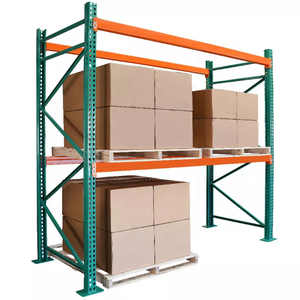
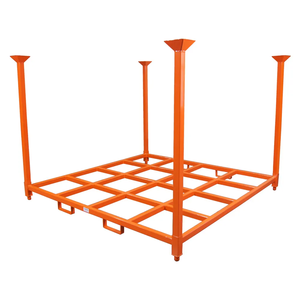
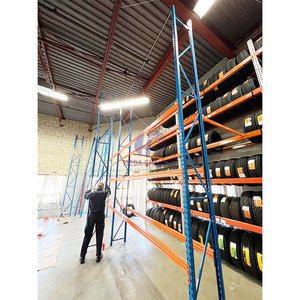
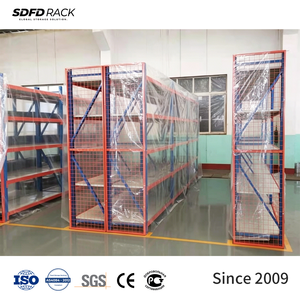
Structural Analysis & Storage Architecture Selection
Selecting the optimal industrial shelving or pallet racking system demands a quantitative evaluation of unit-load dynamics, floor slab flexural capacity, aisle geometry, and seismic moment-frame resistance.
In modern high-throughput logistics facilities, racking is no longer static metal shelving—it functions as an integral structural subsystem of the building envelope. As an OEM manufacturer with over 25 years of metallurgical and roll-forming mastery, HEDA Shelves engineers our upright frames and load beams using premium-grade Q235B and Q355B structural carbon steel. Every profile is cold-rolled with multi-stage forming rolls to induce work hardening, optimizing the strength-to-weight ratio while exceeding structural standards specified by RMI (Rack Manufacturers Institute) MH16.1 in North America and EN 15512 across the European Union.
Critical Failure Modes Prevented by OEM Engineering
Warehouse racking failures are catastrophic events typically stemming from shear failure at beam-to-column connections, Euler buckling under unbraced column lengths, or dynamic forklift impact shocks. Our custom engineering methodologies systematically eliminate these vulnerability vectors:
- Beam-to-Column Moment Connection: Rather than relying on simple tab friction, our teardrop and diamond-slot connections employ multi-claw forged connector plates (3 to 4 lug configurations) engineered to resist joint rotational deflection. Integrated steel safety lock pins provide positive mechanical retention against accidental upward dislodgement forces exceeding 1,000 lbs (4.45 kN).
- Section Modulus & Moment of Inertia (Ix, Iy): Upright columns feature continuous vertical omega (Ω) or hexagonal section designs with internal stiffening ribs. This geometry distributes axial compression and resists lateral torsional buckling under maximum permissible loads up to 45,000 lbs (20,400 kg) per frame assembly.
- Deflection Limit Compliance: All horizontal load beams are calculated under uniformly distributed load (UDL) conditions to restrict maximum deflection strictly below L/180 (commercial threshold) or L/200 (strict automation requirement), mitigating permanent beam sagging and ensuring smooth pallet retrieval.
| Storage System Architecture | Load Capacity per Tier | Pallet Accessibility | Volumetric Space Utilization | Inventory Turnover Logic | Primary Sector Compatibility |
|---|---|---|---|---|---|
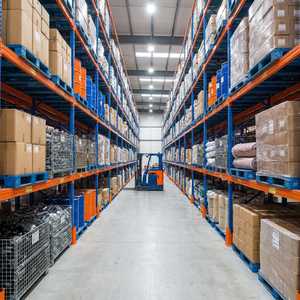
| Selective Pallet Racking | 1,000 – 4,000 kg (8,800 lbs) | 100% Immediate | 40% – 50% | FIFO / Arbitrary | FMCG, 3PL Distribution, General Cargo |
| Double-Deep Racking | 1,000 – 3,000 kg (6,600 lbs) | 50% Immediate (Deep Reach) | 55% – 65% | FILO / Batch | Dry Goods, Cold Storage, Staging Hubs |
| Drive-In / Drive-Through | 1,000 – 2,500 kg (5,500 lbs) | Last Pallet Face Only | 75% – 85% | LIFO / Strict FIFO | Bulk Raw Materials, Beverage, Cold Chain |
| Push-Back Cart Racking | 1,000 – 1,500 kg (3,300 lbs) | Lane Pick Face (2–6 Deep) | 70% – 80% | LIFO per Lane | Medium SKU Diversity, Food Processing |
| Pallet Flow (Gravity Roller) | 500 – 2,000 kg (4,400 lbs) | Full Front Face Delivery | 80% – 90% | Strict FIFO Automatic | Pharmaceuticals, Perishable Foods, Dairy |
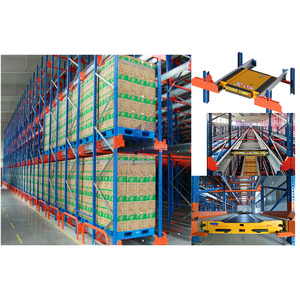
| Semi-Automated Pallet Shuttle | 1,000 – 2,000 kg (4,400 lbs) | End-of-Aisle Pick Face | 85% – 95% Maximum | Configurable FIFO / LIFO | Deep Freeze (-30°C), Central Warehousing |
| Structural Cantilever Racking | 500 – 3,500 kg per Arm | 100% Unobstructed Front | Variable Long-Span | Direct Open Access | Timber, Extrusions, Steel Pipes, Sheet Metal |
Macro Trends Transforming Global Racking Procurement
Enterprise supply chain directors and industrial procurement teams face shifting macroeconomic realities, seismic building codes, and rapid automation imperatives.
Landed-Cost Optimization via Container Cube Efficiency
Global ocean freight dynamics have shifted procurement from simple FOB unit costs to full Landed Cost of Ownership (TCO). Buyers now prioritize suppliers capable of customized nesting, pre-assembled structural sub-frames, and computerized container volumetric packing algorithms that maximize 40-foot High-Cube payload density without exceeding gross road weight limits.
PE-Stamped Structural Calculations & Seismic Compliance
Municipal building authorities across North America (UBC/IBC codes) and Europe (Eurocodes) require site-specific Professional Engineer (PE) stamped calculation packages before issuing warehouse racking occupancy permits. Modern procurement contracts now mandate supplier provision of finite element analyses (FEA) covering soil-structure interaction, anchor bolt pull-out loads, and dynamic spectral response acceleration.
Dual-Channel OEM Strategic Stocking Partnerships
Tier-1 material handling distributors and warehouse integrators are phasing out fragmented open-market purchases in favor of long-term contract manufacturing agreements. By locking in monthly cold-rolled steel coil allocation and standardizing upright tooling dies, B2B integrators protect client delivery dates against raw material commodity shocks.
The Convergence of Heavy Racking & Intralogistics Automation
The traditional boundary between stationary metal racking and intelligent material handling machinery is dissolving as warehouses transition toward high-density autonomous throughput.
As logistics facilities face rising square-meter land costs and labor shortages, clear ceiling heights in newly constructed facilities regularly exceed 12 to 24 meters (40 to 80 feet). Accommodating these elevations requires racking manufacturers to evolve from simple iron mongers into precision structural fabricators capable of micron-level profile straightness and zero-torsion roll-forming.
1. AMR & AGV-Interfaced Base Interfaces
Autonomous Mobile Robots (AMRs) operating underneath pallet racks demand clear bottom-level spans, standardized guide angles, and floor-level reflective markers. At HEDA Shelves, our OEM design teams engineer recessed upright column bases and heavy-duty structural tubular offsets that allow AGVs to navigate tunnel aisles without striking upright footings, while ensuring vertical loads transition symmetrically to the warehouse foundation.
2. Cold-Chain Thermal Efficiency & Shuttle Technology
Operating a refrigerated or blast-freeze storage facility (-25°C to -30°C) incurs immense electrical energy overheads. High cubic footprint utilization directly determines operational profitability. Radio Shuttle racking systems replace forklift transit lanes with high-tensile guide rails and independent four-wheel drive lithium-battery shuttles. Operators load and unload pallets at a single pick face, driving lane density up to 90% while preventing lift trucks from introducing heat and moisture into the frozen storage core.
3. Structural Hybrid Mezzanines with Automated Conveyance
Vertical space above pick-and-pack stations represents massive underutilized volume. Rack-supported and structural steel mezzanines now integrate heavy roller conveyors, spiral chutes, and modular garment-on-hanger (GOH) systems. Utilizing multi-tier mezzanine engineering rated from 500 kg/m² to over 1,500 kg/m², warehouse operators double or triple facility floor space inside existing facility envelopes without costly brick-and-mortar facility expansion.
World-Class Manufacturing Prowess & Quality Governance
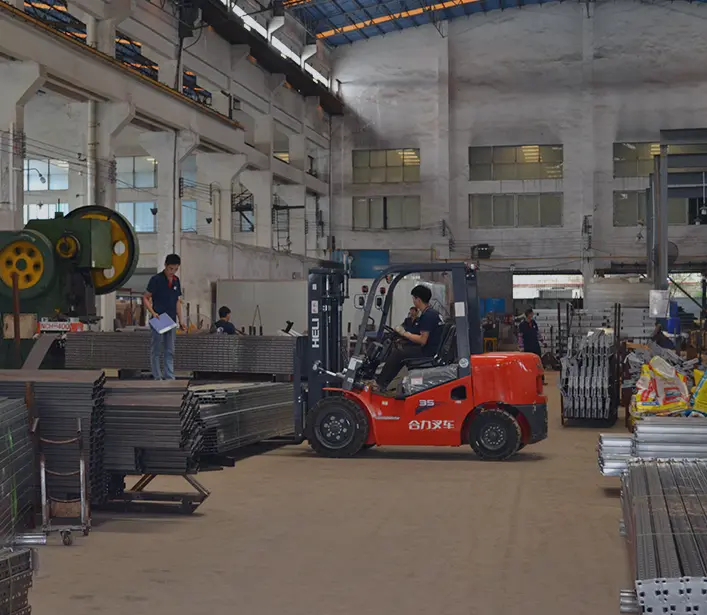
Engineered from certified raw steel coil to finished epoxy powder coating inside our 323,000 sq ft industrial production facility in Guangzhou, China.
Precision Metallurgy Meets Automated Roll-Forming
Founded in 2001, Guangzhou Heda Shelves Co., Ltd. has grown over 25+ years into an international market leader in warehouse racking and industrial shelving engineering. With an elite team of more than 300 experienced fabrication specialists, structural design engineers, and quality assurance inspectors, our monthly steel processing throughput surpasses 30,000 metric tons.
We believe structural reliability begins at the chemical level. Every batch of hot-rolled and cold-rolled steel coils undergoes spectroscopic composition verification and tensile elongation yield testing. Our multi-stage continuous roll-forming lines punch column apertures at micron-level pitch accuracy, preventing cumulative vertical tolerances across high-bay installations.
To resist industrial abrasion, humidity, and corrosive chemical environments, our components travel through an automated 10-step surface finishing line incorporating high-pressure degreasing, ultrasonic rust removal, zinc phosphating, and electrostatic powder curing ovens delivering durable, scratch-resistant finishes that pass ASTM cross-hatch adhesion and salt-spray testing.
ISO 9001:2015 & CE Certified
Certified under ISO 9001:2015 (Certificate 18624Q00169R0M) and European CE Marking (EN 1090/CPR 2435-CPR-8605159). Factory audit verification reports and chemical/physical steel mill test certificates (MTC) are systematically included with export documentation.
24-Hour CAD & 3D Modeling Response
Provide us your architectural warehouse DWG/PDF drawings, column grid positions, ceiling truss clear heights, pallet gross dimensions, and forklift mast parameters. Our in-house engineering team delivers full CAD layout schematics and 3D isometric renderings within 24 hours.
End-to-End Export Logistics & Installation
Direct ocean container staging to premier North American ports (Long Beach, Houston, Savannah, New York, Vancouver) and international gateways worldwide. All components are shipped with color-coded assembly tags, hardware packs, and comprehensive bilingual installation manuals.
Frequently Asked Questions by Industrial Sourcing Managers
Clear, direct answers regarding technical specifications, container logistics, building permits, and custom OEM manufacturing.
We manufacture exclusively with high-strength structural carbon steels, primarily certified Q235B (yield strength ≥ 235 MPa) and Q355B (yield strength ≥ 355 MPa, equivalent to ASTM A572 Grade 50). Full chemical composition reports and tensile test certificates from our metallurgical laboratories accompany each export bill of lading.
Yes. Our teardrop profile conforms to the classic American industry standard with 2-inch vertical hole increments. Beams and uprights are 100% interchangeable with major North American brands, allowing seamless facility expansion or replacement of existing racking lines without re-engineering column baseplates.
Our structural engineering team produces preliminary static calculations, dynamic seismic response models, and foundation baseplate anchor load calculations in imperial (lbs/inches) or metric units. These documents are tailored for fast review and stamping by your local licensed Professional Engineer (PE / SE) or Engineer of Record.
Upright frames can be shipped knocked-down (bolted assembly on-site) to maximize container space utilization or pre-welded depending on project constraints. Components are wrapped in protective polyethylene sheeting, isolated by non-marking corrugated buffers, and secured with heavy-duty steel strapping on custom timber dunnage to prevent transport deformation and facilitate forklift container unstuffing.
Standard custom OEM manufacturing lead times range between 15 to 25 business days from final technical drawing approval, depending on order tonnage and powder coat color customization. We support urgent fast-track schedules for scheduled warehouse tenant move-in dates.
Absolutely. We maintain a full inventory of industrial polyester powder coatings. While Safety Orange (RAL 2004) and Industrial Blue (RAL 5015 / RAL 5010) are our standard selections, we formulate custom electrostatic powders to match any specific RAL, Pantone, or corporate branding palette upon request.