Export Product Portfolio
Engineered Industrial Storage & Heavy-Duty Racking Components
Heavy-gauge cold-rolled carbon steel racking modules, precision fasteners, and space-multiplying mezzanine systems built to global FEM, RMI, and ISO 9001 quality specifications.
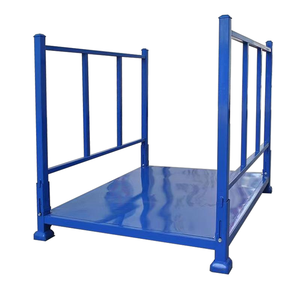
Customizable Heavy-Duty Portable Steel Stacking Racks Corrosion Protected Pallet Shelves Warehouse Storage Metal Mobile Storage
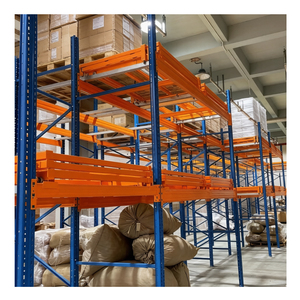
DJ China Heavy Duty Steel Push-Back Pallet Rack With Powder Coating Corrosion Protection Customizable Length
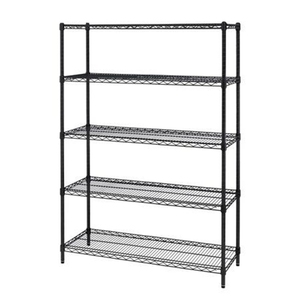
48" X 18" X 72" NSF Approved 5 Tier Commercial Heavy Duty Warehouse Stainless Steel Wire Shelf Rack
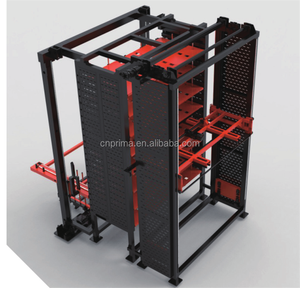
Automatic Pallet Racks Storage Rack for Sheets Metal Laser Cutting Machines
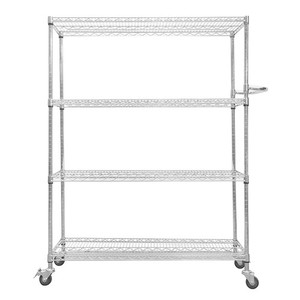
21" X 42" X H72" Multi-functional 4 Tier Chrome Metal Wire Shelving for Commercial Warehouse
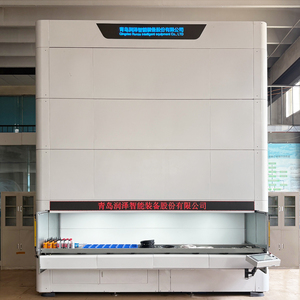
Module Storage Warehouse Picking Smart Warehouse Rack System Automatic Warehouse Storage Vertical Lift Module AS/RS
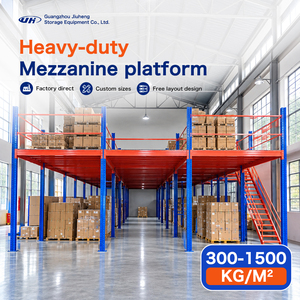
Steel Mezzanine Warehouse Storage System Heavy Duty Multi Level Rack Platform Industrial Shelving Space Saving Solution
Industrial Authority & Engineering Whitepaper
Engineering Integrity: Structural Metrology & Manufacturing Excellence
A technical guide for industrial supply chain executives, intralogistics engineers, and commercial procurement directors.
In modern supply chain ecosystems, warehouse pallet racking systems cease to be passive steel fixtures; they serve as the foundational skeleton for global throughput. Sourcing industrial storage directly from primary Chinese manufacturing centers provides substantial cost advantages, yet requires strict engineering scrutiny. A tier-one racking framework must balance structural safety under dynamic forklift loads, localized seismic moment resistance, steel grade ductility (such as Q235B and Q355B structural steel), and surface chemistry that halts micro-corrosion under varying humidity and sub-zero cold-storage conditions.
25+
Years Engineering Heritage
30,000t
Monthly Steel Output
10,000+
Global Projects Completed
24h
Rapid CAD Layout Turnaround
Industrial pallet systems operate under combined static compression and cyclical live loading. Beam deflection criteria must stay within strict elastoplastic thresholds (typically L/200 under maximum rated load per beam tier per ANSI MH16.1 or EN 15512). Our continuous-line automated roll-forming cold mills form upright profiles with multiple cold-worked bends, improving the radius-to-thickness ratio and substantially boosting column buckling capacity without adding unnecessary deadweight to your concrete foundation.
System Selection Matrix
High-Performance Storage Typologies: Technical Comparison
Evaluating load dynamics, access selectivity, cubic space utilization, and investment amortizations.
| Storage Topology | Volumetric Density | Pallet Selectivity | Inventory Rotation | Optimal Logistics Scenarios |
|---|---|---|---|---|
| Selective Pallet Racking | Moderate (40–45%) | 100% Direct Access | FIFO / Random Access | High-SKU distribution, 3PL logistics, rapid e-commerce sorting. |
| Push-Back Nested Cart Racks | High (65–70%) | Lane Face Accessible | LIFO | Batch manufacturing, cold storage, 2–6 pallet deep SKU consolidation. |
| Rack-Supported Steel Mezzanines | Maximized (100–200% Floor Area) | Custom Tiered Pick | Flexible | Manual order fulfillment, automotive spare parts, picking operations. |
| Automated AS/RS & Vertical Modules | Maximum Vertical (85%+) | 100% Machine Access | WMS Controlled | High-density industrial stamping, sheet metal logistics, dark facilities. |
| Stacking Portable Nesting Racks | Flexible Seasonal | Bulk Stacked | Block LIFO | Seasonal agricultural peaks, temporary warehouses, container transshipment. |
⚙
Cold Chain Optimization
Refrigerated and blast-freezer square footage incurs high energy costs. Utilizing push-back cart mechanics or high-density drive-in systems cuts per-pallet refrigeration power consumption by up to 35% compared to wide-aisle configurations.
☑
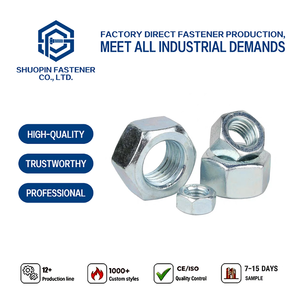
Structural Class 8 Fasteners
Racking stability relies on connection integrity. High-tensile DIN934 Class 8 hot-dip zinc-plated hardware prevents beam dislocation under harmonic forklift impacts and seismic vibrations, ensuring building code compliance.
★
Cleanroom & Sanitary Shelving
NSF-certified electro-polished wire decks and 304 stainless-steel units prevent dust accumulation, ensure laminar airflow in climate-controlled areas, and satisfy stringent clean-in-place sanitary guidelines.
Logistics Evolution
Emerging Trends in Global Racking Engineering & Procurement
Anticipating the technological shifts transforming warehouse management across 2026–2030.
🚀
1. Hybridization with Automated Guided Vehicles (AGVs)
Standard racking frames are adapting to higher tolerance limits. Upright alignment deviations are tightening from standard industrial fractions down to millimeter levels (±1.5mm) to accommodate high-speed AMR and AGV optical sensors without collision risks.
📈
2. Decarbonized Steel Metallurgy & Circular Supply
Global procurement teams prioritize carbon-neutral supply pipelines. Incorporating electric arc furnace (EAF) lower-carbon structural strip steel, alongside thin-film nano-zirconium chemical pretreatments, eliminates hazardous phosphate sludge while maximizing finish adhesion.
🔮
3. Embedded IoT Strain & Seismic Telemetry
Racking beams in premier fulfillment centers are integrating smart structural health monitoring sensors. Embedded piezoelectric strain gauges alert logistics managers to accidental impact deformation or live structural overload conditions in real time.
🛡
4. Extreme Environment Powder Formulations
Thermoset polyester powder coatings now incorporate specialized micro-silicone additives, providing self-healing anti-scratch resilience against continuous forklift fork abrasions while maintaining elastomeric flex down to -40°C.
💻
5. Digital Twin Design & Rapid FEA Modeling
Racking designs are evaluated using multi-point Finite Element Analysis (FEA) computer models before manufacturing starts. This verifies stress concentrations under mixed torsional loads and speeds up local engineer-of-record approval.
📦
6. Container-Optimized Flat-Pack Engineering
High ocean freight costs have accelerated nesting structural innovations. Uprights and stepped box beams are engineered to nest tightly inside standard 40-foot High Cube maritime shipping containers, achieving maximum volumetric cube utilization without field distortion.
Manufacturing Strengths
Why International Enterprise Buyers Choose Our Racking Infrastructure
Combining primary mill direct capacity, strict QC regimes, and tailored export engineering services.
⚒
323,000 Sq Ft Industrial Base
Operating out of our expansive manufacturing campus equipped with automated roll forming mills, continuous robotic welding cells, and automated electrostatic powder coating lines producing 30,000 metric tons per month.
📝
Dual Imperial & Metric Engineering
Our engineering division creates layout schematics, beam loading schedules, and 3D renderings in both fractional inches/pounds and millimeters/kilonewtons, integrating seamlessly with your architectural layouts.
👥
Full OEM / ODM Customization
From custom beam lengths for non-standard export pallets to custom industrial color codings matching your corporate branding, our in-house engineering team designs to your operational requirements.
Procurement Advisory
Frequently Asked Questions: Global Industrial Racking Procurement
Key technical, logistical, and structural compliance topics for international supply chain managers.
How do you verify structural steel compliance and uniform load certification?
Every production batch undergoes strict tensile yield testing, chemical spectrometry, and weld-penetration analysis. Certified mill test certificates (MTC) confirm compliance with Q235B, Q355B, or equivalent ASTM A36 / European S235, S355 steel standards. Structural calculations evaluate beam deflection limits (L/200) under uniformly distributed loads (UDL), in accordance with international RMI and FEM 10.2.02 codes.
How are ocean freight shipments secured against salt fog corrosion and handling damage?
Components undergo multi-stage surface pretreatment (chemical degreasing, rust pickling, phosphating) before applying a durable 60–80 micron electrostatic powder coat. Bundles are nested with corrugated edge protectors, bound with high-tensile PET strappings, and wrapped in waterproof polyethylene stretch film to prevent saltwater corrosion and abrasion during ocean transit.
Can structural engineering drawings be provided for local municipal permitting?
Yes. We provide CAD layout floor plans, structural elevation profiles, anchor-hole reaction forces, and dead/live load data sheets. These technical documents give your local licensed professional engineer (PE) or engineer of record (EOR) the calculations needed for seismic and municipal building permits.
What is the standard production lead time for full-container-load (FCL) projects?
Standard selective pallet rack systems typically ship within 15 to 25 working days from final engineering CAD sign-off. Custom systems—such as structural steel mezzanines or automated AS/RS storage frameworks—generally require 25 to 35 working days, depending on profile complexity and custom accessory fabrication.
Can racking systems be customized for non-standard pallets or unusual floor layouts?
Yes. While standard 48"x40" (GMA), 1200x1000mm (EUR 2), and 1200x800mm (EUR 1) pallets cover most applications, we frequently engineer custom beam spans, frame depths, and reinforced heavy-duty structural baseplates to accommodate building columns, floor expansion joints, and non-standard cargo footprints.
Ready to Optimize Your Warehouse Storage Footprint?
Send your facility architectural plans, clear ceiling heights, and pallet specifications. Our engineers will provide a free CAD system layout, load capacity study, and export quote within 24 hours.