Heavy Duty Tier
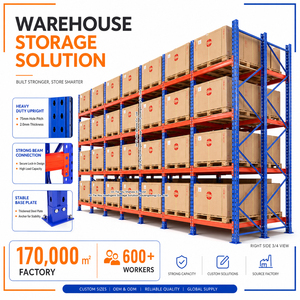
Engineered for international distribution hubs, cold storage facilities, medical depots, and large-scale industrial plants. Select a specific product model below or request a structural engineering consultation.
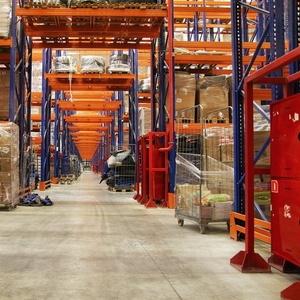
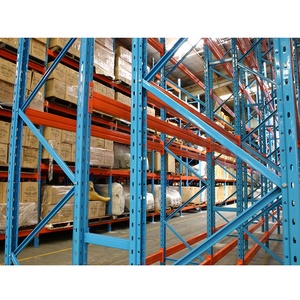
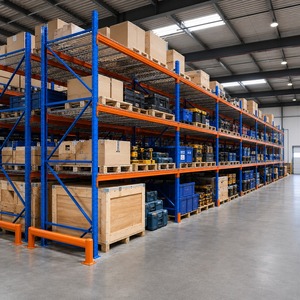
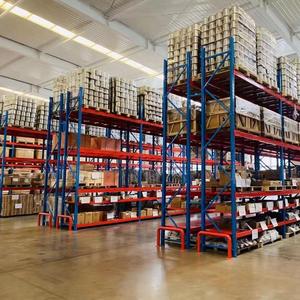
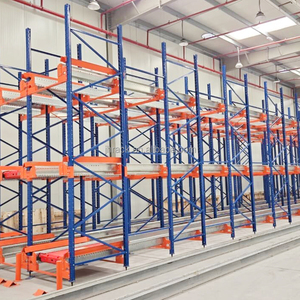
In modern intra-logistics, pallet racking is no longer static metal shelving. It is a calculated structural asset that directly influences capital expenditure (CapEx), supply chain resilience, and automated throughput.
Global warehouse real estate lease rates have surged across major logistics corridors in North America, Western Europe, and Southeast Asia. According to logistics supply chain indices, modern distribution centers face a double challenge: cubic space costs are at historical peaks, while labor costs require higher degrees of automation. Procurement officers and 3PL engineers can no longer rely on single-dimension pallet rack quotes; procurement has shifted to a total-cost-of-ownership (TCO) calculation centered on cubic footprint efficiency, steel grade longevity, and seismic compliance.
Traditional static drive-in systems are being replaced by high-density radio shuttle and automated storage and retrieval systems (AS/RS). Companies require rack manufacturers to maintain rolling mill tolerances within ±0.5mm to allow automated shuttles to navigate error-free at high cycle rates.
Exporting to Australia, New Zealand, the United States, or seismic zones in Latin America demands certified testing data. Sourcing teams prioritize exporters capable of proving yield strengths against AS 4084, RMI (MH16.1), and EN 15512 codes with independent laboratory verification.
With volatile maritime ocean freight rates, buyers refuse to pay for dead shipping volume. Racking systems designed with knock-down boltless upright trusses, nested beam bundles, and high nesting ratios drastically reduce the landed cost per pallet position.
A technical side-by-side comparison to evaluate storage density, pick rate efficiency, and operational suitability across different pallet racking technologies.
| Racking Architecture | Pallet Selectivity | Floor Space Utilization | Stock Rotation Strategy | Forklift Requirement | Typical Application Sector |
|---|---|---|---|---|---|
| Selective Pallet Racking | 100% Direct Access | 35% – 45% (Aisle Intensive) | FIFO or LIFO | Standard Counterbalance / Reach | FMCG, Medical, 3PL Distribution, E-Commerce |
| Double Deep Racking | 50% Immediate Access | 50% – 60% (Reduced Aisles) | LIFO | Pantograph / Deep-Reach Forklift | Manufacturing Spares, Dry Grocery Hubs |
| Drive-In / Drive-Through | Low (Lane-by-lane) | 65% – 75% (High Density) | LIFO (Drive-In) / FIFO (Through) | Counterbalanced with Overhead Guard | Cold Storage, Seasonal Bulk, Raw Materials |
| Push Back Racking | Moderate (Cart Channels) | 60% – 70% (2 to 6 Pallets Deep) | LIFO | Standard Counterbalance | Beverage, Commercial Cold Chain, Buffer Stock |
| Pallet Flow (Gravity) | Automatic Lane Flow | 70% – 80% (Self-Fed Gravity) | Strict FIFO | Separate Loading & Retrieval Trucks | Date-Sensitive Food, Dairy, Pharmaceuticals |
| Automated Radio Shuttle | Independent Semi-Auto | Up to 85% Maximum Footprint | FIFO & LIFO Flexible | Standard Forklift for Shuttle Transfer | Freezer Warehouses, High-Throughput Manufacturing |
Every upright column and beam produced at our 323,000 sq ft manufacturing campus undergoes a strictly controlled 10-phase production sequence before container staging.
Certified Baosteel Q235B and Q355 high-tensile steel coils with mill test certificates (MTC).
Precision coil slitting to exact section strip widths with minimal burr tolerances (≤0.1mm).
Fully automated punch tooling ensuring exact pitch spacing (50mm/75mm) across entire upright lengths.
Multi-station computer-controlled cold roll-forming units yielding ultra-high bending rigidity.
Dual interlocking C-profile continuous roll-forming or interlocked box beam welding.
Robotic multi-point gas shielded arc welding (GMAW) linking beam connectors and footplates.
Acid immersion removal of scale, heavy oil, and oxides to expose clean metallic crystal structures.
Forms a dense microscopic crystalline protective film ensuring maximum polymer bond adhesion.
Automated powder spray booth using non-toxic epoxy-polyester cured at 180°C–200°C (60–80μm).
Deflection load verification, cross-hatch paint adhesion checks, and container strap packing.
Direct supply pricing combined with multinational project consulting. We eliminate project intermediaries, reduce procurement risks, and guarantee certified execution.
Our senior civil and logistics engineers calculate structural loads, forklift aisle configurations, and seismic safety factors, delivering complete CAD blueprints and 3D warehouse renderings within 24 hours.
Operate under ISO 9001:2015 Quality Management Systems (Cert No. 18624Q00169R0M), CE Marking (No. 2435-CPR-8605159), and RoHS testing for non-hazardous coating and welding consumables.
We work natively with North American project requirements (GMA 48×40 pallets, clear heights in feet, beam ratings in lbs) as well as Euro-pallet (1200×800mm) and Australian standard load specifications.
Real-world technical and commercial answers addressing common engineering queries, shipping logistics, and compliance standards for international warehouse buyers.
Every warehouse racking system is custom-calculated according to local seismic accelerations (Ss, S1 values in the US, or AS 4084 earthquake requirements). Our engineering package includes static and dynamic finite element analysis (FEA), baseplate shear anchoring calculations, and full shop drawings ready for submission to your local Engineer of Record (EOR) for building department permit stamping.
We utilize prime hot-rolled and cold-rolled Q235B and high-yield Q355 structural steel with certified yield strengths exceeding 235 MPa and 355 MPa respectively. For cold-chain freezer warehouses (-30°C) or high-humidity ports, we apply an intensive 9-stage chemical pretreatment followed by electrostatic application of thermosetting polyester or epoxy-polyester hybrid powder coating (60–90 microns). Hot-dip galvanization is also available for outdoor cantilever and corrosive chemical environments.
Our packaging engineers optimize every 20GP, 40GP, and 40HQ container load. Uprights are bundled with protective corrugated paper and heavy-duty steel bands. Box beams are packed in interlocking sets with non-scratch spacers, while smaller accessories (base plates, safety pins, row spacers) are crated in seaworthy wooden pallets. This containerization methodology maximizes both cubic capacity and payload limits while eliminating transit abrasion damage.
Yes. Standard 96-inch, 108-inch, and 144-inch clear beam spans with 42-inch or 48-inch upright frame depths are engineered specifically for North American GMA 48×40 inch pallet footprints. We also supply custom wire mesh decking, front-to-back cross pallet supports, and pallet stop safety bars that match OSHA and NFPA fire sprinkler penetration regulations.
To produce an optimized CAD proposal, please share: (1) Warehouse architectural drawings showing column grid locations and clear building height to the lowest sprinkler pipe; (2) Pallet dimensions (Length × Width × Overall Height including load); (3) Maximum and average load weights per pallet; (4) Forklift specifications including mast lift height, turning radius, and minimum aisle width requirements; and (5) Operational preference for FIFO or LIFO inventory rotation.
From initial CAD layouts and structural load verifications to ocean container dispatch and on-site assembly blueprints—partner with China's proven industrial pallet rack exporter.
Send an Inquiry