High-Efficiency Warehouse Racking & Material Handling Equipment
Engineered with premium Q235B and Q355B cold-rolled carbon steel, automated robot-welded connections, and multi-stage electrostatic anti-corrosion finishes for rigorous 24/7 logistics throughput.
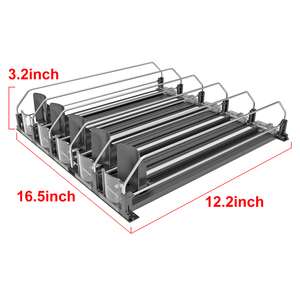
Automatic Spring Loaded Slow Motion Adjustable Multi-functional Pusher Rack
- Self-facing continuous presentation
- Heavy-duty spring tension control
- Modular lane width adjustability
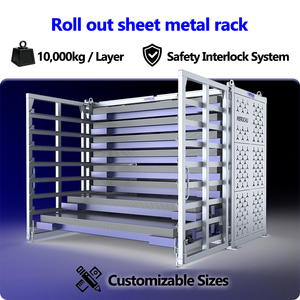
CE Certified Heavy Duty Industrial Warehouse Steel Pallet Racking System
- Payload: 1,000–4,500 kg / level
- Certified CE / ISO 9001:2015
- 50mm / 75mm adjustable beam pitch
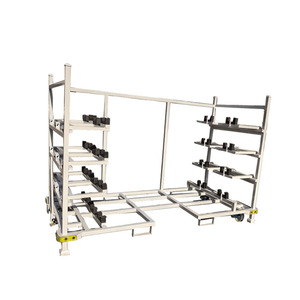
Stacking Racks, Turnover Logistics Trolleys & Mold Storage Workstations
- Custom nested collapsible framework
- Forklift entry guide-shoes integrated
- Automotive line-side buffer storage
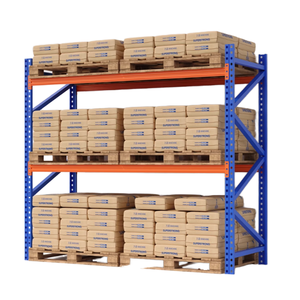
Adjustable Selective Heavy Duty Pallet Shelves with Corrosion Protection
- Electrostatic powder / zinc galvanized
- 100% pallet accessibility pattern
- Seismic upright bracing architecture
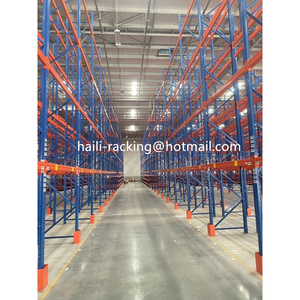
500 to 9000Kg/Layer Mobile Storage Bin Rack Shelving with CE / SGS / TUV
- Extreme load tiers up to 9,000 kg
- Industrial caster & rail guided bases
- High-density aisle condensation
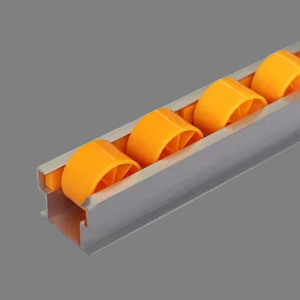
Heavy Duty Industrial Gravity Pallet Flow & Carton Flow Roller Racking
- Automated gravity speed controllers
- Strict FIFO date-critical stock flow
- Floor utilization boost up to 70%
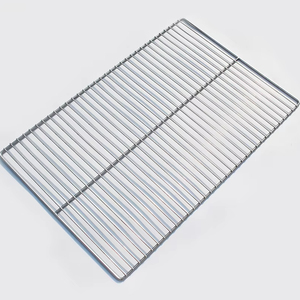
60x40cm Heat-Resistant 304 Stainless Steel Cooling Wire Rack & Oven Trolley
- Food-grade SUS304 passivated alloy
- Resistant up to 300°C thermal shock
- Precision argon arc robot welding
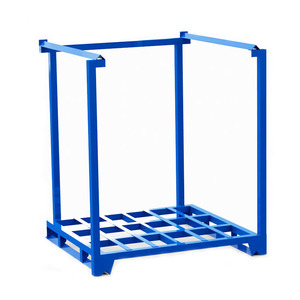
Industrial Heavy Warehouse Metal Steel Stacking Nestainer Pallet Racks
- 90° inverted nested storage design
- Stackable 4 to 5 tiers when loaded
- Eliminates permanent aisle footprints
Comparative Physics & Volumetric Densities of Warehouse Racking Systems
Selecting the optimal pallet racking configuration requires a calculated balance between accessibility (SKU selectivity), cubic volumetric utilization, capital cost per pallet position, and forklift cycle velocity.
| Racking Architecture | Access Archetype | Storage Density | Throughput Cycle | Floor Space Recovery | Ideal Industrial Applications |
|---|---|---|---|---|---|
| Selective Pallet Racking | 100% Immediate Selectivity | Baseline (40–45%) | Maximum / Rapid Handover | Standard | FMCG, 3PL Warehouses, High-SKU Distribution Centers |
| Double Deep Racking | 50% Immediate (Pantograph) | Moderate (+30%) | Medium / Secondary Pick | High | Raw Materials, Dry Bulk, Similar Production Batches |
| Drive-In / Drive-Through | LIFO (Drive-In) / FIFO (Drive-Thru) | Very High (+65%) | Low-Medium Batch Handling | Exceptional | Cold Storage Freezers, Beverage Consolidation, Seasonal Goods |
| Push-Back Dynamic Racking | LIFO (Nested Cart Trolleys) | High (+55%) | Medium-High Velocity | Very High | Food Distribution, Buffer Storage, 2–6 Pallet Deep SKU Runs |
| Gravity Pallet Flow | True FIFO (Self-Braking Rollers) | Maximum (+75%) | Ultra-High Continuous Pick | Supreme | Pharmaceuticals, Perishable Foods, Date-Sensitive Inventories |
| Radio Shuttle Automation | Programmable FIFO / LIFO | Ultra-Dense (+85%) | High Semi-Autonomous | Optimal Footprint | Minus 30°C Cold Freezers, Strategic Reserve Reserves, Bulk Hubs |
| Heavy-Duty Cantilever | Free-Front Variable Pitch | Linear Density | Direct Overhead Crane/FLT | Custom Clear Span | Lumber Yards, Steel Bar & Pipe Depots, Extrusion Profiles |
Load Rating Compliance: Deflection Limits & Structural Metallurgy
Every structural upright frame and shelf beam fabricated at our Guangzhou factory conforms to stringent international standards, including ANSI MH16.1 (Specification for the Design, Testing, and Utilization of Industrial Steel Storage Racks), R-Mark criteria, and EN 15512 European regulations.
Structural integrity depends fundamentally on maintaining the strict L/180 or L/240 deflection threshold under ultimate load limits. When beams are loaded to maximum allowable payload capacity, the maximum vertical deflection at the midpoint cannot exceed span length divided by 180 (or 240 for automated and high-precision applications).
- Raw Metallurgy: Prime certified Q235B (yield strength ≥ 235 MPa) and Q355B (yield strength ≥ 355 MPa) structural hot-rolled coil slitted in-house.
- Seismic Anchor Engineering: Multi-directional baseplates with oversized Hilti-rated chemical/expansion anchor configurations designed for high seismic zones (IBC Seismic Categories D, E, F).
- Safety Spring-Lock Pins: Patented drop-in carbon steel locking mechanisms preventing accidental dislodgement caused by forklift mast uplifts.
Safety factors are not mere estimations; they represent mathematically verified resilience thresholds that prevent catastrophic failure under seismic acceleration or accidental dynamic impact.
Why Tier-1 Importers and Logistics Integrators Source from Guangzhou Heda Shelves
Combining 25+ years of heavy manufacturing mastery with integrated Western engineering workflows, rapid CAD turnarounds, and full export compliance to eliminate import supply chain frictions.
Free 24-Hour CAD & 3D Layout Modeling
Our in-house structural engineering department provides comprehensive AutoCAD, BIM-ready Revit files, and photorealistic 3D structural renderings within 24 hours of receiving your warehouse architectural drawings, pallet load profiles, and forklift turning radius specifications.
Dual Imperial & Metric Engineering Data
We eliminate expensive translation and structural interpretation errors by natively specifying engineering calculations, beam payloads, clearances, and anchoring tables in pounds (lbs), inches, and feet alongside metric standards, tailored directly for your local engineer of record (EOR) and building permit filings.
Certified ISO 9001 & CE 2435-CPR Quality
Backed by official ISO 9001:2015 certification (Cert No. 18624Q00169R0M), CE Marking (No. 2435-CPR-8605159), and RoHS raw material compliance. Every batch undergoes ultrasonic weld flaw detection, salt spray corrosion testing, and automated optical column punch pitch inspection.
Cubic-Optimized Export Packing Systems
Structural components are packaged using customized steel-strapped crating, protective non-woven wrapping, and timber-free dunnage designed specifically to maximize 40-foot High Cube (40HQ) container payloads, minimizing ocean freight costs per pallet location by up to 28%.
Massive 30,000-Ton Monthly Output
With a 323,000-square-foot facility staffed by over 300 experienced technical workers, roll-forming lines, automated punching stations, and multiple continuous powder-coating loops, we guarantee predictable lead times for mega-warehouse developments and turnkey 3PL distribution hubs.
Private-Label OEM / ODM Programs for Dealers
We supply North American and European material handling equipment distributors, racking dealers, and warehouse system integrators with confidential OEM production, custom brand stamping, proprietary color powder-matching, and direct-to-jobsite container dropshipment.
Future Procurement Trends in Industrial Storage (2025–2030)
Global warehouse operators are shifting from generic transactional racking purchases to data-driven, automation-ready logistics infrastructure designed for long-term supply chain resilience.
Integration with Autonomous Mobile Robots (AMRs)
Modern distribution centers are rapidly phasing out manual narrow-aisle trucks in favor of autonomous forklifts and floor-running AMRs. Procuring racking today demands tighter deflection tolerances, clear bottom-tier obstacle sensor bands, and precise magnetic/QR guide path clearances.
Direct Mill-to-Site Landed-Cost (TLC) Analysis
Purchasing managers are evaluating suppliers on Total Landed Cost (TLC) rather than ex-factory unit price. Sourcing directly from certified Chinese manufacturers with integrated container bundling saves up to 35% compared to local middleman distribution markups, even when accounting for tariffs.
Multi-Tier Mezzanine Vertical Expansion Over Relocation
With industrial real estate lease rates at historic highs, procurement officers favor rack-supported mezzanines and structural multi-tier picking towers. Doubling or tripling usable cubic footage inside existing footprints avoids the capital expenditure and multi-year delays of new warehouse construction.
Rigorous Environmental & Low-VOC Epoxy Pre-treatment
Corporate ESG procurement mandates are forcing a transition away from traditional heavy-solvent spray coatings. Sustainable electrostatic powder loops utilizing heavy-metal-free silane pre-treatments deliver superior corrosion resistance without toxic volatile organic emissions.
Digital Twin Modeling and BIM Library Standardisation
Industrial racking is no longer procured in isolation from building architecture. Facilities managers require accurate Revit 3D families to model fire sprinkler overhead clearances, HVAC ductwork flues, seismic drift allowances, and ESFR (Early Suppression, Fast Response) fire safety codes.
Cold-Chain Freezing High-Density Specialization
As global frozen food, bio-pharmaceutical, and fresh-produce logistics expand, demand is surging for high-density semi-automated Radio Shuttle systems engineered to withstand persistent -30°C operational environments without steel embrittlement or lithium battery degradation.
Next-Generation Structural Engineering & Manufacturing Technologies
Explore the manufacturing advancements that separate world-class industrial racking systems from commodity angle iron.
Micro-Alloyed High-Tensile Steel Profiles
By migrating from generic low-carbon steel to micro-alloyed structural grades with optimized manganese and titanium additives, modern upright profiles achieve higher yield strengths with reduced dead-weight. This structural efficiency allows higher frame load limits under extreme seismic ground acceleration.
Continuous Automated CNC Roll-Forming
Our continuous roll-forming lines execute multi-station progressive cold rolling without micro-cracking the steel crystal lattice. Automated CNC punch presses maintain strict 0.2mm tolerances along entire 12-meter column profiles, guaranteeing perfectly vertical alignment during jobsite assembly.
Smart IoT Racking Structural Health Monitoring
Sensors are increasingly integrated into baseplates and upright columns to measure micro-strains, accidental forklift collisions, and ground subsidence in real time. Connected telemetry systems alert warehouse management before micro-deflections compromise building safety.
Frequently Asked Questions on Direct Industrial Racking Procurement
Everything you need to know about international steel specifications, seismic approvals, container logistics, and warranty provisions.
How do Chinese steel grades Q235B and Q355B compare to ASTM and European standards?
Q235B is structurally equivalent to ASTM A36 and European S235JR, with a minimum yield strength of 235 MPa and tensile strength of 370–500 MPa. It serves as the industry baseline for light-to-medium pallet beams, cross-bracing, and wire decks.
Q355B corresponds directly to ASTM A572 Grade 50 and European S355JR, offering a minimum yield strength of 355 MPa and tensile strength of 470–630 MPa. We employ Q355B for high-load upright frames, heavy-duty structural box beams, cantilever arms, and mezzanine main girders to ensure superior load capacity and seismic resilience.
Can HEDA Shelves supply structural calculations for North American building permits?
Yes. Our engineering department prepares comprehensive structural calculation packages detailing section modulus, moment of inertia, dead/live load distributions, wind loads (for outdoor installations), and seismic base shear values calculated in strict accordance with ANSI MH16.1, IBC (International Building Code), and ASCE 7.
These calculations are formatted in imperial units (pounds, inches, feet) so that your local licensed Professional Engineer (PE) or Engineer of Record (EOR) can review, stamp, and submit them directly to municipal building departments for permit approvals.
Are your beam connections compatible with existing North American teardrop racking?
Yes. We manufacture both proprietary teardrop-style punching (fully interchangeable with standard North American styles such as Interlake, Mecalux, and Ridg-U-Rak) and international 50mm, 75mm, and 76.2mm pitch pattern configurations. Our engineering team will review your existing facility uprights to confirm exact hook and hole punch compatibility.
What are the shipping incoterms and container loading volumes for overseas transit?
We routinely support EXW, FOB (Guangzhou / Shenzhen / Foshan), CIF, CFR, and DDP terms. For standard ocean freight, a 40-foot High Cube (40HQ) container typically holds 22 to 26 metric tons of structural racking components, depending on the ratio of dense upright profiles to lighter step beams and wire decking.
Our logistics engineers use computerized 3D container packing simulations to ensure each container is balanced, safely secured with heavy-duty polyester strapping and timber dunnage, and loaded to maximize available cubic capacity without causing transit abrasion.
How does the powder coating hold up in sub-zero cold storage facilities?
Standard indoor electrostatic powder coatings can turn brittle at sub-zero temperatures. For cold storage and blast freezers operating down to -30°C, we apply specialized low-temperature epoxy-polyester or pure polyester TGIC formulations with a dry film thickness of 80 to 110 microns.
All steel components undergo a thorough 7-stage pre-treatment process—including chemical degreasing, acid pickling, rust removal, surface neutralization, and phosphating—to ensure exceptional surface bonding that prevents flaking, chipping, or micro-cracking under intense thermal cycling.
What is the typical production lead time and warranty coverage?
Standard manufacturing lead time is 15 to 25 business days from drawing sign-off and deposit receipt. Highly customized systems (such as automated shuttle tracks, complex mezzanine platforms, or custom colors) typically require 25 to 35 days.
All HEDA structural steel pallet racking components are backed by an extensive 5-year structural warranty against manufacturing defects, weld failures, and material degradation under rated load conditions.
Request a Custom Warehouse Layout & Landed-Cost Analysis
Send your building dimensions, clear ceiling height, pallet specifications, and forklift model. Our engineers will return a complete AutoCAD layout, 3D rendering, and itemized quotation within 24 hours.