High-Performance Storage Racking Systems & Upright Assemblies
Our upright columns feature cold-formed continuous multi-bend omega profiles, micro-pitch adjustability, and robotic high-precision laser-punched connection patterns engineered to sustain heavy dynamic warehouse loads.
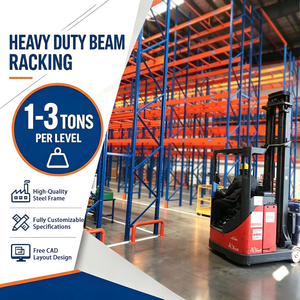
Custom Heavy Duty Steel Pallet Rack Industrial Storage Rack System for Warehouse Warehousing
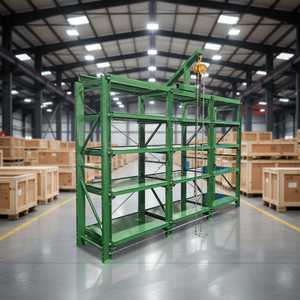
Steel Q235 Construction Corrosion Protection 500-1000KG Capacity 3-5 Layers Heavy Duty Selective Adjustable Tire Storage Rack
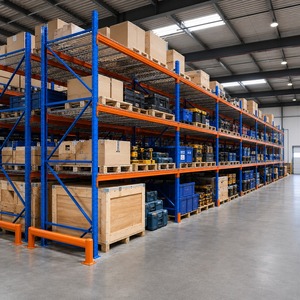
Factory Pallet Racks Industriales Steel Storage Rack Porta Paletes Q235B Steel Schwerlastregal For Logistics Hubs
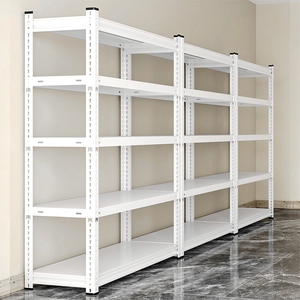
Heavy Duty Steel Storage Rack Adjustable Metal Shelving Warehouse Pallet Racking Corrosion Resistant Industrial Shelves
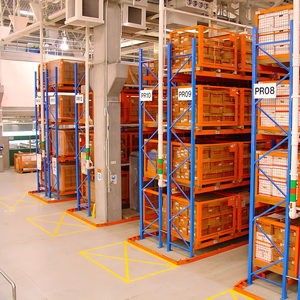
Factory Direct Very Narrow Aisle VNA Pallet Racking Heavy Duty Steel Warehouse Storage Selective Rack System 500-4000kg/Level
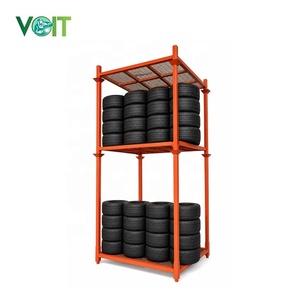
Stackable 4 High Fully Loaded Customized Warehouse Storage Steel Stacking Rack
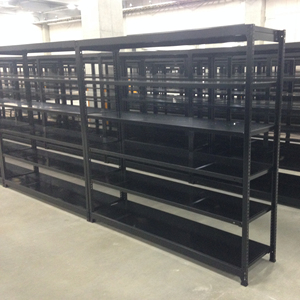
Factory Price Customized Medium-Duty Rack Warehouse Steel Metal Rack Shelf
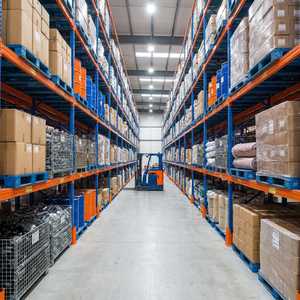
Heavy Duty Warehouse Rack Steel Pallet Rack High-Grade Q235B Steel for Factory Storage With 1000-4000kg Load


The Structural Anatomy of High-Capacity Warehouse Racking Uprights: Engineering, Metallurgy & Cold-Roll Profiling
In modern industrial intralogistics, the upright frame (also referred to as vertical columns, standard posts, or upright stanchions) represents the single most critical structural element in any warehouse pallet rack configuration. While load beams endure bending moment and sheer tension distributed along the horizontal axis, uprights are subjected to severe, cumulative axial compressive forces, combined with torsional-flexural buckling, second-order P-Delta lateral forces, and localized forklift impact stresses. When analyzing procurement options from China's premier racking upright manufacturers, procurement engineers and supply chain directors must evaluate the intricate mechanical interplay between metallurgical chemistry, cold-roll profile geometry, perforation pitch tolerance, and automated post-punching integrity.
Engineering Axiom: The total load-bearing capacity of an upright assembly is not merely a function of steel gauge thickness; it is governed by the radius of gyration (r), the effective length factor (K), the moment of inertia along the X and Y axes (Ix, Iy), and the profile's torsional-warping constant (Cw). China's leading manufacturers utilize sophisticated 18-to-24 pass cold roll-forming lines to manufacture optimized multi-bend Omega upright sections that eliminate internal residual stress while dramatically improving buckling thresholds.
1. Advanced Cold-Forming Geometry: Why the Omega Profile Dominates Global High-Bay Warehousing
Historically, basic C-channels and open hat-sections served as rudimentary vertical columns. However, under high dynamic loads (exceeding 20 metric tons per upright bay) and towering heights exceeding 12 to 15 meters, open symmetrical sections exhibit extreme vulnerability to torsional buckling. Leading Chinese tier-one manufacturers, such as HEDA Shelves, have standardized the multi-ribbed Omega (Ω) upright section. By engineering up to 8 to 12 reverse cold-formed bends within a single structural profile, the neutral axis is stabilized, and localized web buckling is prevented.
The strategic distribution of steel thickness—typically ranging from 1.5 mm (16 gauge) to 3.0 mm (11 gauge) high-strength strip steel—ensures that metal is concentrated furthest from the centroid, optimizing the section modulus (Z). This geometric superiority allows a lightweight profile to support up to 40% higher axial compression than conventional folded channel columns of equivalent linear weight, providing substantial savings in total structural steel tonnage and ocean shipping container optimization.
2. Metallurgical Standards: Comparative Analysis of Q235B, Q355B, ASTM A1011, and EN 10025
Material traceability and tensile strength define whether a warehouse storage system survives decades of continuous heavy cycles or experiences premature metal fatigue. For North American and European logistics operations, bridging domestic Chinese material designations with international standards is vital for building code compliance, seismic engineering approvals, and insurance underwriting.
| Steel Grade Designation | Yield Strength (Fy, MPa) | Tensile Strength (Fu, MPa) | Elongation (%) | International Equivalent | Recommended Racking Application |
|---|---|---|---|---|---|
| Q235B (Cold Rolled) | ≥ 235 MPa (34.1 ksi) | 370 - 500 MPa | ≥ 26% | ASTM A36 / EN S235JR | Standard selective pallet racking, tire racks, retail mezzanines |
| Q355B (High Tensile) | ≥ 355 MPa (51.5 ksi) | 470 - 630 MPa | ≥ 21% | ASTM A572 Gr 50 / EN S355JR | High-bay AS/RS systems, VNA uprights >12m, seismic zones |
| SPHC / Pickled & Oiled | ≥ 205 MPa (29.7 ksi) | ≥ 340 MPa | ≥ 32% | ASTM A1011 HRPO / EN 10111 | Precision step beams, connector clips, high-draw components |
| Q355ND (Cryogenic) | ≥ 355 MPa (Charpy at -20°C) | 490 - 630 MPa | ≥ 22% | EN 10025-3 S355NL | Deep-freeze blast freezers (-30°C), cold-chain automated racks |
3. Hole Perforation Patterns & Structural Connector Mechanics: Teardrop vs. Hexagonal vs. Slotted
The vertical pattern punched along the face and sides of the upright dictates beam connection rigidity, lateral frame sway stiffness, and international market compatibility. Quality manufacturers utilize high-speed automated hydraulic die matrices or multi-axis CNC punching presses prior to continuous cold forming to prevent localized edge micro-cracking around hole contours.
Key perforation standards manufactured for global export include:
- North American Teardrop System (2-inch Pitch): Compatible with standard US teardrop beam connectors. The tapered gravity-lock design creates an automatic wedging action under pallet weight, eliminating beam uplift when paired with positive locking spring pins.
- European Diamond / Hexagonal Pitch (50mm / 75mm): Standardized across EMEA and APAC regions. The interlocking dual-tapered hook connectors resist heavy moment forces and provide exceptionally stiff rotational spring constants (Ν), critical for unbraced longitudinal aisle calculations according to EN 15512.
- Continuous Side-Hole Flange Punching: Engineered along the upright side flanges for horizontal and diagonal structural bracing tubes. Precision bolt spacing allows rigorous calculation of frame truss geometry under seismic and wind-uplift parameters.
Upright Structural Capacity & Engineering Matrix
To assist logistics directors and warehouse structural estimators, the following benchmark matrix outlines typical permissible vertical frame capacities across standardized upright profiles based on unsupported beam level heights (vertical tie spacing):
| Upright Profile (mm) | Gauge Thickness (mm) | Beam Pitch Distance | Max Permissible Frame Load (kg) | Max Permissible Frame Load (lbs) | Typical Application Sector |
|---|---|---|---|---|---|
| UP 80 × 60 | 1.8 mm (15 ga) | 1,500 mm (5.0 ft) | 7,200 kg | 15,873 lbs | Medium-duty industrial shelving, e-commerce parts |
| UP 90 × 70 | 2.0 mm (14 ga) | 1,800 mm (5.9 ft) | 11,500 kg | 25,353 lbs | Standard selective pallet racking (3-4 tiers) |
| UP 100 × 70 | 2.0 mm (14 ga) | 2,000 mm (6.5 ft) | 15,200 kg | 33,510 lbs | Drive-in, push-back, heavy double-deep storage |
| UP 120 × 95 | 2.5 mm (12 ga) | 2,200 mm (7.2 ft) | 22,800 kg | 50,265 lbs | Heavy logistics hubs, structural rack-supported mezzanines |
| UP 140 × 120 (HD) | 3.0 mm (11 ga) | 2,500 mm (8.2 ft) | 31,500 kg | 69,445 lbs | High-bay AS/RS systems up to 24m, automated crane racking |
Future Procurement Trends: Where Racking Engineering is Heading (2026–2030)
As warehouse operations evolve toward autonomous fulfillment, high-speed automated storage, and carbon-neutral supply chain targets, the procurement criteria for racking uprights are transitioning rapidly from commoditized steel purchasing to precision-engineered subsystem integration.
1. Sub-Millimeter Tolerances for AS/RS & AMR Navigation
Automated stacker cranes and automated guided vehicles require structural upright verticality tolerances tighter than 1:1000. Progressive cold-roll forming with automated in-line laser measurement ensures cumulative rack deviation stays within millimetric constraints across high bays.
2. High-Strength Micro-Alloyed Light-Weighting
By moving from conventional Q235B to micro-alloyed vanadium-titanium treated Q355B and high-yield cold-rolled coils, uprights achieve higher yield margins with a 12–18% reduction in raw steel weight, yielding lower ocean freight carbon emissions and landed costs.
3. Cryogenic Metallurgical Toughness for Cold Chain
With pharmaceutical and frozen grocery hubs proliferating, uprights must prevent cold-induced brittle fracture. Next-gen procurement insists on impact-tested steels ensuring ≥27 Joules Charpy V-notch energy absorption at temperatures as low as -30°C.
4. Pre-Galvanized Continuous Roll-Forming
For high-humidity tropical sites, outdoor canopied staging, or aggressive chemical environments, procurement of pre-galvanized coils (Z275 coating mass) formed with specialized tooling minimizes surface micro-cracking and eliminates secondary hot-dip galvanizing delays.
Manufacturing Excellence: Why HEDA Shelves Sets the Benchmark Among Chinese Suppliers
Based in Guangzhou with over two decades of dedicated manufacturing prowess since 2001, Guangzhou Heda Shelves Co., Ltd. has established an international benchmark for structural warehouse racking systems. Spanning a 30,000 square meter (approx. 323,000 sq ft) production facility operated by over 300 skilled technical personnel, HEDA combines massive scale with strict quality assurance.

Quarter-Century Engineering Heritage
Founded in 2001, with over 10,000 completed warehouse projects globally. Our seasoned structural engineers prepare verified load calculation sheets and CAD/3D drawings compliant with ANSI MH16.1 (RMI) and EN 15512 standards.

30,000 Tons Monthly Output
Equipped with 14 automated continuous roll-forming lines, computerized multi-stage punching presses, automatic robotic welding gantries, and automated electrostatic powder coating tunnels capable of executing large-scale project rollouts within tight schedules.

Certified Global Compliance
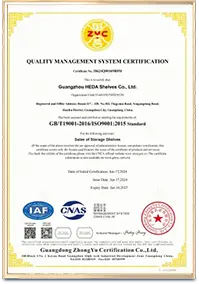
Independently verified by ISO 9001:2015 Quality Management Systems (Certificate No. 18624Q00169R0M) and European CE Marking Construction Products Regulation (CE No. 2435-CPR-8605159), ensuring complete legal safety in North American and European jurisdictions.
Quality Verification & Official Certifications
Every structural upright profile, baseplate weldment, and beam connector leaving our factory gates is backed by comprehensive third-party lab verification, chemical heat composition sheets, and mechanical elongation certificates.
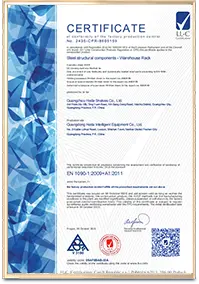 ISO 9001:2015 Quality
Cert No. 18624Q00169R0M
 CE Marking Approval
EN 1090 / CPR 8605159
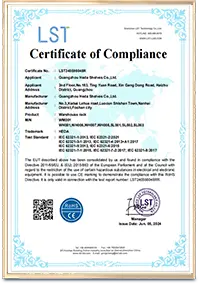 RoHS Compliance
Coating Heavy Metal Free
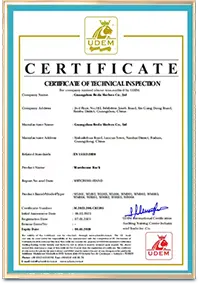
 Mechanical Test Report
Yield & Tensile Validation
Strategic Procurement Playbook: How International Buyers Sourcing from China Mitigate Risk
Sourcing structural racking directly from Chinese manufacturers offers capital expenditure reductions of 25% to 45% compared to purchasing from domestic Western rack distributors. However, capturing this value requires structured technical due diligence. Below is the multi-stage validation framework recommended for supply chain leaders:
Stage 1: Base Steel Coil Chemistry & Thickness Control
Always demand Mill Test Certificates (MTC) indicating carbon equivalent (CEV) values to ensure structural weldability. Verify whether steel coil thickness is specified as "nominal" or "minimum." Quality manufacturers like HEDA guarantee nominal gauge variances within ±0.05 mm, avoiding common undersizing risks.
Stage 2: Powder Coating Pre-Treatment Chemistry
Surface preparation accounts for over 80% of coating longevity. The optimal sequence includes automated hot alkaline degreasing, multi-stage rinse, iron/zinc phosphating pretreatment, and deionized water seal before electrostatic powder spray. The final thermoset epoxy-polyester cured film must measure between 60 to 90 microns and pass a 500-hour ASTM B117 salt spray cross-hatch adhesion test.
Stage 3: Export Packaging & Ocean Container Stuffing Mechanics
Upright columns are susceptible to transit deflection if nested incorrectly. Ensure the manufacturer bands upright bundles with structural steel Dunnage, corrugated corner corner-protectors, plastic shrink wrapping, and designated forklift lifting straps. Bundles must be engineered to match 40-foot High Cube (40HQ) container lengths (11.8m internal), maximizing volume utilization while preventing transit rubbing.
Frequently Asked Questions (FAQ) for Global Racking Upright Buyers
What are the key technical differences between teardrop uprights and European 50mm/75mm uprights?
How do you calculate seismic base plate requirements for warehouse upright frames?
Can Chinese upright manufacturers provide stamped structural engineering calculations for North American city permits?
What steel grade should be specified for cold storage and deep freeze warehouse uprights?
What are the lead times and container loading strategies for upright shipments from China?
Plan Your Warehouse Storage Layout with Tier-1 Engineering
Connect with HEDA Shelves' structural engineering department today. Submit your architectural floor plan, clear ceiling heights, pallet load parameters, and handling vehicle specs to receive a comprehensive CAD layout, 3D structural rendering, and detailed component quotation within 24 hours.