Heavy Duty Warehouse
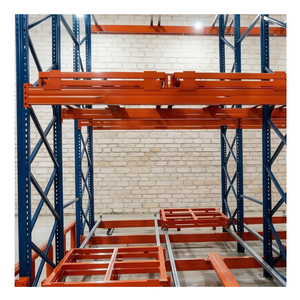
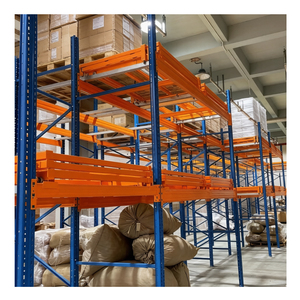
DJ High Density Storage Solution Push Back Pallet Racks
2-6 Pallets Deep
LIFO Logistics
Q235B Cold Steel
Explore high-density warehouse storage systems, precision-loaded retail merchandise pushers, and commercial athletic frame racks exported directly from our Guangzhou facility.
Why Tier-1 logistics hubs favor gravity-nested cart push-back racking over conventional drive-in and standard selective layouts.
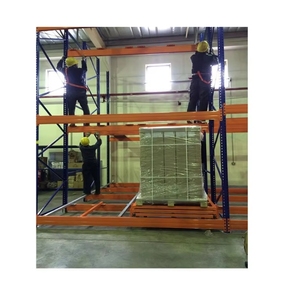
Unlike drive-in systems where lift trucks enter rack bays—causing recurring frame impacts—push-back racking keeps trucks stationed safely in the access aisle. Pallets rest on nested telescopic carts on sloped steel structural channels, cutting frame collision risks by more than 82%.
Utilizing a standard 1.5° to 2.5° precision-calculated incline, when the picking face pallet is retrieved, succeeding nested carts seamlessly coast forward under regulated gravity. Precision flanged bearings maintain uniform tracking even under heavy temperature differentials down to -30°C.
Standard drive-in racking frequently experiences severe "honeycombing"—empty pallet slots locked behind partially emptied lanes. Push-back systems operate with independent dynamic levels, permitting separate SKUs per vertical tier and lifting cubic footprint utilization up to 90%.
Data calibrated against standard 48" x 40" GMA 2,500 lbs pallet profiles in ambient and freezer environments.
| Performance Metrics | Push-Back Pallet Racking | Drive-In Racking | Pallet Flow (Gravity FIFO) | Selective Racking |
|---|---|---|---|---|
| Storage Density | High (Up to 75% Floor Coverage) | Very High (Up to 80% Coverage) | Extreme (Up to 85% Coverage) | Low (Aisle Dependent 40-50%) |
| Accessibility Paradigm | LIFO (By Individual Lane) | Strict LIFO (Entire Bay Locked) | FIFO (Strict Date Control) | 100% Immediate Selectivity |
| Truck Impact Risk | Minimal (External Aisle Operation) | Severe (Truck Enters Deep Bay) | Minimal (Aisle Pick/Drop) | Low-to-Moderate |
| Carts / Tracks Maintenance | Low (Heavy-duty sealed bearings) | Very Low (Static structural rails) | Moderate (Rollers & speed brakes) | Zero (Static components only) |
| Optimal SKU Distribution | 2 to 6 Pallets per Specific SKU | 10+ Pallets per Specific SKU | Fast-moving, Date-sensitive SKUs | High SKU Variance (1-2 Pallets) |
How intelligent sensor integration, ESG supply-chain mandates, and hybrid cold-chain requirements are reshaping procurement strategies.
Global procurement teams are shifting away from plain low-carbon structural hot-rolled sheet toward micro-alloyed, high-yield cold-formed steel profiles. This reduces total steel weight by up to 18% without reducing pallet capacity, significantly mitigating trans-ocean container freight costs and corporate Scope 3 emissions.
Deep-lane push-back configurations (5 to 6 carts deep) now implement kinetic magnetic dampening and wireless optical load detection. These sensors ensure pallets settle with calibrated deceleration, mitigating product tipping and reporting real-time inventory statuses directly to warehouse WMS platforms.
To eliminate expensive domestic middleman markups in the US and Canada, leading enterprises require Chinese manufacturing exporters to deliver Revit/BIM-compliant 3D models alongside full third-party steel batch inspection reports (chemical spectroscopy & tensile load verification) prior to ocean shipment.
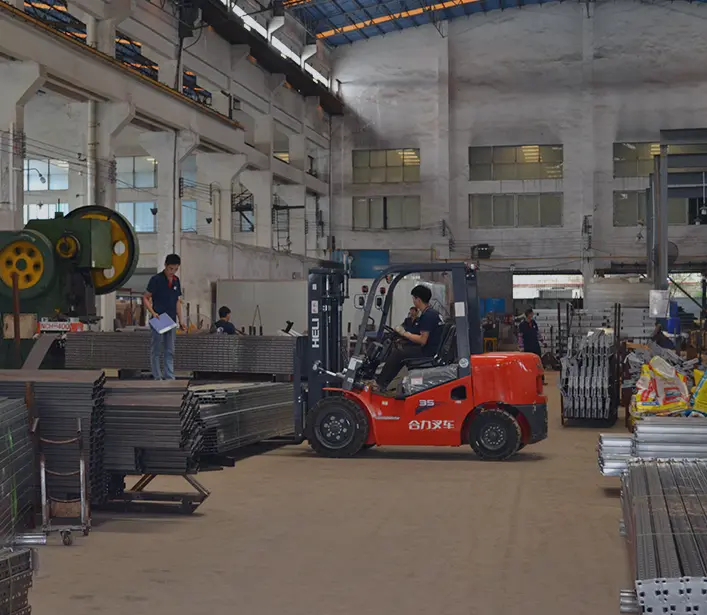
Established in 2001, Guangzhou HEDA Shelves Co., Ltd. operates a premier 30,000 m² (over 323,000 sq ft) facility housing advanced automatic continuous cold roll-forming lines, computerized multi-station stamping presses, robotic welding cells, and an automated continuous Swiss-Gema electrostatic powder-coating plant.
Direct answers to technical, regulatory, structural, and shipping queries for procurement executives and logistics planners.
Our structural engineering department performs finite element analysis (FEA) based on RMI (Rack Manufacturers Institute) MH16.1 specifications and CSA A344 Canadian storage safety codes. We calculate static dead loads, dynamic forklift placement impact, and seismic zone lateral accelerations (Sds coefficients). Complete engineering packages are produced directly in pounds (lbs), feet (ft), and inches (in), tailored for review by your state-licensed Professional Engineer (PE) or municipal building authority.
We manufacture nested carts using high-grade structural tube steel with integrated CNC-machined flanged wheels fitted with permanently sealed low-friction stainless steel bearings. The cart chassis features mechanical safety stop lips, anti-lift interlocks, and debris-shedding track channels that prevent foreign wood splinters or plastic debris from binding the rolling assembly. Each cart profile is custom sized to avoid deflection under full load.
All fabricated components pass through an automated 8-stage pre-treatment line comprising high-pressure hot degreasing, ultrasonic water rinsing, pickling, and zirconium-based phosphating. Racks intended for sub-zero freezer operations (-20°C to -35°C) or chemical distribution receive specialized low-cure TGIC-free epoxy-polyester electrostatic powder coating (thickness 70-110 microns), cured at 200°C for superior adhesion, impact resistance, and salt spray performance exceeding ASTM B117 standards.
Structural upright frames, push-back carts, and horizontal load beams are nested and bundled with high-tensile steel banding, cushioned by heavy-duty corrugated board, multi-layer stretch wrap, and edge guards. Steel structural dunnage skids ensure fork trucks can unload directly from 40-foot High Cube (40HQ) ocean containers at major ports (Los Angeles, Houston, Savannah, Vancouver, New York) without scraping painted or galvanized surfaces.
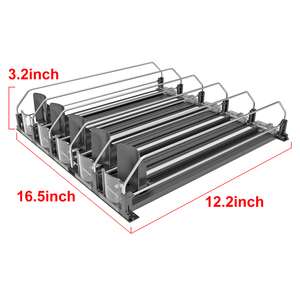
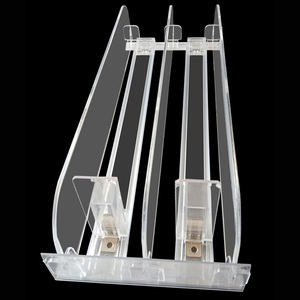
Yes. For retail beverage and snack shelf pusher systems, we engineer variable-force constant tension stainless steel flat springs ranging from 3N to 14N ratings. This guarantees that heavier glass beverage bottles, lightweight tetra-paks, or snack packaging move smoothly forward to the pick face without crushing delicate cartons or causing excessive resistance during manual restocking.
Connect directly with our senior racking structural engineers. Submit your warehouse layout or SKU specifications to receive a complete CAD design, pallet capacity calculation, and FOB/CIF landed cost quotation within 24 hours.