Industrial Whitepaper • Global Engineering Standard
China Best Warehouse Pallet Racking Pallet Racks Manufacturers & Suppliers
Precision-Engineered Heavy Duty Storage Systems, Cold-Formed High-Tensile Structural Racking, and Global Supply Chain Solutions Compliant with ANSI MH16.1, RMI, FEM 10.2.02, and AS 4084 Standards.
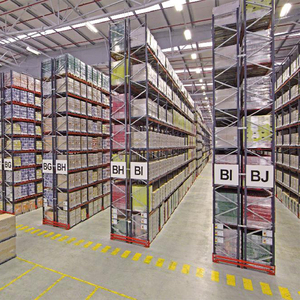
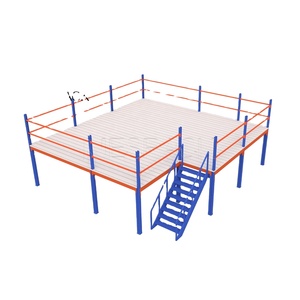
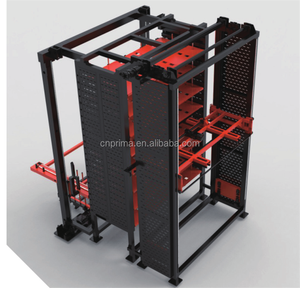
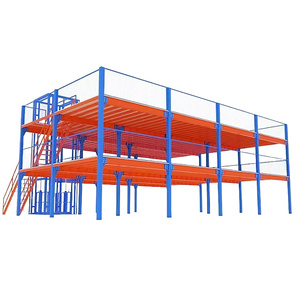
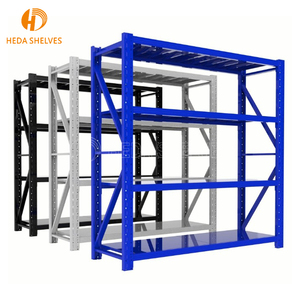
Direct from China's primary manufacturing facility in Guangzhou: certified structural steel pallet racks, automated laser-cutting cassettes, heavy-duty mezzanine platforms, and narrow-aisle systems built for severe seismic and high-throughput industrial logistics.
Founded in 2001, Guangzhou Heda Shelves Co., Ltd. has developed from an advanced tooling workshop into one of China’s most prominent industrial storage and pallet racking manufacturing operations. Operating out of our expansive 30,000-square-meter modern fabrication facility in Guangzhou, China, our company integrates end-to-end structural research, computer-aided architectural layout design, automated roll-forming, laser shearing, robotic MIG/TIG welding, and multi-stage automated electrostatic powder coating.
With an engineering team of more than 300 highly specialized technicians, welders, structural engineers, and international freight specialists, HEDA delivers over 30,000 metric tons of high-yield structural racking systems every month. Unlike commercial trading intermediaries, we control every single thermodynamic and physical aspect of the fabrication cycle—from cold-rolled steel slitting to seismic calculation validation. Every system is manufactured strictly according to international structural standards including EN 15512 (European Racking Code), ANSI MH16.1 (Specification for the Design, Testing and Utilization of Industrial Steel Storage Racks), RMI guidelines, and Australian AS 4084-2012.
Certified Quality Assurance
Independently audited and certified under ISO 9001:2015 Quality Management Systems (Certificate No. 18624Q00169R0M), CE Marking (No. 2435-CPR-8605159) for Construction Products Regulation (CPR), and RoHS environmental material compliance.
Mill-Certified Prime Steel
Exclusively cold-formed from Baosteel and Shougang certified Q235B and Q355B structural carbon steel. Mill test certificates (MTC) with full yield strength, ultimate tensile strength, and Charpy impact absorption guarantees accompany every container shipment.
Precision 10-Stage Finishing
Automated continuous overhead pre-treatment line executing hot alkaline degreasing, ultrasonic rust de-scaling, zinc phosphating, and deionized water rinsing prior to robotic electrostatic epoxy powder coating (60–90µm thickness, 500+ hours salt spray test resistance).
Modern distribution centers, 3PL logistics facilities, and manufacturing plants require customized storage architectures based on SKU diversity, inventory turns, seismic zones, and handling equipment capabilities. The following engineering comparison synthesizes performance parameters across principal pallet racking archetypes.
Storage System Type
Space Cube Utilization
Pallet Selectivity
Inventory Rotation
Forklift Compatibility
Structural Load Rating (Per Tier)
Relative CapEx Index
Selective Pallet Racking
40% – 50%
100% (Direct Access)
FIFO / LIFO Flexible
Standard Counterbalance, Reach Trucks
1,000 kg – 4,500 kg (2,200 – 9,900 lbs)
Baseline (1.0x)
Double Deep Pallet Racking
55% – 65%
50% (Semi-Selective)
FILO / LIFO
Deep-Reach Pantograph Forklifts
1,500 kg – 3,500 kg (3,300 – 7,700 lbs)
1.25x – 1.4x
Very Narrow Aisle (VNA)
60% – 75%
100% (Direct Access)
FIFO / LIFO Flexible
VNA Man-up / Turret Trucks, Wire Guided
1,500 kg – 4,000 kg (3,300 – 8,800 lbs)
1.8x – 2.2x
Drive-In / Drive-Through
65% – 80%
Low (Bulk SKUs)
LIFO (Drive-In) / FIFO (Drive-Thru)
Narrow Counterbalance, Reach Trucks
1,000 kg – 2,000 kg per pallet runner
1.3x – 1.6x
Push Back Racking (Nested Carts)
65% – 75%
Medium (Per Lane Access)
LIFO (Last-In, First-Out)
Standard Counterbalance, Reach Trucks
1,000 kg – 1,500 kg per dynamic cart
2.0x – 2.5x
Gravity Pallet Flow Racking
75% – 85%
High per lane
Enforced Strict FIFO
Standard Counterbalance / Reach Trucks
800 kg – 1,500 kg per roller position
2.8x – 3.5x
Radio Shuttle Cart Racking
80% – 90%
High Density SKU Block
FIFO / LIFO Programmable
Shuttle Unit + Any Standard Forklift
1,500 kg – 2,000 kg per shuttle station
2.6x – 3.2x
Rack-Supported Mezzanine
150% – 250% (Multi-Tier)
100% Piece/Carton Pick
Omni-Channel Picking / Sorting
Forklift drop station + Vertical Reciprocating Conveyor
500 kg – 1,500 kg/m² Uniform Load
1.9x – 2.7x
Procurement Intelligence
Future Warehouse Pallet Racking Procurement Trends: The Next 10 Years
Global procurement directors, supply chain VPs, and 3PL facility planners are facing shifting structural and macroeconomic headwinds. The procurement of industrial warehouse pallet racks is transitioning from simple per-kilogram raw steel transactional purchases to high-value, digitally integrated capital asset deployments. When sourcing pallet racking systems from premier Chinese manufacturers, international buyers must navigate four fundamental procurement transformations over the coming decade.
With the enforcement of the European Union's Carbon Border Adjustment Mechanism (CBAM) and corporate Scope 3 sustainability disclosures across North America, procurement teams are requiring Environmental Product Declarations (EPD). Chinese manufacturing leaders such as HEDA are investing in electric arc furnace (EAF) steel sourcing, photovoltaic-powered automated manufacturing campuses, and documented carbon-intensity tracking per metric ton of cold-formed beam profiles.
2. Factory-Direct Modular Engineering & PE Calculation Packages
The traditional tier-separated distributor markup model is dissolving. Modern warehouse procurement strategies leverage direct engineering collaboration with Chinese Tier-1 original equipment manufacturers. Turnkey packages now standardly include full engineering calculations, finite element analysis (FEA) reports, and structural drawings delivered in imperial and metric systems. These packages arrive formatted specifically for rapid local Professional Engineer (PE) seismic stamping across all 50 US States, Canadian provinces, and Australian territories.
3. Total Cost of Ownership (TCO) Prioritization Over CapEx
Savvy logistics buyers no longer evaluate quotes solely on initial CIF port price. Fleet maintenance data reveals that impact damage, frame twist, and paint flaking can increase maintenance overhead by 22% annually. Procurement contracts now demand enhanced structural gauge thicknesses (minimum 12-gauge / 2.5mm upright columns), heavy-duty wraparound column protectors, welded structural reinforcement stiffeners at bottom impact zones, and zinc-rich rust-inhibiting pretreatment.
Volatile transpacific and Asia-Europe shipping container rates have elevated logistics engineering to a core procurement discipline. Elite manufacturers employ algorithmic loading simulations that nest custom box beams, interlock upright frame bundles, and utilize heavy-gauge banded steel dunnage. This optimized nesting achieves maximum 40HQ container payload weight (up to 26–28 metric tons) without damaging powder-coated surfaces, cutting landed freight costs per pallet position by 18% to 32%.
Technological Innovation
Technological & Structural Development Trends: The Automation Frontier
Warehouse racking is no longer a passive static steel structure. Driven by robotics, artificial intelligence, skyrocketing land valuations, and hyper-dense inventory profiles, the engineering architecture of modern warehouse pallet racks is evolving rapidly. Facilities constructed today must interface seamlessly with automated guided vehicles (AGVs), autonomous mobile robots (AMRs), and sophisticated automated storage and retrieval systems (ASRS).
1. Sub-Millimeter Fabrication Tolerances for ASRS & AMRs
Traditional manually operated forklift racking permits beam deflection tolerances of 1/180th of clear span and plumbness tolerances of ±10mm. Conversely, automated crane-fed ASRS and shuttle channels demand strict tolerances within ±1.5mm across vertical and horizontal planes. HEDA’s advanced continuous CNC roll-forming lines feature continuous laser tracking that ensures hole pitch consistency of ±0.2mm, preventing robotic gripper misalignment and automated shuttle jams.
2. Dynamic Seismic Dampening & Ductile Energy Dissipation
Modern codes (IBC 2024, NFPA 13, and ASCE 7-22) classify tall pallet racks as dynamic non-building structures. In seismic categories D, E, and F (e.g., California, Pacific Rim, New Zealand), modern racking deploys ductile baseplate designs, oversized anchor bolting patterns, and engineered beam end connectors that deform plastically under cyclic earthquake loading to dissipate energy without brittle failure.
3. Thermal-Shock Resistant Cryogenic Steel for Cold Chains
Booming pharmaceutical, biological, and deep-freeze grocery supply chains require operational temperatures from -25°C down to -40°C. Standard commercial carbon steels suffer dangerous ductile-to-brittle transitions at sub-zero temperatures. Advanced storage solutions utilize low-temperature alloyed steels with micro-additions of vanadium and niobium, ensuring high impact toughness and crack resistance inside cryogenic cold storage environments.
4. Structural Health Monitoring (SHM) & Digital Twins
The cutting edge of industrial racking involves IoT structural health telemetry. Strain gauges mounted directly on critical lower upright columns, tri-axial accelerometers detecting forklift impact impulses, and optical verticality sensors transmit real-time telemetry to warehouse management software (WMS). Operators receive instant overload alerts and scheduled maintenance notifications before micro-fractures propagate into cataclysmic rack collapse events.
Direct technical answers to the most critical structural, legal, logistics, and quality assurance questions faced by international procurement managers importing warehouse pallet racking from China.
How do Chinese steel grades Q235B and Q355B compare to American ASTM and European EN standards?
Q235B possesses a nominal yield strength of 235 MPa and minimum tensile strength of 370–500 MPa, functioning as the engineering equivalent of ASTM A36 / ASTM A1011 SS Grade 36 and European S235JR. Q355B provides a nominal yield of 355 MPa, serving as the direct equivalent to ASTM A572 Grade 50 and European S355JR. HEDA issues complete original Mill Test Certificates (MTC) verifying chemical composition and mechanical elongation with every production batch.
Can HEDA racking designs pass local seismic building permits in the USA and Canada?
Yes. We provide complete 2D/3D CAD layout drawings, structural steel section property profiles, connection moment capacities, and load calculation documentation compliant with ANSI MH16.1 and RMI standards. Our engineering team routinely cooperates with licensed local Professional Engineers (PE) across US states and Canadian provinces to verify seismic site coefficients and secure municipal building permits.
Are HEDA selective and drive-in racks compatible with standard 48" x 40" GMA pallets?
Absolutely. While we manufacture custom specifications for Euro pallets (1200x800mm), Australian pallets (1165x1165mm), and Asian pallets (1100x1100mm), over 60% of our export volume is configured specifically for North American 48" x 40" GMA pallets. Standard frame depths are engineered to 42" or 44" to provide optimal 3" pallet overhangs with standard 96", 108", or 144" beam clear spans.
How does HEDA ensure fire code compliance and sprinkler penetration?
We configure racking systems in full compliance with NFPA 13 standards for storage arrays. This includes maintaining 6-inch transverse flue spaces between double-row upright frames using heavy-gauge bolted row spacers, providing 3-inch longitudinal flue openings, and integrating galvanized wire mesh decking with open areas exceeding 70% to facilitate uninhibited overhead fire sprinkler water penetration.
What is the standard manufacturing lead time and ocean container transit schedule?
Standard fabrication lead time for standard selective or drive-in racking (1 to 5 forty-foot high cube containers) is 15 to 22 business days following approved CAD drawings. Custom engineered automated ASRS or mezzanine platforms typically require 25 to 35 business days. Transit time to US West Coast ports (Los Angeles/Long Beach) is approximately 14–18 days, US East Coast ports 26–32 days, and European base ports 24–30 days.
What surface treatments and finishes are offered for harsh or outdoor environments?
In addition to our standard architectural electrostatic epoxy powder coating (available in custom RAL colors), HEDA provides hot-dip galvanization (HDG compliant with ASTM A123 / ISO 1461, yielding 70–100µm zinc thickness) for exterior lumber yards, corrosive fertilizer handling, and marine salt environments, providing maintenance-free rust resistance for over 25 years.
Engineering Consultation
Ready to Optimize Your Warehouse Storage Density & Safety?
Send your building architectural plans, clear ceiling heights, pallet dimensions, and operational forklift specifications. HEDA’s certified structural design team will deliver a comprehensive 2D CAD layout, 3D visualization model, and factory-direct quotation within 24 hours.