Precision Warehouse Racking & Industrial Storage Solutions
Explore our flagship heavy-duty pallet racks, modular mezzanine structures, and high-efficiency material handling units certified for global deployment across logistics hubs, cold chain facilities, and manufacturing plants.
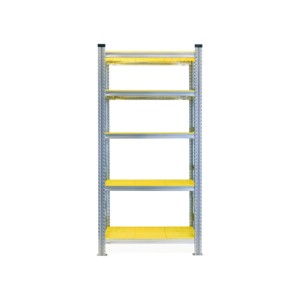
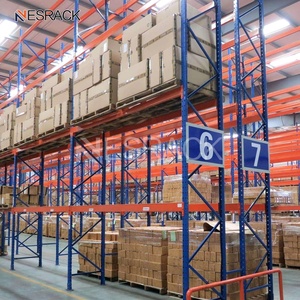
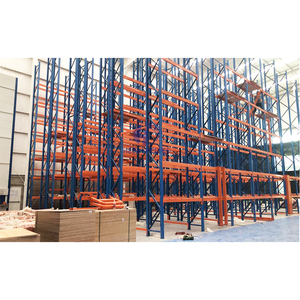
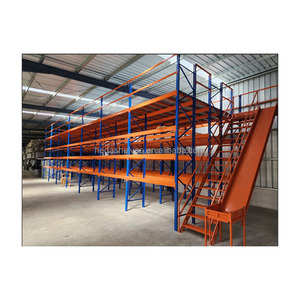
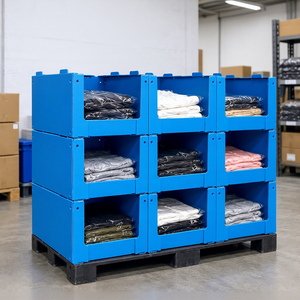
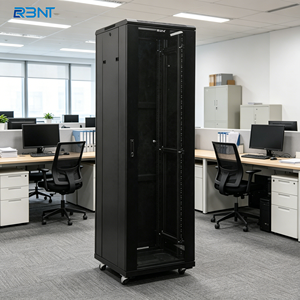
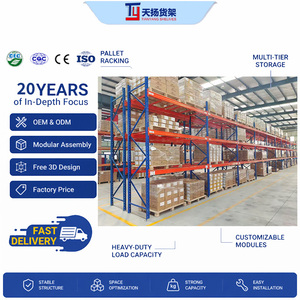
High-Density Rolling Pallet Racks: Technical Architecture & Mechanics
In modern supply chain engineering, the optimization of warehouse cubic volume directly dictates operating margins and capital expenditure amortization. Rolling pallet racks—incorporating motorized mobile racking systems, dynamic gravity roller flow racks, and mechanical push-back cart structures—represent the apex of volumetric spatial compression. By replacing static dedicated aisles with dynamic, on-demand accessible service corridors or continuous roller beds, rolling pallet racks expand usable storage capacity by 85% to 180% within an identical building footprint.
Critical Information Gain: Mechanical vs. Motorized Dynamic Systems
Procurement engineers must distinguish between motorized mobile pallet racks (where racking superstructures travel over floor-embedded railway tracks via integrated wheel blocks) and gravity rolling pallet flow racks (where static racking bays utilize inclined roller beds fitted with centrifugal brake rollers). Both are classified internationally under rolling pallet rack systems but address disparate inventory velocity dynamics: mobile bases excel in slow-to-medium velocity high-density storage (LIFO/FIFO configurable), while rolling gravity flow beds serve high-velocity SKU depletion demanding absolute FIFO compliance.
Heavy-Duty Motorized Mobile Racks
Superstructures mounted on electromechanical mobile bases riding on recessed floor rails. Only one operating aisle is opened at any given time via PLC radio frequency control or onboard photoelectric actuation.
- Eliminates up to 80% of redundant access aisles
- Cold storage rated down to -30°C without fluid freezing
- Multi-channel photoelectric safety light curtains
- Direct integration with warehouse management systems (WMS)
Gravity Pallet Flow (Rolling Bed) Racks
Multi-lane roller tracks set at a calibrated 3% to 4% incline. Pallets loaded at the charge face roll smoothly toward the pick face under controlled gravitational acceleration governed by internal speed regulators.
- Absolute First-In, First-Out (FIFO) material rotation
- Centrifugal brake rollers prevent excessive terminal speed
- Separation end-stops ensure safe, pressure-free picking
- Zero operational electrical energy consumption
Push-Back Nested Trolley Rolling Systems
Trolleys rolling on inclined structural steel channels nested hierarchically. When a new pallet is introduced, the forklift gently pushes back the existing pallet, exposing the subsequent rolling nest (2 to 6 pallets deep).
- Last-In, First-Out (LIFO) high-density buffer storage
- Individual lane selectivity without driving into the rack bay
- Low maintenance sealed precision bearing assemblies
- Eliminates forklift mast impacts typical of drive-in racks
Comparative Engineering & Operational Performance Attributes
A rigorous empirical comparison designed by certified structural engineers to guide logistics planners, project estimators, and supply chain directors in system selection.
| Storage System Type | Volumetric Space Utilization | SKU Selectivity Ratio | Inventory Rotation Profile | Floor Flatness Requirement | Relative Capex Index | Ideal Industry Application |
|---|---|---|---|---|---|---|
| Motorized Rolling Mobile Rack | 85% - 92% (Maximum) | 100% (Individual bay access) | Configurable FIFO / LIFO | Superflat DIN 18202 / Class II | High (Motorized drives & rails) | Cold Storage, Pharmaceutical vaults, Raw chemical reserves |
| Gravity Pallet Flow Rack | 75% - 85% (Continuous lanes) | Lane-end only (One SKU/lane) | Strict FIFO (100% compliant) | Standard industrial concrete slab | Moderate to High (Roller density) | FMCG, Dairy, Perishables, High-throughput staging |
| Push-Back Rolling Cart Rack | 70% - 78% (2-6 pallets deep) | Face pallet per level/lane | Strict LIFO | Standard industrial concrete slab | Moderate (Nested steel carriages) | Beverage bottling, Building hardware, Mid-velocity 3PL |
| Standard Selective Pallet Rack | 40% - 50% (Aisle-heavy baseline) | 100% Immediate accessibility | Random / Free access | Standard industrial warehouse slab | Low (Baseline steel reference) | E-commerce fulfillment centers, General retail distribution |
Future Procurement Trends in Rolling Pallet Racking Systems
Procurement paradigms for industrial warehouse equipment are transitioning from static component pricing toward Total Cost of Ownership (TCO) models, life-cycle carbon accounting, and deep-tier automated system interoperability. Enterprise buyers are navigating five structural shifts:
1. Energy-Driven Cold Chain Footprint Compression
With refrigerated warehouse power tariffs increasing globally, cold storage operators in North America, Europe, and Asia are mandating maximum thermal efficiency. Motorized rolling pallet racks condense cubic volume by over 50%, reducing cooling envelope requirements, compressor duty cycles, and parasitic energy losses. Procurement tenders now explicitly weight kWh consumption savings across 10-year amortization curves.
2. Stringent Seismic & Micro-Vibration Compliance
International building codes (including IBC 2024, AS 4084, and FEM 10.2.02) impose heightened seismic restraints on dynamic elevated storage. Modern rolling pallet racks now incorporate seismic latching systems, anti-tipping guide rollers, and base anchors tested via finite element analysis (FEA) to resist moment shears and dynamic harmonic oscillations during seismic events.
3. AMR & AGV Synergistic Interfacing
Autonomous Mobile Robots (AMRs) and Automated Guided Vehicles (AGVs) are replacing conventional counterbalance forklifts. Future-ready rolling pallet racks are engineered with optical floor reflectors, WCS-synchronized aisle positioning triggers, and millimeter-level alignment tolerances so robotic vehicles dock, load, and pick pallets without human intervention.
Evolutionary Frontiers: Structural Metallurgy, Smart Sensors & Green Coating
Chinese premier racking manufacturing has evolved from basic metal fabrications into precision mechatronic engineering. Today’s rolling pallet rack production integrates metallurgy advancements, automated continuous roll-forming lines, and intelligent diagnostic sensors:
Advanced Micro-Alloy Cold-Formed Steels
Transitioning from standard Q235B steel to high-yield Q355B and specialized micro-alloy hot-rolled coils allows upright profiles to maintain greater moment capacity with reduced profile weight. This translates directly into lower ocean freight shipping costs and higher strength-to-weight ratios under heavy cyclic pallet dynamic loads.
IoT-Enabled Structural Health Monitoring (SHM)
Next-generation installations integrate strain gauges, optical deflection sensors, and wireless impact detectors into rack uprights and mobile drive chassis. Facility managers receive predictive maintenance notifications before accidental forklift collision damages precipitate catastrophic progressive beam failures.
Non-Phosphorus Electrostatic Powder Technologies
Adhering to strict international environmental and RoHS standards, leading Chinese foundries utilize silane-based nano-ceramic pretreatments followed by solvent-free electrostatic epoxy-polyester powder curing. This ensures over 500 hours of salt-spray corrosion resistance without toxic heavy metal leaching.
Why Partner with HEDA Shelves as Your Direct China Racking Manufacturer
Founded in 2001, Guangzhou Heda Shelves Co., Ltd. operates as a world-class manufacturing authority in custom warehouse logistics solutions, supporting international engineering firms, racking distributors, and enterprise 3PLs.
In-House Mechatronic & Roll-Forming Capability
From automatic column punching and high-precision CNC slitting to multi-station roll-forming lines, every beam connector, base plate, and guide rail is produced under strict ISO 9001:2015 quality surveillance.
24-Hour CAD & Finite Element Analysis
Our 30+ structural engineers supply complete CAD shop plans, 3D renderings, and seismic load calculation sheets in both imperial (lbs/ft) and metric standards to streamline local building permit clearance.
Global Export Packaging & Port Access
Strategically situated near Guangzhou and Shenzhen ports, systems are packaged in high-cube ocean containers using steel banding, protective corner guards, and bundle labeling for rapid field unpacking.
OEM & ODM Private-Label Program
We serve as the trusted OEM backbone for prominent storage brands across North America, Europe, Australia, and the Middle East, offering custom colors, beam profiles, hole pitches, and laser-cut branding.
Frequently Asked Questions on Rolling Pallet Racks Procurement
Comprehensive engineering, trade, and compliance insights compiled by HEDA Shelves structural and export specialists.
What are the key floor flatness specifications required for rolling mobile pallet racks?
+
How do rolling gravity flow racks handle varied pallet weights and base conditions?
+
Are HEDA Shelves rolling pallet racks compliant with US RMI and European EN standards?
+
What safety interlocks protect personnel working inside mobile rolling rack corridors?
+
What is the typical manufacturing lead time and container shipping schedule from China?
+
Can rolling pallet rack systems be integrated into existing warehouse facilities?
+
Request Custom Engineering Calculations & Layout Drawings
Connect directly with our senior racking engineering department. Provide your facility clear height, pallet dimensions, forklift parameters, and SKU velocity data to receive a certified 3D CAD proposal within 24 hours.