Engineered Heavy-Duty Pallet Racking Systems
Browse our proven industrial pallet racking and warehouse shelving lines. Fully customizable bay widths, upright column gauges, and beam profiles tailored to meet strict building codes, seismic zones, and forklift dynamic load requirements.
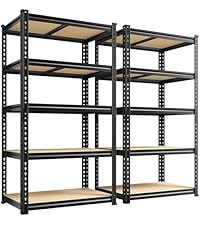 Heavy Shelving
5 Layer Industrial Storage Shelving Racks Heavy Duty Adjustable Boltless Rivet Rack
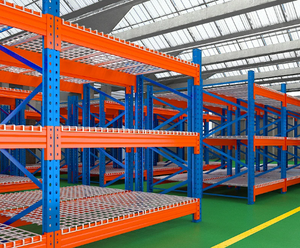 Pallet Rack
Steel Wire Shelf Warehouse Pallet Racks 5-Layer Boltless Heavy Duty 1000kg-3000kg
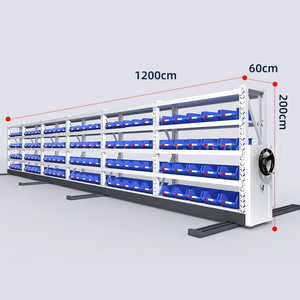 High Density
Mobile Pallet Racking System for Industrial Warehouse Storage High Capacity
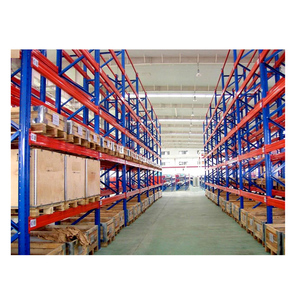 Selective Rack
HEDA Guangzhou Steel Pallet Racking System Warehouse Rack Storage Shelves
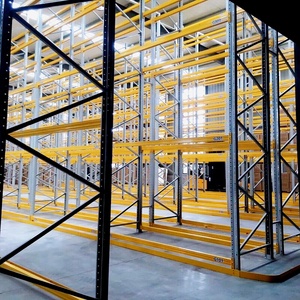 VNA System
Pallet Racking Warehouse Storage Narrow Aisle Selective Warehouse Racking System
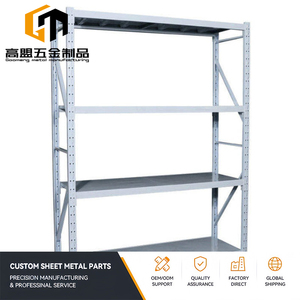 Light-Medium
Adjustable Layer Light Duty Warehouse Storage Steel Rack Boltless Metal Shelving
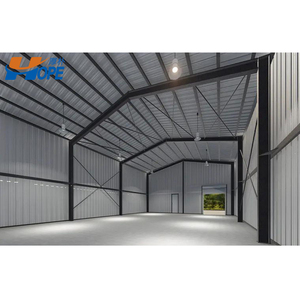 Prefab Structure
Steel Structure Warehouse Building Prefab Warehouse Steel Structure Engineering
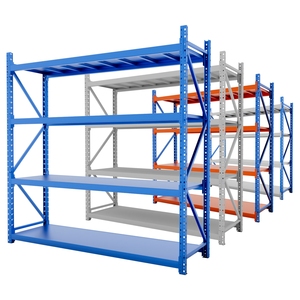 Long Span
Factory Direct Steel 4-Layer 500kg Load Heavy Duty Pallet Rack Long Span Shelving
Engineering Principles of Heavy-Duty Pallet Racks: Sourcing From China
A deep metallurgical and structural analysis designed for Chief Supply Chain Officers, Warehouse Operations Directors, and Structural Engineers of Record (EOR) evaluating Chinese manufacturing capabilities.
Modern warehouse logistics requires racking systems that perform flawlessly under dynamic live loads, repeated forklift impacts, and strict regional seismic regulations. Sourcing pallet racking directly from premier Chinese manufacturing facilities is no longer just a cost-arbitrage strategy; it has transformed into a high-precision engineering collaboration. When evaluating racking factories, industrial buyers must look past surface paint finishes and analyze core structural metallurgy, roll-forming tolerances, connector slot design, and mechanical testing standards.
1. Metallurgy & Steel Grade Selection: Q235B vs. Q355B (ASTM A36 vs. A572 Gr 50)
The structural integrity of warehouse upright frames and horizontal load beams begins at the coil slitting stage. Top-tier Chinese manufacturers exclusively procure prime, certified hot-rolled steel coils from tier-1 mills such as Baosteel, Shougang, and Ansteel. For standard ambient selective racking, Q235B structural carbon steel provides an optimal balance of yield strength (minimum yield strength of 235 MPa / 34,100 psi) and exceptional elongation (over 25%), ensuring that uprights deform predictably under catastrophic overload rather than undergoing brittle shear failure.
For high-bay installations exceeding 9 meters (30 feet), seismic zone classifications (IBC Seismic Design Categories C through E), or cold storage freezer facilities operating down to -30°C (-22°F), HEDA specifies Q355B low-alloy high-strength steel (equivalent to ASTM A572 Grade 50 or European S355JR). Q355B delivers a minimum yield strength of 355 MPa (51,500 psi). This enhanced load-bearing capacity allows engineers to optimize wall gauge thicknesses without sacrificing critical section modulus, effectively trimming gross steel weight while increasing the bay's permissible live load capacity by up to 28%.
2. Cold Roll-Forming Precision & Continuous Punching Automation
A racking system's structural stability depends on the precision of its cold roll-forming process. Upright columns undergo gradual cold-bending deformation through 18 to 22 sequential roll tooling stations. This progressive forming minimizes residual internal stress and eliminates micro-fractures along column corners. Upright slotting (whether teardrop pattern for North American interoperability or slotted diamond/omega pattern for European systems) is punched simultaneously by high-speed CNC automated multi-die punching presses before roll forming. This guarantees a cumulative center-to-center pitch error of less than ±0.5mm across a continuous 12-meter profile.
Horizontal load beams utilize continuous seam-welded step beams or interlocking twin-C box beams. Box beam profiles are robotically welded along their neutral structural axis using continuous gas metal arc welding (GMAW). The beam end connectors are stamped with heavy 3-claw or 4-claw safety hooks featuring an integral cold-formed taper. When engaged with the column perforations, gravitational load wedges the connector tighter into the upright, creating a rigid moment-resisting connection that dampens building vibrations and forklift docking deflections.
3. Surface Treatment Chemistry: Automated Electrostatic Pre-Treatment
Corrosion is a primary cause of structural racking degradation in ambient distribution centers and high-humidity cold chains. Leading Chinese manufacturers replace manual solvent wiping with fully automated, multi-stage immersion or spray pre-treatment lines. At HEDA Shelves, every roll-formed component undergoes hot alkaline degreasing, clean water rinsing, acid pickling to strip mill scale, and a dense zinc-phosphating conversion bath that forms a uniform crystalline layer of 1.5–2.5 g/m².
Following pre-treatment, components enter clean-room electrostatic powder coating booths utilizing lead-free, non-toxic pure polyester thermosetting powder. Fully cured in gas-fired convection curing tunnels at 180°C–200°C for 20 minutes, the resulting film achieves a uniform dry film thickness (DFT) of 60 to 80 microns. The cured coating delivers an impact resistance of 50 kg·cm (ASTM D2794), a cross-hatch adhesion score of Class 0 (ISO 2409), and neutral salt spray resistance exceeding 500 hours without creepage (ASTM B117)—ensuring long service life in heavy industrial environments.
Industrial Pallet Racking Configuration Comparison
Evaluate spatial footprint, SKU selectivity, pallet density, and throughput metrics across core industrial configurations to select the ideal system for your facility.
| Racking Architecture | SKU Selectivity | Storage Density | Rotation Principle | Floor Utilization | Forklift Capital Cost | Primary Application Profile |
|---|---|---|---|---|---|---|
| Selective Pallet Racking | 100% Direct | Baseline (40-50%) | FIFO / LIFO | 35% - 40% | Standard Counterbalance | High-SKU 3PLs, FMCG e-commerce DCs, automotive parts hubs. |
| Very Narrow Aisle (VNA) | 100% Direct | High (65-75%) | FIFO / LIFO | 55% - 60% | High (VNA Man-up/Wire Guided) | High-value pharmaceutical hubs, bonded warehouses with high land costs. |
| Double Deep Racking | 50% Accessible | Moderate (60-65%) | LIFO | 45% - 50% | Moderate (Deep-reach pantograph) | Dry grocery consolidation, staging distribution, mid-SKU buffers. |
| Drive-In / Drive-Thru | Low (<15%) | Very High (75-85%) | LIFO (Drive-In) / FIFO | 65% - 75% | Standard Reach / Counterbalance | Cold storage freezer rooms, seasonal harvest hubs, single-SKU bulk. |
| Push-Back Racking (Cart System) | Pick-Face Only | High (70-75%) | LIFO | 55% - 65% | Standard Reach / Counterbalance | High-turnover food manufacturing, wholesale cold room staging. |
| Pallet Flow (Gravity Roller) | Lane Pick-Face | Maximum (80-90%) | Strict FIFO | 70% - 80% | Standard Forklift Fleet | Date-sensitive dairy, perishables, pharmaceuticals, buffer replenishment. |
| Radio Shuttle Automation | Lane Managed | Maximum (85-92%) | FIFO or LIFO | 75% - 85% | Shuttle Cart + Standard Fleet | Automated mega-DCs, sub-zero cold chain logistics, high-throughput manufacturing. |
Pallet Racking Procurement Trends (2025–2030)
Macroeconomic shifts, automated material handling integration, and strict environmental mandates are redefining how enterprise buyers source racking infrastructure from Chinese suppliers.
1. Transition to ASRS-Ready Hybrid Racking
Procurement strategies have shifted away from pure manual selective systems toward modular structures engineered for robotic automation. Modern racking bays are engineered to accept 4-way autonomous shuttles, AMR pickers, and stacker cranes without structural modifications, protecting capital investments over 15-year facility lifecycles.
2. Carbon Footprint Accounting & Green Steel
Enterprise buyers operating under strict ESG directives require certified Scope 1, 2, and 3 carbon disclosures. Chinese fabricators are shifting to Electric Arc Furnace (EAF) scrap steel coils, closed-loop zero-discharge phosphating lines, and low-VOC dry powder coatings, supplying full environmental product declarations (EPD) for green building verification.
3. Advanced Seismic Engineering & Stamped Calculations
Building authorities in high-seismic regions (the US West Coast, Latin America, and Japan) now enforce rigorous, project-specific verification. Procurement contracts require finite element seismic analysis, ductile column base detailing, and engineering submittals prepared for third-party review by registered local Engineers of Record (EOR).
4. Direct Factory DDP & Container Space Optimization
To insulate supply chains against freight volatility, buyers increasingly demand Delivered Duty Paid (DDP) terms paired with advanced container space modeling. Specialized bundle staging, custom stacking dunnage, and structural nesting maximize container cube utilization to 98%, cutting per-pallet maritime freight costs significantly.
5. Multi-Tier Rack-Supported Structural Mezzanines
With industrial land costs and industrial real estate leases at historic highs, operations are moving vertically. Rack-supported catwalks and structural mezzanines integrate bulk pallet staging on the floor level with manual order picking overhead, multiplying usable warehouse square footage without expanding the building shell.
6. Intelligent Structural Health Monitoring (SHM)
Next-generation racking frameworks incorporate embedded IoT strain gauges, tilt sensors, and impact monitors into aisle corner posts. These sensors provide early warning of dynamic frame displacement, chronic beam overloading, or unrecorded forklift collision impacts, allowing operators to complete targeted repairs before rack failures occur.
Technological Evolution in Pallet Rack Fabrication
Explore the engineering breakthroughs and automated production systems setting new standards across the pallet rack manufacturing sector.
Over the past decade, Chinese racking manufacturing has evolved from manual, labor-intensive stamping shops into fully integrated, digitally monitored smart manufacturing plants. This transformation is driven by high-speed continuous roll-forming lines, 6-axis robotic welding workcells, automated fiber-laser cutting, and comprehensive quality assurance testing protocols.
1. Automated Continuous Roll Forming with In-Line Laser Metrology
Modern production facilities utilize high-speed continuous roll-forming systems equipped with in-line laser thickness and profile scanning. As high-tensile steel strip feeds through the rollers, laser micrometers track critical flange dimensions, hook clearance gaps, and outer column squareness at millisecond intervals. If cold spring-back shifts out of tolerance by more than ±0.2mm, automated roll tooling servos self-adjust in real time, preventing defective components from ever reaching the welding stations.
2. Robotic Welding Cells for Heavy Beam Connectors
Connector-to-beam joints represent a primary point of dynamic shear stress during seismic movement or accidental forklift fork strikes. HEDA Shelves utilizes automated dual-station 6-axis robotic welding arms integrated with precision pneumatic positioning fixtures. Using pulsed metal active gas (MAG) welding under 80/20 Argon-CO₂ shielding gas, these robotic workcells generate clean, deeply penetrated fillet welds that are free of spatter, porosity, or undercut defects, ensuring uniform structural strength across thousands of production beams.
3. Non-Destructive Weld Testing & Universal Load Rigs
Quality assurance programs have moved far beyond standard dimensional vernier inspections. Tier-1 manufacturing facilities maintain on-site mechanical testing labs with 100-ton computer-controlled hydraulic universal testing machines (UTM). Production samples of upright stub columns undergo stub-column compression tests (verifying effective section area), beam-to-column connector moment tests (calculating connection spring stiffness and design moment capacities), and pallet beam deflection tests under real water-tank or solid-cast iron ballast blocks to verify the standard L/180 or L/240 deflection criteria mandated by RMI MH16.1 and EN 15512 codes.
Why Global Enterprises Partner with HEDA Shelves
Guangzhou HEDA Shelves Co., Ltd. is an established industry leader with over two decades of engineering and manufacturing excellence, delivering durable, code-compliant storage infrastructure to over 130 countries worldwide.
25+ Years Proven Track Record
Founded in 2001, HEDA has manufactured and commissioned over 10,000 warehouse projects worldwide, spanning cold logistics, automotive distribution, retail fulfillment, and government archive facilities.
323,000 Sq Ft Manufacturing Plant
Our 30,000 m² modern factory campus features automated continuous roll-forming lines, automated punching lines, and powder coating lines delivering an output capacity of 30,000 metric tons per month.
Rapid 24h Engineering & 3D Layouts
Our dedicated engineering team models complete 2D/3D CAD layouts, structural calculations, and itemized quotations in imperial or metric units within 24 hours of receiving building drawings and load specifications.
ISO 9001:2015 & CE Certified
Full compliance under ISO 9001:2015 Quality Management (Cert: 18624Q00169R0M), CE Marking (2435-CPR-8605159) for structural construction components, and RoHS material safety verification.
Mill Test Reports & Full Traceability
Every production run ships with 3.1 Mill Test Certificates (MTC) documenting steel chemical composition, yield strengths, and batch-tested powder coating adhesion and salt-spray results.
North American & Global Fits
Engineered for GMA 48"x40" pallets, Euro pallets (1200x800mm), and industrial containers. Fully compatible with teardrop profiles, slotted patterns, and customized proprietary hook standards.
Damage-Free Ocean Freight Packing
Uprights and beams are banded with protective edge guards, vapor-corrosion-inhibitor (VCI) film, and custom dunnage skids engineered for rapid unloading with standard sit-down forklifts.
Single-Source Accountability
From raw steel slitting and robotic welding through to export customs clearance, maritime delivery, and step-by-step installation packages, HEDA is your single point of operational accountability.
Frequently Asked Questions: Sourcing Pallet Racks from China
Clear, definitive answers to the key structural, commercial, and operational questions asked by procurement managers, import teams, and warehouse engineers.
1. How does HEDA verify structural compliance with US (RMI) and European (FEM/EN) racking standards?
2. What steel grades are used, and can you provide Mill Test Reports (MTR) with shipments?
3. What is the typical lead time from final CAD layout sign-off to container vessel dispatch?
4. How does HEDA prevent rust and surface abrasions during ocean container transit?
5. Are HEDA racking components compatible with standard 48" x 40" North American GMA pallets?
6. What documentation do you supply to assist on-site warehouse assembly and installation crews?
7. How does HEDA manage quality control across high-volume production runs?
8. Can you accommodate custom corporate colors and high-visibility safety finishes?
Ready to Optimize Your Warehouse Storage Footprint?
Connect with our senior logistics engineers today. Provide your building footprint, clear roof height, pallet load profiles, and forklift models to receive a comprehensive CAD layout, 3D rendering, and factory-direct quotation within 24 hours.