Specialized Warehouse Racking Systems for Global Logistics
Manufactured with high-tensile certified steel coil, automated continuous roll-forming lines, and robotic CO2 shielding welds to ensure maximum volumetric yield, structural durability, and optimal return on investment.
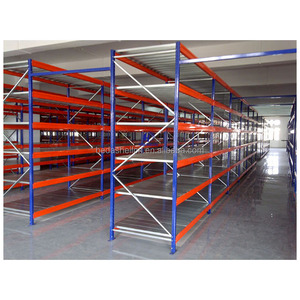
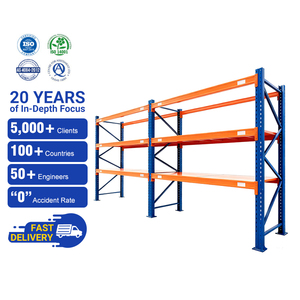
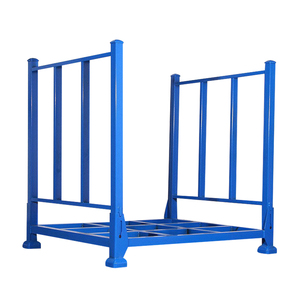
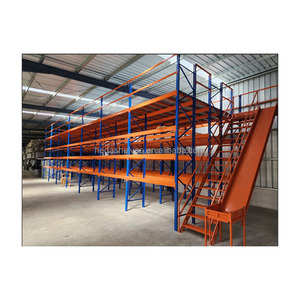
Push Back Pallet Racking: Engineering Architecture and Mechanics
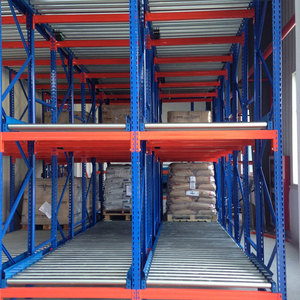
Push back pallet racking is recognized by intralogistics engineers as one of the most operationally efficient high-density storage solutions available. Operating on a Last-In, First-Out (LIFO) inventory model, push back racking utilizes nested telescoping rolling carts that travel along inclined structural steel rails mounted onto structural pallet rack beams. Unlike conventional drive-in systems where forklift operators must traverse narrow, hazardous internal bays, push back racking keeps forklift activity confined strictly to the outer cross-aisle.
Structural Anatomy of an Industrial Push Back System
A certified, industrial-grade push back racking installation produced by HEDA Shelves comprises several critical, high-precision engineering assemblies:
Nested Cart Carriages
Fabricated from heavy-duty steel tube sections and low-profile nested channel frames. Each cart nests systematically beneath the next to minimize vertical beam clearance loss, providing low friction and zero carriage binding across 2 to 6 pallet depths.
Heavy-Duty Flanged Steel Bearings
Engineered with double-shielded precision bearings running within structural guide tracks. Machined wheel flanges prevent lateral cart sway, ensuring smooth tracking even when handling non-standard or slightly deflected wood and plastic pallets.
Fail-Safe Cart Stops & Push Guards
Integral mechanical stops at the front loading face prevent pallet overrun. Built-in anti-lift brackets and heavy structural bullnoses protect the carriage mechanism from forklift mast collisions during rapid pallet loading cycles.
Dynamic Storage Systems: Comparative Engineering Matrix
Logistics directors and fulfillment managers evaluating system retrofits or greenfield facilities must balance SKU density, capital investment, and throughput velocity. The following operational matrix details how Push Back compares against other dense storage topologies:
| Storage Topology | Rotation Logic | Depth Range | SKU Selectivity Index | Forklift Cycle Time | Upright Collision Risk |
|---|---|---|---|---|---|
| Push Back Racking | LIFO per lane | 2 – 6 Pallets Deep | High (One SKU/Lane) | Fast (Aisle-Only Operation) | Low (Zero Bay Penetration) |
| Drive-In Racking | LIFO per bay | 4 – 12 Pallets Deep | Low (One SKU/Bay) | Slow (Deep Bay Entry Required) | Severe (High Forklift Impact) |
| Pallet Flow (Gravity) | FIFO strict | 4 – 20 Pallets Deep | Medium (Dual Aisle Required) | Fast (Separated Load/Pick) | Low (Aisle Operation) |
| Radio Shuttle System | FIFO or LIFO | 10 – 40+ Pallets Deep | Medium-High | Automated Internal Travel | Minimal (Semi-Autonomous) |
| Selective Pallet Rack | 100% Random Access | 1 Pallet Deep | Maximum (100% Direct Pick) | Standard | Moderate (Narrow Aisles) |
Future Procurement & Technological Trends (2025–2035)
The global warehousing landscape is experiencing monumental shifts driven by rising commercial real estate square-footage costs, cold chain cold-storage energy consumption spikes, and the convergence of semi-automated materials handling. Procurement executives selecting push back racking suppliers are prioritizing the following long-term technological and economic trends:
1. Integration with Autonomous Mobile Robots (AMRs) & AGVs
Traditional push back systems rely on counterbalance forklift operators applying smooth horizontal thrust to push nesting carts uphill. The latest forward-looking facilities in North America and Western Europe are standardizing push back guide channels to interface directly with sensor-guided Automated Guided Vehicles (AGVs). By equipping push back cart faces with retroreflective optical targets and pressure-calibrated pushing bumpers, autonomous forklifts can safely perform continuous LIFO replenishment and retrieval without manual operator intervention.
2. Cold Chain Freezer Cost Compression
Refrigerated and blast freezer facilities run at severe kilowatt-hour operational costs. Conventional selective racking wastes valuable cubic feet in multiple cold air-conditioned travel aisles. Push back systems compress cold storage footprints by up to 55%, delivering massive thermal savings. Modern engineering demands specialized low-temperature carbon steels (such as Q355D/E) and proprietary low-viscosity synthetic grease bearings that function seamlessly at temperatures down to -35°C without cart freezing or sticking.
3. Decarbonization and Green Steel Sourcing
Global supply chains require quantifiable Scope 3 carbon reduction. Procurement specifications increasingly favor manufacturers like HEDA Shelves who implement electric arc furnace (EAF) recycled scrap steel processing, solar-powered powder coating pre-treatment lines, and zero-VOC electrostatic polyester powder coatings. Sourcing durable racking systems capable of withstanding 20+ years of rigorous warehouse cycles directly curbs the embodied carbon footprint of the facility.
4. Dynamic Smart Sensor Cart Monitoring
The next frontier in warehouse safety is IoT-enabled telematics. Modern deep push back lanes (5 to 6 deep) are being integrated with low-power wireless strain-gauge sensors and speed monitors embedded into the cart stop plates. These sensors notify Warehouse Management Systems (WMS) in real-time regarding bay occupancy, pallet weight validation, and acceleration spikes caused by irregular forklift bumping, allowing preventative maintenance before mechanical failures occur.
Why Global Logistics Leaders Partner with HEDA Shelves
Established in 2001, Guangzhou Heda Shelves Co., Ltd. has grown over 25+ years into one of the premier heavy-duty warehouse racking manufacturers and exporters in China. Operating an expansive modern manufacturing facility covering 30,000 m² (over 323,000 sq ft) with more than 300 experienced fabrication engineers, machinists, and structural specialists, HEDA delivers an extraordinary production output of 30,000 metric tons per month.
Free 24-Hour CAD & 3D Engineering
Our in-house design engineering department generates comprehensive AutoCAD architectural layouts, 3D structural visual renders, and seismic structural calculation packages tailored to your building column grid, fire sprinkler flue spaces, and forklift turning radiuses within 24 hours.
Certified ISO & CE Quality Systems
Certified under ISO 9001:2015 Quality Management Systems (Certificate No. 18624Q00169R0M) and CE Construction Products Regulation (No. 2435-CPR-8605159). All raw steel coils undergo rigorous tensile yield testing, ultrasonic weld inspection, and micro-meter powder coating thickness tests.
Container-Optimized Ocean Export
Exporting structural steel racks demands precision containerization. We pack upright frames, box beams, push back cart carriages, and guide channels with automated steel banding, corner edge protectors, and waterproof plastic film wrapping to ensure 100% zero-damage arrival at global seaports.
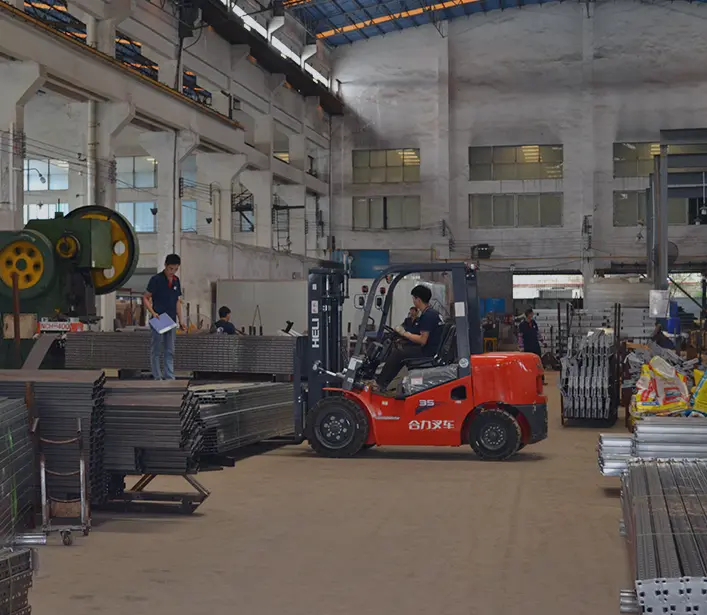
Full-Chain Precision Manufacturing
Every structural push back racking component undergoes an exhaustive 10-stage fabrication protocol: starting from raw hot-rolled certified steel coils, slitting, multi-station automated hydraulic punching for exact 50mm/75mm beam connector pitches, continuous cold roll profiling, robotic welding, 8-stage chemical pickling and phosphating, and finished on high-efficiency electrostatic powder coating baking lines.
This rigorous industrial process ensures that our push back carriages retain micron-level geometric accuracy, completely preventing frame warping, cart derailment, or binding during intense warehouse logistics cycles.
Push Back Racking Procurement FAQ: Answers for Project Managers
Consult this technical Q&A guide covering critical structural parameters, building tolerances, pallet interactions, and export logistics prior to issuing an RFQ or placing high-volume production orders.
How much warehouse floor space can push back racking realistically save compared to selective racking?
Push back pallet racking typically increases storage capacity by 75% to 100% across identical warehouse footprints compared to standard selective racking. By consolidating multiple access aisles into deep-lane 2, 3, 4, 5, or 6-deep push back arrays, the ratio of storage space to aisle space improves drastically. Facilities often decrease aisle square footage requirements from 60% of total floor area down to less than 28%, significantly reducing cost per pallet position.
What pallet specifications (GMA, EUR, Plastic, Custom) are supported by your nesting carts?
Because HEDA Shelves controls custom roll-forming and robotic carriage welding in-house, we engineer carts around standard North American 48" x 40" GMA pallets, European 1200 x 800 mm EUR/EPAL pallets, Australian 1165 x 1165 mm pallets, or specialized metal storage stillages. Each cart is designed with customizable front lip retainers, bottom skid runner support bars, and optional center safety wire decking to safely cradle non-standard or damaged wooden pallets.
How does the push back system handle cold storage and below-freezing temperatures?
Cold storage blast freezers (-25°C to -35°C) pose severe risks of bearing seizure and grease thickening in low-grade mechanisms. HEDA Shelves Push Back systems for cold rooms utilize hermetically sealed stainless-steel flanged wheels packed with aerospace-grade low-temperature synthetic lubricants. Additionally, all structural channel frames receive specialized shot-blasting and low-temperature impact-resistant powder coatings to prevent embrittlement and corrosion.
What special forklift specifications or mast tilts are required for push back operation?
Standard counterbalance and reach forklifts are fully compatible with push back racking. Operators do not require specialized attachments. However, the forklift mast must possess adequate forward and backward tilt capability (typically 3° to 5°) to match the 2.5% to 3.0% rail slope angle when inserting pallets into carts. The forklift's hydraulic pushing power must easily overcome the gravitational component of the stored pallets (typically requiring 3% to 4% of total load weight as horizontal pushing force).
What structural codes, seismic load ratings, and engineering calculations do you supply for permit sign-offs?
For international buyers in the United States, Canada, Australia, and the European Union, HEDA Shelves delivers comprehensive finite element analysis (FEA) structural calculation packages, raw steel mill test certificates (MTRs), and full 2D/3D shop drawings. Our structural designs conform to RMI (Rack Manufacturers Institute) ANSI MH16.1, EN 15512, and AS 4084 standards, enabling your local Engineer of Record (EOR) to seamlessly stamp drawings for city building permits.
What is your production lead time, minimum order quantity (MOQ), and shipping delivery process?
Standard lead times for full container orders (20GP, 40GP, 40HQ) range between 15 to 25 business days from approved CAD drawing sign-offs. We accept scalable project orders from single-bay extensions to 20,000+ pallet distribution centers. Shipments are loaded directly at our Guangzhou factory and shipped through major international ports (Nansha, Huangpu, Shenzhen, or Hong Kong) directly to your destination port under FOB, CIF, CFR, or DDP terms.
Transform Your Warehouse Density with HEDA Push Back Systems
Maximize cubic utilization, cut forklift travel times, and eliminate bay collision risks with high-tensile, factory-direct push back racking. Connect directly with our Senior Engineering Team for a complimentary 24-hour CAD layout and itemized project quotation.