China Best Industrial Storage Shelving Systems Factories & Suppliers
Engineering-grade selective racking, high-density push-back, gravity flow systems, and structural mezzanines built with certified high-yield steel for North American and global enterprise warehouses.
Engineered Warehousing Inventory
Featured Industrial Storage & Material Handling Equipment
Precision-formed beam connectors, heavy-duty cold-rolled steel profiles, and modular racking units manufactured to strict international structural standards.
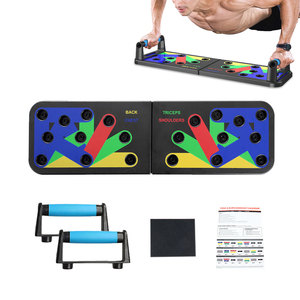
Engineered modular construction combining high-tensile structural ABS polymers with high load tolerance, designed for ergonomic multi-angle leverage resistance.
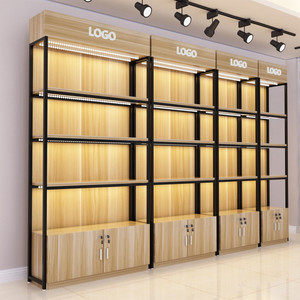
Anti-corrosion chrome finish wire storage system with tool-free slip-sleeve height adjustability, designed for hygienic dry storage, retail staging, and pick operations.
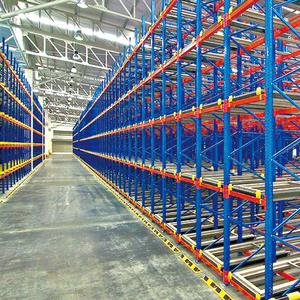
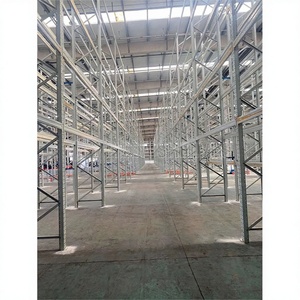
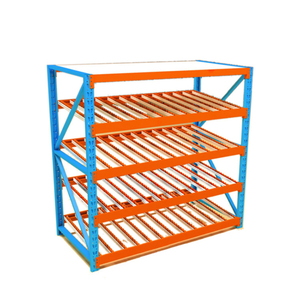
Low-profile nested steel shuttle carts on inclined structural channels. Maximizes pallet bay cube utilization up to 6 deep per lane under heavy industrial dynamic loadings.
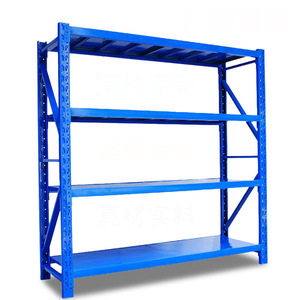
North American teardrop hole pattern fully compatible with RMI standards. Features automatic safety locking pins, roll-formed continuous columns, and welded base plates.
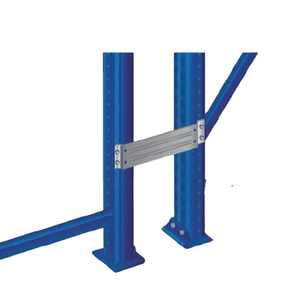
Heavy-gauge welded structural channel spacers to tie back-to-back rack runs. Maintains uniform flue space compliance according to NFPA fire safety sprinkler mandates.
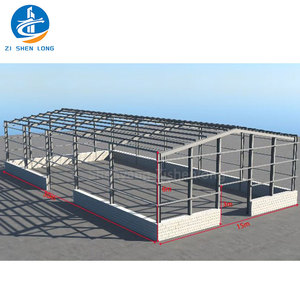
Heavy industrial H-section and portal frame prefabricated steel structures. Custom-designed clear span architecture tailored to accommodate rack-supported building mezzanines.
Verified Manufacturing Capabilities: Why Global Sourcing Teams Partner with Us
Operating out of our Guangzhou manufacturing complex since 2001, Guangzhou Heda Shelves Co., Ltd. has developed into an internationally certified supplier of advanced pallet racking, industrial cantilever systems, multi-tier rack-supported mezzanines, and automated material handling infrastructure. With more than 300 experienced technical staff, structural engineers, and certified welding specialists across a 323,000 sq. ft. modern facility, our production lines process in excess of 30,000 metric tons of prime structural steel every month.
Global procurement teams navigating overseas sourcing require verified manufacturing precision, certified structural adherence, and predictable logistics fulfillment. We bridge the engineering divide between Asian manufacturing efficiency and Western regulatory compliance. Every storage design is calculated to comply with ANSI/RMI MH16.1 specifications, European EN 15512 codes, and AS4084 guidelines, supporting stamped calculation reviews by local engineers of record in the United States, Canada, Australia, and the European Union.
Strategic Engineering Turnaround: Send your architectural footprint, clear ceiling heights, floor slab PSI specs, and forklift mast data. Our in-house engineering group generates comprehensive 2D CAD layout schematics, 3D spatial renders, and itemized structural quotations within 24 hours.
Automated Roll-Forming Lines
Continuous CNC multi-station cold roll-forming mills produce upright columns with tight dimensional tolerances (within ±0.5mm), eliminating residual internal metal stresses and guaranteeing consistent interlocking fit.
Automated Pre-Treatment & Coating
A rigorous 10-step surface preparation process featuring acid pickling, zinc phosphating, and automatic electrostatic epoxy-polyester powder coating cured at 200°C ensures salt-spray resistance exceeding 500 hours.
Certified Structural Compliance
Audited under ISO 9001:2015 Quality Management Systems (Certificate No. 18624Q00169R0M) and CE Construction Products Regulation (2435-CPR-8605159), accompanied by raw material mill test certificates (MTC).
Imperial & Metric Dual Engineering
Complete project documentation rendered natively in imperial feet/inches and pounds or metric millimeters and kilograms, ensuring seamless permit approval with local municipal building departments.
Ocean-Optimized Freight Loading
Proprietary container packing software sequences nesting uprights and bundle-banded beams with heavy steel strapping, moisture-barrier wrapping, and corner edge protectors to minimize ocean transit damage.
Technical Comparison
Warehouse Storage System Engineering Selection Matrix
Selecting the optimal industrial racking topography dictates throughput velocity, floor space efficiency, and return on capital investment. The following engineering comparison guides warehouse directors and project engineers in matching SKU profiles to appropriate structural systems.
System Architecture
Pallet Selectivity
Floor Cube Utilization
Rotation Principle
Forklift Compatibility
Typical Industrial Application
Selective Pallet Racking
100% Immediate
40% – 45%
FIFO / LIFO
Counterbalance, Reach, VNA
General 3PLs, E-Commerce fulfillment, High-SKU distribution
Push-Back Rack (2–6 Deep)
Front Pallet Face
70% – 75%
LIFO
Standard Counterbalance, Reach
Cold storage, food processing, medium SKU batch staging
Future Industrial Storage Procurement Trends: What Buyers Must Anticipate
Industrial warehousing procurement is undergoing a paradigm shift driven by e-commerce velocity, commercial real estate escalation, and warehouse automation. Sourcing managers and supply chain executives must evaluate factory partnerships based on emergent trends:
1. Accelerated Convergence Toward Hybrid Semi-Automated Systems
Purely manual selective racking is increasingly being superseded by hybrid systems that bridge manual lift trucks and automated guided vehicles (AGVs) or autonomous mobile robots (AMRs). Modern factory-engineered rack bays now routinely feature tighter deflection thresholds (L/400 or L/500 rather than conventional L/200) to ensure laser-guided vehicle sensor accuracy. Sourcing directors must verify that suppliers can machine precision laser-guided bottom rails, target reflectors, and ultra-flat floor run channels directly during the roll-forming cycle.
2. High-Yield Cold-Rolled Steels vs. Traditional Gauge Thickness
Historically, procurement specifications relied strictly on raw steel gauge thickness (e.g., 12-gauge or 14-gauge uprights). The modern metallurgical trend utilizes micro-alloyed, high-strength cold-rolled steels such as Q355B (equivalent to ASTM A572 Grade 50) in place of softer Q235B (ASTM A36). By utilizing higher yield strengths (minimum yield point of 355 MPa), structural designers reduce gross component deadweight by 12% to 18% without sacrificing axial column capacity. This directly reduces sea-freight tonnage costs while meeting strict seismic resistance parameters.
3. Seismic Resilience and Permitting Rigor
Municipal building authorities across seismic regions in the Americas, Oceania, and Southern Europe now demand site-specific finite element analysis (FEA) validating base plate anchor shear and upright ductile deformation under seismic ground accelerations (Ss and S1 values). Overseas factories that cannot provide third-party verified weld testing (AWS D1.1/D1.3 standards) or certified structural design calculations face immediate permit rejections, leading to disastrous project delays. Strategic procurement requires early-stage submission of signed engineering documentation packages.
With volatile ocean freight costs, packaging efficiency is a critical landed-cost determinant. Tier-1 Chinese manufacturers now employ advanced 3D container cubing simulations that pack high-density nested upright sections and alternating stepped beam pairs. By achieving 98%+ volumetric container utilization in 40ft High Cube containers, landed logistics cost per pallet position is drastically reduced. Concurrently, European and North American buyers are requiring Environmental Product Declarations (EPDs) documenting low-carbon electric arc furnace (EAF) coil inputs and eco-compliant powder coatings free from volatile organic compounds (VOCs).
Technological Roadmap
Future Trends in Storage System Design & Materials Engineering
The manufacturing landscape for industrial shelving is rapidly evolving from basic sheet-metal stamping into advanced digital metal-forming engineering. Key technical breakthroughs reshaping manufacturing excellence include:
Integrated IoT Sensor Upright Bracing
Sensors embedded into structural baseplates and bottom upright segments continuously monitor micro-deflection, seismic displacement, and impact shock from forklift collisions, streaming real-time structural health metrics to warehouse management dashboards.
Sub-Zero Cryogenic Steel Metallurgy
Cold chain facilities operating down to -30°C require structural steel grades resistant to brittle fracture. Formulations enriched with micro-alloyed manganese prevent ductile-to-brittle transitions, ensuring full impact resilience in automated blast freezers.
Continuous High-Speed Laser Tube Cutting
Replacing traditional hydraulic mechanical blanking, robotic multi-axis fiber laser systems cut interlocking tabs, connector slots, and mounting holes with 0.05mm repeatability, eliminating micro-burrs and preventing localized stress risers.
Procurement Intelligence
Frequently Asked Questions: Global Sourcing & Engineering Due Diligence
Technical due diligence answers to assist procurement directors, safety coordinators, and logistics planners in vetting Chinese industrial storage suppliers.
How do we ensure that pallet racking manufactured in China complies with US RMI / ANSI MH16.1 or Canadian CSA S16 standards?
Racking compliance centers on two foundational factors: structural design methodology and raw steel mechanical validation. Reputable manufacturers design beam-to-column connector assemblies, frame bracing geometry, and column profiles using finite element cold-formed steel engineering conforming to RMI / ANSI MH16.1 specifications. To satisfy North American permitting and local engineer-of-record reviews, our engineering department provides comprehensive calculation reports detailing section moduli, moments of inertia, column load tables, and weld certifications (AWS D1.1/D1.3). Furthermore, verified Mill Test Certificates (MTCs) confirming chemical composition, elongation, and yield strength (Q235B / Q355B verified against ASTM A36 / A572 Gr 50) accompany every production heat.
What documentation is required to pass local municipal seismic and building permits?
Obtaining building permits requires a documented submittal package. We deliver: (1) Scaled 2D CAD architectural plans detailing aisle clearances, exit egress widths, flue spacing, and sprinkler head coordination; (2) Elevation drawings specifying beam level elevations, clear pallet gaps, and overall height; (3) Structural calculations including seismic base shear calculations, overturning moments, anchorage anchor bolt pull-out calculations, and concrete slab bearing load verifications; and (4) Load capacity plaques indicating maximum permissible uniform distributed loads (UDL) per pair of beams and maximum frame capacities based on the vertical beam spacing.
What are the practical lead times from design freeze to jobsite port delivery?
Standard project production cycles range from 20 to 30 business days following final approval of engineering shop drawings and deposit confirmation. Factory production throughput is 30,000 tons monthly, ensuring that large multi-container orders (e.g., 10 to 50 40ft HQ containers) are fabricated rapidly. Ocean transit duration depends on the destination port: approximately 14–20 days to US West Coast ports (Los Angeles, Long Beach, Oakland, Vancouver), 28–35 days to US East Coast and Gulf ports (Savannah, Houston, New York/New Jersey), and 25–32 days to major European base ports (Rotterdam, Hamburg, Felixstowe). We offer FOB, CIF, DDU, and DDP terms depending on client preference.
How do teardrop roll-formed connectors compare to structural bolted rack connections?
Roll-formed teardrop racking utilizes high-strength formed sheet steel with punchings on 2-inch centers, allowing tool-free drop-in beam installation secured by spring-loaded safety pins. It represents the standard for North American general distribution due to low material cost, rapid reconfiguration, and fast assembly. Structural racking, by contrast, is fabricated from hot-rolled structural steel channels (C-channels) with bolted beam connections. While structural racking demands a higher initial capital outlay and longer assembly times, it offers superior resistance to repetitive forklift mast impacts, making it the preferred choice for heavy abusive environments, freezer distribution hubs, and heavy push-back layouts.
What surface treatment is best for corrosive, unheated, or sub-zero freezer facilities?
For standard ambient and dry warehouse environments, a high-grade thermosetting polyester-epoxy hybrid powder coating applied over a multi-stage phosphated surface provides excellent scratch and chemical protection. However, in cold storage facilities where thermal cycling creates condensation, or in coastal and outdoor lumber yards, hot-dip galvanization conforming to ASTM A123 / EN ISO 1461 is recommended. Hot-dip galvanization immerses the steel components into molten zinc at 450°C, creating an alloyed zinc-iron metallurgical barrier that prevents rust propagation even when subjected to abrasion.
How does the factory prevent bundle collapse, rack bending, or surface damage during ocean container transport?
Ocean freight subjecting heavy steel bundles to dynamic marine motions requires engineered export crating and packing protocols. Upright frames are stacked horizontally with timber dunnage spacers and banded using heavy high-tensile steel straps with edge protection corner boards. Step beams are nested in matching pairs with non-abrasive closed-cell PE foam interleaving between painted finishes. Hardware components, base plates, row spacers, and anchor bolts are crated in labeled, heat-treated fumigated plywood cases (ISPM-15 compliant). Furthermore, desiccants are suspended throughout the container interior to mitigate condensation during trans-equatorial maritime crossings.
Transform Your Warehouse Volumetric Efficiency Today
Connect directly with our senior racking applications engineering team. Submit your architectural floor drawings, building clear heights, and unit-load parameters for a complimentary 2D/3D CAD design layout, structural load review, and competitive factory-direct landed price quotation within 24 hours.