Engineering the Future of Cubic Storage Optimization
Navigating escalating commercial industrial real estate values demands advanced structural engineering, structural integrity certifications (ANSI MH16.1, RMI, EN 15512), and precision-engineered cold-formed steel manufacturing.
1. Architectural Paradigm: High-Density Volumetric Efficiency vs. Accessibility
Modern supply chain logistics hubs, fast-moving consumer goods (FMCG) distribution networks, and temperature-controlled cold-chain infrastructures are continually impacted by industrial land scarcity and spiraling kilowatt-hour operational expenses. In high-velocity fulfillment environments, warehouse footprint efficiency cannot be decoupled from structural load capacity and stock turnover throughput. Traditional selective pallet setups rarely exceed 40% volumetric spatial efficiency, effectively squandering the upper clear-height margins of modern 32-to-45-foot logistics infrastructure.
As China’s foremost high-density racking exporter and structural engineering authority, our plant operates under rigorous structural metallurgy protocols utilizing high-tensile certified structural steel coils (grades Q235B and Q355B, equivalent to ASTM A36 and ASTM A572 Grade 50). By deploying computerized continuous roll-forming lines, automated punching profiles with tight beam connector tolerances, and multi-stage anti-corrosion chemical pretreatments, we engineer industrial racking systems that elevate warehouse storage density by up to 75% to 250% over standard floor-stacked or wide-aisle configurations.
High-density racking configurations—ranging from dynamic push-back carts, structural cantilever cantilevers, and heavy-duty multi-tier mezzanine decks to automated radio shuttle channels—are deeply customized according to SKU profile velocities, seismic zone ratings (Seismic Design Categories A through F), floor slab concrete shear capabilities, and materials handling equipment (MHE) turning radiuses. This comprehensive whitepaper reviews our verified product lineup, manufacturing tolerances, strategic market procurement trends, and core procurement engineering standards.
Featured Heavy-Duty Industrial Racking & Platforms
Precision-engineered systems compliant with CE, ISO 9001:2015, and North American RMI testing protocols, tailored for international supply chains.
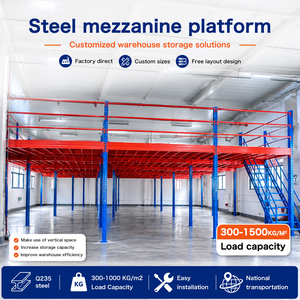
Multi Level Steel Industrial Mezzanine Storage System
Heavy-duty structural mezzanine platform multiplying warehouse vertical clear height into multi-tier order picking operations.
- Capacity: 300 - 1,500 kg/m²
- Decking: Steel, B-Deck, Grating
- Structure: Hot-rolled H-Beam/Q355B
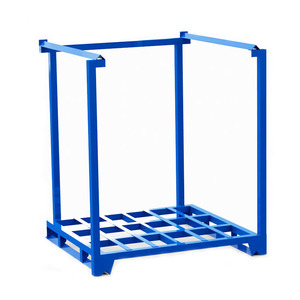
Industrial Warehouse Steel Stacking Nestainer Racks
Self-nesting movable tubular racking eliminating aisle dead-space for bulk seasonal goods and rapid container turnover.
- Stacking Tier: 3-5 Layers Safe Stack
- Unit Capacity: 1,000 - 2,500 kg
- Nesting Ratio: 4:1 Storage Footprint
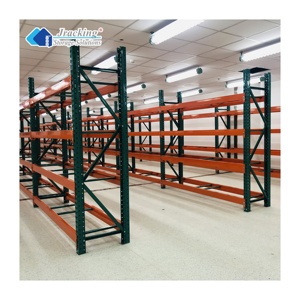
Adjustable Steel Teardrop Pallet Racking System
North American industry-standard punch profile allowing tool-less beam adjustment and direct interchangeability with legacy systems.
- Pitch: 2-inch (50.8mm) Increment
- Pallet Standard: 48" x 40" GMA Ready
- Compliance: RMI MH16.1 & CE Norm
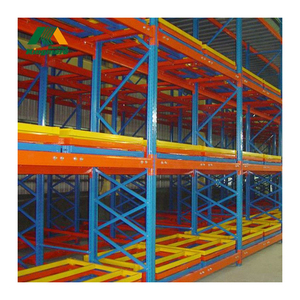
Heavy Duty Push Back Rack Stacking System
Nested telescoping rolling carts on inclined steel rails delivering high-density 2-to-6 deep pallet storage per SKU face.
- Depth: 2, 3, 4, 5, 6 Deep Pallets
- Cart Bearings: Sealed Precision Steel
- Throughput: Up to 70% Less Travel
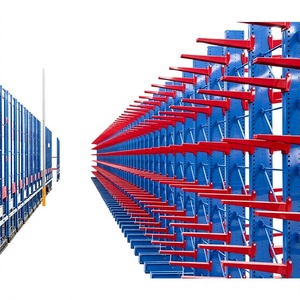
Heavy Duty Industrial Cantilever Warehouse Racks
Unobstructed structural columns providing continuous longitudinal storage for lumber, extruded pipe, steel profiles, and bars.
- Column Type: Roll-formed or H-Beam
- Arm Load: 500 - 1,800 kg per Arm
- Configuration: Single or Double Sided
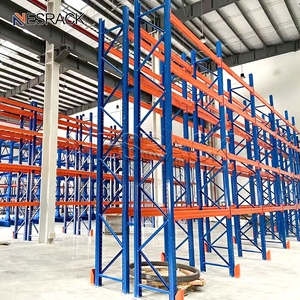
American Standard Heavy-Duty Selective Pallet Rack
High-rigidity bolted upright frames paired with step beams for versatile wire mesh decking or cross-bar integrations.
- Beam Safety Factor: 1.67 Yield Minimum
- Upright Section: 80x60 to 120x95 mm
- Finish: Electrostatic Epoxy Polymer
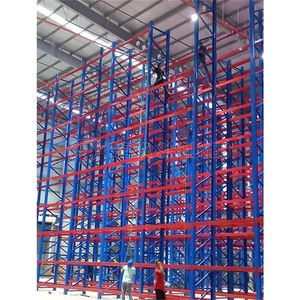
Heavy Duty Metal Storage Pallet Racking System
Heavy structural profile racking optimized for 3PL logistics multi-aisle operations requiring 100% random access picking.
- Layer Load: 1,000 - 4,500 kg / level
- Height Capabilities: Up to 14 Meters
- Deflection Standard: L/200 Under Full Load
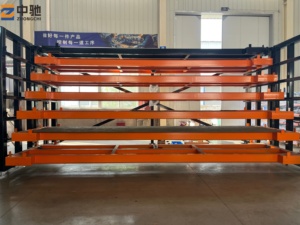
High Load Capacity 8-Layer Anti-Rust Coated Rack
Multi-tier high-bay cold storage & chemical application racking treated with 10-step anti-rust phosphating and cured powder finishes.
- Coating: 80-120 Micron Epoxy Layer
- Temperature Range: -30°C to +50°C
- Salt Spray Resistance: 500+ Hours ASTM B117
2. Comparative Engineering Matrix: Selecting the Appropriate Density Topology
Material handling directors and engineering contractors evaluate racking architectures across several interrelated operational parameters: cubic utilization percentage, SKU selectivity, pallet cycle times, and initial capital expenditure per pallet location. The following verified decision framework maps systems according to logistical suitability:
| Storage System Type | Cubic Density Efficiency | Pallet Selectivity Ratio | Stock Inventory Rotation | MHE Forklift Impact Risk | Best Logistical Use Case |
|---|---|---|---|---|---|
| Selective Standard Racking | (40%) | 100% (Direct Instant Access) | FIFO or LIFO Arbitrary | Low (Open Aisle Clearance) | High SKU-count, rapid-sorting e-commerce & retail DCs |
| Push Back Racking (2-6 Deep) | (75%) | Medium (Front face access) | LIFO by Channel Lane | Very Low (Carts guide pallets) | Cold storage, food/grocery distribution, 4-10 pallets/SKU |
| Drive-In / Drive-Through | (80%) | Low (Lane restricted) | LIFO (Drive-In) / FIFO (Drive-Thru) | High (Mast operates inside lanes) | Bulk commodity storage, beverage distributors, seasonal surges |
| Radio Shuttle Automation | (90%) | Engineered Deep-Lane | Automated FIFO or LIFO | Minimal (Robotic cart inside channel) | Sub-zero freezers, large bulk manufacturing, multi-deep bays |
| Structural Multi-Tier Mezzanine | (200% Floor Area) | 100% Manual Floor Picking | Dynamic Multi-Level Picking | Isolated from Ground Traffic | Auto parts distribution, small-parts bins, assembly space |
| Heavy Cantilever Racking | (60%) | 100% Face Frontage | Arbitrary Linear Load Handling | Medium (Long load clearance) | Lumber yards, steel tubing, PVC extrusions, bar stock |
System selection requires an exhaustive balancing of capital cost per pallet against labor expense per pick. While a radio shuttle rack incurs higher upfront mechanical costs, it yields dramatic thermal energy reductions inside refrigerated warehouses by compressing cubic footage requirements. Conversely, selective and teardrop systems minimize initial infrastructure outlay for facilities needing wide-open accessibility for high SKU diversity.
Why Top Global Engineering Contractors Partner With Us
From raw structural coil verification to certified third-party structural testing, our automated manufacturing process ensures structural reliability in mission-critical warehouses.
Certified Metallurgy & Structural Calculations
We procure direct mill-certified prime coils of Q235B and Q355B high-strength steel. Every project is validated by finite element analysis (FEA) software, ensuring full seismic and structural design conformity with RMI MH16.1, AISC, and EN 15512 specifications.
10-Step High-Durability Surface Engineering
Components undergo rigorous degreasing, ultrasonic pickling, zinc phosphating, and automatic dry-off before robotic electrostatic epoxy powder coating. The resulting finish resists heavy abrasion, impacts, moisture, and extreme -30°C cold-store environments without micro-fissuring.
Rapid 24-Hour CAD & 3D Modeling Response
Our staff of 30+ licensed civil and structural logistics engineers creates fully dimensioned imperial (ft/in/lbs) or metric CAD elevation schematics and complete BIM/Revit layouts within 24 hours, including seismic slab anchor engineering calculations for local permitting.
Container-Optimized Ocean Logistics
Uprights and beams are bundled with steel strapping, corrugated corner protectors, and moisture-barrier shrink wrap, maximizing cubic volume utilization within standard 40-foot High Cube (40HQ) ocean containers to significantly reduce international freight costs per pallet position.
International Quality & Compliance Badges
Our operations strictly observe ISO 9001:2015 quality management procedures, verified with CE marking (Certificate No. 2435-CPR-8605159) for structural construction components, along with RoHS material compliance documentation for green building environmental credits.
Complete Structural Warranty & Field Support
All installed heavy-duty racking frames, cross beams, connectors, and cantilever systems are backed by our written 10-year structural integrity warranty, complete with factory bolt-together erection manuals, anchor point torque schedules, and remote video installation guidance.
Future Procurement Trends in High-Density Storage
Strategic shifts in industrial procurement, robotic fleet integration, and lifecycle cost analysis reshaping modern distribution center infrastructure investments.
Transition Toward Autonomous AGV & AMR Integration
Standard forklift-operated racks are increasingly modified to interface directly with Autonomous Mobile Robots (AMRs) and automated guided counterbalanced trucks. Racking systems require tightened profile manufacturing tolerances (sub-millimeter deflection tolerances) and photo-eye optical reflector alignments to permit continuous robotic operations without sensor misalignments.
Cold-Chain Compression Driven by Energy Tariffs
Skyrocketing industrial refrigeration power costs have transformed cold chain procurement. Logistics developers are actively replacing static selective racks in sub-zero freezers with automated 4-way radio shuttle channels, achieving up to 85% cubic storage density and shrinking cooling volume requirements by thousands of cubic meters.
Seismic Base Isolation & High-Ductility Design
International building codes across seismic fault zones require dynamic spectral analysis and higher ductility reduction factors. Procurement managers demand third-party stamped engineering calculations validating base-plate anchor embedment depth, post-buckling beam behavior, and spine bracing geometry to satisfy regional building inspectors.
3. Technological Evolution in Cold-Formed Structural Fabrication
The manufacturing of industrial warehouse racking is undergoing structural transformation driven by lightweight structural engineering and metallurgical innovation. The conventional approach of over-specifying steel mass to compensate for structural deflection is being replaced by sophisticated computer-controlled cold-roll forming with multiple roll passes. By introducing multiple return bends and stiffening ribs along upright profile flanges, modern racks attain superior section moduli and higher load capacities while reducing excess raw steel weight.
Furthermore, robotic plasma beam-cutting and multi-axis CNC punching lines eliminate manual tolerance deviations. Hole punch pitch accuracy (whether standard 50mm, 75mm, or North American 2-inch teardrop increments) is maintained within ±0.1mm across a 12-meter upright section. This precision prevents residual mechanical stress during on-site erection, speeds field installation, and prevents uneven load distributions across connectors under maximum rated conditions.
Surface pretreatment chemistry has similarly advanced. Modern electro-chemical zinc phosphating and silane passivation pretreatments form a nanoscale ceramic crystalline matrix over raw steel surfaces. When layered with thermosetting polyester-epoxy powders, the finished coating provides superior impact resistance against forklift tine scrapes and resists chemical exposure to corrosive pallet outgassing.
Frequently Asked Engineering & Import Questions
Exhaustive technical, logistical, and compliance answers prepared by senior structural engineers for B2B procurement managers and EPC contractors.
What structural steel standards and mill grades do you utilize in racking fabrication?
How does your engineering team support North American seismic permit approvals?
Are your upright frames and step beams fully compatible with US Teardrop standards?
What is the maximum span and load rating achievable on structural steel mezzanines?
What anti-corrosion surface treatments are applied for sub-zero cold-storage operations?
How are export shipments packed to prevent transit deformation inside ocean containers?
What is the typical manufacturing lead time for full container load (FCL) projects?
How do you ensure NFPA 13 fire safety compliance regarding flue space allowances?
Can you manufacture OEM custom upright punch profiles and private-label colors?
What structural warranties and QA inspection protocols are provided with deliveries?
Accelerate Your Warehouse Capacity With Direct Factory Engineering
Send your building architectural drawings (DWG/PDF), clear height dimensions, pallet weights, and forklift specifications. Our senior structural logistics engineering team will return a certified CAD layout, 3D render, and transparent factory-direct quotation within 24 hours.
Send an Inquiry