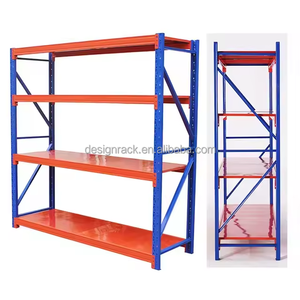
Enterprise Product Series
High-Performance Pallet & Cantilever Racking Portfolio
Explore factory-direct, cold-rolled and structural steel storage architectures fabricated with automated roll-forming and certified electrostatic powder coating lines.
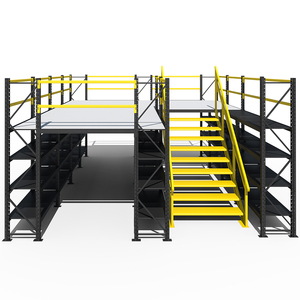
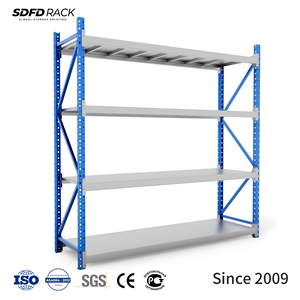
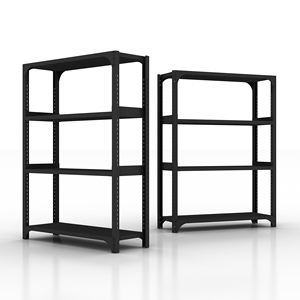
Structural Integrity & Mechanics
Engineering Cantilever & Heavy-Duty Pallet Systems for Critical Loads
Overcoming torsional stress, arm deflection, and seismic shear when handling long, irregular, and extreme-density cargo.
When engineering industrial storage systems for long profiles, timber, heavy coils, structural piping, and dense pallet arrays, standard shelving principles become obsolete. Cantilever pallet racking systems operate under complex cantilever deflection moments (M = F × L) where continuous unbraced lengths dictate arm geometry and column base rigidity. As a premier exporter and manufacturing leader in China, our engineering methodology relies on Finite Element Analysis (FEA) to eliminate stress concentrations at the column-to-base flange joint and arm pivot points.
Tapered Column Dynamics
Unlike standard roll-formed uprights, our heavy-duty cantilever columns feature continuous structural taper (H-beam or specialized box profile). This distributes moment load evenly from upper arms down to the heavy base plate, counteracting bending moments without adding redundant dead steel weight.
Pivot Pin Safety Connections
Cantilever arms employ high-shear grade 8.8 or 10.9 structural pivot pins with secure split pins or self-locking fasteners. When hit accidentally by lift trucks during upward hoisting, the arm swings freely upward instead of snapping the upright connection or bending the column flange.
Deflection Limits (L/200 - L/300)
All arm load tables comply with stringent deflection boundaries under full uniform load. Arms incorporate a nominal upward camber (typically 1:100 to 1:120) so that under maximum allowable operating payload, the arm settles horizontally without inducing dangerous forward slip.
| Component Type | Material Grade | Structural Profile | Yield Strength (fy) | Standard Load Span | Anti-Corrosion Finish |
|---|---|---|---|---|---|
| Cantilever Upright | Q235B / Q355B Hot-Rolled | IPE / HEA / Welded Box H-Beam | ≥ 235 - 355 MPa | Up to 12,000 mm Clear Height | Electrostatic Polyester (70-90μm) |
| Cantilever Arm | Q235B Cold-Formed / C-Lip | Tapered C-Channel / Tubular Box | ≥ 235 MPa | 600 mm to 2,500 mm Reach | High-Visibility Safety Orange (RAL 2004) |
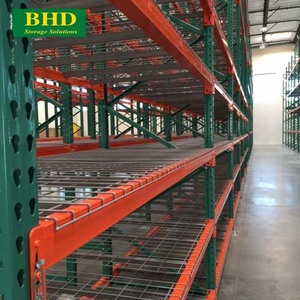
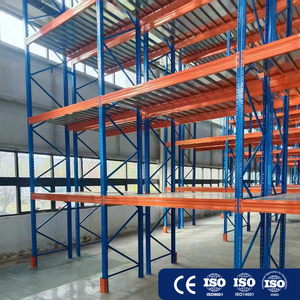
| Selective Pallet Beam | Q235B High-Tensile Coil | Double-C Interlocking Box Beam | ≥ 235 MPa | 2,300 mm to 3,900 mm (GMA / Euro) | Powder Coated / Hot Dip Galv (HDG) |
| Teardrop Upright Frame | ASTM A1011 Equivalent | Cold-Rolled Omega Column Profile | ≥ 310 MPa | 40,000 to 55,000 lbs Frame Rating | Polyurethane Powder Coat (RAL 5015) |
| Cross & Horizontal Bracing | Q235B Structural Steel | Cold-Drawn Angle Iron & RHS Tube | ≥ 235 MPa | Engineered X-Pattern Rigidity | Zinc Phosphate Pre-treatment |
Strategic Sourcing Whitepaper
Future Procurement Trends in Industrial Cantilever & Pallet Racking
How North American and international logistics directors balance total landed cost, seismic engineering, and long-term asset scalability.
The procurement landscape for warehouse logistics racking is undergoing significant structural shifts. Procurement directors, third-party logistics (3PL) providers, and industrial distributors are no longer assessing cantilever and pallet racking merely as capital commodity purchases. Instead, decision-making is heavily dictated by landed lifecycle costs, high-cube ocean logistics optimization, modular layout interchangeability, and localized permitting compliance (IBC 2024, NFPA 13, and Canadian NBCC seismic codes).
1. Container Cube Optimization & High-Density Bundling
Ocean freight fluctuations require advanced bundle nesting strategies. Traditional pre-welded cantilever bases often waste up to 45% of 40HQ container interior cubic volume due to awkward geometry. Modern procurement contracts with HEDA Shelves utilize detachable, high-tensile bolted bases and interlocking arm brackets that pack flush into standard marine containers. This increases steel weight utilization per container from 16 metric tons to 24-26 metric tons, reducing per-pallet-position ocean transit freight costs by upwards of 28%.
2. Universal Interoperability (Teardrop & Metric Selective)
Supply chain leaders across North America actively source teardrop-compatible rack configurations that integrate effortlessly with pre-existing domestic footprints. By standardizing 2-inch pitch hole intervals and compatible lock-pins while sourcing from top-tier Chinese manufacturing lines, enterprises gain wholesale factory-direct cost efficiency without stranding their legacy inventories or requiring dedicated proprietary beam connectors.
3. Decarbonized Steel Sourcing & Low-VOC Powders
Global corporate ESG mandates now scrutinize Scope 3 supply chain emissions. Next-generation procurement specs require mills to furnish traceable steel heat numbers, utilize scrap-recycled electric arc furnace (EAF) raw billets, and apply TGIC-free polyester powder formulations. Our zero-wastewater phosphating pretreatment lines align directly with rigorous US and EU environmental standards.
4. Rapid Pre-Engineered Permit Packs
The historical hurdle in overseas racking procurement has been regional engineering permitting. Trend-forward procurement contracts stipulate supplier-provided imperial shop drawings, 3D BIM/CAD building integration models, and comprehensive Finite Element structural calculations ready for localized Professional Engineer (PE) stamping within 24 to 48 hours of building dimension release.
Technological Innovations
Emerging Engineering Trends in Modern Heavy-Duty Racking
Bridging traditional heavy fabrication with smart logistics, automated material handling, and automated structural forming.
Digital Twin Simulation & FEA Stress
Modern cantilever systems undergo digital twin modeling prior to coil slitting. Engineers simulate dynamic forklift impacts, unequal arm loading, and asymmetric seismic ground accelerations, optimizing structural thickness at high-stress shear vectors while thinning non-critical webbing.
Narrow Aisle (VNA) Guided Cantilever
Floor space pressures have driven the development of guided cantilever rack systems where side-loaders and articulated lift trucks run on ultra-precise steel floor guide rails or inductive magnetic wire guidance. This cuts aisle widths from 4.5 meters down to 2.1 meters, expanding storage density by 40%.
Automated Profiling & Laser Welding
Traditional manual welding has transitioned to high-speed robotic continuous welding cells and multi-station continuous cold roll-forming lines. CNC plasma and 3D fiber tube lasers cut connector slots with sub-millimeter precision, guaranteeing effortless upright alignment on job sites.
Our 10-Stage Precision Manufacturing Workflow
Stage 01
Certified Steel Coil
Mill-tested Q235B/Q355B coils verified for tensile yield and chemical purity.
Stage 02
Precision CNC Slitting
High-tolerance coil longitudinal slitting to exact profile strip dimensions.
Stage 03
Multi-Punch Matrix
Automated punch presses deliver exact 50mm, 75mm, or 2" teardrop hole pitches.
Stage 04
Cold Roll-Forming
Continuous 24-station rolling stands form rigid Omega and box beam sections.
Stage 05
Fiber Laser Cutting
3D lasers mitre cut columns, arms, and structural base plates without thermal warp.
Stage 06
Robotic MIG Welding
Gas-shielded robotic arm cells bond connectors and base plates for zero slag.
Stage 07
Shot Blasting / Polish
Mechanical surface scale removal and deburring for safe warehouse handling.
Stage 08
Pickling & Phosphating
Multi-bath chemical immersion creates a corrosion-resistant molecular primer coat.
Stage 09
Electrostatic Coating
Automated powder spray booths bake durable 180°C thermoset polymer resins.
Stage 10
Batch QC & Bundling
Caliper dimensional checks, film thickness gauges, and container strapping.
Enterprise Core Strengths
Why International Logistics Leaders Choose HEDA Shelves
Engineered reliability, massive production scale, and complete end-to-end export documentation directly from the factory source.
25+ Years of Racking Manufacturing Mastery
Since our founding in 2001, Guangzhou Heda Shelves Co., Ltd. has established itself as an authoritative global manufacturer of warehouse storage racking, heavy cantilever configurations, mezzanine flooring platforms, and automated handling racking. Operating from our expansive 30,000 m² (approx. 323,000 sq ft) production base in Guangzhou, our team of over 300 experienced craftsmen, mechanical design engineers, and international logistics coordinators delivers custom storage architectures to more than 130 countries worldwide.
We maintain fully integrated ISO 9001:2015 Quality Management Systems (Certificate No. 18624Q00169R0M), CE Marking (No. 2435-CPR-8605159), and full RoHS compliance. When you partner with us, there are no middleman markups. From the first structural CAD draft to container packing and sea cargo tracking, your engineering team collaborates directly with our in-house technical department.
Direct Engineering Deliverables with Every Order:
- 24-Hour Free 2D/3D CAD Layouts: Turnaround building blueprints, aisle layouts, and pallet count calculations within 1 business day.
- Imperial & Metric Bilingual Documentation: Load capacity tables, column base reactions, and beam ratings issued in pounds (lbs), feet (ft), or metric (kg/mm).
- Certified Steel Heat Certificates: Full chemical and tensile property verification documents shipped with each ocean container.
- OEM/ODM Customization: Tailored upright colors (RAL standard matching), specialized arm shelf decking (wire mesh, timber, or steel sheet), and custom forklift guide angles.
2001.
Established Year
Over 25 Years of Excellence
323K+
Factory Area (Sq Ft)
30,000 m² Modern Campus
30Kt
Monthly Steel Output
Massive Production Throughput
10K+
Projects Delivered
Serving USA, CA, Europe & Global
Procurement Knowledge Base
Frequently Asked Questions on Cantilever & Pallet Racking Sourcing
Authoritative technical answers to key questions regarding structural design, overseas shipping, code compliance, and installation.
What are the key technical differences between roll-formed and structural I-beam cantilever racks?
Roll-formed cantilever racks are fabricated from high-yield sheet coil (Q235B steel) cold-bent into hollow or C-shaped channels. They are ideal for light-to-medium long goods (such as plastic conduit, light lumber, moulding, and consumer goods) up to approximately 1,500 lbs (680 kg) per arm. Structural cantilever racking is hot-rolled from wide-flange structural I-beams (W or IPE sections). Structural I-beam systems deliver massive impact resistance against heavy forklifts and support extreme capacities exceeding 6,600 lbs (3,000 kg) per arm, making them the standard choice for steel pipe, solid bar stock, heavy drywall, and outdoor lumber yard applications.
How do you calculate cantilever arm deflection under uniform distributed load (UDL)?
Under ANSI MH16.1 and European EN 15512 codes, cantilever arm deflection is calculated using the elastic beam equation δ = (w × L^4) / (8 × E × I) for uniform distributed load w, where L is arm length, E is the Modulus of Elasticity of steel (approx. 200–210 GPa), and I is the cross-sectional moment of inertia. We design arms so that maximum elastic deflection does not exceed L/200 under 100% rated capacity. Furthermore, our arms are fabricated with an intentional 1.5° to 2° upward slope/camber to offset visual and functional deflection once full load is applied.
Can your engineering team support North American seismic permit requirements?
Yes. We regularly supply detailed structural design packages formatted specifically for municipal permitting in the United States and Canada (under IBC 2021/2024 and NBCC). This includes anchor bolt pull-out calculations, seismic base shear coefficient calculations (Ss and S1 parameters), foundation slab minimum thickness guidelines, and complete CAD shop drawings with imperial dimensions. These packages are structured so that your local licensed Professional Engineer (PE / SE) can readily review, approve, and wet-stamp them for building department submittal.
How are cantilever uprights and arms bundled to prevent damage during ocean transit?
Export packing is engineered to maximize container weight capacity while safeguarding powder-coated finishes. Upright columns are interleaved with heavy corrugated buffer pads and high-density foam sleeves, then strapped securely to heavy timber or steel runners with heavy-gauge PET straps. Cantilever arms and small brackets are banded in steel cages or heavy wooden crates. Every bundle is tagged with weatherproof barcodes and piece-mark labels that correlate directly with the installation shop drawings, dramatically reducing job-site sorting time.
What surface treatment is best for outdoor cantilever lumber and pipe racks?
For exposed outdoor yards subject to rain, UV, and freeze-thaw cycles, Hot-Dip Galvanizing (HDG) conforming to ASTM A123 / ISO 1461 is strongly recommended. HDG immerses the pre-cleaned structural steel components into molten zinc at 450°C, producing a metallurgical zinc-iron alloy coating with a minimum thickness of 80–100 microns. This delivers 25+ years of maintenance-free rust resistance, far exceeding standard painted or light electro-galvanized finishes. For moderate indoor or dry warehouse applications, our standard electrostatic polyester powder coating (tested to ASTM B117 500-hour salt spray) provides exceptional durability at lower cost.
What information is needed to obtain a full engineering quote and CAD layout?
To generate a free 2D/3D layout and line-item quotation within 24 hours, our engineering team requires: (1) Warehouse clear height to bottom of joists, (2) Floor plan dimensions indicating building columns, overhead doors, and dock locations, (3) Product details: maximum length, depth, weight per piece/bundle, (4) Pallet dimensions and maximum weight for selective areas (e.g., standard 48" x 40" GMA pallets), and (5) The model or aisle turn radius of your forklift or reach truck equipment.
Transform Your Warehouse Throughput & Storage Density
Direct factory engineering from China's premier racking exporter. Contact our structural engineers today to receive comprehensive CAD layouts, technical data sheets, and competitive FOB/CIF quotations.